
Siding Installation in Linden, NJ
Linden Homes Are Tough — Your Siding Should Be Too
Hear from Our Customers
Siding Contractors in Linden, NJ
New siding is not just about looks. It’s about stopping the slow damage that’s been happening behind the scenes — moisture working its way into your walls, insulation losing its fight against drafts, and a home that costs more to heat and cool than it should. When the installation is done correctly, all of that stops. You get a tighter, drier, more efficient home. And in Linden, that matters more than it does in a lot of other places.
A big portion of homes in Linden — especially throughout Sunnyside, the City Center area, and the neighborhoods bordering Cranford and Clark — were built between the 1930s and 1960s. That original siding wasn’t meant to last forever, and most of it has already exceeded its lifespan. What’s underneath is often aging sheathing with little to no moisture barrier. Getting ahead of that before water finds its way in is the difference between a siding project and a full wall repair.
For homes closer to the Arthur Kill waterway — Bayway, Tremley, Tremley Point — the exposure is even more direct. Salt air, elevated humidity, and wind-driven moisture off the water accelerate exterior deterioration faster than most homeowners realize. Proper installation with the right moisture management isn’t optional in those neighborhoods. It’s the whole point.
Local Siding Company in Linden, NJ
We’ve spent the last decade working on homes across Union County, and Linden has been part of our story from the beginning. This is a family-run operation, which means the people doing the work are the same people whose name is on the line when the job is done. There’s no middle layer of subcontractors to manage and no corporate structure to disappear behind if something doesn’t go right.
Our roofing background matters here too. Most residential siding contractors only think about the wall in front of them. Because we work across the full exterior — roof, siding, gutters, flashing — we understand how water moves across your entire home, not just one section of it. That perspective catches problems that a siding-only crew would walk right past.
Every estimate we write is detailed and honored. No bait-and-switch pricing, no vague scopes that expand after the contract is signed. You’ll know exactly what the job includes before anyone picks up a tool.

Residential Siding Contractors in Linden, NJ
It starts with a free inspection. Before any material is selected or any price is discussed, we conduct a real assessment of your home’s exterior — current siding condition, what’s underneath it, how moisture is or isn’t being managed, and what the right solution actually looks like for your specific home. That inspection is free, and it’s where honest recommendations come from.
From there, you get a written estimate with real numbers. In Linden, siding replacement projects typically require a building permit through the city’s Construction Code Department. We handle that process — permit applications, NJ Home Improvement Contractor registration documentation, all of it. You don’t need to navigate City Hall on your own.
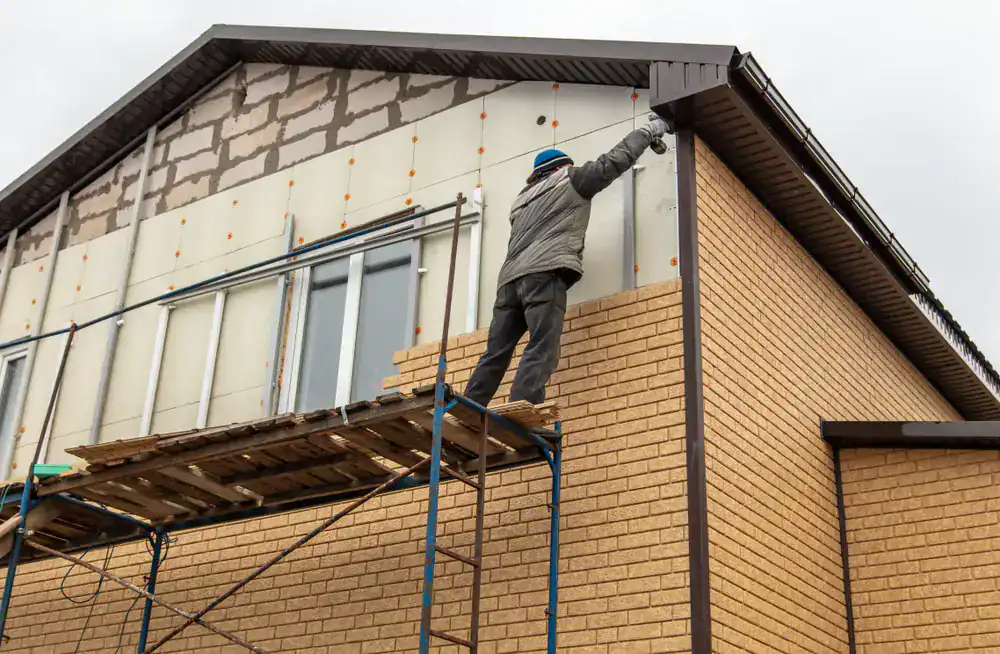
Once the work starts, old siding comes off and the substrate gets a proper look. If there’s moisture damage, rot, or missing housewrap underneath — which is common in Linden’s older housing stock — that gets addressed before a single new panel goes up. New siding goes on with manufacturer-compliant technique, correct flashing at every window and door opening, and fastening that accounts for the thermal movement your walls will go through across a full New Jersey winter. When our crew leaves, the site is clean and the job is done — not mostly done.

Ready to get started?
Vinyl Siding Contractors in Linden, NJ
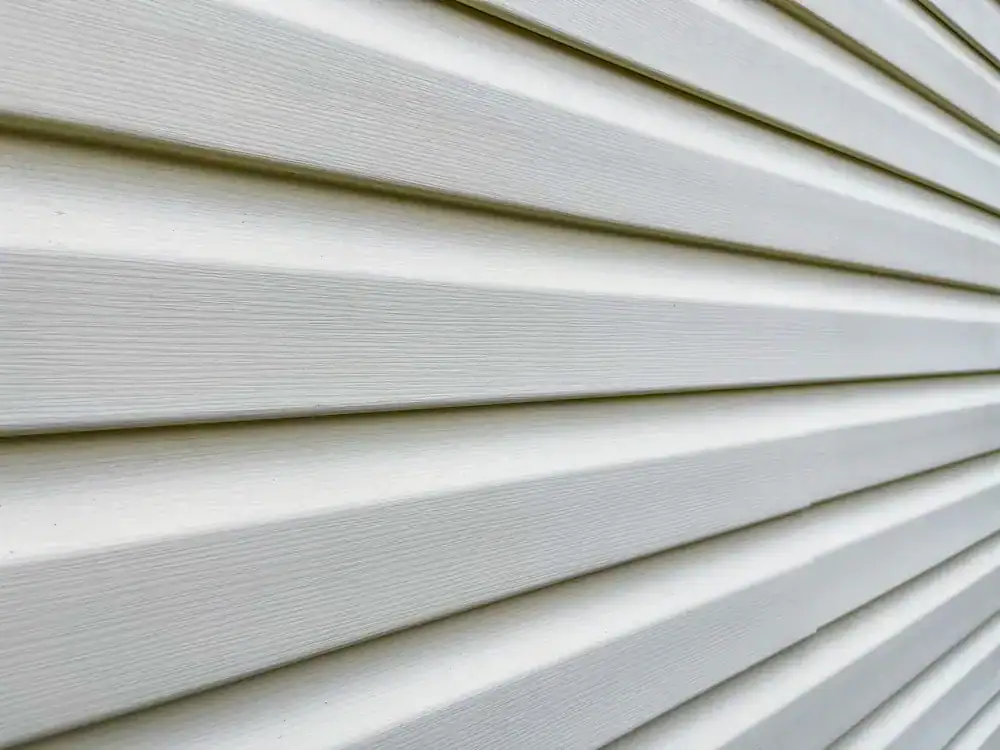
Vinyl siding is the most common choice for Linden homeowners, and for good reason — it handles the Northeast climate well, requires minimal maintenance, and holds up to the kind of freeze-thaw cycling this area sees every winter. For homes in Sunnyside or the City Center neighborhoods where original profiles and trim details matter, we offer vinyl options that replicate traditional looks without the upkeep that wood demands.
Fiber cement — including James Hardie products — is the right call when you want maximum durability and you’re not interested in replacing siding again in 20 years. It resists moisture, doesn’t warp, and holds paint longer than wood or standard vinyl. For homes in Bayway or near the waterfront where ambient moisture and salt air are ongoing factors, fiber cement performs better over the long haul. It costs more upfront, but the math works out when you factor in how rarely it needs attention.
Whatever material fits your home and budget, our installation process stays the same: proper substrate prep, correct moisture barrier, manufacturer-compliant fastening, and flashing done right at every transition point. We hold manufacturer certifications that require demonstrated installation knowledge — not just a license fee — which means your product warranty stays intact and the work is backed by more than just a handshake.

Do I need a permit for siding installation in Linden, NJ?
Yes — siding replacement in Linden requires a building permit through the city’s Construction Code Department, located at City Hall. New Jersey also requires that any contractor pulling that permit be registered under the NJ Home Improvement Contractor (HIC) Registration Act with the Division of Consumer Affairs. It’s not optional, and it’s not just paperwork — it’s the legal framework that gives you recourse if something goes wrong.
A lot of homeowners don’t realize this until after they’ve already hired someone. An unregistered contractor can’t legally pull permits in Linden, which means the work either gets done without one — leaving you exposed to fines and issues at resale — or it doesn’t get done at all. We’re fully registered and handle the permit process as part of every project. You don’t have to chase it down yourself.
How much does siding installation typically cost in Linden, NJ?
For a full home re-side in Linden, most projects fall somewhere between $8,000 and $20,000 depending on the size of the home, the material selected, and what’s found underneath the existing siding once it comes off. Vinyl tends to land on the lower end of that range. Fiber cement, which holds up better in high-moisture environments like the waterfront neighborhoods near the Arthur Kill, runs higher — but it also lasts significantly longer and requires far less maintenance over time.
The number that matters most isn’t the initial quote — it’s what the final invoice says. Some contractors in this market quote low to win the job, then add costs once the work is underway. We provide written estimates with detailed scope before anything starts, and those numbers don’t change unless you ask for something that wasn’t in the original plan. What you’re quoted is what you pay.
What siding material works best for older homes in Linden, NJ?
Most of Linden’s older homes — particularly in Sunnyside and the neighborhoods that run toward Cranford and Clark — were built with wood siding or early-generation vinyl that’s well past its useful life. For those homes, the two most practical options are modern vinyl and fiber cement, and the right choice depends on your priorities.
Vinyl is lower cost, easier to install on irregular framing dimensions that are common in mid-century homes, and still performs well in New Jersey’s climate when installed correctly. Fiber cement is the more durable option — it doesn’t warp, holds up better against moisture intrusion, and doesn’t need to be repainted as often. For homes that have dealt with recurring moisture issues, especially in areas of Linden with more water exposure, fiber cement is usually the better long-term investment. A free inspection will tell you which one actually makes sense for your specific home’s condition.
How long does siding installation take from start to finish?
For most single-family homes in Linden, the physical installation takes between two and five days depending on the size of the home and what’s discovered once the old siding comes off. If there’s substrate damage, missing housewrap, or moisture issues underneath — which is genuinely common in Linden’s older housing stock — addressing that properly adds time, but it’s time well spent. Skipping it creates a much bigger problem down the road.
The full timeline from first contact to project completion is typically two to four weeks when you factor in the free inspection, written estimate, permit application through Linden’s Construction Code Department, and material lead time. Spring and early fall are the busiest seasons in this market, so scheduling earlier in those windows gives you more flexibility. Winter installations are possible, though vinyl requires extra care in cold temperatures to avoid brittleness during handling.
How do I know if my siding needs to be repaired or fully replaced?
The honest answer is that you usually can’t tell just by looking at the outside. Surface damage — cracked panels, faded color, a few warped sections — might be patchable. But if moisture has been getting behind the siding for years, the real problem is in the substrate, not the panels themselves. Homes in Linden that were built before modern housewrap became standard often have little to no moisture barrier behind the cladding, which means water intrusion can be significant even when the outside looks relatively intact.
A free inspection is the only way to know for certain. We take a look at what’s actually happening at the wall level — not just the surface — and give you an honest answer about whether targeted repairs will hold or whether a full replacement is the smarter move. There’s no pressure either way. The goal is to give you accurate information so you can make a decision that actually protects your home.
Is new siding worth the investment before selling a home in Linden, NJ?
In most cases, yes — especially in Linden’s current market where median home values have climbed significantly and buyers are paying close attention to exterior condition. Worn, cracked, or visibly aging siding signals deferred maintenance to buyers and their inspectors, and that perception tends to show up in lower offers or repair credits at closing. New siding removes that objection before it starts.
Vinyl siding replacement consistently ranks among the highest-return exterior projects in the Remodeling Magazine Cost vs. Value Report, with recoupment rates typically in the 67–80% range in the Northeast region. Beyond the financial return, homes with fresh, well-installed siding simply move faster — and in a city like Linden where buyers have real options across Union County, first impressions at the curb carry weight. If your siding is at or near end of life, replacing it before listing is usually a cleaner path than negotiating around it after.