
Gutter Installation in Plainfield, NJ
Plainfield's Older Homes Deserve Gutters That Actually Work
Hear from Our Customers
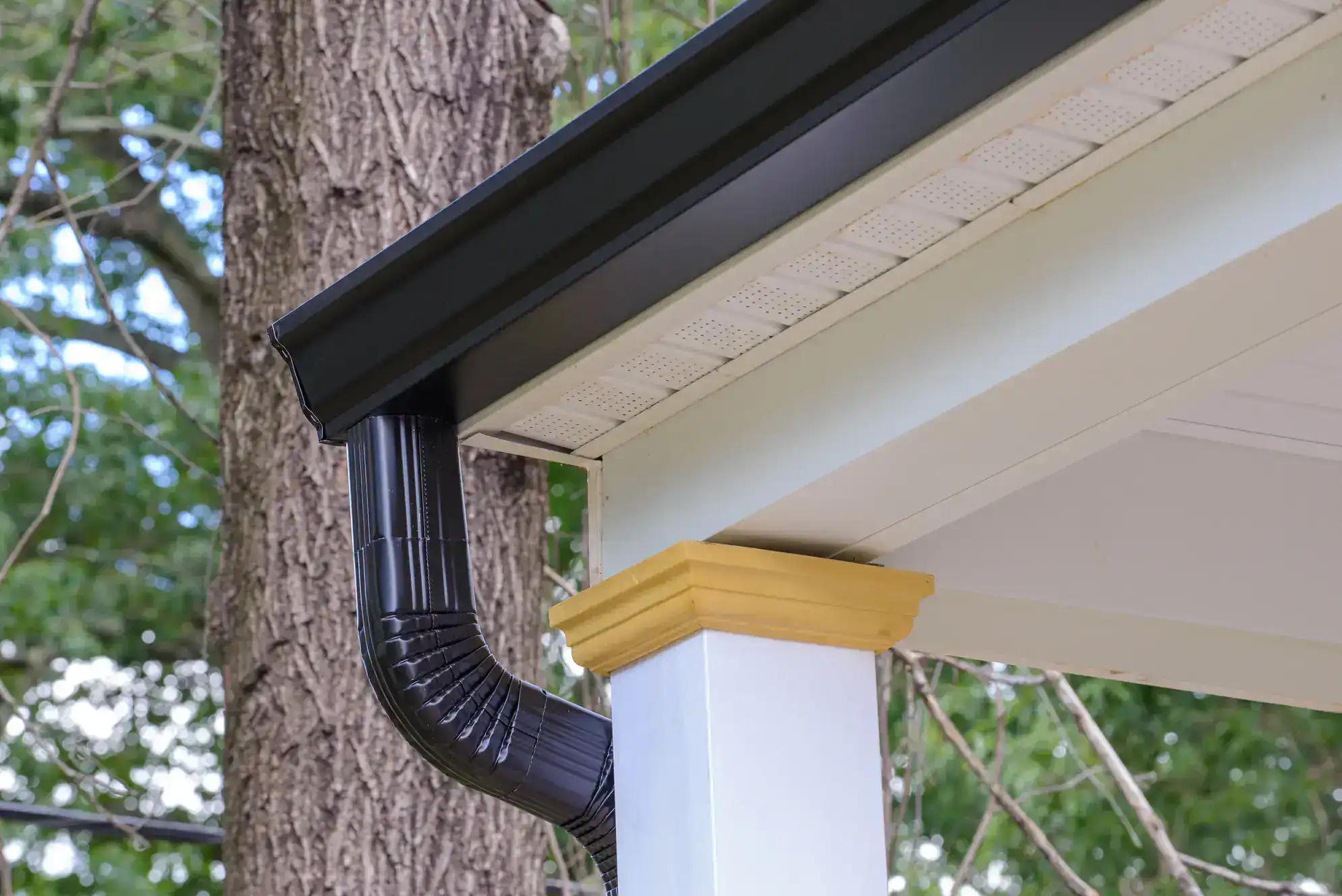
Rain Gutter Installation in Plainfield, NJ
Plainfield has seen what happens when water has nowhere to go. Flash flooding has damaged hundreds of homes here, and while no gutter system stops a six-inch rainfall, a properly installed one makes a real difference in how much of that water ends up against your foundation — and how much stays out of your basement.
Most of the homes in Plainfield’s historic neighborhoods — Van Wyck Brooks, Netherwood Heights, the Crescent Area, Sleepy Hollow — were built between the 1870s and the 1920s. Complex rooflines, multiple gabled sections, and decades of deferred maintenance mean the gutters on these homes are often undersized, improperly pitched, or failing at the seams. When that’s the case, cleaning them doesn’t fix the problem. Replacing them with a system that’s actually built for your roofline does.
The result is straightforward: water moves away from your home the way it’s supposed to. No overflow pooling at the base of your siding. No soil saturation pulling moisture toward your foundation. No ice backup forming at the eaves every winter because the gutters are already full of standing water. Just a system that works — quietly, consistently, and without you having to think about it.
Gutter Contractors in Plainfield, NJ
We’re based in Elizabeth, NJ — about twelve miles from Plainfield on Route 28 — and have been working on Union County homes for over ten years. That proximity matters. The housing stock in Plainfield, the weather patterns, the permitting environment — it’s all familiar territory. When you call, you’re talking to a local team that has worked on homes just like yours, not a regional franchise routing your job to whoever’s available.
We hold NJ Division of Consumer Affairs Home Improvement Contractor License #13VH10605800 and manufacturer certifications from major exterior material producers. That means your installation meets code, qualifies for manufacturer-backed warranty coverage, and is done by a contractor who’s accountable to New Jersey’s consumer protection framework — not just making verbal promises.
For homeowners in Plainfield’s historic districts, where the city’s Construction Division may need to coordinate with the Historic Preservation Commission on certain exterior projects, working with a licensed, experienced contractor isn’t optional — it’s the only way to make sure the job gets done right and doesn’t create problems down the road.
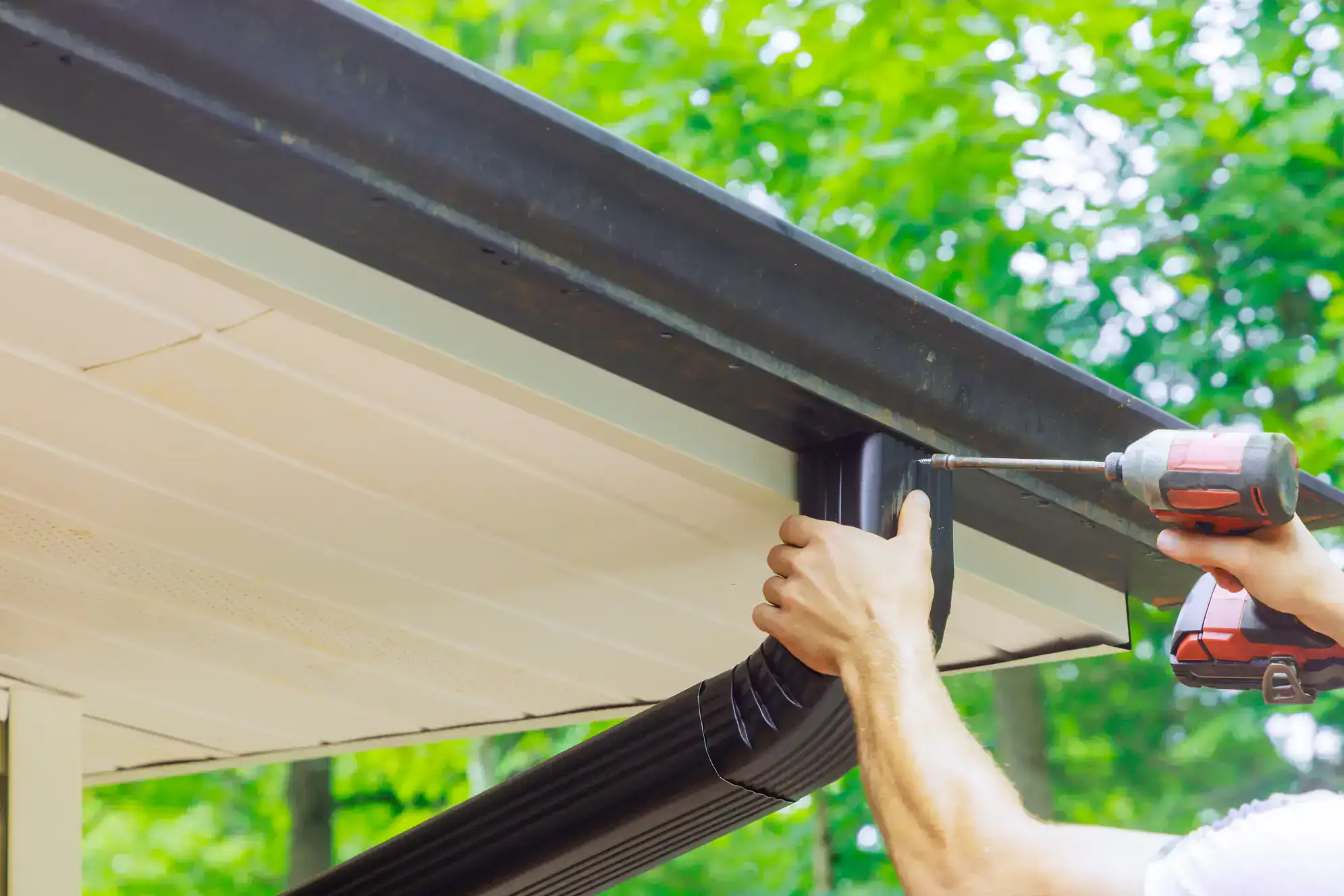
Home Gutter Installation in Plainfield, NJ
It starts with a free inspection. Before anything is quoted or scheduled, someone from our team walks your property and looks at the full picture — not just the gutters, but the fascia boards behind them, the roofline above them, and the downspout drainage below them. On a pre-war home in Plainfield, these details matter. A rotted fascia board under a gutter bracket, or a downspout draining toward the foundation instead of away from it, can undermine a new installation within a season if it’s not caught first.
Once the inspection is done, you get a written estimate with a clear scope of work and no hidden line items. If you’re in a designated historic district — Van Wyck Brooks, Netherwood Heights, the Crescent Area — we’ll flag any permitting considerations relevant to your property before work begins. Plainfield’s Construction Division requires coordination with the Historic Preservation Commission for certain exterior alterations, and navigating that process correctly from the start saves time and avoids complications later.
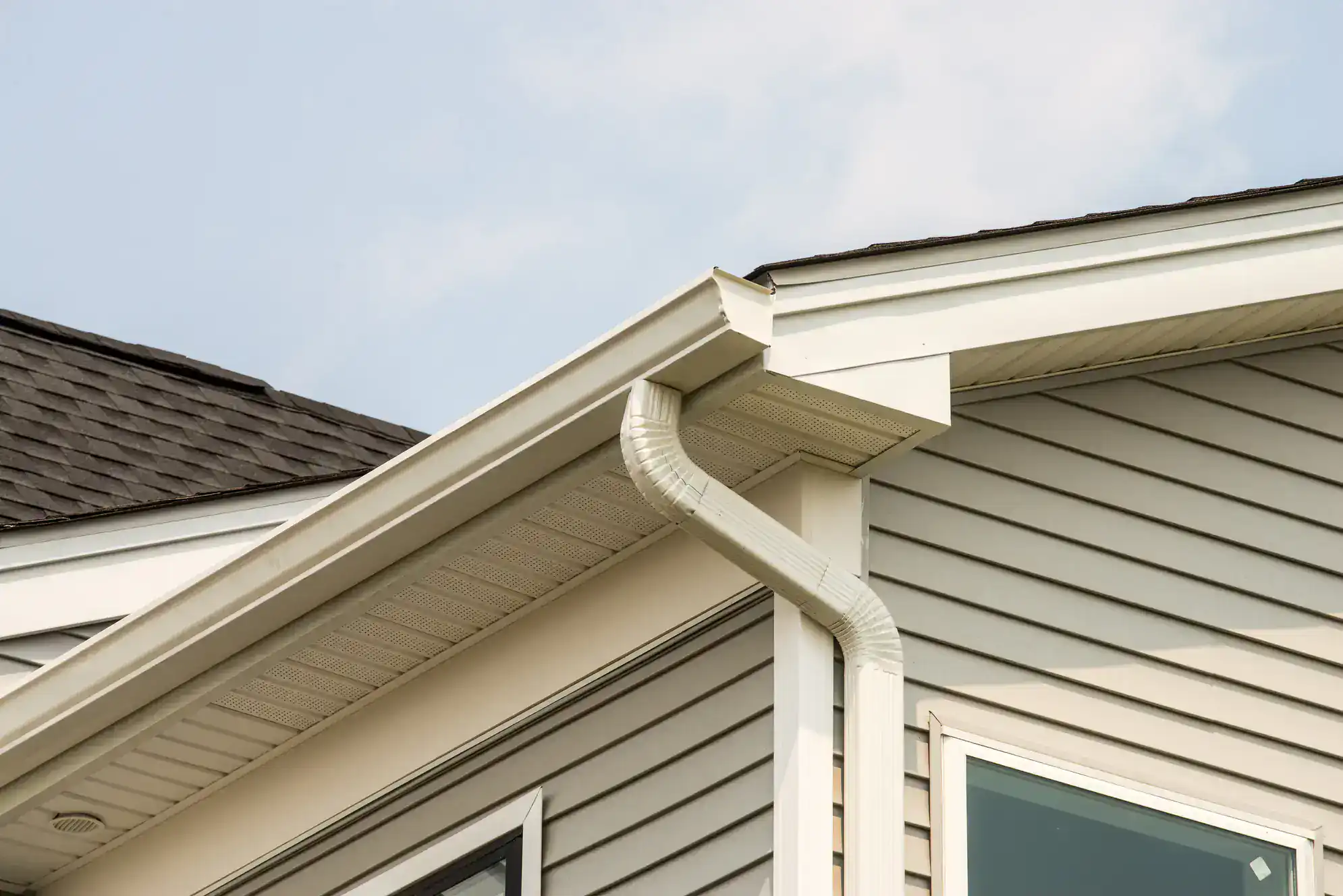
Installation itself is done with custom-fabricated seamless aluminum gutters cut on-site to the exact measurements of your roofline. Slope is calculated per run before a single bracket goes up, downspouts are sized for your roof’s actual drainage load, and every outlet is positioned to move water well away from your foundation. When the job is done, the site is cleaned up and you’re walked through what was installed and why.
Ready to get started?
Roof Gutter Installation in Plainfield, NJ
Every gutter installation we perform starts with custom fabrication. Gutters are cut on-site from seamless aluminum stock to the exact length of each run — no pre-cut sections, no seam points mid-run where leaks start. For homes in Plainfield’s historic neighborhoods, where rooflines are rarely simple and water sheds from multiple directions, this isn’t a premium upgrade. It’s the only approach that actually works long-term.
Downspout sizing and placement get the same attention. Undersized downspouts overflow at the outlet even when the gutters above them are fine — a common problem on older homes that were originally built with narrower drainage systems. We calculate downspout requirements based on your roof’s actual square footage and position each one to drain a minimum of six feet from your foundation. In a city where summer storms have produced state-of-emergency flooding, that calculation isn’t a formality.
If your gutters were damaged in a recent storm event, we work directly with insurance adjusters to document damage, file claims, and help you understand what your policy covers. Many Plainfield homeowners don’t realize storm-damaged gutters may be covered under their existing homeowner’s insurance — and navigating that process alone is harder than it needs to be. We handle it alongside the installation so you’re not managing two separate conversations at once.
Do I need a permit to replace gutters on my Plainfield, NJ home?
For most straightforward gutter replacements — swapping out old gutters for new ones on the same structure — a separate construction permit typically isn’t required under New Jersey’s Uniform Construction Code. That said, Plainfield’s Construction Division operates in coordination with several other city departments, including the Historic Preservation Commission and Flood Plain Management, and homeowners in one of the city’s designated historic districts may face additional review depending on the scope of the work.
If your home is in the Van Wyck Brooks Historic District, Netherwood Heights, the Crescent Area, or Sleepy Hollow, it’s worth confirming whether any visible exterior changes — including gutter material, profile, or color — require Commission approval before installation begins. We’re familiar with Plainfield’s permitting environment and can help you determine what applies to your specific property and make sure the process moves forward without delays or compliance issues after the fact.
How do I know if my gutters need to be fully replaced or just repaired?
The honest answer is that it depends on what’s actually failing. Isolated leaks at a joint or a single section pulling away from the fascia can often be repaired without replacing the entire system. But if your gutters are consistently overflowing during rain, visibly sagging along multiple runs, or showing rust and separation at numerous points, repair becomes a temporary fix on a system that’s already past its service life.
On the older homes common throughout Plainfield — particularly in the pre-war neighborhoods along the Van Wyck Brooks and Crescent Area corridors — gutters are often sectional aluminum or even original galvanized steel that has been patched repeatedly over the decades. When a system like that starts failing in multiple places at once, the cost of ongoing repairs typically exceeds the cost of a full replacement within a year or two. A free inspection gives you a clear picture of where your system actually stands so you’re not guessing.
Why do my gutters overflow during heavy rain even though they're not clogged?
This is one of the most common complaints homeowners bring up, and the cause is almost always one of two things: improper slope or undersized capacity. Gutters need to pitch slightly toward the downspout — typically about a quarter inch for every ten feet of run — so water moves continuously rather than pooling. If that slope is off, even a moderate rainfall will cause water to back up and spill over the front edge before it reaches the outlet.
Capacity is the other issue. Older homes in Plainfield were often built with five-inch gutters, which were standard for decades but are undersized for the kind of high-intensity summer storms the area now sees regularly. When six inches of rain falls in under three hours — which has happened here — a five-inch gutter on a large roof simply cannot move water fast enough. Upgrading to six-inch gutters with properly sized downspouts is often the fix that cleaning alone will never provide.
What's the difference between seamless gutters and regular sectional gutters?
Sectional gutters are pre-cut lengths that are joined together on-site with connectors and sealant. Every one of those connection points is a potential leak — and over time, especially through New Jersey’s freeze-thaw winters, those seams expand and contract until the sealant fails. Once a seam starts leaking, water gets behind the gutter and onto the fascia board, which leads to wood rot, and from there the problem compounds quickly.
Seamless gutters are fabricated on-site from a continuous roll of aluminum, cut to the exact length of each run with no mid-run joints. The only connection points are at the corners and downspout outlets — which are unavoidable — but everything in between is a single, uninterrupted piece. For homes in Plainfield’s historic districts where fascia boards are original wood and replacement is costly, eliminating unnecessary seam points isn’t just a quality preference. It’s a practical way to protect what’s already there.
Can storm-damaged gutters in Plainfield be covered by homeowner's insurance?
In many cases, yes — though it depends on your specific policy and the nature of the damage. Most standard homeowner’s insurance policies cover sudden, accidental damage caused by wind, hail, or falling debris. If your gutters were damaged during one of the severe storm events that have hit Plainfield and Union County in recent years, that damage may qualify for a covered claim rather than an out-of-pocket replacement.
Where homeowners typically run into trouble is in the documentation process. Insurance adjusters need clear evidence that the damage was storm-related rather than the result of deferred maintenance or normal wear — and making that case on your own, without contractor-level damage documentation, is harder than it sounds. We work directly with adjusters to document storm damage, support the claims process, and make sure you’re not leaving coverage on the table. If you’re unsure whether your situation qualifies, a free inspection is the right starting point.
How much does gutter installation cost in Plainfield, NJ?
Most residential gutter installations in Plainfield fall somewhere between $1,000 and $2,500 for a standard single-family home, though the actual number depends on several factors: the linear footage of gutter needed, the number of downspouts, the complexity of your roofline, and whether any fascia repair is required before installation can begin.
Homes in Plainfield’s historic neighborhoods tend to fall toward the higher end of that range — not because the materials cost more, but because multi-gabled Victorian and Colonial Revival rooflines require more linear footage, more corners, and more careful slope calculation than a straightforward ranch or colonial. That complexity is real, and a contractor who quotes without accounting for it will either cut corners on the installation or come back with change orders after the job starts. A written estimate from us covers the full scope before any work begins — so the number you’re quoted is the number you pay.
Other Services we provide in Plainfield