
Roofer in Plainfield, NJ
Historic Homes Here Demand More Than a Standard Roofer
Hear from Our Customers
Local Roofing Company in Plainfield, NJ
A roof that was installed correctly doesn’t just keep water out — it stops the slow damage you don’t see until it’s expensive. No more ceiling stains after a nor’easter. No more attic moisture building up through February. No more wondering whether that flashing around your chimney is going to hold through another winter.
For Plainfield homeowners, that peace of mind carries extra weight. A lot of the homes here — especially in areas like Van Wyck Brooks, Netherwood Heights, and along Berkeley Avenue — were built over a century ago. They have complex rooflines, aging decking, and original flashing details that most contractors aren’t trained to handle properly. When a roofer who doesn’t know what they’re looking at cuts corners on a Victorian with three dormers and a chimney stack, you feel it within two seasons.
Getting it done right also means your home holds its value. With median property values sitting around $410,800 in Plainfield, your roof isn’t just overhead — it’s a direct line to what your home is worth. A certified installation with a manufacturer-backed warranty is something you can document, transfer to a buyer, and actually rely on. That’s a different outcome than a five-year patch job from a contractor you can’t verify.
Roofing Company in Plainfield, NJ
We’re a family-owned exterior renovation contractor based in Elizabeth, NJ — Union County, the same county as Plainfield. That’s not a coincidence. Serving Union County for over a decade means understanding what NJ winters actually do to pre-war rooflines in Plainfield, what the Plainfield Construction Division requires for permitted work, and why the Historic Preservation Commission’s material standards matter for properties in the city’s ten historic districts.
We hold NJ Home Improvement Contractor License #13VH10605800 — publicly searchable through the NJ Division of Consumer Affairs — along with certifications from major shingle manufacturers that unlock enhanced warranty tiers most local contractors simply can’t offer. Every job includes upfront pricing, a clear scope of work, and bilingual communication for Spanish-speaking homeowners. In Plainfield, where nearly 42% of residents were born outside the United States, that last part isn’t a footnote — it’s a genuine commitment to serving all of the community.
Roof Repair and Replacement in Plainfield, NJ
It starts with a free inspection — exterior assessment, attic check, drainage review, and a photo report you keep regardless of what you decide next. For Plainfield homeowners in one of the city’s ten historic districts, this step also includes an honest conversation about material options. If your home falls under Historic Preservation Commission review, you need to know upfront what materials will pass and what won’t. Showing up with standard 3-tab shingles on a property that requires period-appropriate materials creates delays, correction costs, and headaches that a prepared contractor prevents before they start.
Once the inspection is complete, you get a written estimate with itemized pricing before anything is scheduled. No vague ranges, no surprise line items when the job wraps. If the scope changes because something unexpected turns up during the work — deteriorated decking, failed underlayment — you hear about it before it’s addressed, not after.
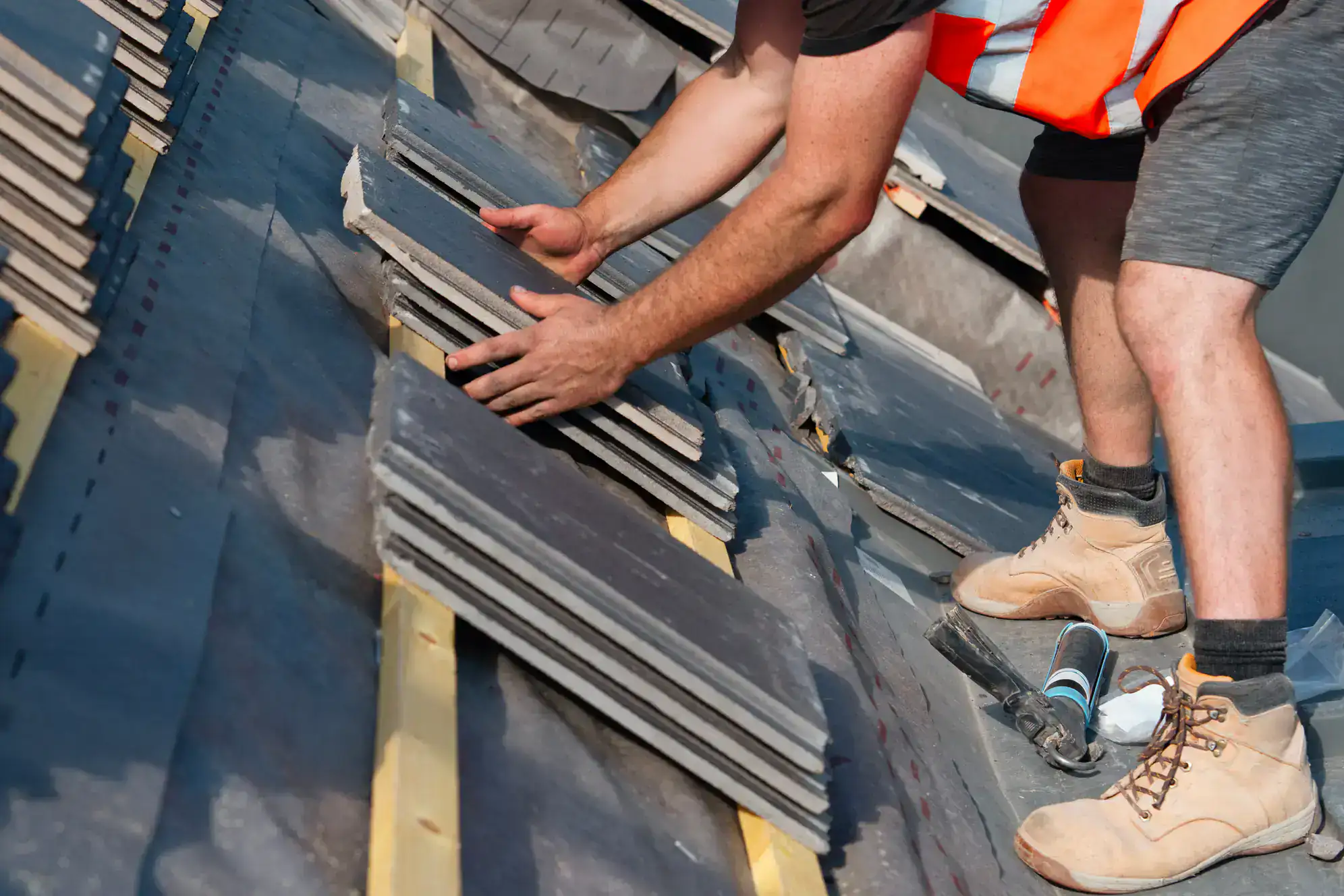
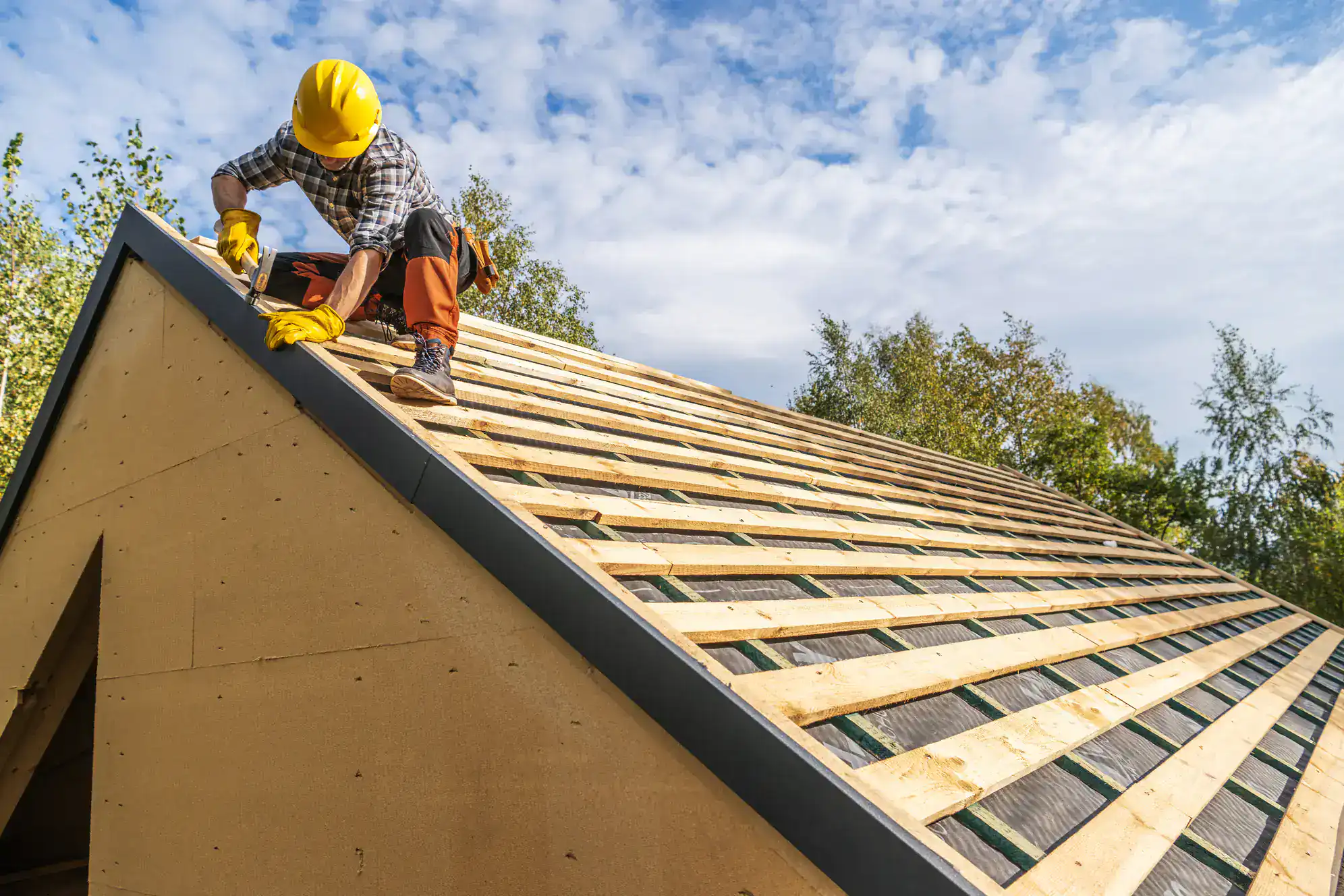
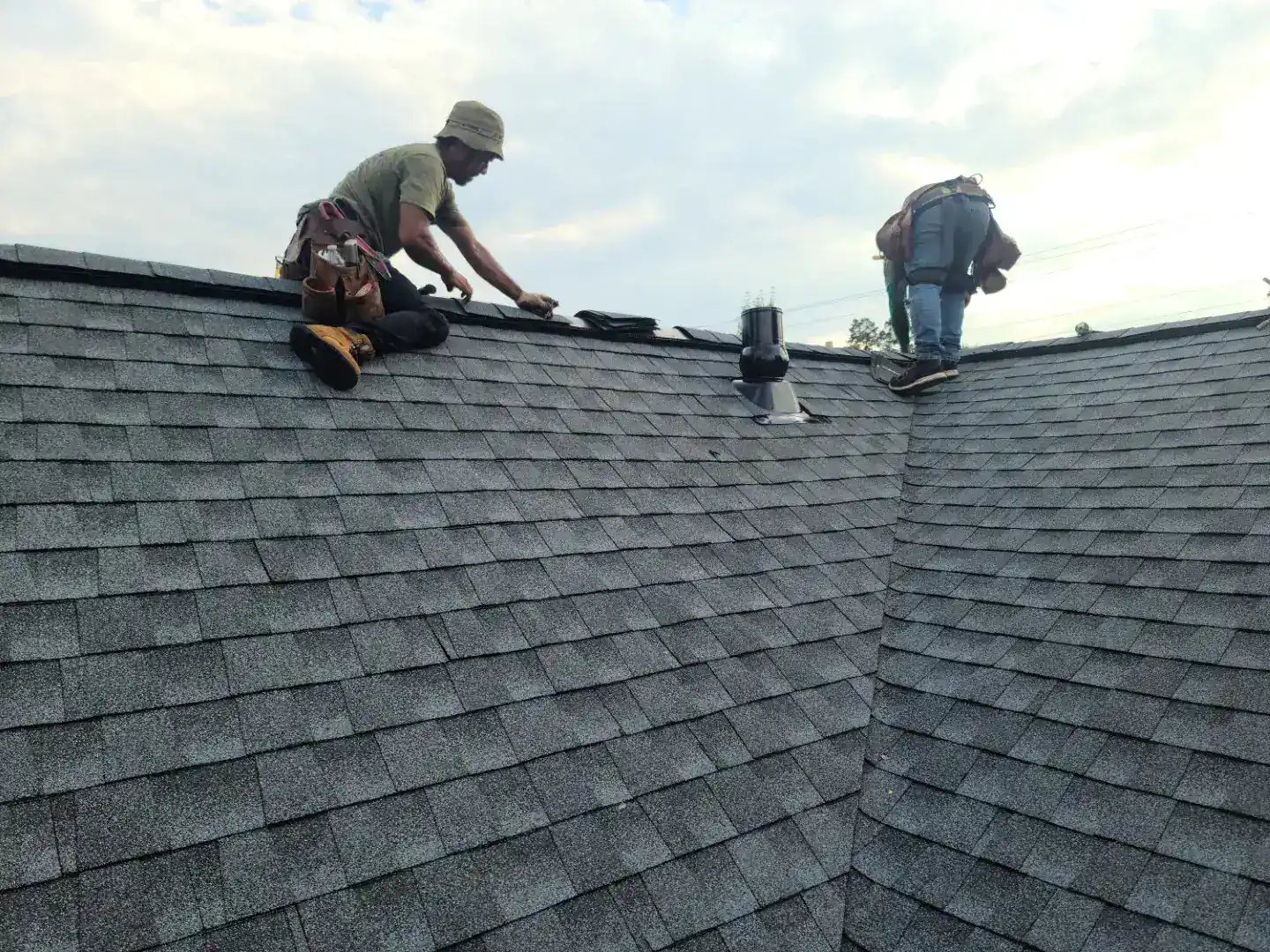
The work itself follows a clean process: old material removal, decking inspection and repair where needed, proper underlayment installation, shingle or membrane installation depending on your roof type, flashing detail work around chimneys and penetrations, and a final walkthrough with you before the crew leaves. Post-job cleanup is part of the job — not an afterthought. When it’s done, you get complete warranty documentation and a roof you can actually rely on heading into the next nor’easter season.
Ready to get started?
Affordable Roofers in Plainfield, NJ
We cover the full range of roofing services that Plainfield homes typically require — and in a city with this much architectural variety, that range is wide. Asphalt shingle installation and replacement, flat roofing systems including TPO and EPDM for multi-family and commercial properties, roof repair, emergency storm damage response, gutter installation, and siding round out our exterior service menu. One contractor, one point of contact, one scope that accounts for how your roof, gutters, and siding actually work together.
For homes in Plainfield’s historic districts — Van Wyck Brooks, Netherwood Heights, Crescent, and others — the material conversation matters more than it does anywhere else in Union County. The city’s standard is like materials for like materials, meaning a Victorian with an original slate roof needs either a slate replacement or an approved alternative like Slateline architectural shingles that can satisfy the Historic Preservation Commission’s review. We can walk you through what’s appropriate for your specific property and help you avoid the permit delays that come from choosing the wrong material.
Emergency roof repair is available 24/7 — because when a storm moves through and takes shingles off a 130-year-old roofline at midnight, you shouldn’t be waiting until Monday morning with a tarp and a bucket. We offer free estimates and free inspections with no obligation to proceed.
Does the Plainfield Historic Preservation Commission need to approve my new roof?
If your home is located within one of Plainfield’s ten historic districts — Van Wyck Brooks, Netherwood Heights, Crescent, Hillside, or any of the others — then yes, exterior improvements visible from the public right-of-way require review and approval from the Historic Preservation Commission before work begins. This includes roofing. The Commission’s standard is that replacement materials should match the original as closely as possible. That means if your home had a slate roof, you’ll generally need to replace it with slate or an approved alternative like Slateline architectural shingles — not standard asphalt.
The practical implication is that hiring a contractor who isn’t familiar with this process can get your project denied or delayed, and in some cases require costly corrections after the fact. Before any work is scheduled, it’s worth confirming whether your property falls within a historic district boundary and what materials will satisfy the Commission’s review. A contractor who’s worked in Plainfield before will know this process and can help you navigate it correctly the first time.
How do I know if I need a full roof replacement or just a repair?
The honest answer is that you usually can’t tell from the ground — and neither can most homeowners from a quick attic glance. The real indicators are in the details: granule loss in the gutters, soft spots in the decking, failed or lifted flashing around chimneys and penetrations, and the age of the roof relative to the material’s expected lifespan. Asphalt shingles typically last 20 to 30 years. If your Plainfield home was built before World War II — which describes a significant portion of the housing stock here — and the roof hasn’t been replaced in the last two decades, you’re likely past the point where repairs are a long-term solution.
A free inspection gives you a documented, photo-backed answer rather than a guess. The inspection covers the exterior, the attic, and the drainage system, and you get a report you keep regardless of what you decide. If a repair is genuinely the right call, that’s what you’ll be told. If the decking is compromised or the system has failed in multiple areas, a replacement conversation is more honest than patching something that won’t hold through another Union County winter.
What roofing materials are approved for historic homes in Plainfield, NJ?
For properties within Plainfield’s historic districts, the guiding principle from the city is like materials for like materials. That means the replacement should closely match what was originally installed — in appearance, texture, and where possible, material composition. For homes with original slate roofs, the preferred replacement is natural slate. However, the Historic Preservation Commission also recognizes that natural slate is significantly more expensive and not always structurally feasible, so approved alternatives like Slateline architectural asphalt shingles — which replicate the look and profile of slate — are often acceptable.
Standard 3-tab asphalt shingles are generally not appropriate for historic district properties, particularly on homes with Victorian, Queen Anne, or Colonial architectural profiles. The Commission evaluates proposals based on how well the replacement material maintains the property’s historical character as seen from the street. If you’re unsure what’s appropriate for your specific home, a pre-application conversation with the Plainfield Historic Preservation Commission — or a contractor who’s navigated this process before — will save you from submitting a proposal that gets rejected and delays your project by weeks.
Do I need a permit to replace my roof in Plainfield, NJ?
Yes. Roof replacement in Plainfield requires a construction permit issued through the city’s Construction Division, located at 508 Watchung Ave. The permit process follows the New Jersey Uniform Construction Code, and depending on the scope of your project and where your property is located, the application may involve review by multiple city departments — including Planning and Zoning, the Historic Commission if applicable, and Flood Plain Management in certain areas. The state allows up to 20 days for permit approval or denial.
Inspections must be requested in writing at least 24 hours in advance and are conducted Monday through Friday between 9:00 AM and 2:00 PM. A licensed contractor handles the permit application process as part of the job — this is one of the clearest practical reasons to hire someone with an active NJ Home Improvement Contractor license rather than an unlicensed crew offering a lower price. If unpermitted work is discovered during a future home sale or insurance claim, it can create significant legal and financial complications that far outweigh whatever was saved upfront.
How much does a roof replacement cost in Plainfield, NJ?
For a standard asphalt shingle replacement on a single-family home in Plainfield, you’re generally looking at a range somewhere between $8,000 and $18,000 depending on the size of the roof, the pitch, the number of penetrations (chimneys, skylights, vents), and the condition of the existing decking. Homes with more complex rooflines — which describes a lot of the Victorian and Queen Anne architecture in Plainfield’s historic districts — tend to sit at the higher end of that range because the labor involved in working around dormers, steep pitches, and original flashing details is more intensive.
If your home requires historic-appropriate materials like Slateline architectural shingles rather than standard asphalt, expect that to add to the material cost as well. Flat roofing systems on multi-family or commercial properties in Plainfield are priced differently and depend heavily on square footage and membrane type. The most useful thing you can do before comparing quotes is get a written, itemized estimate from each contractor — not a ballpark number over the phone — so you’re comparing the same scope of work across bids.
Are there Spanish-speaking roofers in Plainfield, NJ who can help me through the process?
Yes — and in Plainfield, where more than half the population identifies as Hispanic and nearly 42% of residents were born outside the United States, this matters more than it does in most NJ towns. Navigating a roof replacement or storm damage claim involves permits, insurance documentation, written contracts, and material decisions that carry real financial weight. Doing all of that in a second language, with a contractor who can’t fully communicate with you, creates unnecessary risk at every step.
We offer bilingual service in Spanish throughout the entire process — from the initial inspection and estimate through the permit application, the work itself, and the final walkthrough. That means you can ask every question you need to ask, fully understand what you’re agreeing to before signing anything, and communicate clearly if something comes up during the job. It’s a straightforward thing to offer, but most roofing contractors in the area don’t. For a significant portion of Plainfield’s homeowning community, it’s the difference between feeling confident in the process and feeling like you’re guessing your way through it.
Other Services we provide in Plainfield