
Gutter Installation in Liberty Square, NJ
Bergen County Storms Don't Wait — Neither Should Your Gutters
Hear from Our Customers
Rain Gutter Installation in Liberty Square, NJ
When gutters are doing their job, you stop thinking about them. No water spilling over the edge and pooling against your foundation. No streaking down your siding after every storm. No soggy walkway every time it rains on your way to the Wesmont Station platform. That’s what a properly installed gutter system actually delivers — and it’s more noticeable than most homeowners expect.
Liberty Square townhomes were built by Pulte in 2016 and 2017, which means the original gutter systems are now eight to nine years old. That’s the window where builder-grade aluminum starts showing its first real signs of wear — brackets loosening, slope drifting, sections pulling slightly away from the fascia. None of it looks dramatic at first. But when Bergen County drops two-plus inches of rain in a single afternoon, like it did in July 2025, a gutter that’s lost even a quarter inch of pitch stops moving water and starts holding it.
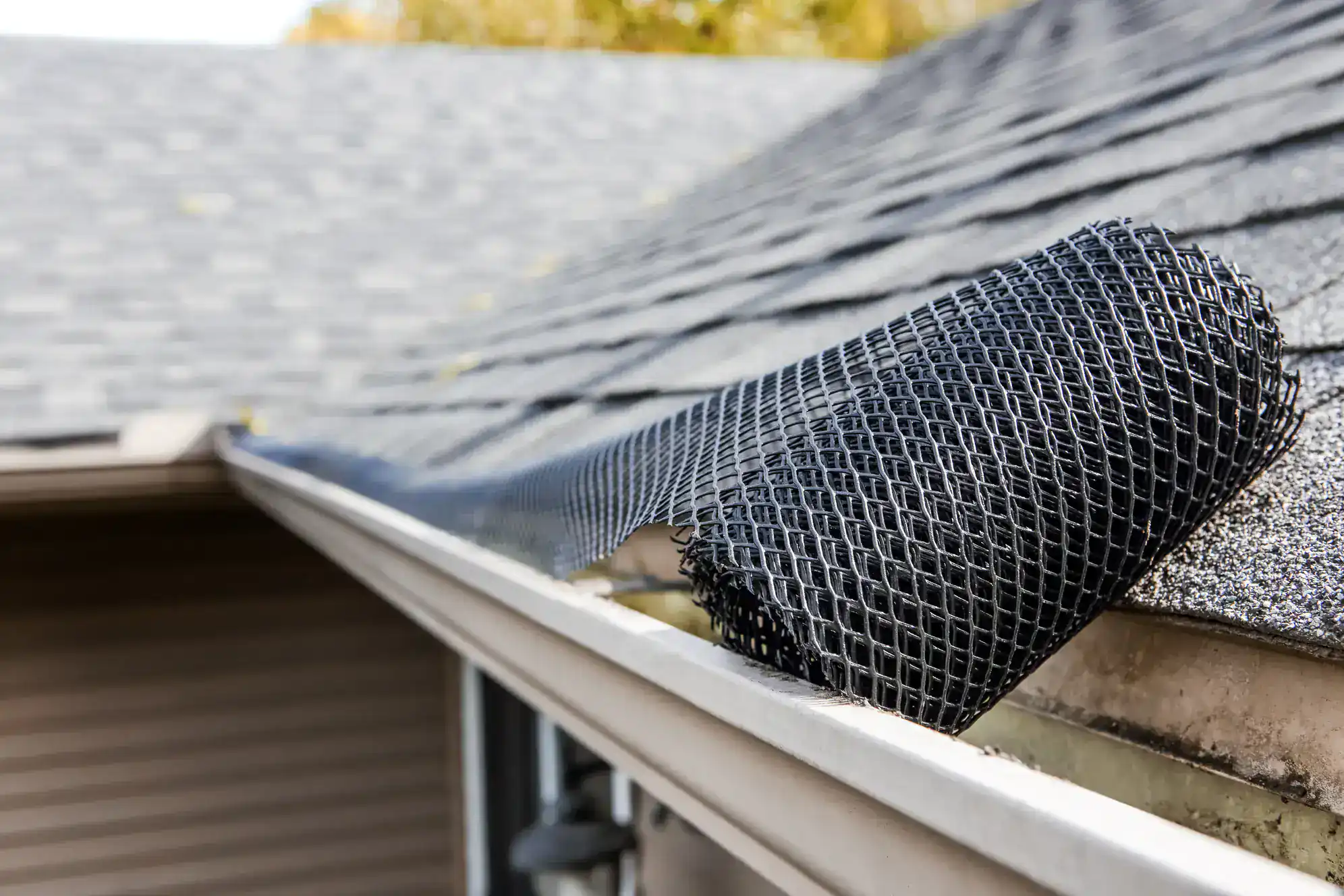
The street trees throughout Liberty Square add another layer to this. Every fall, those trees load your gutters with debris faster than most homeowners realize. When a clogged or sagging gutter overflows toward your foundation repeatedly, you’re not just dealing with a gutter problem — you’re setting up a much more expensive conversation about water intrusion, siding rot, or basement seepage. Getting the gutter system right now is the cheaper decision by a wide margin.
Gutter Contractors Serving Liberty Square, NJ
We’ve spent over ten years doing exterior renovation work across northern New Jersey, including Liberty Square and surrounding Bergen County communities. The company grew through referrals — not advertising — which means the track record speaks before anyone picks up the phone.
Every job starts with a free inspection and ends with a written estimate that doesn’t change when the crew shows up. Our NJ Home Improvement Contractor License #13VH10605800 is verifiable through the NJ Division of Consumer Affairs — not just a line on a website. That matters in Liberty Square, where the municipal code specifically flags disconnected or unsecured gutters as a property maintenance violation subject to enforcement.
For Liberty Square homeowners who need exterior work to meet HOA standards, we handle that too. We match gutter profiles and colors to your existing exterior, and can provide documentation for HOA review through Young and Associates if your community requires it. No surprises, no shortcuts.
Home Gutter Installation in Liberty Square, NJ
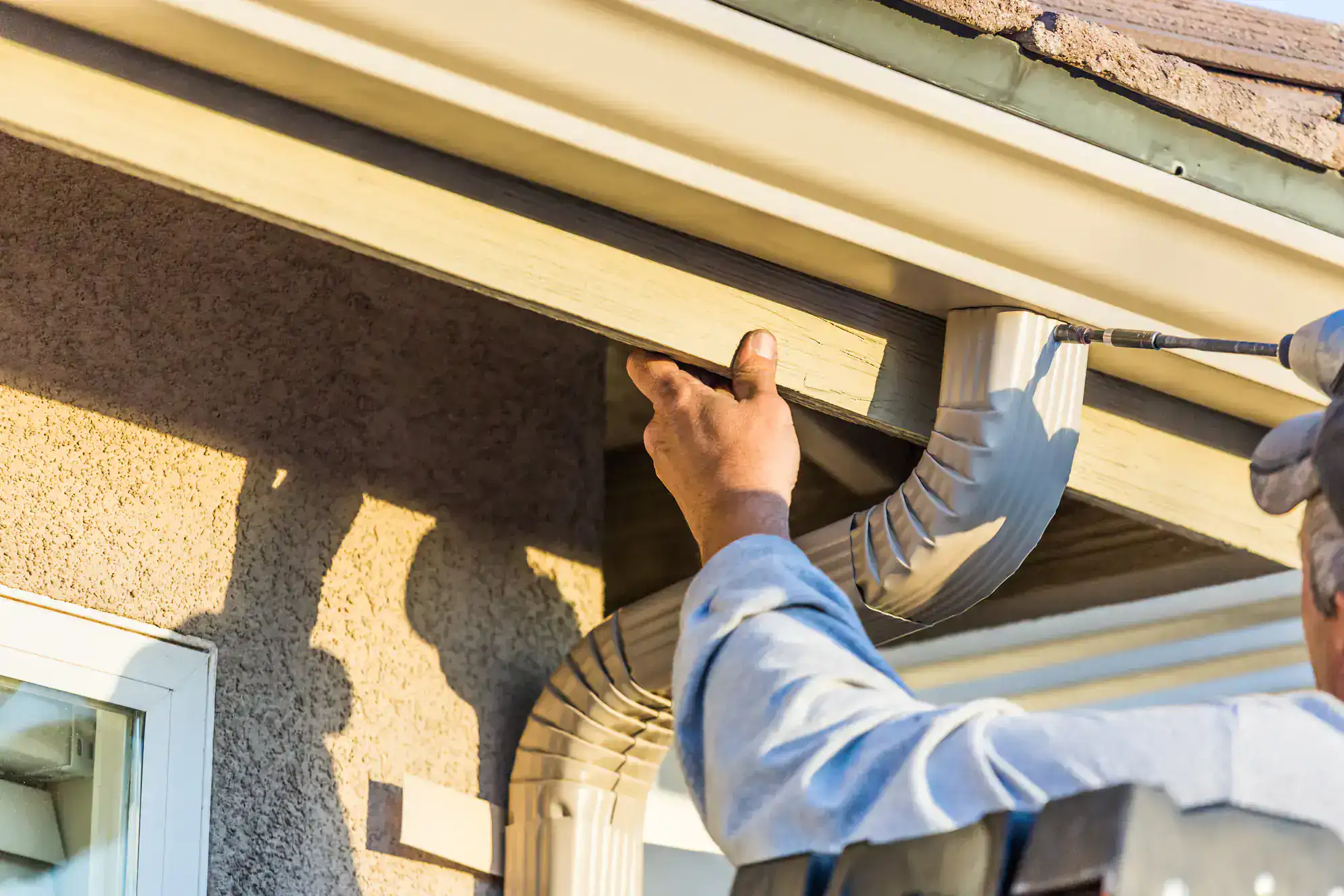
It starts with a free on-site inspection. Before anything is measured or ordered, we evaluate the full exterior system — roof pitch, fascia condition, existing gutter slope, downspout placement, and where water is currently going versus where it should be going. On a Pulte townhome in Liberty Square that’s eight or nine years old, that inspection often turns up bracket loosening or slope drift that the homeowner had no idea was there.
From there, you get a written estimate with clear line items. If the job is a straightforward replacement, we custom-fabricate seamless aluminum gutters on-site to your exact measurements — no pre-cut sections, no joints, no seams that fail under ice load or freeze-thaw stress. Bergen County winters are hard on sectional systems, and seamless fabrication eliminates the most common failure points before they become a problem.
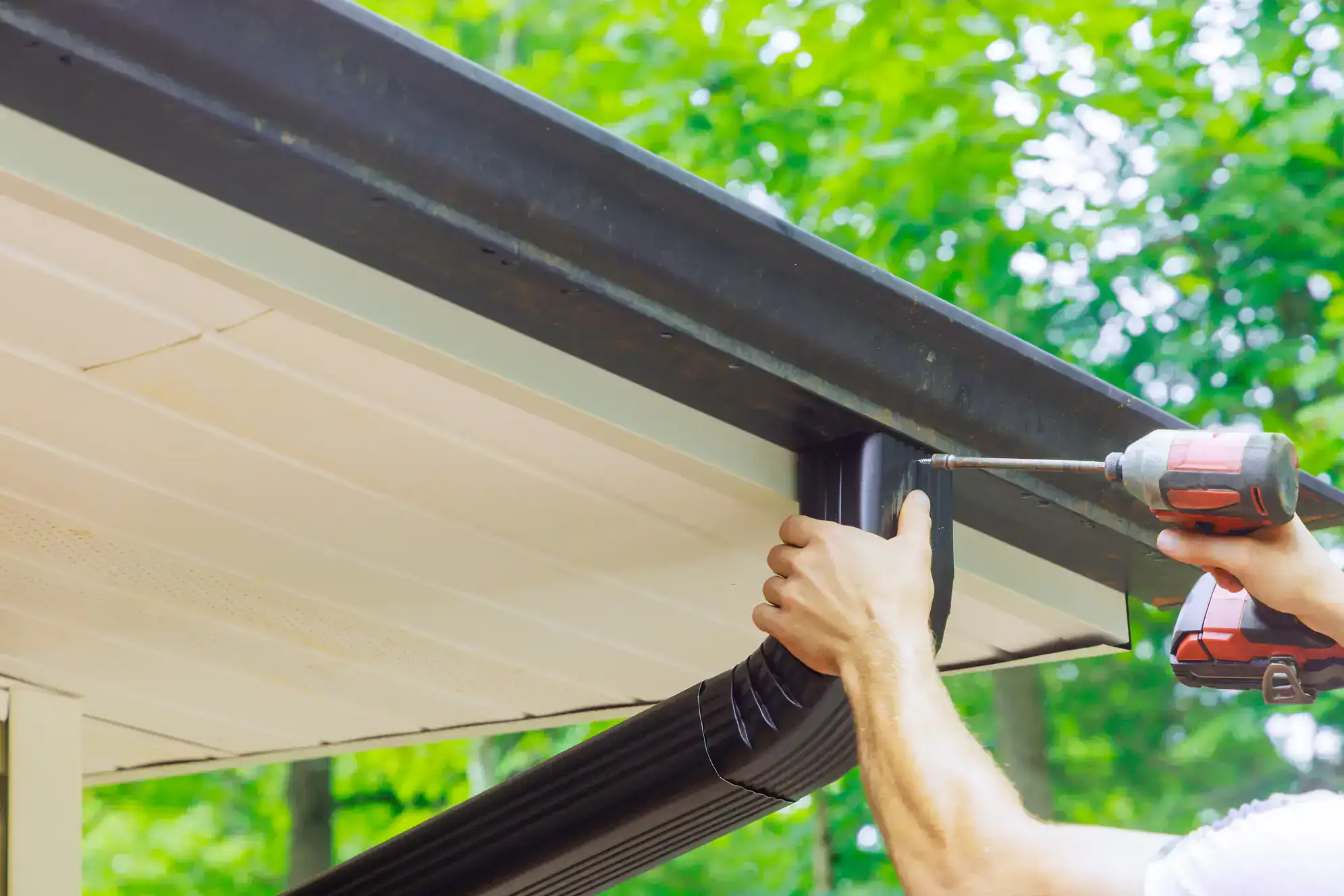
Installation is clean and efficient. We evaluate downspout positioning for proper drainage away from the foundation, not just placing them for convenience the way builder installs sometimes are. If any fascia damage is found during the process, we flag that before new gutters go up — because mounting new gutters to rotted wood is a short-term fix that costs more in the long run. Wood-Ridge’s Construction Department handles permit questions for any work that goes beyond like-for-like replacement, and we include that guidance in the estimate process.
Ready to get started?
Roof Gutter Installation Company in Liberty Square, NJ
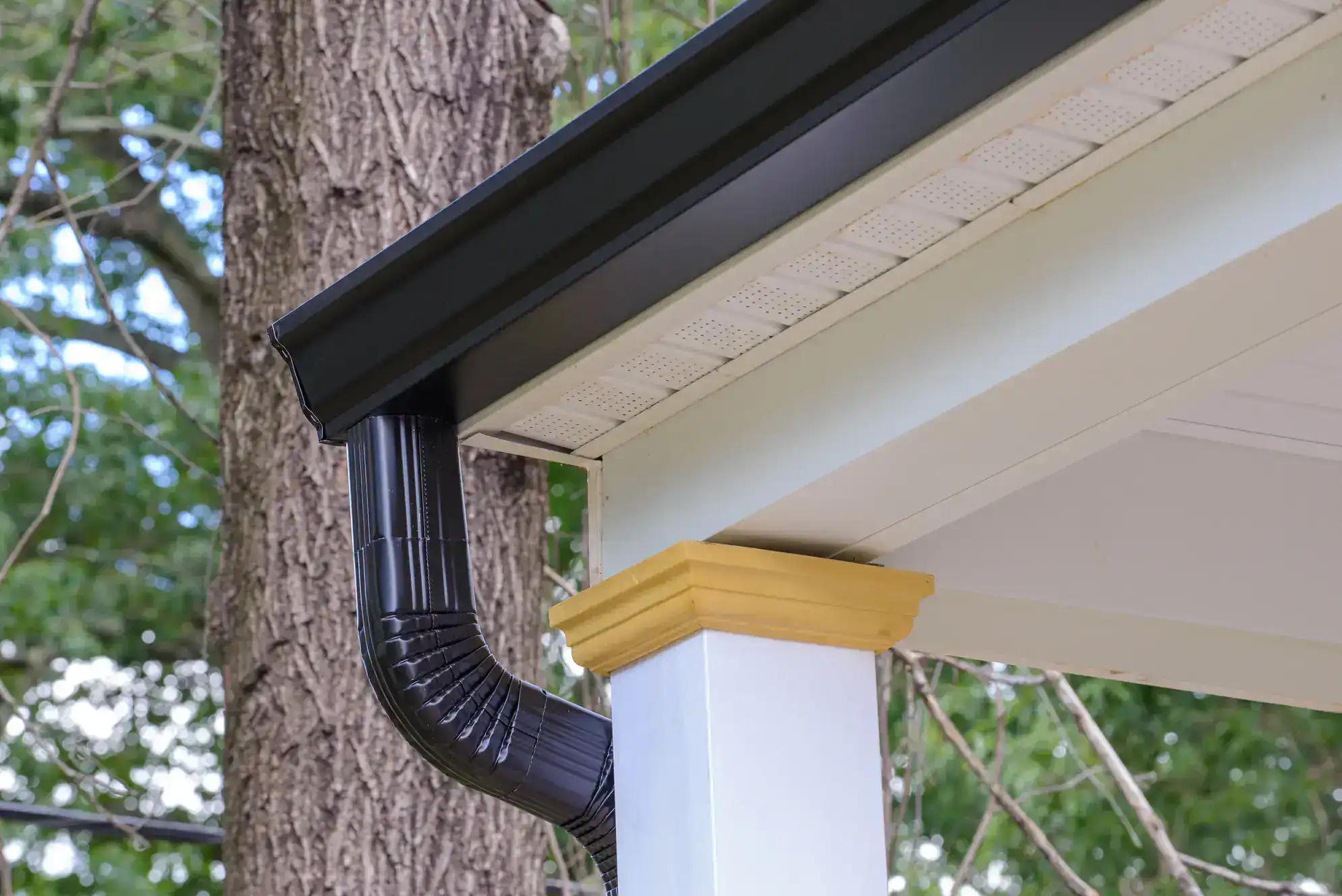
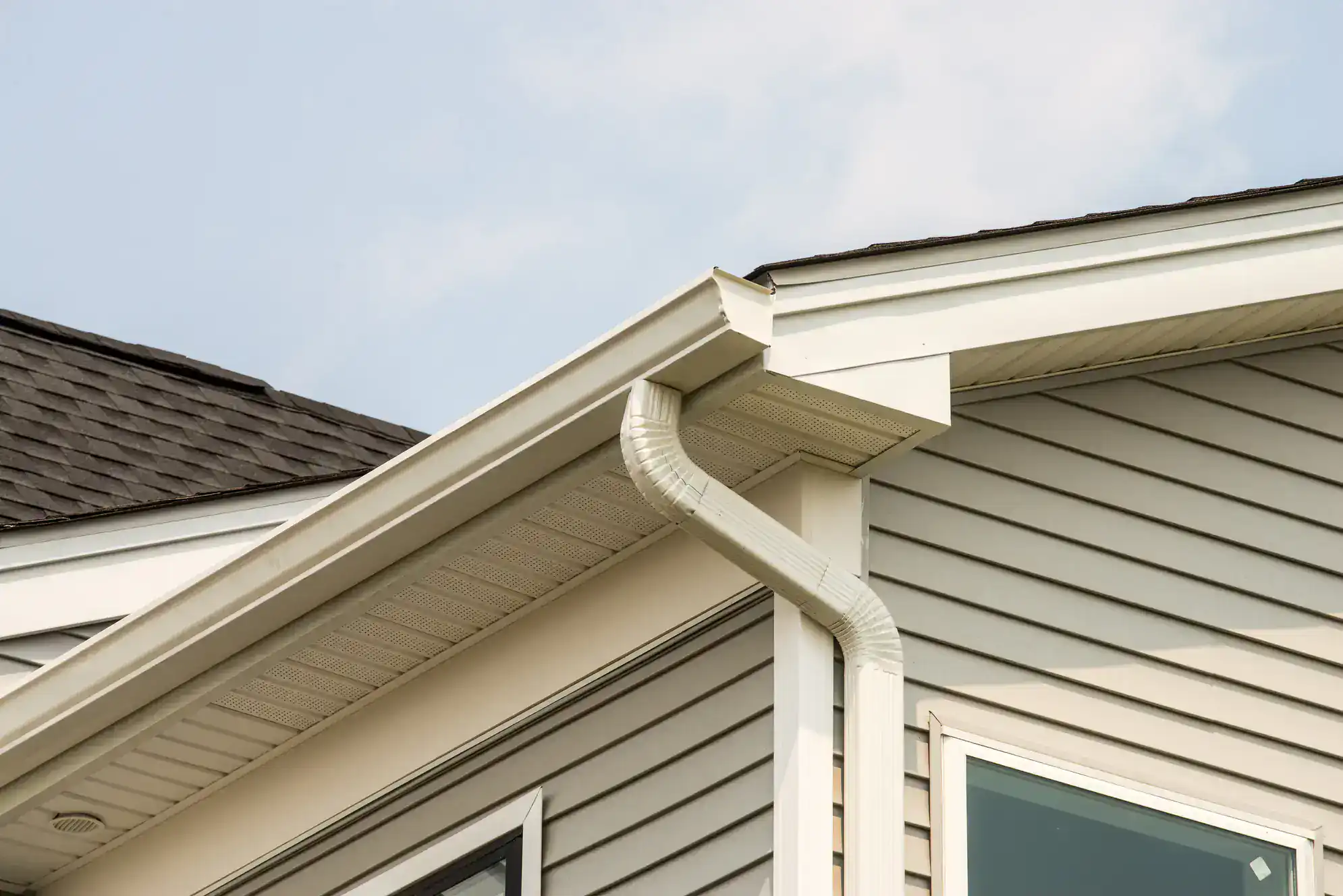
Most builder-installed gutter systems on Liberty Square townhomes are five-inch K-style aluminum — the standard minimum for new construction. For a lot of homes, that’s fine under normal conditions. But Bergen County isn’t always normal. When a storm drops two inches in an hour, a five-inch gutter on a steep-pitch or wide-span roofline can’t move water fast enough to keep up. In those cases, upgrading to six-inch seamless aluminum gutters is the right call — and it’s a recommendation we make based on your actual roof geometry, not a blanket upsell.
Every gutter system we install is fabricated on-site from continuous aluminum stock, cut to your exact roofline. That means no seams along the run — just clean, uninterrupted channels that move water efficiently to properly positioned downspouts. Gutter color is matched to your exterior profile, which matters in a Liberty Square HOA community where exterior consistency is part of the community standard.
The full scope of what we evaluate includes fascia board condition, downspout sizing and placement, slope and pitch across every run, and drainage path away from the foundation. If something is wrong upstream — a roof valley directing high water volume to an undersized section, or a downspout emptying too close to the building — we identify and address that as part of the installation, not discover it later.
Do Liberty Square townhomes need a permit for gutter replacement?
For a straight like-for-like gutter replacement — same size, same configuration, same downspout locations — a building permit is generally not required under New Jersey’s Uniform Construction Code. You’re replacing an existing system, not making structural changes to the building. That applies to most standard gutter jobs in Liberty Square.
Where it gets more nuanced is when the scope changes. If you’re adding new downspout penetrations through siding, changing the gutter sizing significantly, or modifying the drainage configuration, that may cross into permit territory. Wood-Ridge’s Construction Department issues permits Monday through Friday from 9 a.m. to 3 p.m., and inspection scheduling goes through 201-939-5188. We walk through the permit question as part of the estimate process, so you know exactly where your job stands before any work begins.
How do I know if my gutters need full replacement or just a repair?
The honest answer is that it depends on what’s actually failing. A gutter that’s sagging in one section because a bracket worked loose doesn’t need to be replaced — it needs the bracket reset and the slope corrected. A downspout that’s disconnected at the elbow is a fifteen-minute fix. Those are repairs, and we’ll tell you that upfront rather than push a full replacement.
Full replacement makes more sense when the gutter material itself is compromised — sections that have corroded through, end caps that keep failing, or a system that’s been patched so many times that the repairs are creating more joints than the original installation had. For Liberty Square townhomes built in 2016 and 2017, most systems are still structurally sound but may have developed slope issues or bracket problems that a professional inspection will catch. The free inspection exists specifically to answer this question for your home — not in general, but for your actual roofline and your actual gutters.
What gutter size is right for a Bergen County townhome after heavy rain events?
The standard builder install on most Liberty Square townhomes is a five-inch K-style aluminum gutter, which handles average rainfall without issue. The problem shows up during the kind of intense, short-duration storms Bergen County gets in summer — events like the July 2025 flash flood that dropped over two inches on Wood-Ridge in a matter of hours. In those conditions, a five-inch gutter on a steep-pitch roof or a wide roof span can’t move water fast enough, and it overflows before the volume reaches the downspout.
Six-inch seamless gutters are increasingly the professional recommendation for homes in this area, particularly on rooflines with higher water volume. The right answer for your home depends on the actual pitch of your roof, the total square footage draining to each run, and how your downspouts are sized and positioned. That’s what the inspection evaluates — your specific geometry, not a one-size-fits-all recommendation. Upgrading to six-inch gutters where it’s warranted isn’t a premium upsell; it’s the practical response to what Bergen County weather actually does.
Will my Liberty Square HOA need to approve new gutters before installation?
It depends on what’s changing. If you’re replacing your existing gutters with the same color, profile, and configuration, most HOA communities don’t require a formal approval — it’s a maintenance replacement, not an exterior modification. But if you’re changing gutter color, switching profiles, or making any visible change to the exterior appearance, Liberty Square’s HOA — managed by Young and Associates — may require you to submit for architectural review before work begins.
The safe approach is to confirm with the HOA before scheduling installation, especially if you’re considering a color or material change. We handle this regularly in HOA communities and can match your existing gutter profile and color to keep the replacement consistent with community standards. If documentation is needed for an HOA submission, we can provide that as part of the estimate process. The goal is to get the work done correctly without putting you in a position where you’re dealing with a community violation after the fact.
How much does gutter installation typically cost for a townhome in Liberty Square, NJ?
For a full seamless gutter replacement on a typical townhome, you’re generally looking at a range somewhere between $1,800 and $4,500, depending on linear footage, gutter size, downspout count, and whether any fascia work is needed before installation. Bergen County labor rates run higher than the state average, which is worth factoring in when you’re comparing estimates.
What matters more than the number is what’s included. An estimate that doesn’t account for fascia condition, downspout sizing, or drainage path away from the foundation may look cheaper upfront but leave you with problems the new gutters can’t fix. We provide written estimates with clear line items after a free on-site inspection — so you know exactly what you’re paying for and why, before any commitment is made. For Liberty Square homeowners carrying $10,000-plus in annual property taxes, the last thing you need is a gutter job that creates a bigger problem six months later.
Can storm damage to my gutters be covered by homeowner's insurance in New Jersey?
Yes, in many cases it can — but most homeowners either don’t know to file a claim or don’t document the damage in a way that holds up with an adjuster. In New Jersey, homeowner’s insurance policies typically cover sudden and accidental damage from wind, hail, falling branches, and storm events. Bergen County sees its share of all of those, and Liberty Square’s street trees mean falling branch damage is a real and recurring scenario, not a hypothetical.
The process matters as much as the coverage. You need clear documentation of the damage, a professional assessment of what caused it, and someone who can communicate that clearly to your insurance adjuster. We handle storm damage claims as part of the job — documenting the damage, working directly with your adjuster, and helping you understand what your policy actually covers. If the damage qualifies, that process can significantly offset or eliminate your out-of-pocket cost for replacement. It’s worth asking the question before you assume you’re paying for everything yourself.
Other Services we provide in Liberty Square