
Roofer in Crane Square, NJ
Flat Roofs, Old Buildings, Real Answers
Hear from Our Customers
Local Roofing Company Crane Square NJ
A roof that’s been patched and re-patched on a 70-year-old apartment building in Crane Square isn’t just inconvenient — it’s a liability. When tenants are calling about water coming through the ceiling, you’re not just dealing with a roofing problem. You’re dealing with a habitability issue, a potential insurance claim, and a repair bill that grows every week you wait.
Getting it handled properly means the leaks stop, the tenants stop calling, and the building is actually protected going into nor’easter season. For flat roofs — which make up most of the roofing stock in Crane Square — that means a properly installed membrane, working drains, and sealed seams that don’t fail the first time it rains sideways off Newark Bay. That’s basic asset protection on a property worth $400,000 or more.
And for property owners managing buildings in Crane Square that were constructed before 1970, the difference between a real inspection and a quick glance from the ground is enormous. A thorough assessment tells you what you’re actually dealing with — multiple roofing layers, compromised flashing, deteriorated underlayment — before those issues turn into emergency calls at 2 AM in January.
Roofing Company in Elizabeth, NJ
We’ve been working in Elizabeth for over ten years, with deep roots in Crane Square and the surrounding North End neighborhoods. Our office is here, our crews work here, and we pull permits through Elizabeth’s Bureau of Construction on a regular basis. When a job comes up in Crane Square — whether it’s near Kellogg Park, off Route 1 and 9, or a few blocks from Elizabeth High School — this isn’t unfamiliar territory.
We’re family-owned, licensed under NJ HIC #13VH10605800, and certified by major shingle manufacturers — which matters because those certifications unlock warranty coverage that most contractors simply can’t offer. Every estimate is free, every inspection comes with a photo report, and the price you see before work starts is the price on the invoice.
If you speak Spanish, that’s not a problem. A significant portion of Crane Square’s community is more comfortable in Spanish, and we communicate in both languages without making it a bigger deal than it needs to be.
Emergency Roof Repair Crane Square NJ
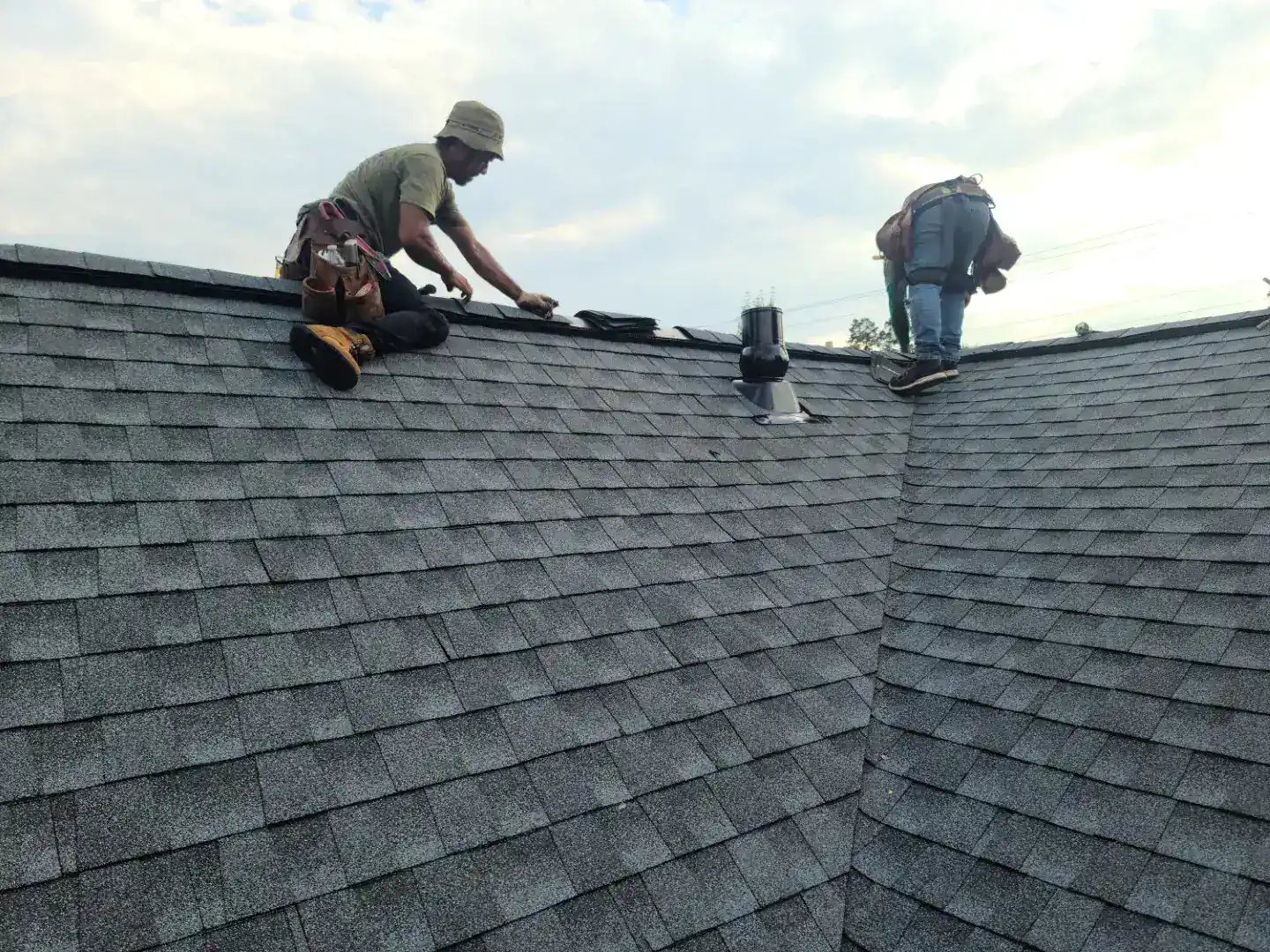
It starts with a free inspection. One of our crew members comes out, gets on the roof, and actually looks at what’s there — not just the surface, but the drainage, the flashing, the underlayment condition, and the state of the membrane if it’s a flat system. You get a photo report of everything found, in writing, before any conversation about cost happens.
From there, you receive a detailed estimate with a clear scope of work and a fixed price. Nothing changes mid-project without your approval. If the job requires a permit through the City of Elizabeth’s Bureau of Construction — which full replacements typically do under New Jersey’s Uniform Construction Code — we handle that on our end. You don’t have to figure out the permitting process yourself.
Once work begins, the timeline is realistic and communicated upfront. Crane Square’s older building stock sometimes surfaces surprises — extra roofing layers, original flashings that have never been touched — and when that happens, you hear about it immediately, not after the fact. The job isn’t done until the site is cleaned up and the work has been inspected. If something comes up after, you have a local company with a real address to call, not an out-of-state number that goes to voicemail.
Ready to get started?
Affordable Roofers Crane Square NJ
The roofing needs in Crane Square aren’t the same as what you’d find in a newer suburban development. Most of the buildings here were constructed between the 1940s and 1960s, and a meaningful number predate World War II. That means flat and low-slope roofing systems are common — TPO, EPDM, and built-up roofing — alongside traditional pitched shingle work on smaller multi-family homes. We handle all of it.
For flat roofs, our work includes full membrane installation and replacement, seam repair, drain clearing and repositioning, and flashing replacement around penetrations and parapet walls. These are the failure points that cause the most damage in Elizabeth’s coastal wind environment, especially during nor’easters that push rain horizontally off Newark Bay. For pitched roofing on two and three-family homes in Crane Square, the scope covers full tear-off and replacement, shingle installation with manufacturer-backed system warranties, ventilation assessment, and ice and water shield installation at the eaves — which matters in a neighborhood where freeze-thaw cycles hit hard every winter.
We also offer gutters and siding, and for older buildings where water has already worked its way into the wall assembly, addressing those systems in the same project visit saves time and prevents the kind of damage that compounds quietly behind the exterior.
Do I need a permit to replace the roof on my Crane Square rental property?
Yes, in most cases. Full roof replacements in Crane Square fall under the jurisdiction of the City of Elizabeth’s Bureau of Construction, which enforces New Jersey’s Uniform Construction Code. A permit is required for complete tear-offs and replacements — not typically for minor repairs, but anything involving a full system change needs to go through the city’s permitting process before work begins.
This matters more than people realize. Work done without a permit can create complications when you sell the property, may not pass a bank or insurance inspection, and can expose you to fines from the city. It also affects your liability if a worker is injured on-site. We handle the Elizabeth permitting process regularly and take care of it as part of the project — you don’t have to navigate the Bureau of Construction on your own.
How do I know if my flat roof needs repair or a full replacement?
The honest answer is that you usually can’t tell from the ground, and a lot of property owners in Crane Square find out the hard way — after water has already gotten into the building. A flat roof that looks intact from street level can have failing seams, cracked membrane, clogged drains, or ponding water issues that only show up on close inspection.
The clearest indicators that you’re past repair territory are multiple patches that keep failing, visible membrane shrinkage or bubbling, standing water that doesn’t drain within 48 hours after rain, and interior water stains that keep coming back in the same spots. On buildings from the 1940s and 1950s in Crane Square — which make up a large portion of the neighborhood’s housing stock — there are often two or three layers of roofing material already installed. At that point, another patch isn’t a solution. A free inspection with a photo report gives you an honest picture of where things actually stand before you spend money on a repair that won’t hold.
What type of flat roofing material is best for apartment buildings in Elizabeth, NJ?
TPO and EPDM are the two most common options for flat and low-slope roofs on multi-unit buildings, and each has real advantages depending on the building’s situation. TPO — a single-ply white membrane — reflects heat well, which helps in Elizabeth’s urban environment where rooftops absorb significant heat during summer months. It’s also weld-seamed, which creates strong, watertight joints when installed correctly. EPDM is a rubber membrane that’s been used reliably for decades and holds up well through the freeze-thaw cycles that hit Elizabeth hard every winter.
The right choice depends on the existing roof condition, the drainage setup, the building’s age, and what’s already been installed. A building that’s had EPDM for 25 years and is in reasonable structural shape might be a good candidate for a new EPDM system. A building with significant heat exposure and drainage issues might benefit more from TPO. This is exactly the kind of conversation that happens during a free inspection — you get a real recommendation based on your specific building, not a one-size answer.
How much does a roof replacement typically cost in Crane Square, NJ?
Roofing costs in Crane Square vary based on the type of system, the size of the roof, the number of existing layers that need to come off, and the condition of the decking underneath. For a standard asphalt shingle replacement on a smaller two or three-family home, you’re generally looking at a range that reflects both material costs and the labor involved in a full tear-off. Flat roofing on a larger apartment building carries different pricing based on square footage, membrane type, and drainage work required.
What matters most in this market is that the number you see in the estimate is the number you pay. Mid-project price changes are one of the most common complaints about contractors in Elizabeth, and it’s something we don’t do. The estimate is itemized, the scope is clear, and nothing gets added to the invoice without a conversation first. If you want a real number for your specific property, a free inspection is the fastest way to get there — no obligation, just an honest look at what the job actually involves.
What happens to my roof during a nor'easter, and how do I know if there's damage?
Nor’easters are a genuine problem for roofs in Crane Square, and not just because of the wind. The combination of sustained gusts — sometimes 50 to 70 mph — and horizontal rain driven off Newark Bay creates conditions that expose every weak point in a roofing system. Shingles lift at the edges, flashing pulls away from walls and chimneys, and flat roof seams that were already under stress can open up entirely. The damage isn’t always visible from the ground immediately after the storm.
Common post-storm indicators include missing or curling shingles, granules collecting in the gutters, water stains appearing on interior ceilings in the days after the storm, and visible flashing separation around vents or parapet walls. On flat roofs, ponding water that wasn’t there before the storm can signal a drain blockage or membrane shift. If a nor’easter has come through and you’re not sure what happened to your roof, a post-storm inspection is the right move — it documents the condition of the roof, which is also useful if you’re filing an insurance claim for storm damage.
Does USA Home Remodeling offer services in Spanish for Crane Square residents?
Yes. A large share of property owners and residents in Crane Square are more comfortable communicating in Spanish — with nearly 60% of the neighborhood’s residents born outside the United States, and a strong South American, Dominican, and Brazilian community throughout the North End of Elizabeth. Going through a roofing estimate, reviewing a contract, or asking questions about materials and timelines is a lot easier when you’re doing it in the language you think in.
We offer bilingual service in Spanish throughout the entire process — from the first call through the inspection, the estimate, and the job itself. This isn’t a workaround or a translation service patched in after the fact. It’s part of how we work in this community. If you’d prefer to communicate in Spanish at any point, that’s completely fine, and nothing gets lost in translation when it comes to the details that actually matter — scope, price, timeline, and warranty.
Other Services we provide in Crane Square