
Roof Repair in Scotch Plains, NJ
Scotch Plains Roofs Take a Beating — Here's What Actually Fixes Them

Hear from Our Customers
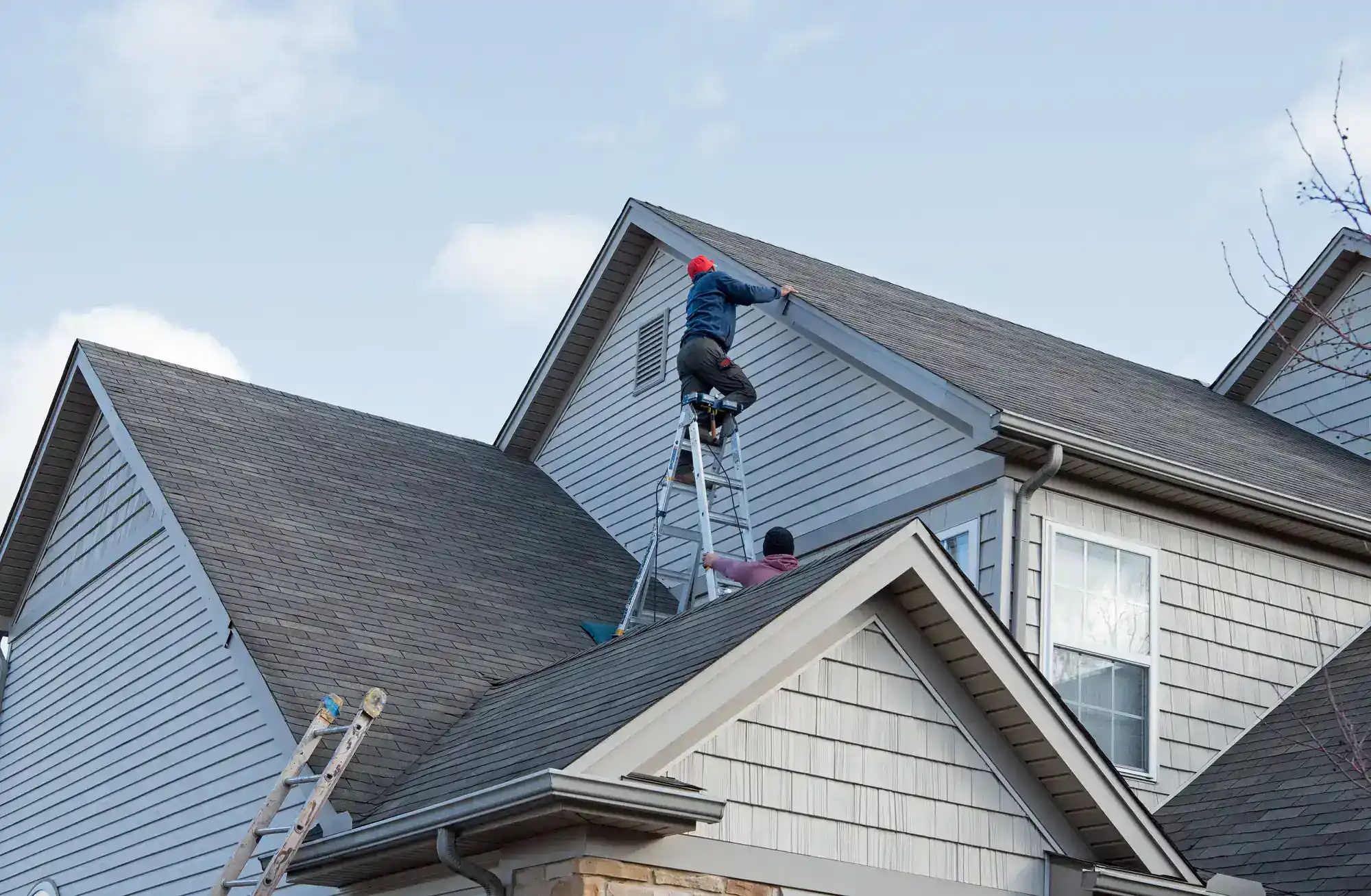
Roof Leak Repair in Scotch Plains, NJ
A small leak after a storm feels manageable — until it isn’t. What starts as a water stain on the ceiling can quietly work its way into your insulation, your drywall, and eventually your roof deck. By the time it’s visible inside, the damage outside has usually been building for months. A $400 flashing repair left alone long enough becomes a $5,000 structural project.
In Scotch Plains, this pattern shows up more than most homeowners expect. The mid-century colonials and split-levels throughout the township — many with original or once-replaced roofs now pushing 25 to 30 years — are at the age where small vulnerabilities start to compound. Add in the mature tree canopy that blankets neighborhoods near the Watchung Reservation, and you’ve got consistent moisture exposure, debris buildup in valleys, and shaded areas where algae quietly eats through shingle granules year after year.
Getting a professional set of eyes on the problem early is the single most cost-effective thing you can do. A free inspection from us tells you exactly what’s going on — no obligation, no inflated scope, no guesswork. You get a clear answer and a written estimate before anything is touched.
Roofing Contractor in Scotch Plains, NJ
We’re a family-operated exterior renovation company that has been working in Scotch Plains and the surrounding Union County market for over ten years. Roofing is the core of what we do — repair, replacement, inspection — with gutters and siding rounding out the work that typically goes hand-in-hand when storm damage or age catches up with a home’s exterior.
We hold contractor licenses, carry full liability insurance and workers’ compensation coverage, and are certified by major shingle manufacturers — which means the repairs we do qualify for manufacturer-backed warranty coverage, not just a handshake from the crew that showed up. That distinction matters when you’re protecting a home in Scotch Plains where median values push well past $700,000.
Scotch Plains homeowners have high standards, and they should. You chose this township for a reason — the schools, the neighborhood, the investment. We treat the work accordingly.

Roof Repair Estimate in Scotch Plains, NJ
It starts with a free inspection. We come out, get on the roof, and look at what’s actually happening — not just what’s visible from the driveway. Flashing around chimneys, sealant around vent pipes, the condition of valleys and ridge caps, any signs of ice dam damage along the eaves. We document everything and give you a straight assessment of what needs attention and what can wait.
From there, you get a written estimate that spells out the scope, the materials, and the total cost. If the scope doesn’t change, the price doesn’t change. That’s not a policy we advertise — it’s just how we operate. For homeowners dealing with storm damage, we can also walk you through what your insurance claim should cover and how to document the damage in a format adjusters actually work with.
One thing worth knowing for Scotch Plains specifically: roof work on existing structures can require a construction permit under the New Jersey Uniform Construction Code, administered through the Scotch Plains Building Department. We’re familiar with those requirements and factor them into the process from the start — so there are no delays or surprises once work begins.
Ready to get started?
Shingle and Flat Roof Repair in Scotch Plains, NJ
The majority of homes in Scotch Plains have pitched asphalt shingle roofs — and that’s where most of the repair work lives. Wind-lifted tabs, cracked or missing shingles, deteriorating flashing around chimneys and skylights, granule loss from aging or hail impact — these are the issues that show up repeatedly on the colonials, Tudors, and split-levels that define this market. When we replace shingles, we source materials that match your existing roof’s color profile and texture as closely as possible, because a patch that looks like a patch is a job half done.
Many Scotch Plains homes also have flat or low-slope sections — a rear addition, a detached garage, a covered porch — and these require a completely different approach than shingle work. TPO membrane patching, EPDM lap sealing, modified bitumen repairs — these aren’t skills every general roofer brings to the table. We handle both systems, so you’re not tracking down a second contractor for the garage roof while we’re already on site.
Emergency roof repair in Scotch Plains, NJ is also part of what we do. When a storm rolls through and you’ve got an active leak, the first priority is stopping the water — tarping, emergency patching, whatever it takes to protect the interior while permanent repairs are planned. Union County has seen its share of severe weather, including the kind of storm damage that put the county on a federal disaster declaration after Tropical Storm Ida. When that happens, you need someone who can respond, not a voicemail.
How do I know if my Scotch Plains roof needs repair or full replacement?
This is the question most homeowners get wrong — usually because they assume the worst before anyone’s actually looked at the roof. The honest answer is that a meaningful percentage of roofing service calls in this market can be resolved through targeted repair rather than full replacement. The determining factors are the age of the roof, the extent and location of the damage, and the condition of the underlying deck.
For the mid-century colonials and split-levels that make up most of Scotch Plains’ housing stock, a roof that’s 15 to 20 years old with localized damage — a few failed flashing seals, some wind-lifted shingles, a compromised valley — is often a strong repair candidate. A roof that’s 28 years old with widespread granule loss, multiple leak points, and soft spots in the deck is a different conversation. The only way to know for certain is a proper inspection, which is why we offer them at no charge. You’ll get a clear recommendation based on what’s actually there — not a pitch for the most expensive option.
What does a roof repair typically cost, and what affects the price?
Repair costs vary significantly depending on what’s wrong, where it is, and how long it’s been going. A minor flashing repair or a small shingle patch might run $300 to $600. Replacing a deteriorated valley, resealing multiple penetrations, or repairing ice dam damage along the eaves of a larger colonial can push into the $1,500 to $3,000 range. More extensive repairs involving deck replacement or structural work will cost more.
What drives cost in Scotch Plains specifically is often the age and style of the home. Steeper colonial rooflines, complex geometry with multiple valleys and dormers, and older chimneys with deteriorating mortar all add time and material to the job. The best way to get an accurate number is a written estimate after a proper inspection — which we provide at no cost. You’ll know exactly what you’re looking at before you decide anything.
Does roof repair in Scotch Plains, NJ require a permit?
It depends on the scope of the work. Minor repairs — patching a few shingles, resealing flashing — typically don’t trigger a permit requirement. But more substantial work, particularly anything involving structural elements or a significant portion of the roof surface, can require a construction permit under the New Jersey Uniform Construction Code. The Scotch Plains Building Department administers these permits locally, and the fee structure includes both a local ordinance component and a state DCA fee based on the dollar value of the work.
This matters for a few reasons beyond just compliance. Work done without a required permit can complicate a home sale, create problems with an insurance claim, and potentially create liability if something goes wrong down the line. We’re familiar with what triggers permit requirements in Scotch Plains and factor that into our process from the start. If a permit is needed, we handle it — you don’t have to navigate the Building Department on your own.
My ceiling has a water stain but I don't see any obvious damage outside — what's going on?
Interior water stains are one of the most misleading things a homeowner can deal with, because the entry point on the roof is almost never directly above where the stain appears. Water travels along rafters, sheathing, and insulation before it finds a place to drip — which means a stain in the middle of a bedroom ceiling could be coming from a failed flashing seal near the chimney, a cracked pipe boot around a vent stack, or a compromised area in a valley that’s been slowly saturating the underlayment for months.
In Scotch Plains, the most common culprits on aging homes are chimney flashing — especially on older brick chimneys where the mortar has deteriorated — and ice dam damage along the eaves after a hard winter. The freeze-thaw cycle here is aggressive enough that even a roof in decent overall condition can develop ice-related entry points that don’t show up until spring. A proper inspection traces the moisture path from the inside out and identifies the actual source, not just the symptom.
Will my homeowners insurance cover roof repair after storm damage in Scotch Plains?
Potentially, yes — but the answer depends on how the damage is categorized. Homeowners insurance generally covers sudden, accidental damage caused by a covered peril: wind, hail, falling branches, that kind of thing. What it typically does not cover is damage attributed to wear and tear, age, or deferred maintenance. The challenge is that insurance adjusters sometimes categorize storm damage as pre-existing deterioration, which can result in a denied or underpaid claim.
Union County has documented storm exposure — including hail events, high-wind thunderstorms, and the kind of widespread damage that followed Tropical Storm Ida’s remnants through the region. If you’ve had a significant weather event come through Scotch Plains and you’re seeing damage afterward, it’s worth having the roof assessed by a contractor before you call your insurer — or at minimum, before you accept an adjuster’s initial assessment. We can document damage in a format that holds up through the claims process and help you understand what should reasonably be covered.
How long does a roof repair take, and when is the best time to schedule in Scotch Plains?
Most residential roof repairs in Scotch Plains are completed in a single day — sometimes in a few hours, depending on the scope. A straightforward flashing repair or shingle replacement is typically a half-day job. More involved work, like repairing ice dam damage across a significant portion of the eaves or addressing multiple problem areas on a larger colonial roofline, may run a full day or require a follow-up visit if materials need to be ordered for a specific match.
Timing matters more than most homeowners realize in this market. Late summer through early fall — roughly August through October — is the ideal window for getting ahead of winter before the freeze-thaw cycle starts working on any existing vulnerabilities. That’s also when contractors tend to book up fastest, so earlier is better if you’re planning preventive work. Spring is the busiest season for repairs, because that’s when the damage from nor’easters and ice accumulation becomes visible. Emergency repairs can be scheduled as needed regardless of season — if you have an active leak, that’s not a “wait for the right time of year” situation.
Other Services we provide in Scotch Plains