
Roof Repair in Linden, NJ
Linden Roofs Don't Get Second Chances After a Nor'easter
Hear from Our Customers
Roof Leak Repair in Linden, NJ
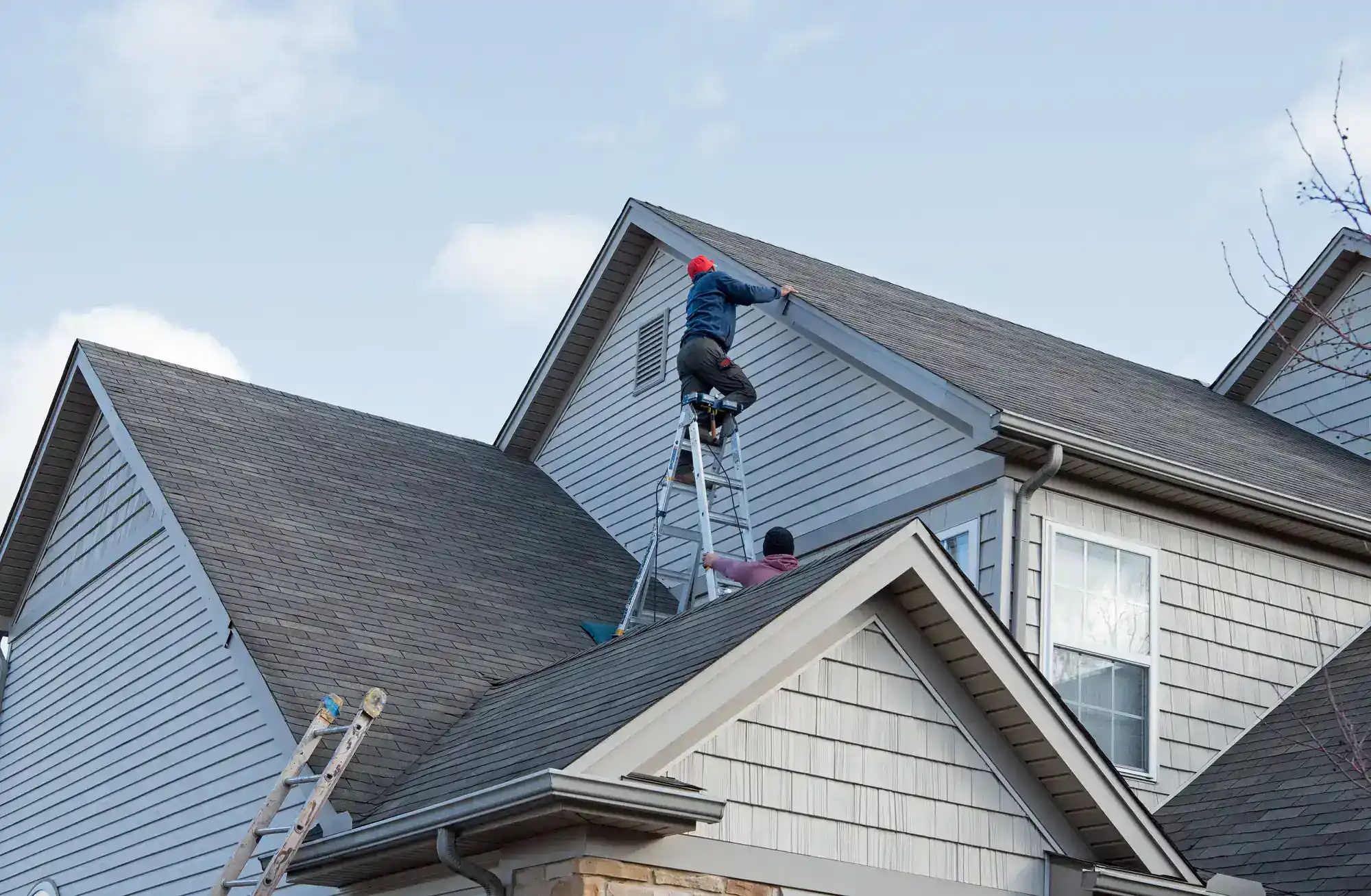
A small leak doesn’t stay small. What starts as a water stain on the ceiling becomes saturated insulation, rotted decking, and eventually a repair that costs three times what it would have a season ago. The faster you act, the less you’re dealing with — and the less you’re spending.
Linden’s housing stock makes this especially real. Most homes here were built in the 1940s through 1960s, which means a significant portion of the city is working with roofs that are at or past the end of their service life. When a nor’easter rolls through the Route 1/9 corridor — and they do, every single winter — those aging systems take the hit first. Wind-driven rain finds every weak point: worn flashing around chimneys, cracked sealant at pipe boots, shingles that have been losing granules for two seasons now.
Then there’s the moisture factor that’s specific to this part of Union County. Homes on the eastern side of Linden, particularly near the Arthur Kill waterfront, deal with elevated humidity and salt air that inland towns simply don’t see. That environment accelerates shingle deterioration faster than most homeowners realize. Getting ahead of it with a proper repair — not a patch-and-pray approach — is what keeps a fixable problem from becoming a full replacement conversation.
Certified Roof Repair Contractor in Linden, NJ
We’ve been working on roofs across Linden and Union County for over a decade. Not as a franchise. Not as a call center that dispatches whoever’s available. As a family-operated company where the people you talk to are the people who show up.
That matters in a city like Linden. This isn’t a market where you can disappear after a job and expect to stay in business. Word travels. Neighbors talk. The homeowner on your block who had a bad experience with a contractor will tell five people before the week is out. We’ve built this business on repeat calls and referrals — and that only happens when the work holds up and the communication is straight.
We hold manufacturer certifications from major shingle brands, carry full liability insurance and workers’ compensation, and are registered as a New Jersey Home Improvement Contractor. You can verify every one of those credentials before you sign anything. That’s not a sales pitch — that’s just how a legitimate roofing contractor operates in this state.
Roof Repair Estimate in Linden, NJ
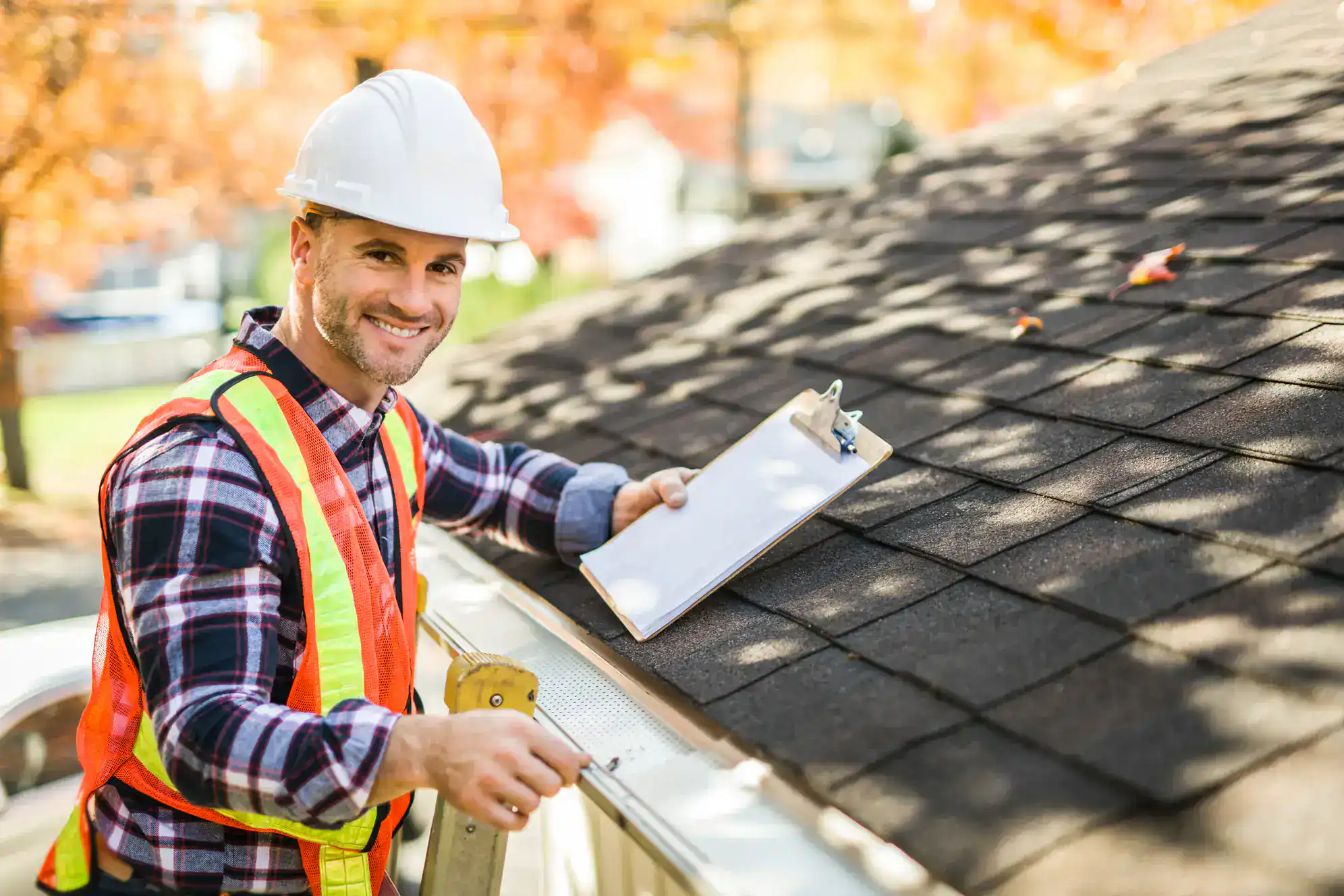
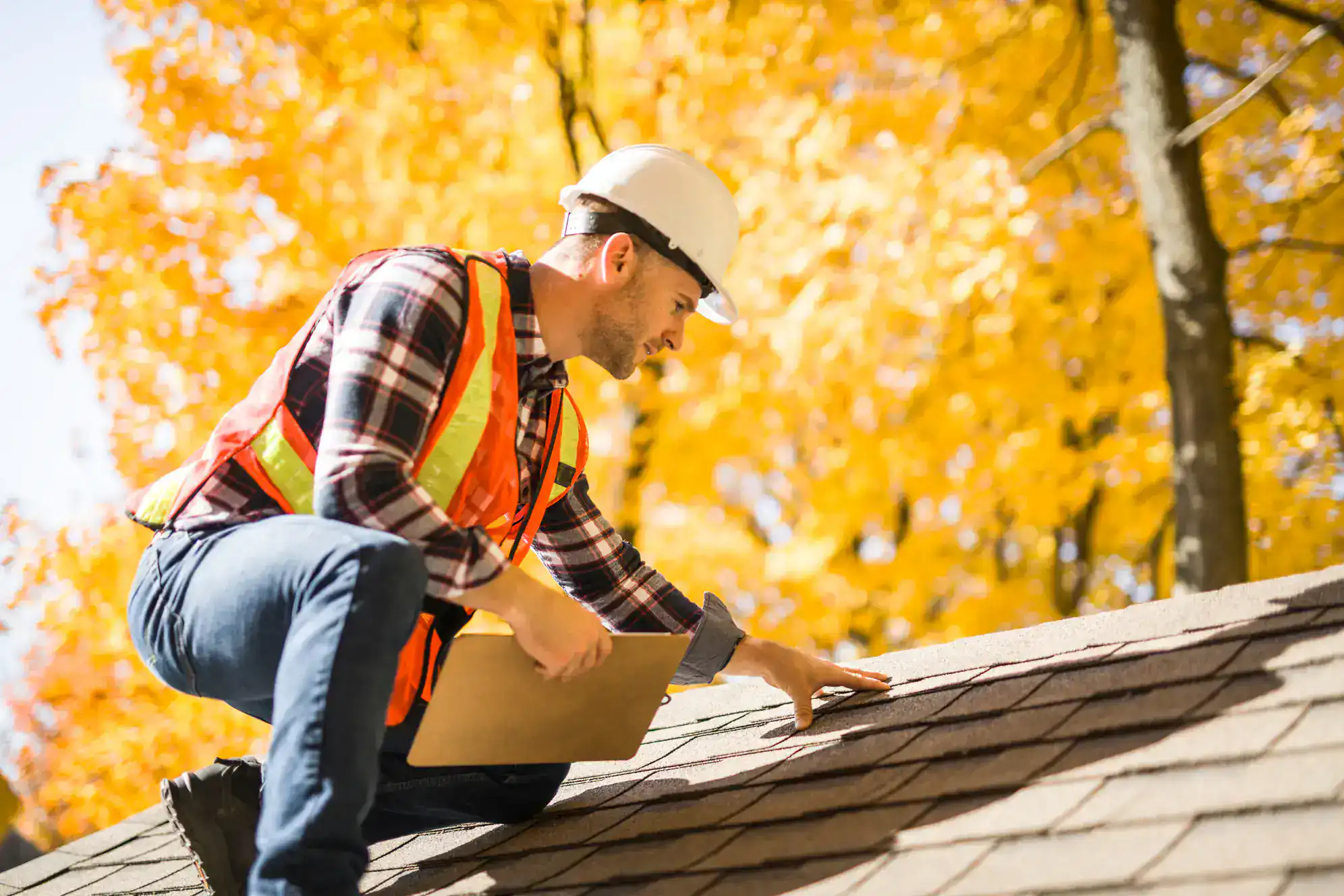
It starts with a free roof inspection. We come out, get on the roof, and give you an honest assessment of what’s actually going on up there. Not what generates the biggest invoice — what your roof actually needs. If it’s a repair, we’ll tell you. If it’s heading toward replacement, we’ll tell you that too, and explain why so you can make an informed decision on your own timeline.
Once we’ve assessed the damage, you get a written, itemized estimate before any work begins. The scope is clear. The materials are specified. The price is the price. In Linden’s market, where a lot of homeowners have been burned by estimates that ballooned after the job started, that kind of transparency isn’t standard — but it should be.
For storm damage situations, we also help you document the damage properly for your homeowners insurance claim. New Jersey’s insurance process has specific documentation requirements, and having a contractor who understands that process — and can communicate clearly with your adjuster — makes a real difference in what you recover. After the repair is complete, we do a thorough cleanup, run a magnetic nail sweep, and walk the property before we leave. The job isn’t done until your property is clean.
Ready to get started?
Shingle and Flat Roof Repair in Linden, NJ
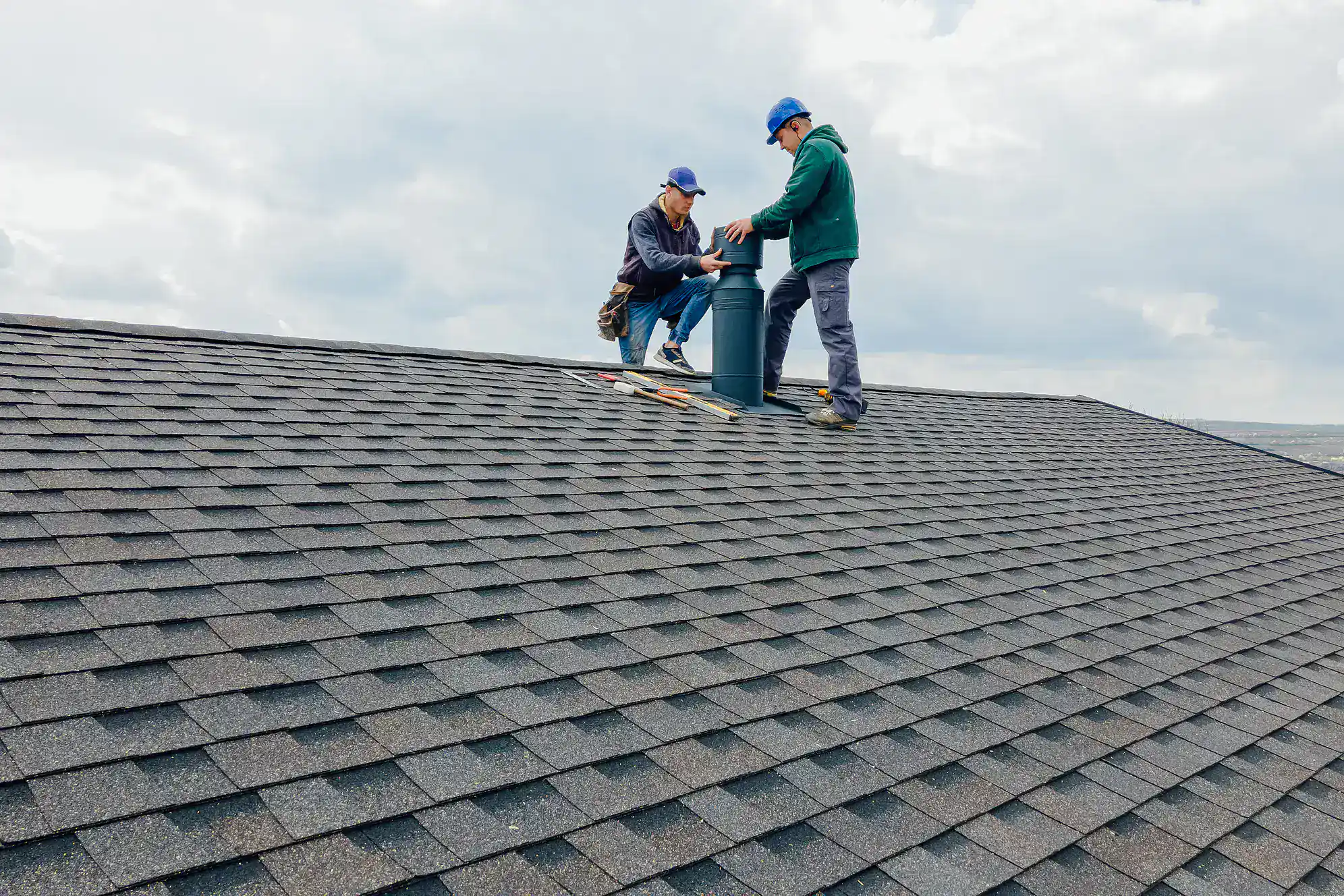
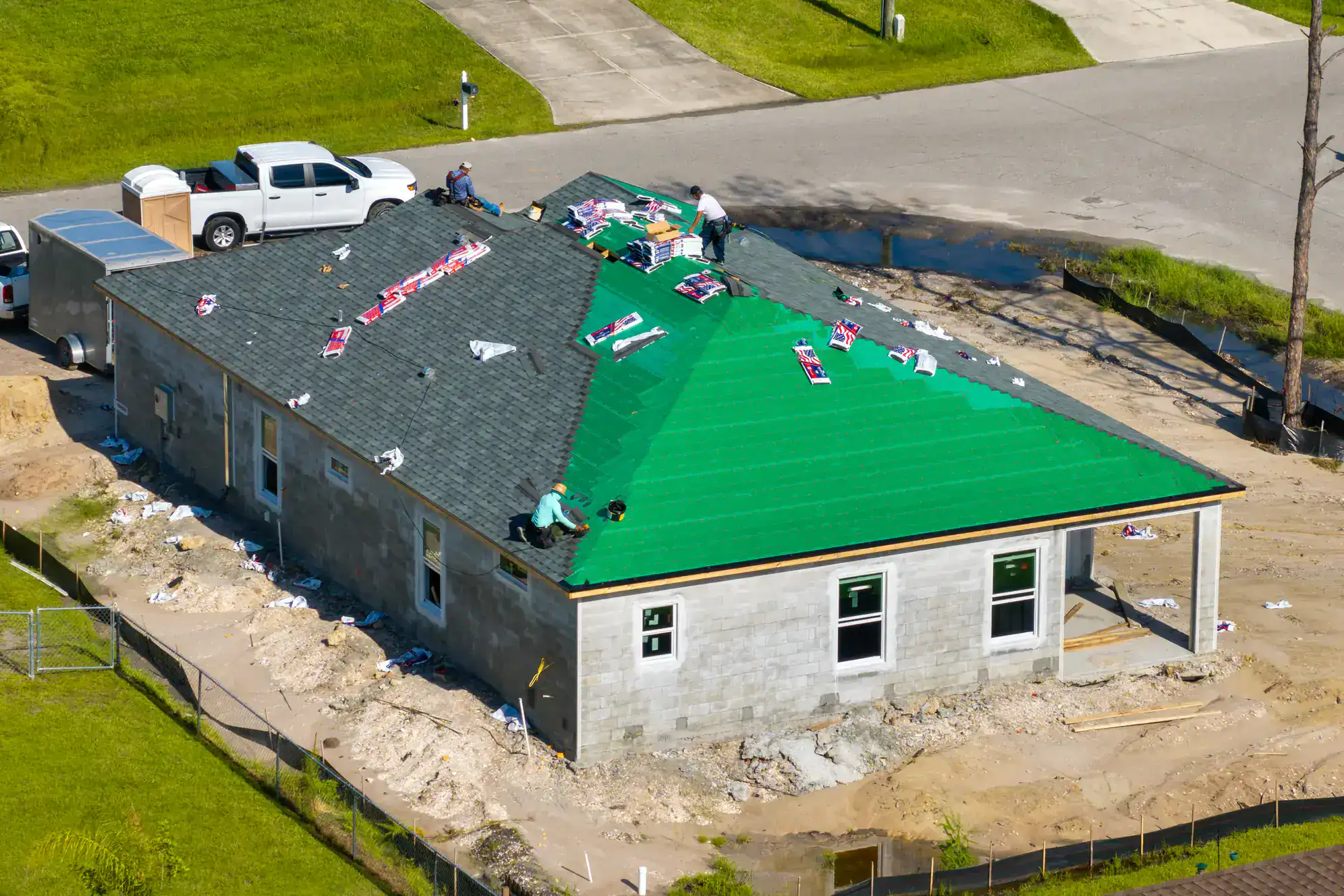
The most common call we get in Linden is shingle roof repair — missing shingles after a wind event, granule loss on aging asphalt, failed flashing around a chimney or skylight, or a valley that’s letting water through. Linden’s post-WWII residential blocks are overwhelmingly asphalt shingle, and that’s where the bulk of the repair work lives. When we replace shingles, we source material that matches your existing roof in color, profile, and texture — because in a neighborhood where your roof is visible from the street and your neighbors can see it from their front steps, a patch that looks like a patch isn’t an acceptable finish.
Emergency roof repair is a separate category entirely. When a nor’easter or summer storm leaves you with active water intrusion, we respond quickly, deploy temporary protective measures to stop the damage cycle, and get a permanent repair scheduled as fast as conditions allow. Waiting isn’t an option when water is moving through your decking.
We also handle flat roof repair for Linden’s commercial properties, mixed-use buildings along Wood Avenue, and residential garages and additions with low-slope systems. TPO, EPDM, and modified bitumen each require a different diagnostic and repair approach — and applying shingle logic to a flat membrane will make the problem worse, not better. If you have a flat roof that’s leaking, you want someone who actually knows the difference.
How do I know if my Linden home needs roof repair or full replacement?
This is the most common question we hear, and it’s the right one to ask before spending money on either. The honest answer is that it depends on the age of the roof, the extent of the damage, and whether the underlying decking has been compromised. A roof that’s 10-15 years old with isolated shingle damage or a flashing failure is almost always a strong repair candidate. A roof that’s 25-30 years old with widespread granule loss, multiple leak points, and soft spots in the decking is likely telling you it’s done.
In Linden specifically, a lot of homes are sitting on roofs that were replaced in the late 1990s or early 2000s — which puts them squarely in the repair-or-replace decision zone right now. The free inspection we provide is designed to give you a clear, honest answer to that question without any financial pressure. You’ll know exactly what you’re dealing with before you decide anything.
What causes most roof leaks in Linden, NJ homes, and where do they start?
In Linden’s housing stock, the most common leak sources aren’t the shingles themselves — they’re the transition points. Flashing around chimneys, skylights, and dormer walls. Sealant around pipe boots and roof vents. The valleys where two roof planes meet. These are the areas that take the most stress from wind-driven rain, thermal expansion, and age, and they’re the first places to fail on a roof that’s been in service for 15 or more years.
The waterfront environment on Linden’s eastern side adds another layer. Salt air and elevated humidity from the Arthur Kill accelerate the breakdown of sealants and metal flashing faster than you’d see on a comparable home further inland in Union County. If you’re in that part of the city and your roof is more than 15 years old, those transition points deserve a close look even if you haven’t seen a leak yet.
Does roof repair in Linden, NJ require a permit, and who handles that?
Minor roof repairs — patching a small section, replacing a few shingles, resealing flashing — generally don’t require a permit in Linden under New Jersey’s Uniform Construction Code. However, if the scope of work involves structural elements, significant decking replacement, or a large portion of the roof surface, a permit from Linden’s Construction Department is typically required. The threshold isn’t always obvious from the outside, which is one reason it’s worth working with a contractor who knows how to assess scope accurately.
What every roofing job in New Jersey does require is a licensed contractor. Any company performing home improvement work in this state must hold a current New Jersey Home Improvement Contractor registration issued by the NJ Division of Consumer Affairs. That registration number should be visible on any contract you sign. If a contractor can’t produce it, that’s a hard stop — not a minor detail.
My roof was damaged in a storm — how does the insurance claim process work in New Jersey?
Filing a storm damage claim in New Jersey is more involved than most homeowners expect the first time through. Your insurer will send an adjuster to assess the damage, but adjusters and roofing contractors don’t always agree on the scope — and the initial assessment isn’t always the final word. Documenting the damage thoroughly before any temporary repairs are made is critical, because once materials are disturbed, it’s harder to demonstrate the original condition.
We help Linden homeowners through this process by photographing and documenting damage in the format insurers expect, clearly identifying storm-related damage versus pre-existing wear, and communicating with adjusters when needed. One important note: under New Jersey law, contractors cannot legally offer to waive your insurance deductible as an incentive to hire them. If someone is making that offer, walk away — it’s a red flag, not a deal.
How much does roof repair typically cost in Linden, NJ?
Roof repair costs in Linden generally fall into a few ranges depending on what’s actually wrong. Minor repairs — a small shingle section, a resealed pipe boot, basic flashing work — typically run between $300 and $800. Moderate repairs involving a larger shingle area, valley repair, or chimney flashing replacement usually land between $800 and $2,500. More significant work, like partial re-roofing or decking repair alongside shingle replacement, can run from $2,500 to $7,000 depending on the extent of the damage.
Those ranges reflect real Union County market rates, not a lowball number designed to get you to call and then expand once we’re on your roof. The written estimate you receive before any work begins is the number we stand behind. If the scope doesn’t change — and it won’t without your approval — the price doesn’t either. That’s the standard we hold ourselves to, and it’s reflected in what our customers say about us.
How do I find a legitimate, licensed roofing contractor in Linden versus a storm chaser?
After any significant nor’easter or hail event in the Linden area, out-of-state contractors work the Route 1/9 corridor knocking on doors and offering quick fixes. Some of them do decent work. A lot of them don’t, and once they’ve moved on to the next storm market, you have no recourse if something fails. The difference between a legitimate local contractor and a storm chaser usually comes down to a few verifiable things.
First, check the New Jersey Home Improvement Contractor registration through the NJ Division of Consumer Affairs — it’s a public database and takes two minutes. Second, look at the review history: not just the star rating, but how long the reviews go back and whether the company has been consistently active in Linden and the surrounding area. Third, ask for proof of liability insurance and workers’ compensation before signing anything. A contractor who hesitates on any of those three things is telling you something. A contractor who hands them over without being asked is telling you something better.