
Roof Replacement in Lyndhurst, NJ
When Your Lyndhurst Home Has Carried That Roof Long Enough
Hear from Our Customers
Residential Roof Replacement in Bergen County
A roof replacement done correctly means you stop managing the problem and start forgetting it exists. No more watching the ceiling after a storm. No more wondering if that dark spot in the corner is getting worse. You get a roof that does its job quietly, the way it should — and you move on.
For Lyndhurst homeowners specifically, that peace of mind carries extra weight. The Meadowlands sit right to the west, and that open, flat terrain gives nor’easters and summer thunderstorms a clear runway straight into your neighborhood. There is no natural windbreak between those weather systems and the west-facing slopes of homes in Lyndhurst West or along the Route 17 corridor. A properly installed roof — with the right underlayment, correct flashing, and adequate ice and water shield at the eaves — handles that exposure the way a marginal one never will.
The Passaic River runs along Lyndhurst’s eastern edge, and homes in the Riverwatch area deal with elevated moisture in the air year-round. That accelerates granule loss on shingles and breaks down underlayment faster than the manufacturer’s stated lifespan assumes. When your roof is replaced with materials and installation standards matched to those actual conditions — not just the average NJ climate — it lasts longer and performs better. That is the difference between a replacement that buys you 15 years and one that earns you 30.
GAF Certified Roofer Serving Lyndhurst, NJ
We have been doing exterior work across Bergen County for over 17 years, with deep roots in Lyndhurst and the surrounding communities. That is long enough to know what freeze-thaw cycling does to a 1962 Cape Cod in Kingsland, what wind-driven rain does to flashing on a colonial near Schuyler Avenue, and what happens when a homeowner gets talked into a lay-over instead of a proper tear-off. We have seen the results of shortcuts — and we do not take them.
As a GAF certified roofing contractor, the warranty we offer is not just a piece of paper. GAF certification is publicly verifiable, independently maintained, and the only path to enhanced warranty tiers that cover both materials and the installation itself. Non-certified contractors cannot offer that, regardless of how long they have been in business.
This is a family-operated company. The same people who give you the estimate are accountable for the finished roof. In a community like Lyndhurst — where neighbors talk and reputations travel fast — that accountability is not a selling point. It is just how we operate.
Roof Installation Process in Lyndhurst, NJ
It starts with a free inspection. We get on the roof, look at the decking, check the flashing, examine the valleys, and give you a straight assessment of what is there. If your roof has years of life left, we will tell you. If it needs to be replaced, we will show you exactly why and walk you through what that involves before you commit to anything.
Once you decide to move forward, we handle the permit with Lyndhurst’s Construction Department. That is not optional — roof replacement in Lyndhurst requires a building permit under the NJ Uniform Construction Code, and any contractor who suggests skipping it is putting the risk on you, not them. We pull the permit, schedule the inspection, and make sure the work is documented and on record.
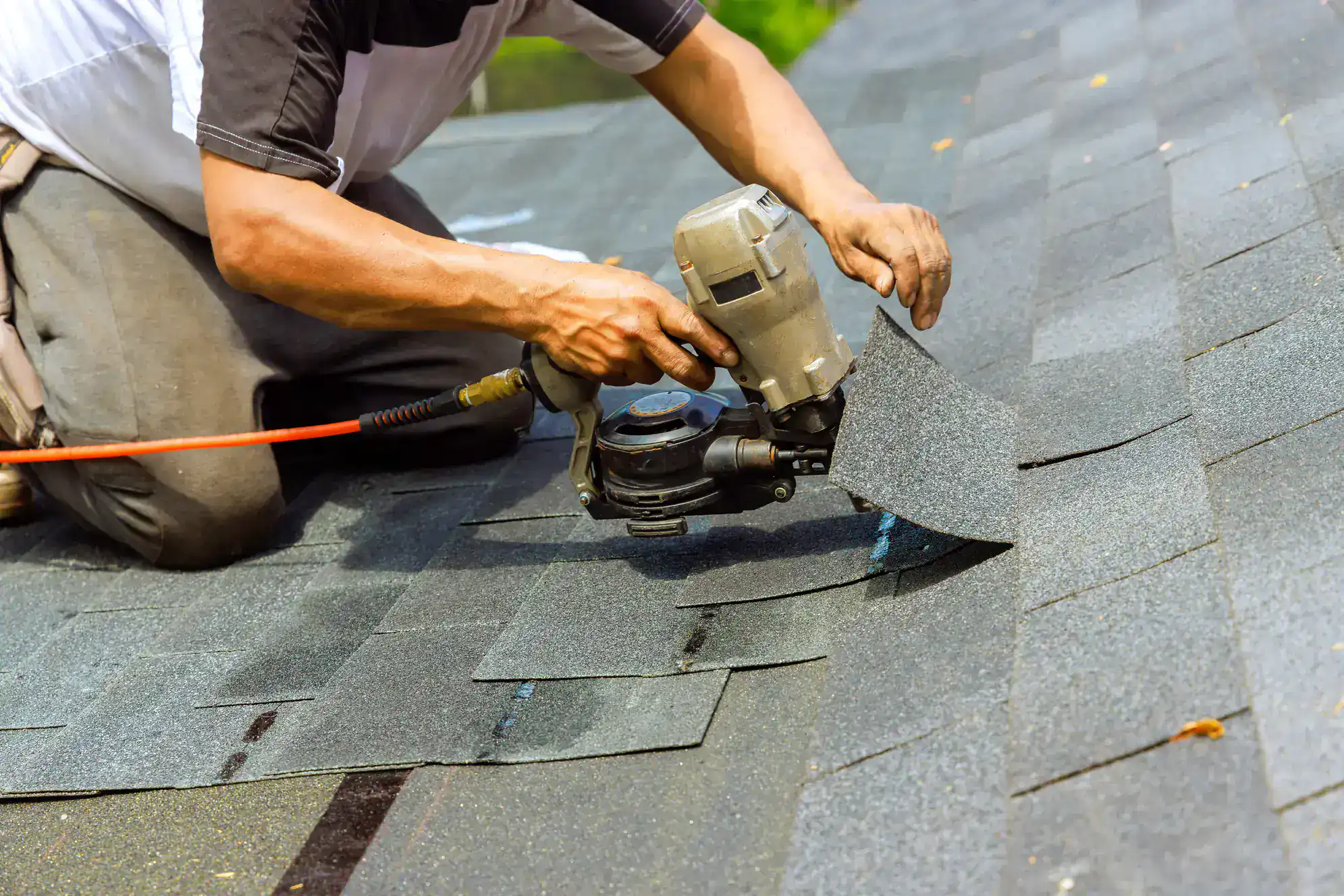
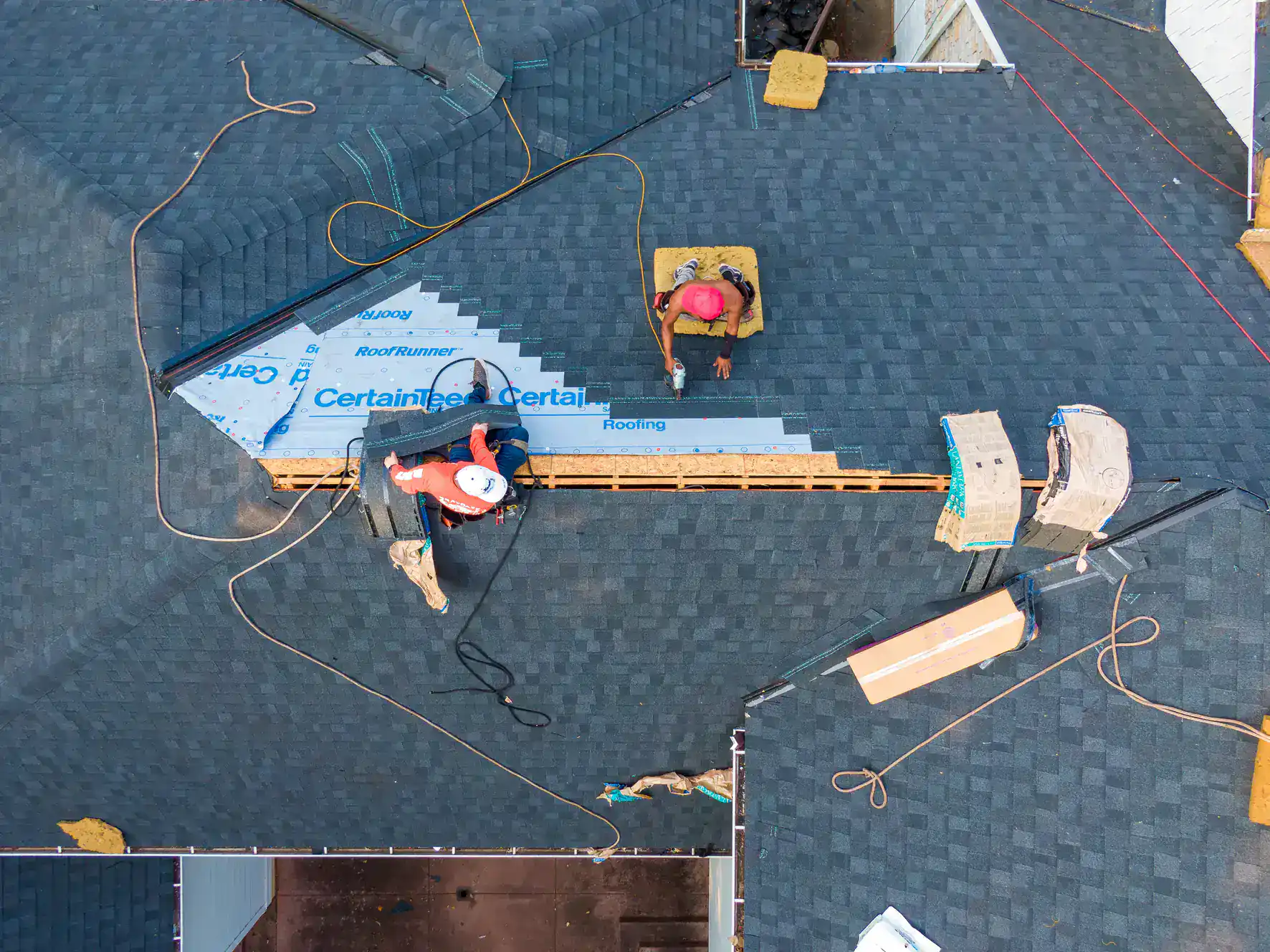
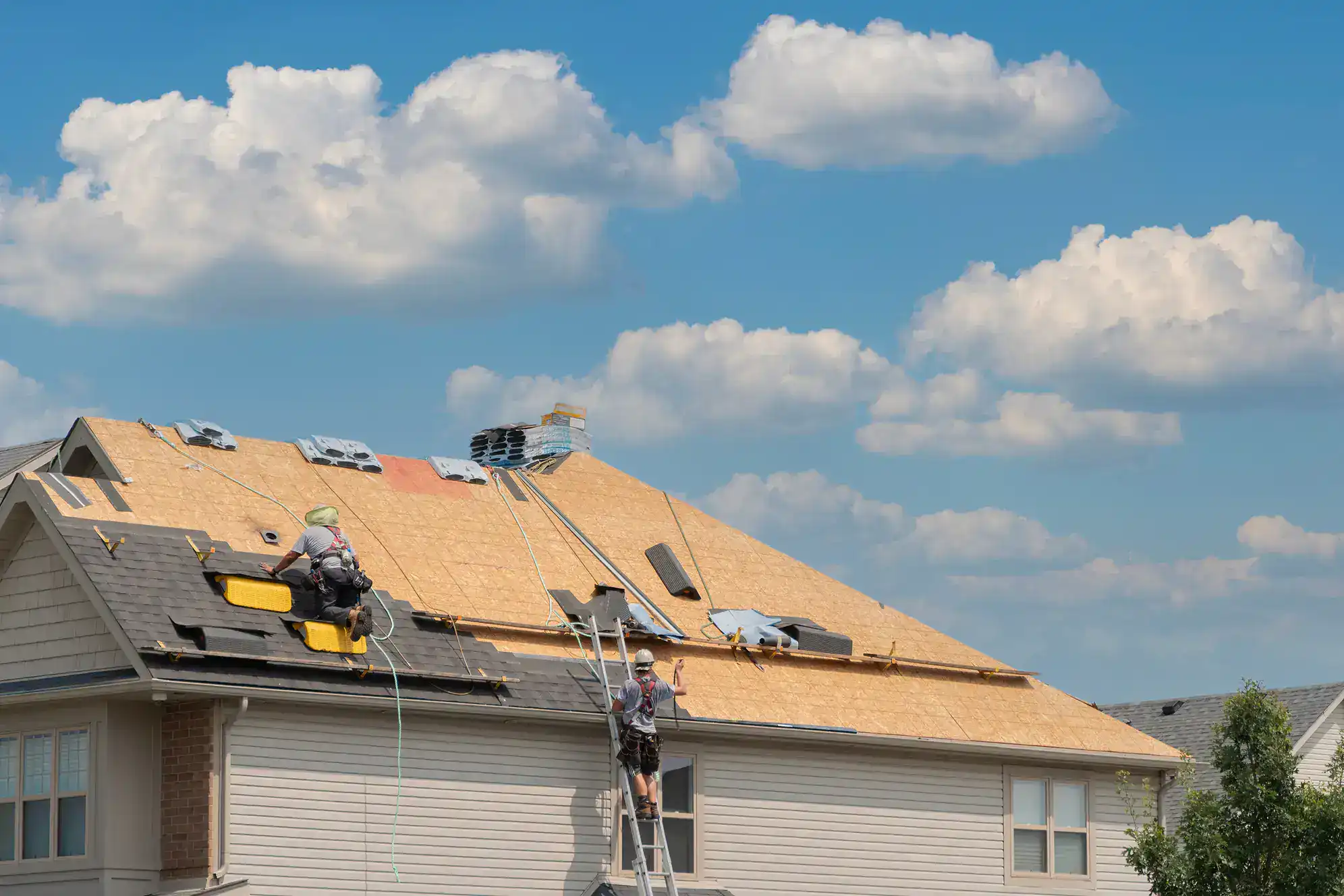
On installation day, the old roof comes off completely. Full tear-off every time — because on homes built in the 1950s and 60s, which make up a significant portion of Lyndhurst’s housing stock, the decking underneath needs to be seen and evaluated before anything new goes on top of it. Ice and water shield goes in at the eaves and valleys, drip edge is installed correctly, and the new system goes down to manufacturer spec. Most residential replacements in Lyndhurst are completed in one to two days. Before we leave, the yard and driveway get a magnetic nail sweep and all debris is removed. You come home to a finished roof, not a construction site.
Ready to get started?
Storm Damage Roof Replacement in Lyndhurst, NJ
Residential roof replacement is the core of what we do in Lyndhurst. Whether it is an asphalt shingle replacement on a post-war colonial near Kingsland station, a full tear-off on a ranch in Lyndhurst West, or a new installation on a multi-family property, the standard does not change. We install GAF architectural shingles, proper underlayment, ice and water shield at all vulnerable points, and correct ventilation — every component installed to spec, every time.
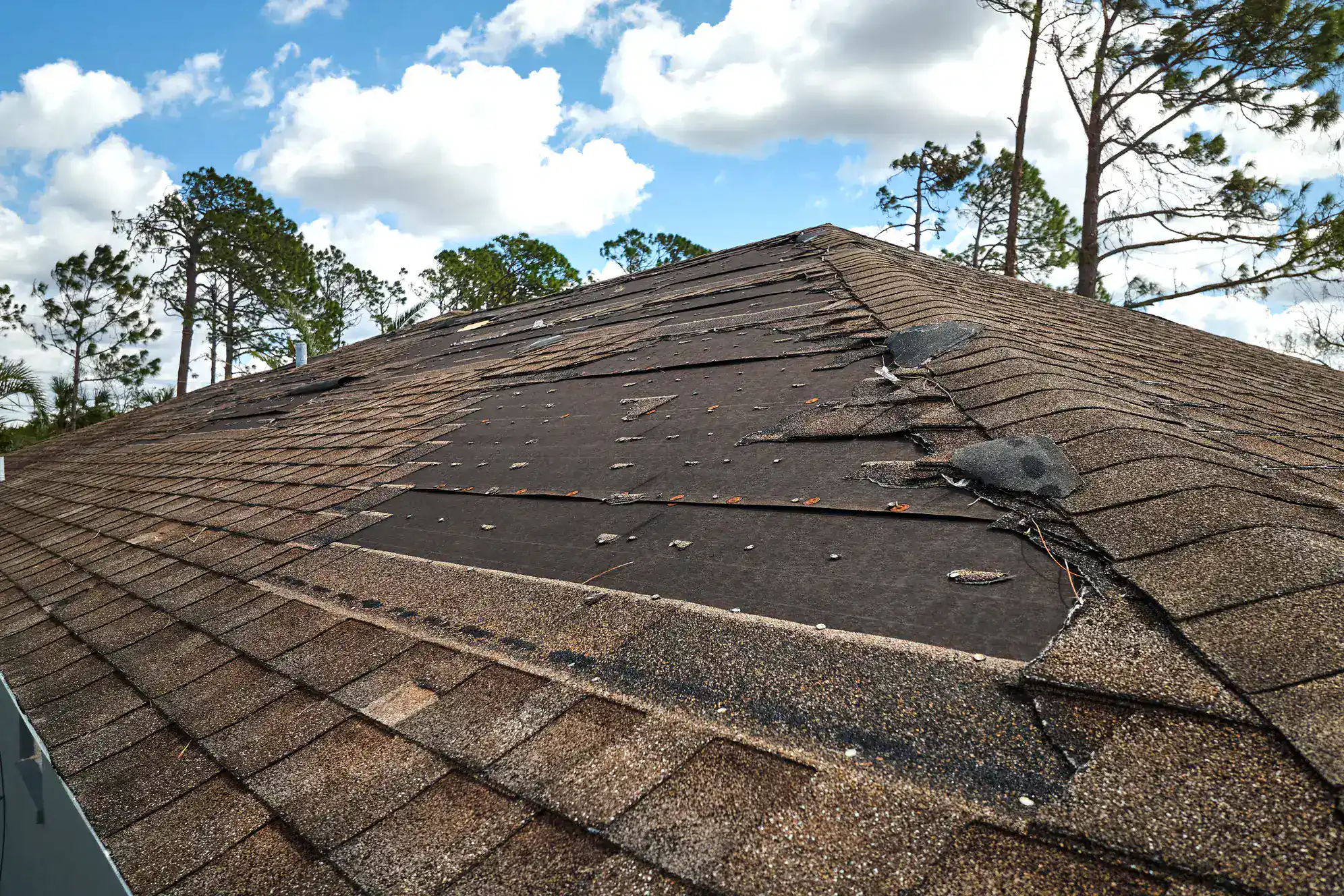
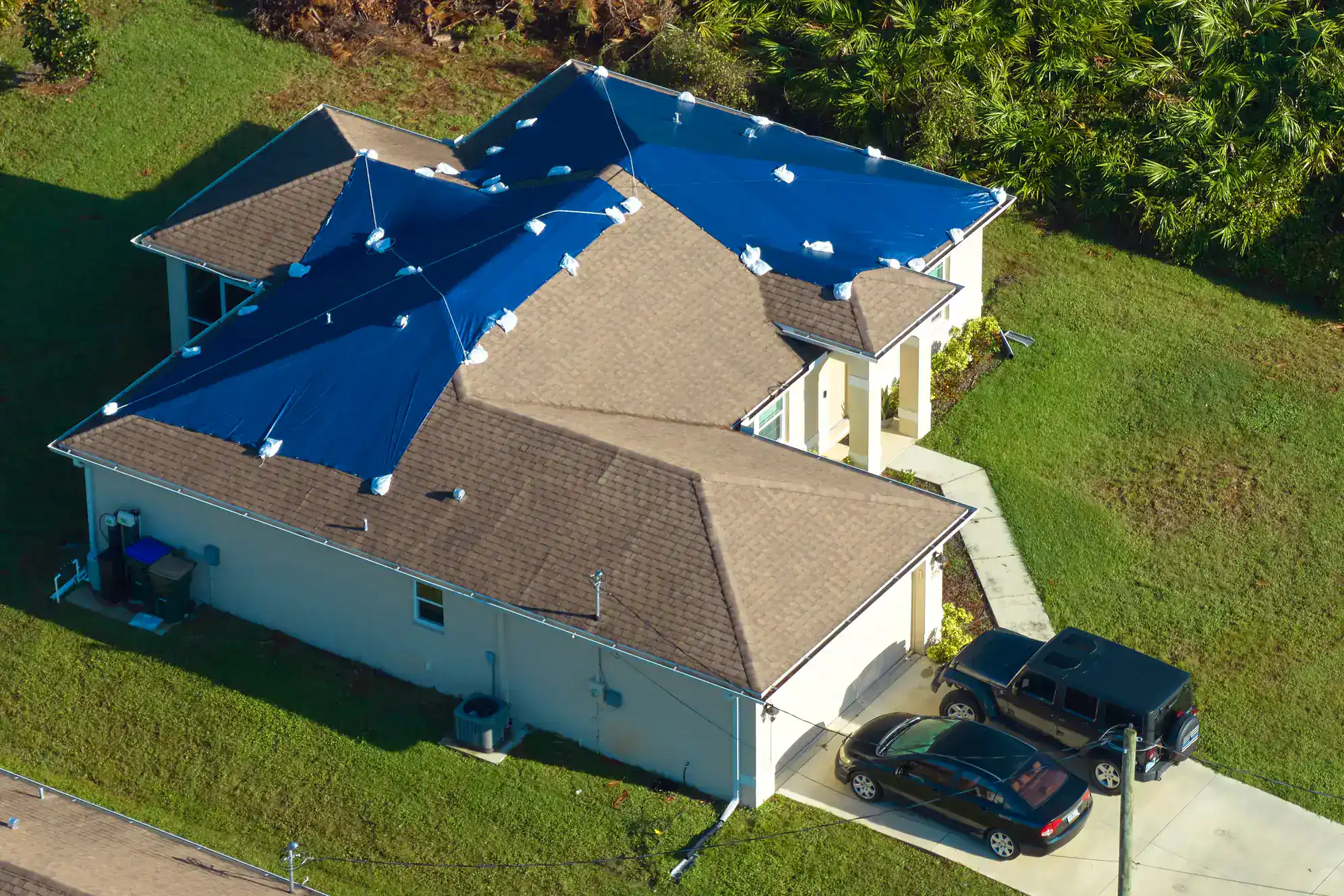
Storm damage roof replacement in Lyndhurst, NJ is a separate conversation, and one we handle frequently. Bergen County takes a beating from nor’easters and summer hail events, and Lyndhurst’s Meadowlands exposure makes it one of the more vulnerable townships in the county. If your roof sustained damage, we document everything in the format insurance adjusters require, communicate with your insurer directly, and make sure you understand what your policy covers before any work begins. Homeowners who go through this process alone often settle for less than they are entitled to.
For commercial properties along Route 17 and in the Meadowlands-adjacent sections of the township, we also offer commercial roof replacement in Lyndhurst, NJ — TPO, EPDM, and modified bitumen flat roofing systems installed with the same certified standards we apply to every residential job. Every project, residential or commercial, comes with a free estimate and a written scope before anything is signed.
Does roof replacement in Lyndhurst, NJ require a building permit?
Yes — and this is worth understanding before you hire anyone. Lyndhurst’s Construction Department administers the NJ Uniform Construction Code, which requires a permit for roof replacement work. The permit process ensures the job is inspected and on record, which matters more than most homeowners realize until they go to sell the house or file an insurance claim and discover unpermitted work creates complications in both situations.
A licensed contractor handles this as a standard part of the job. If someone quotes you a lower price and mentions skipping the permit to save time or money, that savings comes at your expense — not theirs. The liability for unpermitted work stays with the property owner. We pull the permit on every job in Lyndhurst, no exceptions.
How do I know if my roof actually needs to be replaced or just repaired?
The honest answer is that you need someone on the roof to tell you — not a contractor driving by, and not a guess based on age alone. That said, there are real indicators. If your shingles are curling, cracking, or losing granules heavily, if you have recurring leaks in the same spots, or if your roof is approaching or past the 20–25 year mark, replacement is more likely the right call than another round of repairs.
For Lyndhurst homeowners, the age of the housing stock is a practical factor. The average home here was built in 1966, and nearly 28% of homes in the township predate 1939. If your home has had one previous replacement, it may be on a system that is now 20-plus years old without showing dramatic visible damage yet. Freeze-thaw cycling and moisture from the Passaic River corridor accelerate degradation in ways that are not always obvious from the ground. A free inspection gives you a real answer instead of a guess.
What is a GAF certified roofer and why does it matter for my Bergen County home?
GAF is the largest roofing manufacturer in North America, and their certification program requires contractors to carry proper state licensing, maintain adequate insurance, and demonstrate installation proficiency. It is not a logo you can buy — it is a credential that GAF maintains and that is publicly verifiable through their contractor locator.
What makes it matter practically is the warranty access. We can offer enhanced warranty tiers — including System Plus and Golden Pledge — that cover both the materials and the installation. A non-certified contractor can install GAF shingles, but they cannot offer those warranty tiers. For a Lyndhurst homeowner with a home valued at $500,000 or more, the difference between a warranty that covers workmanship and one that only covers the shingles is not a minor detail. It is the difference between real protection and a document that only applies if the shingle itself was defective.
My roof was damaged in a storm — how does the insurance claim process work?
Bergen County gets hit hard — nor’easters, summer hail, and events like Tropical Storm Ida in 2021 have driven significant insurance claims across Lyndhurst and the surrounding area. The process starts with documentation. Before any repairs happen, the damage needs to be photographed and cataloged in a format that insurance adjusters recognize and accept. That is not something most homeowners know how to do on their own, and gaps in documentation are the most common reason claims come back underpaid.
We handle storm damage roof replacement in Lyndhurst, NJ with the insurance process built in from the start. We document the damage, communicate with your insurer, and help you understand what your policy actually covers before you agree to anything. One thing to know: your insurer may send an adjuster who works for them, not for you. Having a contractor who understands how to present the damage accurately — and who will push back if the initial assessment is incomplete — can make a real difference in the final settlement.
How long does a roof replacement actually take on a Lyndhurst home?
Most residential roof replacements in Lyndhurst are completed in one to two days. The variables are roof size, pitch, the condition of the decking once the tear-off is done, and weather. We give you a realistic timeline before the job starts — not a best-case estimate that falls apart on day one.
Because we do full tear-offs on every job, there is occasionally additional time needed if the decking has soft spots or rot that needs to be addressed before the new roof goes down. On older homes — and Lyndhurst has a lot of them — this is not rare. It is also not a surprise tactic. If we find decking damage during tear-off, we document it, show you what we found, and explain what it costs to address before we proceed. You are never handed an invoice for something you did not know was coming.
What roofing materials hold up best against New Jersey winters and nor'easters?
For most Lyndhurst homes, GAF architectural asphalt shingles are the right call. They are rated for high-wind conditions, carry strong impact resistance options, and are designed to handle the freeze-thaw cycling that NJ winters deliver year after year. Architectural shingles also have a longer lifespan than three-tab shingles, which still exist on a lot of older homes in the township and are worth replacing when the time comes.
What matters as much as the shingle itself is what goes underneath it. Ice and water shield at the eaves and in the valleys is not optional in a climate like Lyndhurst’s — it is the layer that prevents water from backing up under the shingles when ice dams form, which happens regularly on Cape Cods and colonials with older attic insulation. Proper drip edge, synthetic underlayment, and correct attic ventilation round out a system that actually performs through a Bergen County winter, not just looks good on the day it is installed.