
Roof Repair in Lyndhurst, NJ
Lyndhurst Roofs Take a Beating — Here's What Actually Fixes Them
Hear from Our Customers
Roof Leak Repair in Lyndhurst, NJ
A repaired roof means dry ceilings, protected insulation, and no water working its way into the walls of a home you’ve spent years maintaining. That’s the outcome — not a sales pitch, just what happens when the problem is actually fixed.
For Lyndhurst homeowners, the stakes are higher than in most Bergen County towns. The Meadowlands microclimate keeps ambient moisture elevated year-round, which accelerates shingle degradation and drives moss and algae growth on north-facing slopes faster than you’d expect. Add the Passaic River proximity and the freeze-thaw cycling that runs from November through March, and what looks like a minor leak in October can become a decking replacement job by April if it’s left alone.
Most of the homes in Lyndhurst were built in the early-to-mid twentieth century. That means aging flashing, worn sealants, and roof systems that have been patched and re-shingled more than once. Getting the repair right means understanding what’s underneath — not just what’s visible from the driveway. That’s the difference between a fix that holds and one that sends you back to square one next season.
Roof Repair Contractor in Lyndhurst, NJ
We’ve been working in northern New Jersey for over ten years — long enough to know how Bergen County weather behaves, what older homes in Lyndhurst actually need, and how to give homeowners a straight answer without the runaround.
We’re family-operated, which means the people writing the estimate are accountable for the finished work. There’s no commissioned sales team handing your job off to a crew you’ve never met. From Kingsland to the Route 17 corridor, we’ve repaired roofs on Lyndhurst homes that have been in families for generations — and we treat them that way.
We hold contractor licenses, carry full liability insurance and workers’ compensation, and are certified by major shingle manufacturers. Those certifications aren’t just credentials on a wall — they unlock manufacturer-backed warranty tiers that most local contractors simply can’t offer.
Emergency Roof Repair in Lyndhurst, NJ
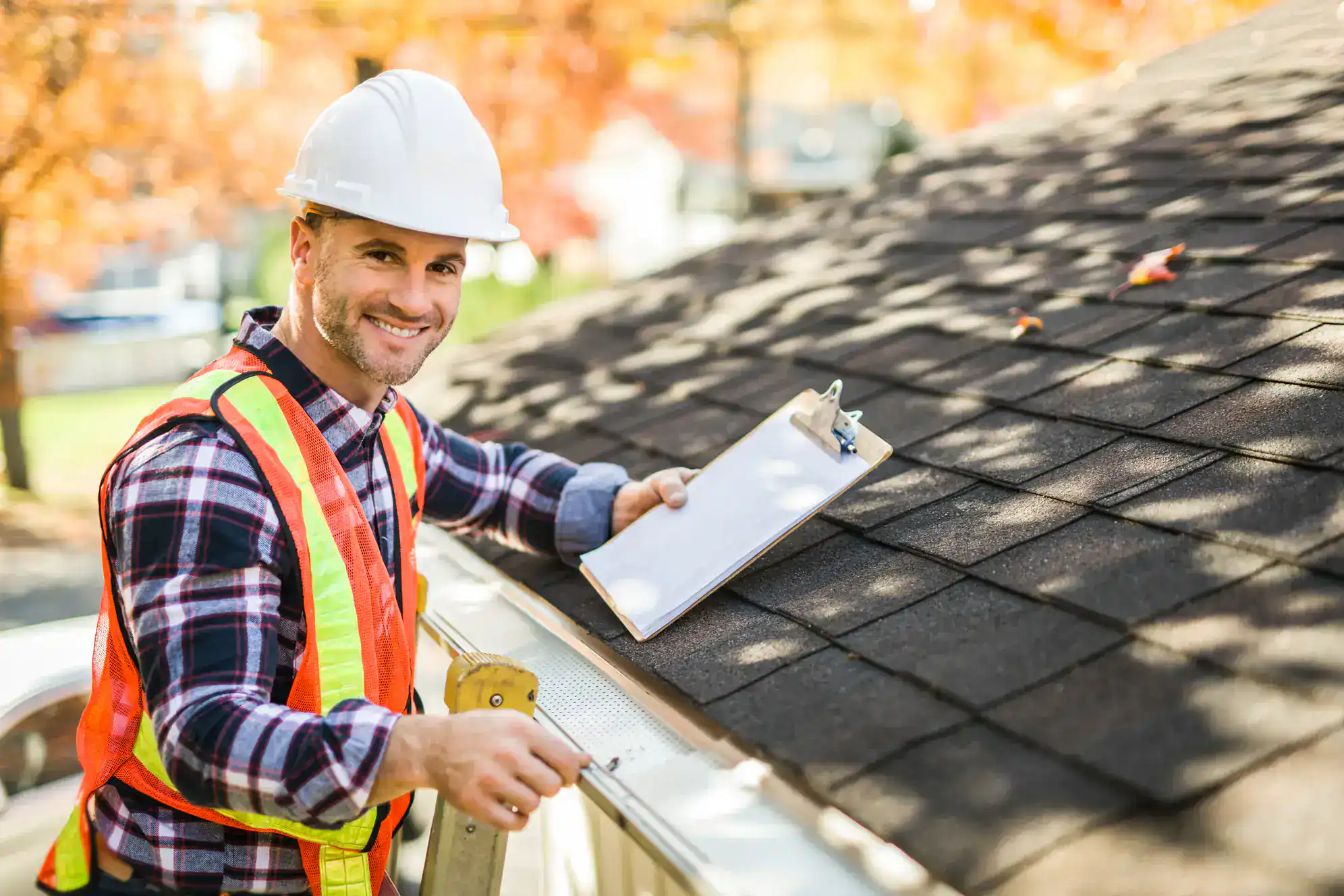
It starts with a free inspection. We come out, get on the roof, and tell you exactly what’s going on — the actual condition of your shingles, flashing, valleys, and decking. You’ll get an honest assessment of whether you need a targeted repair or something more involved. No pressure either way.
From there, you receive a written estimate with a clear scope of work and a fixed price. In Lyndhurst, where a lot of homes have layered shingles, aging underlayment, and flashing that’s been in place for decades, that upfront clarity matters. The number on the estimate is the number on the invoice — unless you ask us to do something different.
When the work starts, we handle everything: material sourcing, installation, and cleanup. Lyndhurst’s residential streets are tight, and homes sit close together — so we treat the job site like it’s our own property. Nails get picked up, debris gets cleared, and the driveway looks the way it did before we arrived. If the damage was storm-related and you’re filing an insurance claim, we can help you document it in a format that actually supports the process.
Ready to get started?
Shingle and Flat Roof Repair in Lyndhurst, NJ
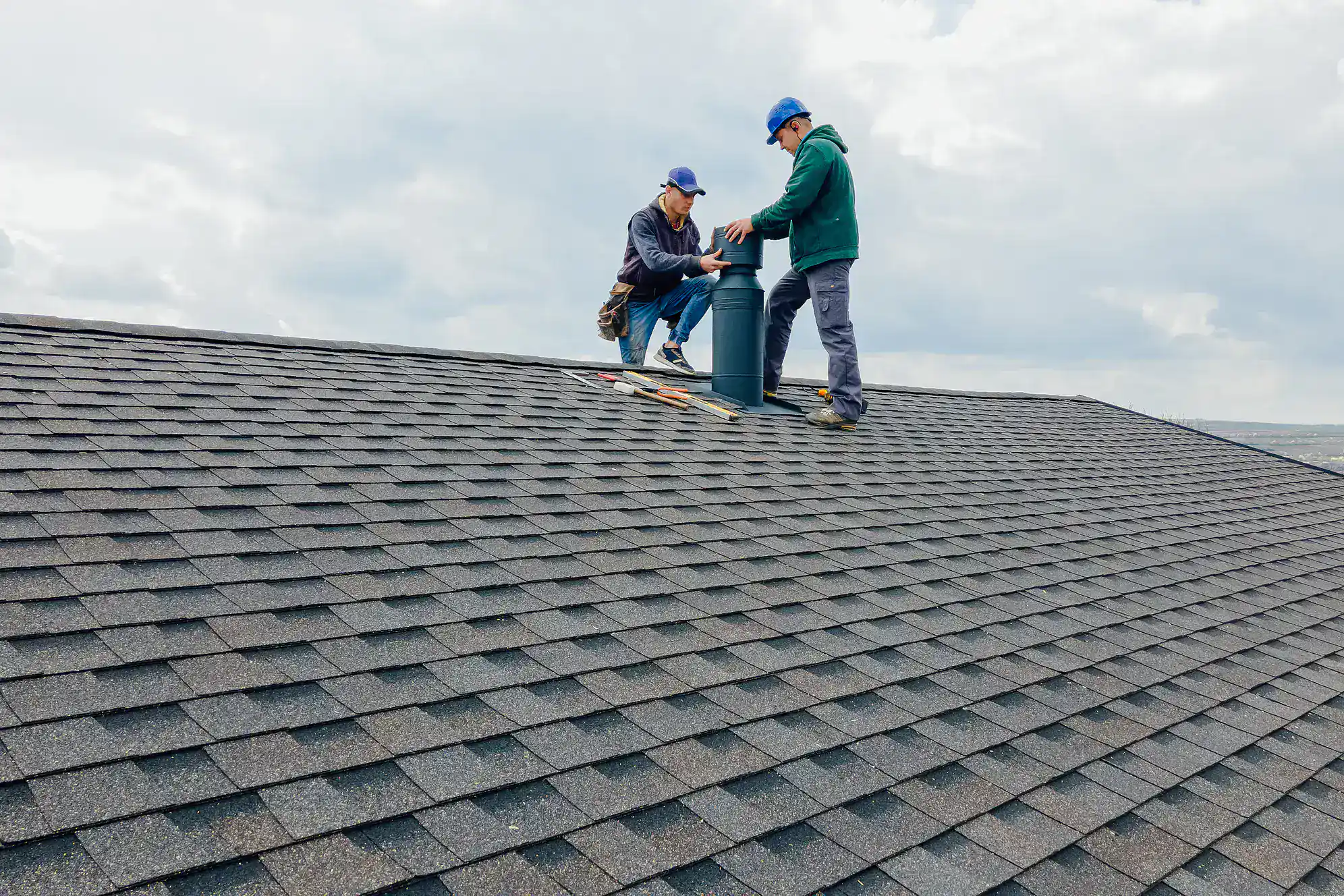
Shingle roof repair covers the full range — missing or lifted shingles after a nor’easter, granule loss from summer hail, cracked or curling shingles on aging slopes, and failed flashing around chimneys, skylights, and roof-to-wall transitions. These are the most common failure points on Lyndhurst’s older housing stock, and they’re the ones that tend to get worse fast when the Meadowlands moisture and winter freeze-thaw cycles get involved.
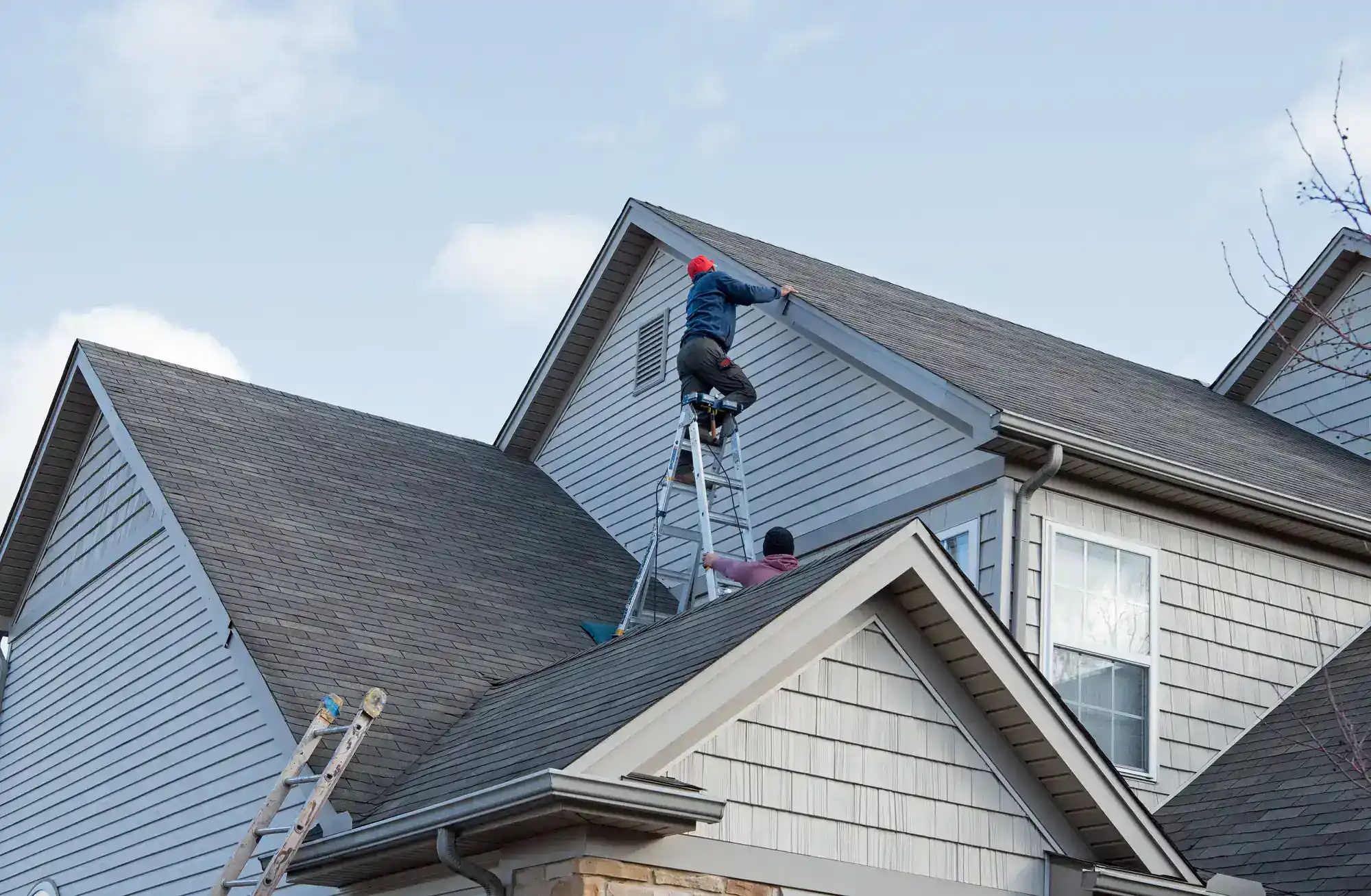
Roof leak repair goes deeper than the surface. A leak showing up on your ceiling is rarely where the water entered — it usually traveled. We trace it back to the source, whether that’s a failed pipe boot, a deteriorated valley, or ice dam damage along the eave. Getting the source right the first time is what keeps the repair from coming back.
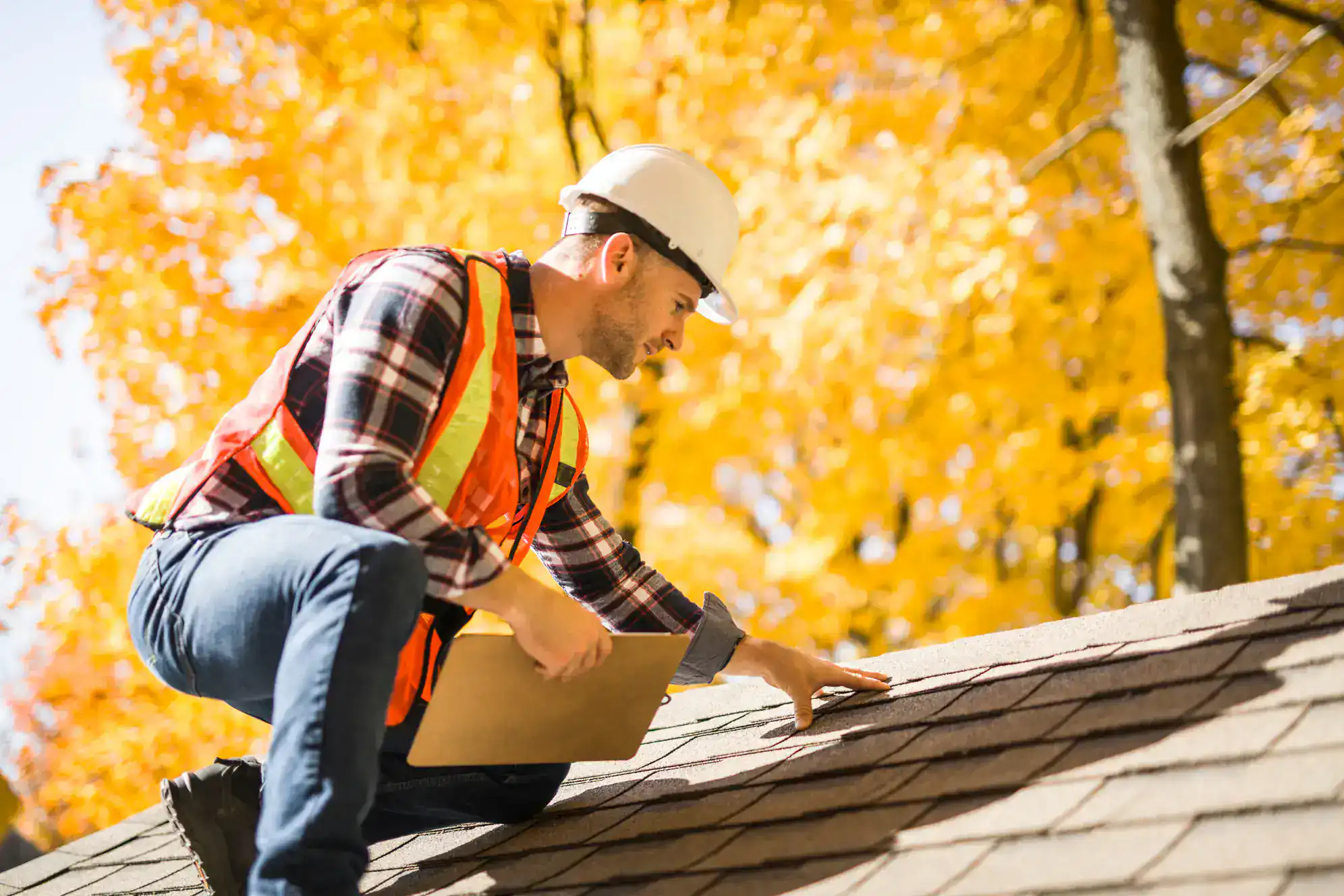
For flat roof repair, it’s worth knowing that Lyndhurst’s residential zoning code restricts flat roofs in R-A and R-B zones — they’re generally limited to commercial buildings, garages, additions, and mixed-use structures. If you have a flat or low-slope section on a garage or commercial property along the Route 17 corridor, we work with TPO, EPDM, and modified bitumen systems and understand how those materials fail differently than pitched shingle roofs. We also handle roof storm damage repair and emergency roof repair — including same-visit tarping and temporary protection when active water intrusion can’t wait.
How much does roof repair typically cost in Lyndhurst, NJ?
Cost depends on the scope, but here’s a realistic range for Lyndhurst. Minor shingle repairs — replacing a handful of damaged or missing shingles — typically run $300 to $600. Moderate repairs involving flashing replacement, valley work, or multiple damaged sections fall in the $1,500 to $4,000 range. If the damage has reached the decking, or if ice dam formation over the winter has compromised the underlayment and structural sheathing, you’re looking at $5,000 or more before it’s fully addressed.
Lyndhurst’s older housing stock adds a layer of complexity that affects cost. Many homes have multiple shingle layers, aging decking, and flashing systems that were installed decades ago. When we inspect, we’re looking at all of it — not just the surface. That’s why the free inspection matters: you get an accurate scope before any money changes hands, and the written estimate you receive reflects the actual work required, not a lowball number designed to get us in the door.
Does homeowners insurance cover storm roof damage in Lyndhurst, NJ?
In most cases, yes — if the damage was caused by a covered peril like wind, hail, or a falling tree. Bergen County gets hit hard by nor’easters and summer thunderstorms, and Lyndhurst’s position near the Passaic River and the Meadowlands means storm events here tend to be more intense than in inland parts of the county. If your roof took damage in a recent storm, your homeowners policy likely covers at least a portion of the repair.
The key is documentation. Insurance adjusters need clear evidence of the cause and extent of damage — photos, written assessments, and a repair scope that aligns with what the policy covers. We’ve helped Lyndhurst homeowners through this process many times. We document the damage in a format that supports the claim, and we make sure the repair scope reflects what actually needs to be fixed — not an inflated estimate, and not an undercount that leaves damage behind.
How do I know if I need roof repair or a full replacement?
This is the question most Lyndhurst homeowners are really asking when they call — and it’s a fair one, because the fear of being oversold into a replacement is real in this market. The honest answer is that it depends on the age of the roof, the extent of the damage, and the condition of the underlying decking and structure.
If the damage is isolated — a few missing shingles, a failed pipe boot, a section of flashing that’s pulled away — repair is almost always the right call. If the damage is widespread, if the shingles are at or past the end of their lifespan, or if the decking has been compromised by years of moisture infiltration, replacement starts to make more financial sense. For Lyndhurst homes built in the early-to-mid twentieth century, we often find that what looks like a small leak on the surface has been feeding water into the structure for longer than the homeowner realized. The free inspection gives you the full picture — not a sales pitch, just an honest assessment of what you’re actually dealing with.
Do I need a permit for roof repair in Lyndhurst, NJ?
It depends on the scope of work. In Lyndhurst, minor repairs — replacing a small number of shingles, patching flashing, or sealing a specific leak point — generally do not require a permit. A full roof replacement does. The Lyndhurst Building Department, located at 367 Valley Brook Avenue, administers these requirements in accordance with New Jersey state construction code.
One thing worth knowing if you’re considering any roofing changes: Lyndhurst’s zoning code prohibits flat roofs in R-A and R-B residential zones. All roofs in those zones must meet a minimum 4.5-inch-on-12-inch pitch. If you’re in a standard residential area and someone is proposing a flat roof section as part of a repair or modification, that’s a conversation worth having with the building department before work begins. We know the local code requirements and factor them into every project scope from the start — so you don’t end up with work that won’t pass inspection.
What causes roof leaks in older Lyndhurst homes, and how are they fixed?
The most common culprits in Lyndhurst’s older housing stock are failed flashing, deteriorated pipe boots, cracked or missing sealant around penetrations, and ice dam damage along the eaves. Flashing — the metal that seals transitions between the roof surface and chimneys, skylights, dormers, and walls — degrades over time, and in homes built decades ago, it may have been repaired or re-caulked multiple times without ever being properly replaced.
Ice dams are a specific and recurring problem in Lyndhurst. When attic heat melts snow on the upper roof and it refreezes at the cold eave overhangs, water backs up under the shingles and finds its way into the structure. Homes built before modern insulation and ventilation standards are especially vulnerable, and Lyndhurst has a lot of them. Fixing the leak means addressing both the immediate entry point and the underlying condition driving it — whether that’s improved attic ventilation, new flashing, or replacing sections of decking that have absorbed water over multiple seasons.
How do I find a trustworthy roof repair contractor in Lyndhurst, NJ?
Start with the basics: verify that the contractor holds a current New Jersey Home Improvement Contractor registration through the Division of Consumer Affairs, carries general liability insurance, and has workers’ compensation coverage. Workers’ comp matters specifically because if a worker is injured on your property and the contractor doesn’t carry it, you can be exposed to liability. In New Jersey, where medical and legal costs run high, that’s not a risk worth taking.
Beyond licensing, look for a contractor with a verifiable local track record — not one who showed up after the last nor’easter and will be gone before the next one. Lyndhurst residents talk, and word-of-mouth still carries real weight in a community this connected. Check reviews for specifics: do they mention accurate estimates, clean job sites, and responsive communication? Those details tell you more than a five-star average alone. Manufacturer certifications are also worth asking about — certified contractors can offer warranty tiers that non-certified contractors simply can’t, which matters when you’re investing in a repair on a home you plan to stay in.