
Roof Repair in Saddle River, NJ
Estate Roofs Repaired Right — No Shortcuts, No Surprises

Hear from Our Customers
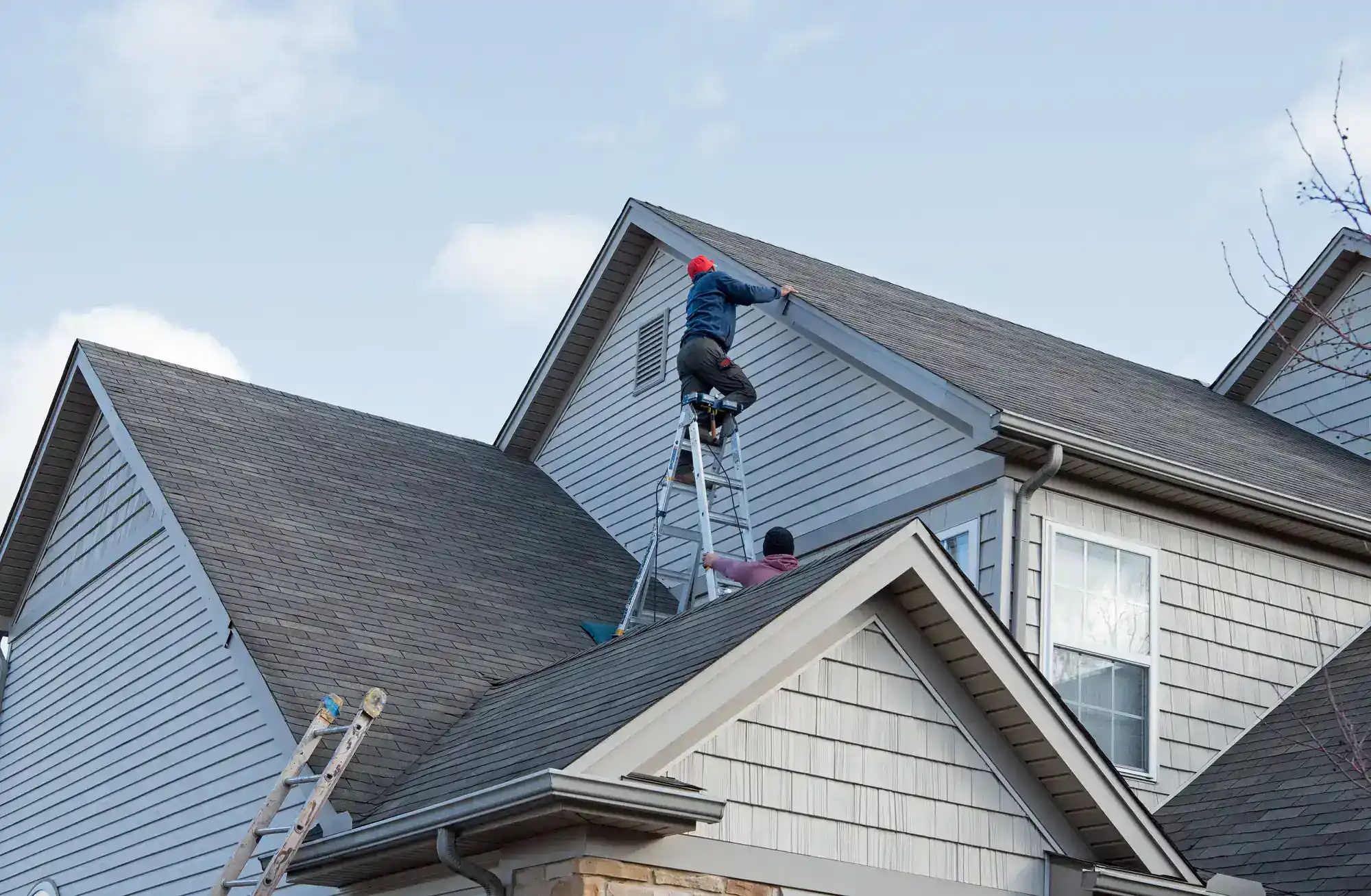
Roof Leak Repair in Saddle River, NJ
A roof leak on a Saddle River estate isn’t the same problem it is on a standard suburban home. When water gets in through a failed valley, a cracked flashing, or a compromised shingle section on a home with custom woodwork, imported stone, or irreplaceable architectural details — the damage compounds fast. Getting the repair right isn’t just about stopping the leak. It’s about protecting everything underneath it.
Saddle River homes sit on two-acre-minimum lots with significant tree canopy coverage. That coverage is part of what makes Saddle River what it is, but it also means your roof deals with debris accumulation, shaded surfaces that stay wet longer, and branches that come down hard during nor’easters and summer convective storms. The Doppler radar has detected hail near Saddle River on 27 separate occasions in a single recent 12-month period. That’s not a general Bergen County statistic — that’s your zip code.
The other thing worth knowing: the median construction year for homes in Saddle River is around 1979. If your roof hasn’t been replaced since the late 1990s or early 2000s, it’s operating at or past the upper end of its expected lifespan. A professional inspection tells you exactly where you stand — and whether a targeted repair buys you real time or whether replacement is the more honest conversation to have.
Roof Repair Contractor in Saddle River, NJ
We’ve been doing exterior work across Bergen County for over ten years, with deep experience on properties throughout Saddle River. That includes roofing, gutters, and siding on properties ranging from modest colonials to the kind of estate homes that line East Saddle River Road and West Saddle River Road. We’re family-operated, which means the person you talk to at the estimate is connected to the finished product — not handing off to a crew they’ve never met.
We hold contractor licenses and manufacturer certifications from major shingle brands. That matters because certified contractors can back their work with manufacturer warranty coverage that uncertified contractors simply cannot offer — regardless of what materials they use. On a property worth what Saddle River homes are worth, that distinction is meaningful.
Our estimates are free, written, and itemized. No verbal ballpark figures, no invoice surprises after the job is done. If the scope doesn’t change, the price doesn’t change.

Roof Storm Damage Repair in Saddle River, NJ
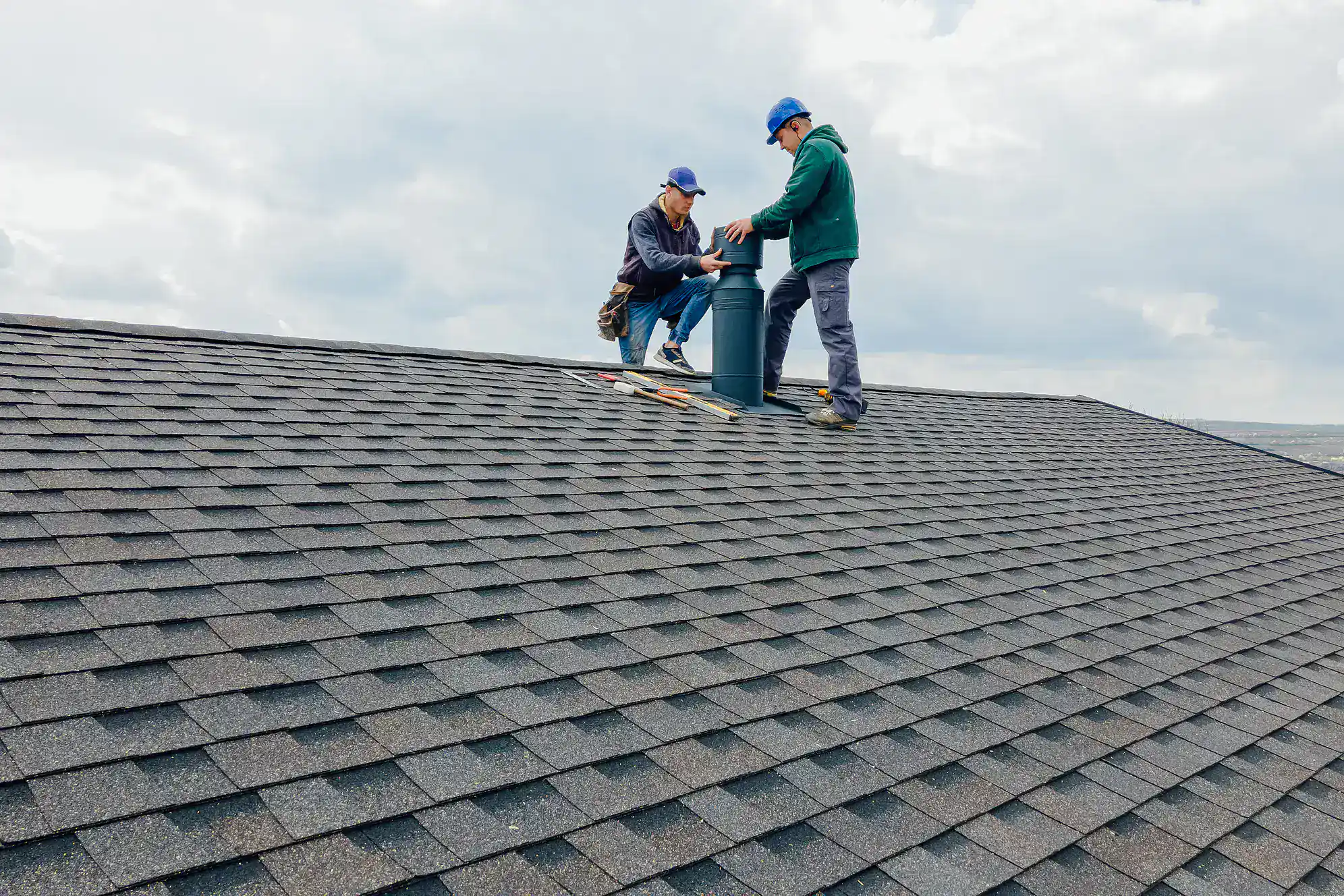
It starts with a free inspection. Someone from our team comes out, gets on the roof, and gives you a real assessment of what’s going on — not a sales pitch designed to upsell you into a full replacement. If a targeted repair is the right answer, that’s what you’ll hear. The inspection covers shingles, flashing, valleys, penetrations, and any areas where storm debris or moisture may have created damage that isn’t visible from the ground.
From there, you get a written estimate that breaks down the work and the cost before anything is touched. For work that requires a permit under New Jersey’s Uniform Construction Code — which applies to many roof repairs and most replacements — we handle that process through Saddle River’s Building and Construction Department at Borough Hall. If you’ve never dealt with the borough’s permit office before, it has specific hours and procedures that a contractor unfamiliar with the area might not know. We take care of that for you.
Once the work is approved and scheduled, we complete the repair with materials matched to your existing roof as closely as possible. On Saddle River’s architecturally distinctive homes, a repair that looks like a repair isn’t acceptable — shingle color, texture, and profile matching is part of the job, not an afterthought. After the work is done, the site is cleaned up and we walk you through what was done and why.
Ready to get started?
Shingle and Flat Roof Repair in Saddle River, NJ
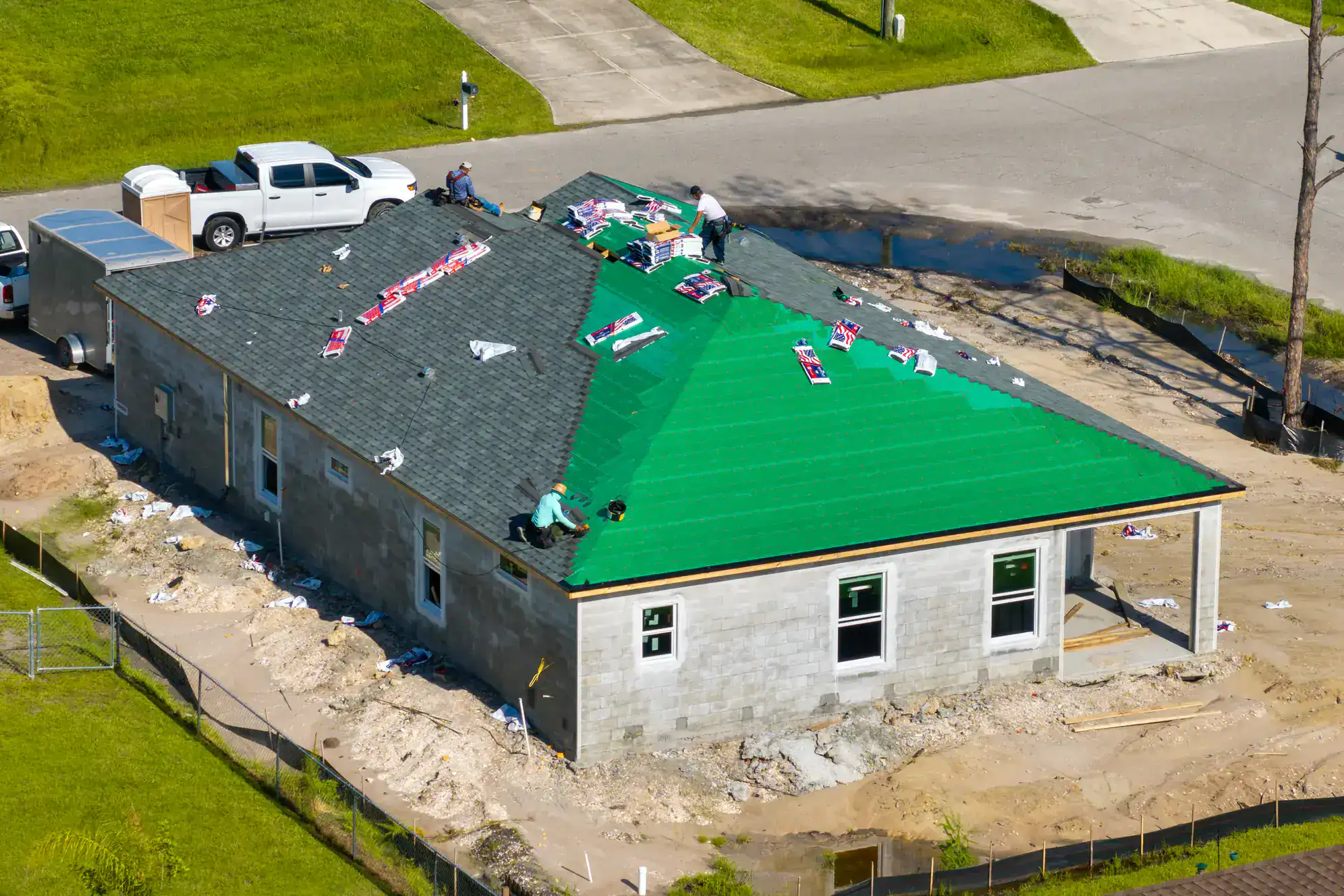
The roofing needs in Saddle River aren’t one-size-fits-all. The primary residences here — stone manors, French chateaus, contemporary estates — typically have complex pitched roof systems with multiple planes, dormers, valleys, chimneys, and skylights. Emergency roof repair in Saddle River after a nor’easter or a downed branch requires a team that can work on steep, multi-pitch geometry without cutting corners on flashing detail or material matching. That’s the standard work we handle here.
But Saddle River is also known for its horse farms and equestrian properties, and many of those include barns, stables, and outbuildings with flat or low-slope roofing systems — TPO, EPDM, or modified bitumen — that need an entirely different repair approach. Flat roof repair on Saddle River’s agricultural and equestrian facilities is a real and recurring need, and it’s a service we handle alongside pitched roof work. You don’t need to find a separate contractor for the barn.
Our roof repair estimates in Saddle River are provided in writing before any work begins. The estimate accounts for the specific complexity of your property — pitch, penetration count, material type, and access — so the number you receive reflects the actual job, not a lowball figure that grows after the crew is already on your roof.
Do I need a permit for roof repair in Saddle River, NJ?
It depends on the scope of the work. Under New Jersey’s Uniform Construction Code, minor repairs — replacing a handful of shingles, sealing a flashing, patching a small section — typically don’t require a permit. But once the work crosses into a more significant repair or a full replacement, a construction permit is generally required through Saddle River’s Building and Construction Department at Borough Hall.
One thing worth knowing specific to Saddle River: the borough’s permit office does not issue permits after 2:00 PM. That’s a local procedural detail that out-of-area contractors often don’t know, and it can delay the start of a job if permit procurement isn’t handled correctly upfront. We manage the permit process as part of the project — you won’t be left navigating that on your own. Doing the work without a required permit can also create problems when you sell the property or file an insurance claim, so it’s not a step worth skipping.
How do I know if my roof needs repair or full replacement in Saddle River?
The honest answer is that it depends on the age of the roof, the extent of the damage, and what’s going on beneath the surface. A roof that’s 15 years old with isolated storm damage is usually a strong candidate for targeted repair. A roof that’s pushing 30 to 40 years — which is a realistic scenario for many Saddle River homes given the borough’s median construction year of around 1979 — may be at the point where repairs are buying diminishing returns.
The inspection is where that determination gets made. A thorough look at the shingles, decking, flashing, and underlayment will tell you whether the system as a whole is still sound or whether it’s been patched enough times that a full replacement is the more cost-effective long-term call. Our inspections are free and the assessment is honest — if a repair is the right answer, that’s what you’ll hear. If replacement makes more sense, you’ll hear that too, with the reasoning explained clearly.
What causes most roof leaks on older Saddle River estate homes?
Flashing failures are the most common culprit on older homes — particularly around chimneys, skylights, dormers, and valleys. Flashing is the metal that seals the transitions between your roof and any vertical surface or penetration, and it degrades over time through thermal expansion, freeze-thaw cycling, and general weathering. On Saddle River’s older estate properties, which often have multiple chimneys, complex valley systems, and custom architectural features, there are simply more flashing points to fail than on a standard suburban home.
The second most common cause is shingle deterioration in low-pitch sections or areas with heavy shade. Saddle River’s mature tree canopy means many roofs have sections that stay damp longer after rain, which accelerates granule loss and shingle breakdown. Ice dams are also a recurring issue in Bergen County winters — when snow melts unevenly and refreezes at the eave line, it forces water back under shingles in ways that standard drainage isn’t designed to handle. These are the actual repair scenarios we see repeatedly on properties throughout the area.
How do I handle a roof insurance claim for storm damage in Saddle River, NJ?
Start by documenting the damage before anything is touched. Photographs from ground level and, if safe, closer up — plus notes on when the storm occurred and what it involved — give your insurance adjuster the baseline they need to evaluate the claim. Bergen County’s storm exposure is well-documented, and the Saddle River area specifically has been under severe weather warnings multiple times in recent years, so storm-related claims in this area are not unusual for adjusters to process.
Where homeowners often run into problems is in the gap between what the insurance adjuster documents and what the actual repair scope requires. A written assessment from a licensed contractor that clearly identifies all damaged components — not just the obvious ones — helps ensure the claim reflects the full extent of the damage. We provide that documentation as part of the repair process. One important note: filing a claim for damage that’s actually the result of deferred maintenance rather than a specific storm event is a different situation, and a contractor who helps you understand that distinction upfront is doing you a real service.
What should I do if a tree branch damages my roof in Saddle River?
First, don’t wait to address it. A branch impact can look minor from the ground and still have cracked the decking, displaced multiple shingles, or compromised flashing in ways that won’t be obvious until the next rain. Saddle River’s two-acre lots and mature tree coverage make branch damage one of the most common roof repair scenarios in the borough — especially after nor’easters and summer thunderstorms when limbs come down with real force.
If there’s an opening in the roof surface, temporary protection — tarping or emergency patching — should go on as quickly as possible to stop water from getting in while a full assessment is scheduled. We offer emergency roof repair in Saddle River for exactly this situation. On an estate property where interior damage to custom finishes, hardwood floors, or architectural millwork can cost far more than the roof repair itself, the speed of the initial response matters. After the emergency protection is in place, a full inspection determines the actual repair scope and what the insurance claim should cover.
Why does roof repair cost more on Saddle River properties than in other Bergen County towns?
A few factors drive cost on Saddle River’s estate properties that don’t apply the same way in denser suburban communities. Steep roof pitches require additional safety equipment and slower, more careful work. Complex geometries — multiple planes, dormers, turrets, and custom valleys — take more time and more precision than a straightforward gable roof. Multiple penetrations like chimneys, skylights, and custom vents each require individual flashing work. And on a home where the architectural character matters as much as the structural function, material matching — sourcing shingles that align with the existing roof’s color, profile, and weathering stage — is part of the job.
None of that is padding. It reflects what the work actually involves on this type of property. What you should expect from any contractor working in Saddle River is a written, itemized estimate that explains exactly what’s driving the cost — so you can evaluate it clearly rather than just accepting a number. If a contractor gives you a vague verbal quote on a complex estate roof, that’s a signal worth paying attention to before you agree to anything.