
Roof Repair in Piscataway, NJ
Piscataway Roofs Don't Fail Quietly — Catch It Before It Costs You
Hear from Our Customers
Roof Leak Repair in Piscataway, NJ
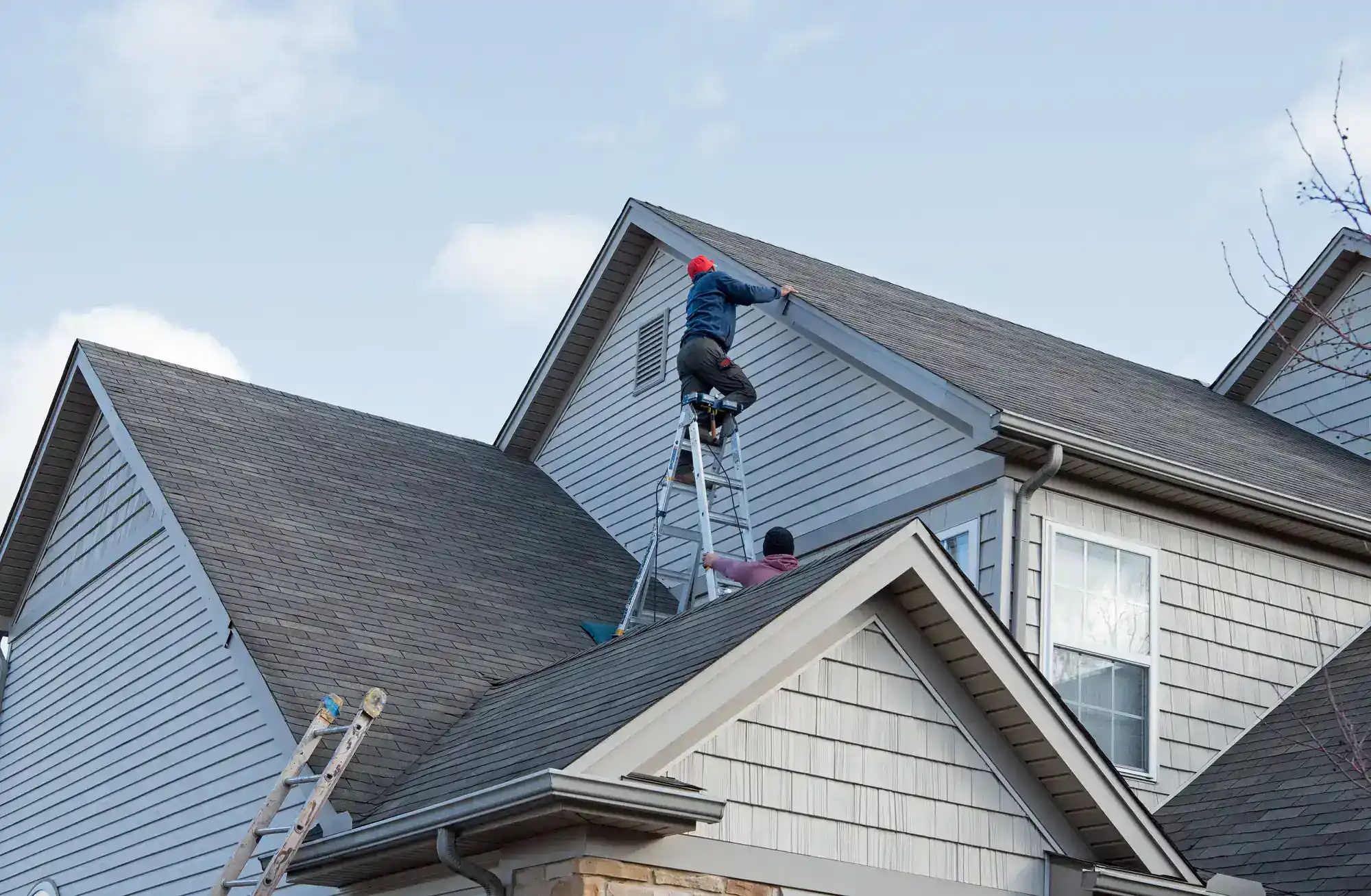
When a roof starts failing on a home that was built in the 1970s — which describes a lot of Piscataway — it doesn’t usually announce itself with a waterfall through the ceiling. It shows up as a water stain on the drywall, a soft spot near the eave, or granules collecting in the gutters after a storm. By the time it’s obvious, the damage has usually been spreading for months.
Piscataway’s climate puts roofs through a full cycle of stress every year. Summer thunderstorms regularly produce wind gusts that lift shingles and compromise flashing. Then winter hits with freeze-thaw cycles that push water under any opening, refreeze, expand, and widen the gap further. Homes in neighborhoods like Lake Nelson and New Market — where a lot of the housing stock dates back to the 1940s through 1960s — often have decking and flashing that have already been through multiple rounds of this.
A proper repair stops that cycle. You get a roof that doesn’t leak, doesn’t let heat escape through compromised insulation, and doesn’t quietly eat into the value of a home you’ve invested real money into. In Piscataway, where median home values sit above $525,000, protecting that investment with a repair done right the first time is the smarter move.
Roofing Contractor in Piscataway, NJ
We’ve been doing exterior work across Piscataway and central New Jersey for over ten years. That’s not a tagline — it means we’ve repaired roofs after nor’easters, responded to storm calls in the middle of summer, and helped homeowners in Middlesex County figure out whether they actually needed a full replacement or just a targeted fix. The answer isn’t always what makes us the most money, and we’re okay with that.
We’re a family-run operation, which means the person who looks at your roof and writes your estimate is accountable for what gets done. There’s no sales team handing your job off to a subcontracted crew you’ve never met. We hold contractor licenses and manufacturer certifications from major shingle brands — the kind that let us offer warranty coverage most contractors in this area simply can’t access.
If you’re near Rutgers’ Busch Campus, over in Randolphville, or anywhere else in Piscataway, the process starts the same way: a free inspection, a straight assessment, and a written estimate with no surprises in it.
Roof Repair Estimate in Piscataway, NJ
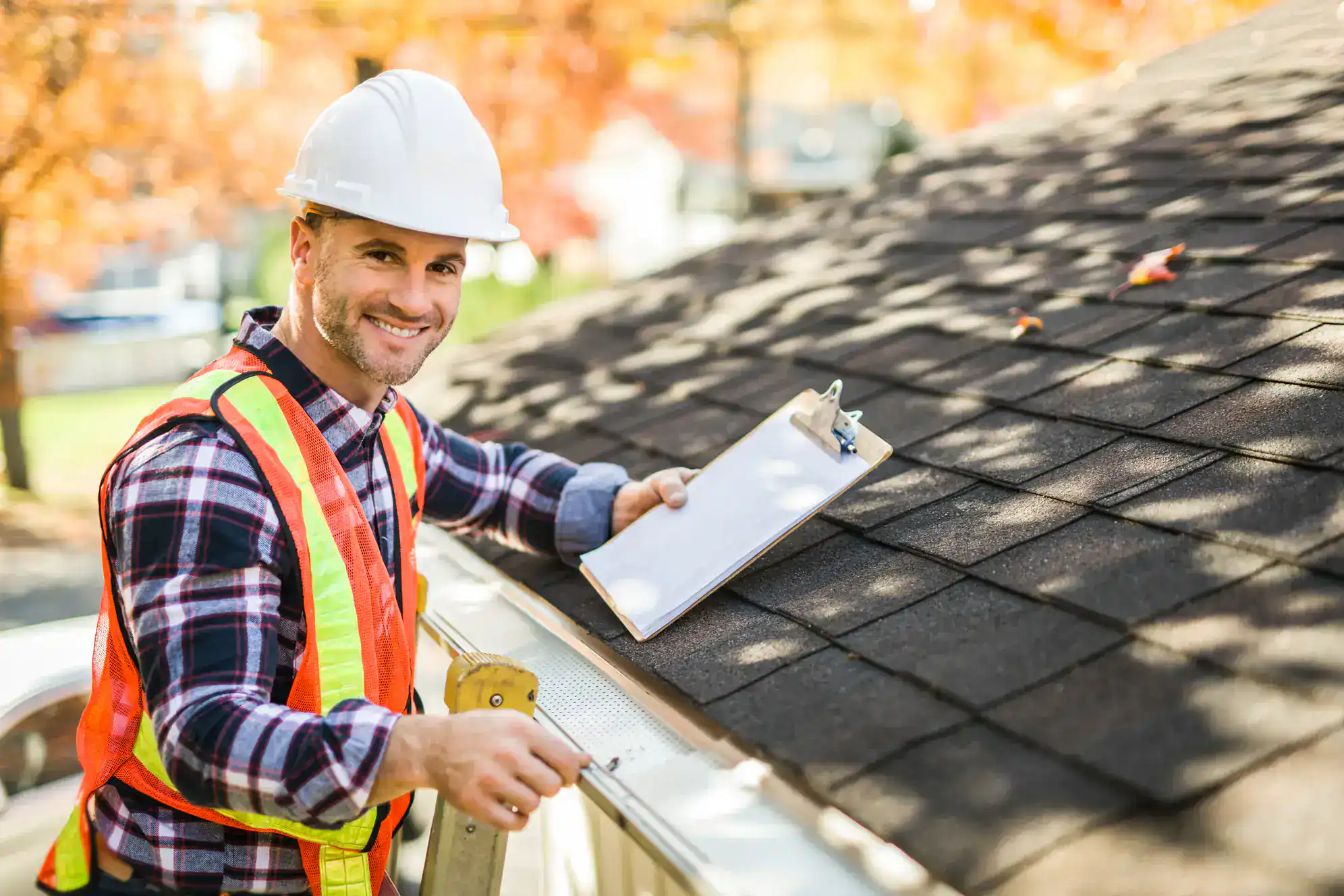
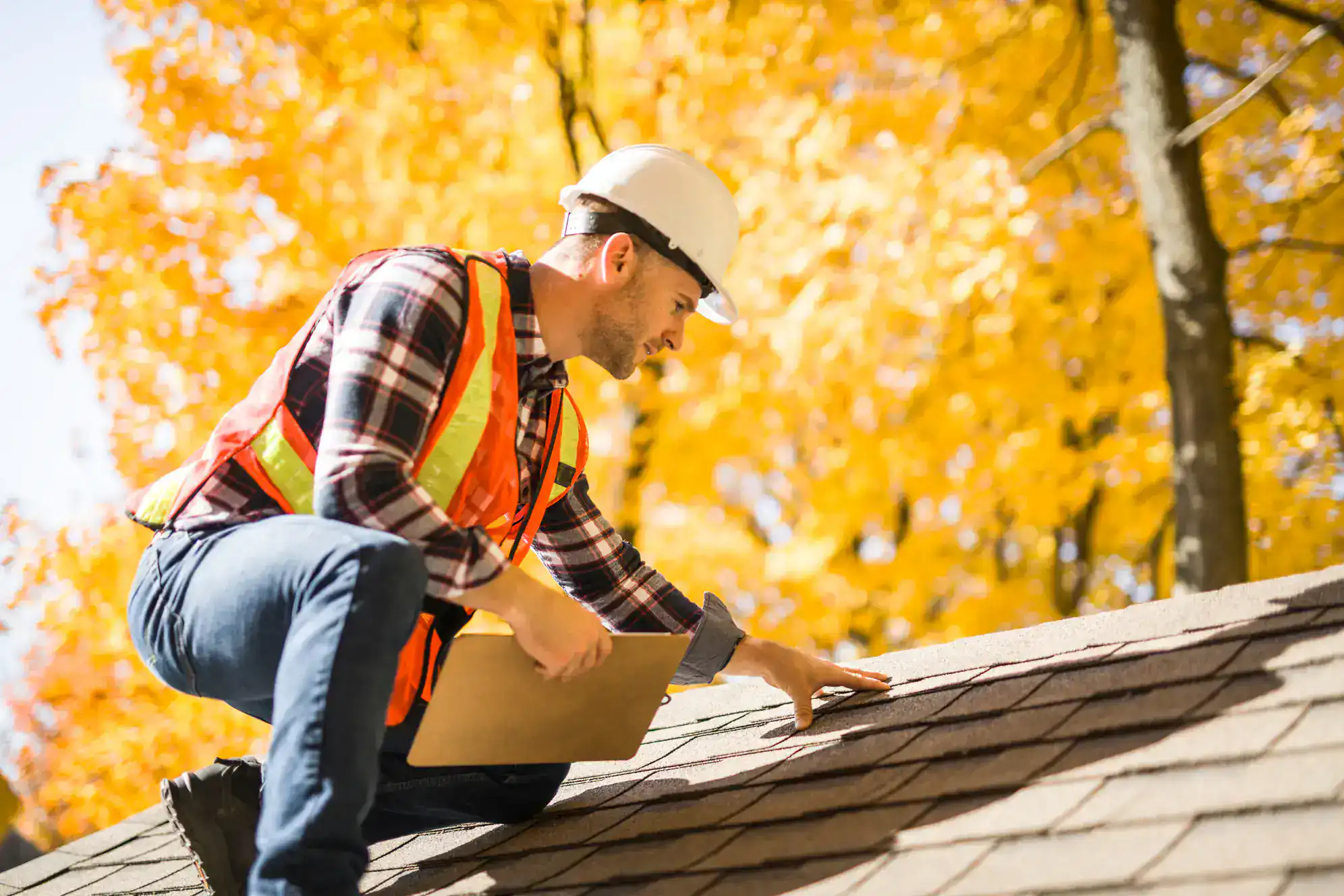
It starts with a free roof inspection. We get on the roof, look at what’s actually going on, and give you an honest read — not a worst-case pitch designed to sell you a replacement you may not need. We check flashing around chimneys and vents, look at shingle condition and granule loss, inspect the eave zones where ice dams tend to do their damage in Piscataway winters, and assess the decking underneath where we can.
From there, you get a written estimate that spells out exactly what needs to be done and what it costs. For most standard shingle repairs on a detached single-family home in Piscataway, you don’t need a permit — the township classifies that work as ordinary maintenance. We know the local code, so you don’t have to sort through it yourself.
Once you approve the scope, we schedule the work and complete it with the same crew that assessed the damage. When the job is done, we walk the site, clean up, and make sure everything is sealed correctly before we leave. The final invoice matches the estimate. That’s the whole process — no detours, no add-ons, no calls from a stranger telling you the scope changed.
Ready to get started?
Shingle and Flat Roof Repair in Piscataway, NJ
The majority of roofs in Piscataway are asphalt shingle — and most of them are somewhere between 20 and 50 years old. That’s the range where granule loss accelerates, flashing sealants crack, and the underlayment starts losing its integrity. Shingle roof repair in Piscataway means knowing how to match replacement shingles to the existing profile on an established colonial or ranch so the repair doesn’t look like a patch, and knowing when the decking underneath has taken enough moisture damage that it needs to be addressed before new shingles go on.
Emergency roof repair is a real part of what we do. When a summer storm drops 60 mph wind gusts on a Middlesex County neighborhood, shingles come off, flashing lifts, and water finds its way in fast. We respond to those calls and get temporary protection in place while the permanent repair is planned.
For homes with flat or low-slope sections — garages, additions, and some of the older ranch-style homes in areas like Piscataway Southwest — we work with TPO, EPDM, and modified bitumen systems. These aren’t shingle repairs done with the wrong materials. Flat roof repair requires its own diagnostic approach and its own repair methods, and that’s exactly how we treat it. Storm damage repair also includes documentation support if you’re working through a homeowners insurance claim — we give you what the adjuster needs to move the process forward.
Does roof repair in Piscataway, NJ require a permit from the township?
For most standard roof repairs and shingle replacements on a detached single-family or two-family home in Piscataway, no permit is required. The township’s Building Division classifies that work as ordinary maintenance, which means you’re not waiting on permit approvals or paying permit fees for a typical repair job. That’s a straightforward process compared to some other municipalities in New Jersey.
Where permits do come into play is when the work goes beyond surface-level repair — structural decking replacement on a larger scale, multi-family buildings, or projects that change the building envelope in a more significant way. We know where that line is in Piscataway, and we’ll tell you upfront whether your job falls into the permit-required category before any work starts. You won’t find out at the end that something needed approval and didn’t get it.
How do I know if I need a roof repair or a full roof replacement?
The honest answer is that it depends on how much of the roof is compromised, how old the system is, and what the decking looks like underneath. A repair makes sense when the damage is isolated — a section of shingles that took wind damage, a flashing failure around a chimney, a localized leak that hasn’t spread far. Replacement becomes the better conversation when the shingles are past their useful life across most of the surface, when granule loss is widespread, or when the decking has taken repeated moisture damage.
In Piscataway, where a lot of the housing stock was built between the 1950s and 1990s, many homes are on their second roof. If that second roof is now 20-plus years old, a repair might buy you a season or two — but it won’t change the underlying reality. We’ll tell you which situation you’re in after the inspection, with specifics, not a vague recommendation designed to push you toward the higher-ticket option.
What types of roof storm damage repair does USA Home Remodeling handle in Piscataway?
We handle the full range of storm-related damage that central New Jersey weather produces — missing or lifted shingles from high-wind events, flashing displacement, hail damage that cracks or dents shingles and accelerates granule loss, and ice dam damage that shows up after a hard winter. Piscataway’s location in Middlesex County puts it squarely in the path of summer thunderstorms that can produce serious wind, and nor’easters that load roofs with heavy snow and ice before the freeze-thaw cycle starts working on any weak points.
If the damage is significant enough that you’re filing a homeowners insurance claim, we can help with that process too. That means a written damage assessment, photo documentation of what we found and where, and clear communication about scope that gives your adjuster what they need. Most roofing contractors in this area show up with a crew and a number — we make sure you have the paperwork to actually get the claim processed correctly.
How much does roof repair typically cost in Piscataway, NJ?
The range is wide because the scope varies so much. A minor repair — sealing a flashing joint, replacing a small section of shingles after a wind event — might run a few hundred dollars. A more involved repair involving decking replacement, ice dam damage that spread under the underlayment, or a flat roof membrane section can move into the $1,500 to $3,500 range or higher depending on what’s there.
What we can tell you is that the cost of not fixing it compounds fast. A leak in a 1970s Piscataway home that gets ignored through one winter can turn a $400 repair into a project that involves decking, insulation, and interior remediation. The free inspection exists so you know exactly what you’re dealing with before you decide anything. You’ll get a written estimate with a clear number — not a ballpark, not a range with an asterisk. What we quote is what you pay if the scope doesn’t change.
What are the signs that I have a roof leak that needs immediate attention?
The most obvious signs are water stains on ceilings or walls, especially near exterior walls or in rooms directly below the roof line. But a lot of leaks in Piscataway homes — particularly in older colonials and ranches where the attic insulation has been there for decades — don’t show up on the ceiling right away. The water travels along the decking or rafters before it finds a place to drip, which means the source of the leak is often several feet from where you see the stain.
Other things to watch for: granules collecting in your gutters or at the base of downspouts (a sign the shingles are breaking down), soft or spongy spots when you walk on the roof, visible daylight through the attic, or a musty smell in upper-floor rooms that wasn’t there before. Any of these is a reason to get an inspection done before the next rain. Waiting to see if it gets worse is how a manageable repair becomes a much bigger job.
Can USA Home Remodeling repair a flat roof on my Piscataway garage or home addition?
Yes — and it’s worth being specific about why that matters. Flat and low-slope roofs require a completely different repair approach than pitched shingle roofs. The materials are different (TPO, EPDM, modified bitumen), the way water moves across the surface is different, and finding the actual source of a leak is different because water on a flat roof can travel horizontally a significant distance before it penetrates. A contractor who applies shingle-repair logic to a membrane roof is going to give you a temporary fix at best.
Piscataway has a lot of homes with flat-roof garages and additions — it’s common in the ranch and split-level stock that was built through the 1960s, 1970s, and 1980s in neighborhoods like Piscataway Southwest and Lake Nelson. If you’ve got a low-slope section that’s been leaking or showing bubbling, cracking, or pooling water, we assess it as its own system and repair it with the right materials for what’s actually there. That’s what gets you a repair that holds through the next season — not just the next dry week.