
Gutter Installation in Piscataway, NJ
Built for the Raritan's Worst Storms
Hear from Our Customers
Rain Gutter Installation in Piscataway
Piscataway sits in the Raritan River basin — one of the most flood-prone watersheds in New Jersey. When the National Weather Service issues flash flood warnings here citing rainfall rates of one to two inches per hour, a gutter system that’s clogged, undersized, or pulling away from the fascia isn’t just inconvenient. It’s sending water straight toward your foundation, your siding, and your basement walls.
When your gutters are properly installed and correctly sized, that changes. Water moves away from your home the way it’s supposed to. You stop seeing the staining along your siding after every storm. You stop wondering whether that damp smell in the basement is something serious. For homeowners in neighborhoods like Society Hill, New Market, and along the River Road corridor — areas that have felt the impact of storms like Hurricane Floyd and Ida firsthand — that kind of peace of mind is real and measurable.
Beyond flood protection, there’s the long-term picture. Piscataway’s mature tree canopy — especially near Johnson Park and the Rutgers Ecological Preserve — means heavy leaf loads every fall that clog standard gutters fast. A properly installed seamless system, sized and sloped for your specific roofline, handles that seasonal stress without backing up and overflowing onto your fascia boards. It protects the exterior your home has built up in value — and in a market where median sold prices are up over ten percent year over year, that’s not a small thing.
Gutter Contractors in Piscataway, NJ
We’ve been serving Piscataway and central New Jersey homeowners for over ten years — not through advertising, but through referrals from people who’ve actually had the work done. That’s how you build a reputation in a community like Piscataway, where neighbors talk and a bad experience travels fast.
We’re licensed with the NJ Division of Consumer Affairs under HIC License #13VH10605800 — a credential you can verify yourself on the state’s website. Manufacturer certifications from major exterior material brands back our installation quality, which means your new gutters qualify for manufacturer warranty coverage, not just a contractor’s handshake promise. Every estimate we provide is written, itemized, and free. There’s no pressure, no hidden fees, and no upselling replacement when a repair is genuinely the right call.
Serving Middlesex County communities including Piscataway, Edison, New Brunswick, and Woodbridge, our crews know the housing stock — the post-war colonials, the split-levels, the aging fascia boards that show up in established neighborhoods across Piscataway and the township. That local familiarity matters when you’re making a decision about your home.
Home Gutter Installation Piscataway, NJ
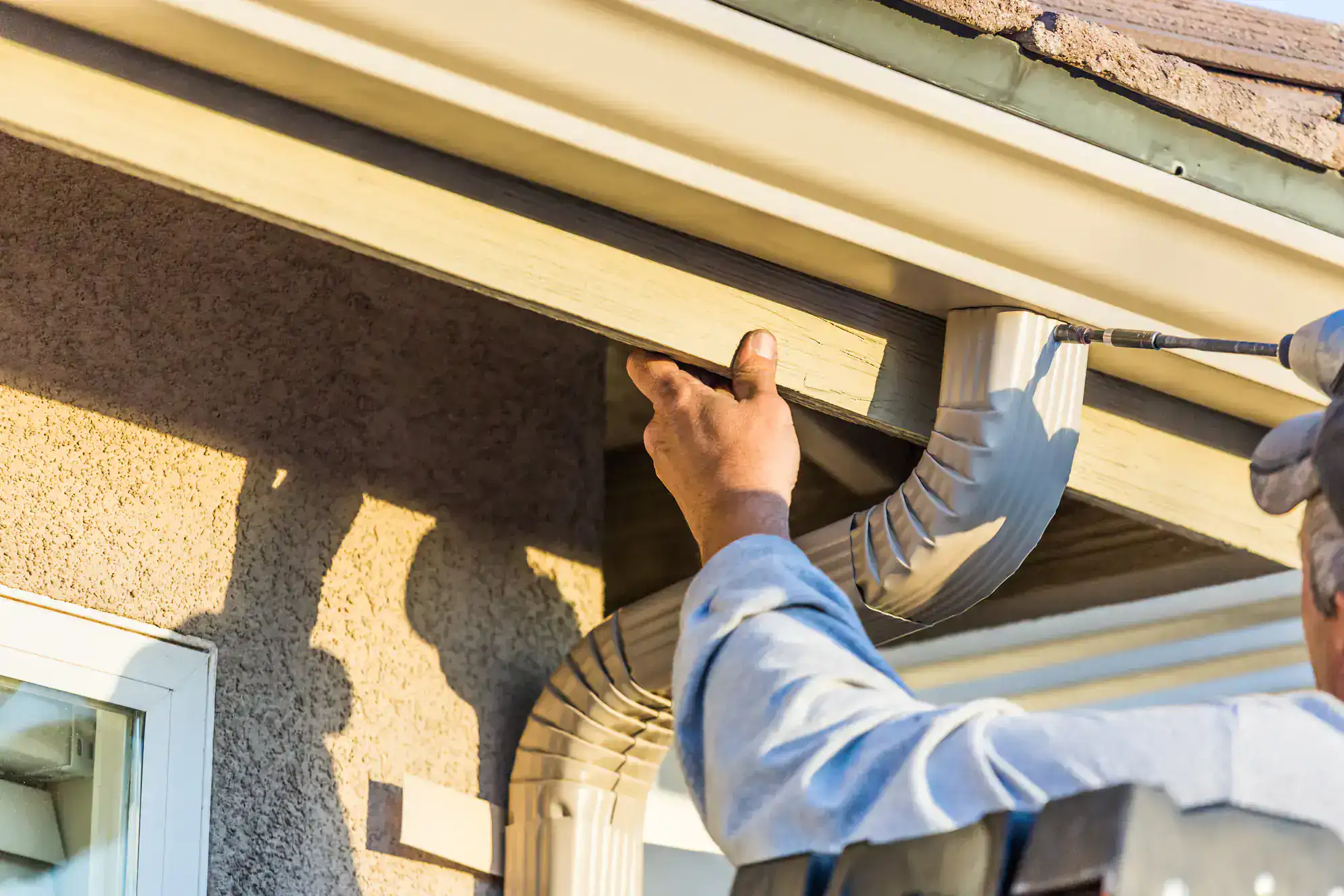
It starts with a free inspection. We come out, look at your existing gutter system, check the fascia and soffit condition behind the mounting points, evaluate the slope and downspout positioning, and give you an honest read on what’s actually going on. If repair is the right answer, that’s what you’ll hear. If replacement makes more sense — because the system is too old, too damaged, or undersized for your roofline — that gets explained clearly, not just recommended.
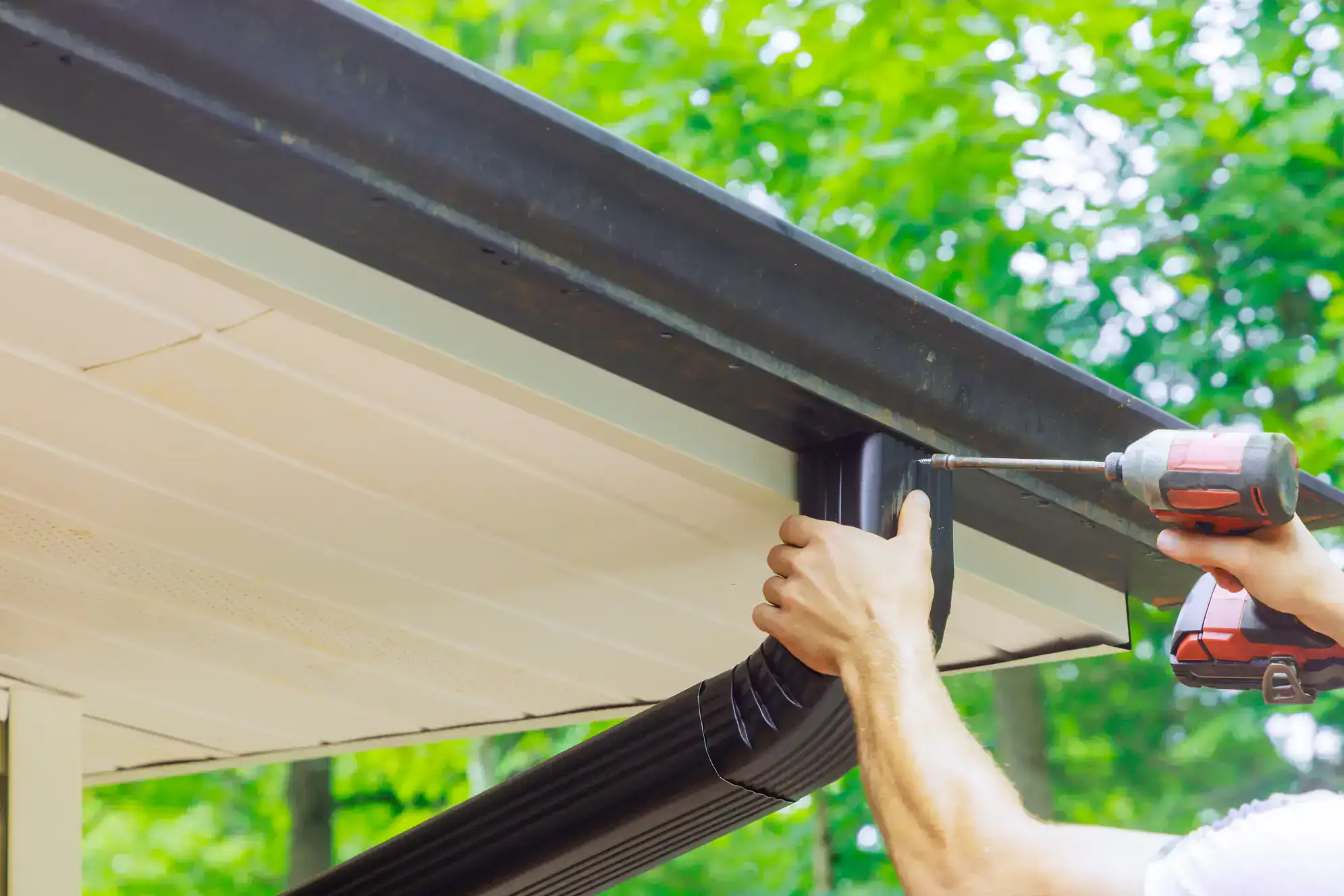
From there, you get a written estimate with no vague line items. Once you approve it, installation is scheduled. We custom-fabricate the gutters on-site using professional seamless gutter equipment — cut to the exact length of each run on your home, not pre-sectioned pieces joined together every ten feet. That matters in Piscataway’s climate, where freeze-thaw cycles through the winter stress every joint and seam in a sectional system until they start leaking.
Slope is calculated before a single bracket goes in. Industry standard is a quarter inch of drop per ten feet toward the downspout — and that’s what we measure and set, not eyeball. Downspouts are sized to your roof’s square footage and positioned to discharge well away from your foundation. For homes near the river corridor or in low-lying sections of Piscataway, that discharge positioning isn’t a minor detail. It’s the whole point. When the job is done, the site is cleaned up and we walk you through what was installed and why.
Ready to get started?
Roof Gutter Installation in Piscataway
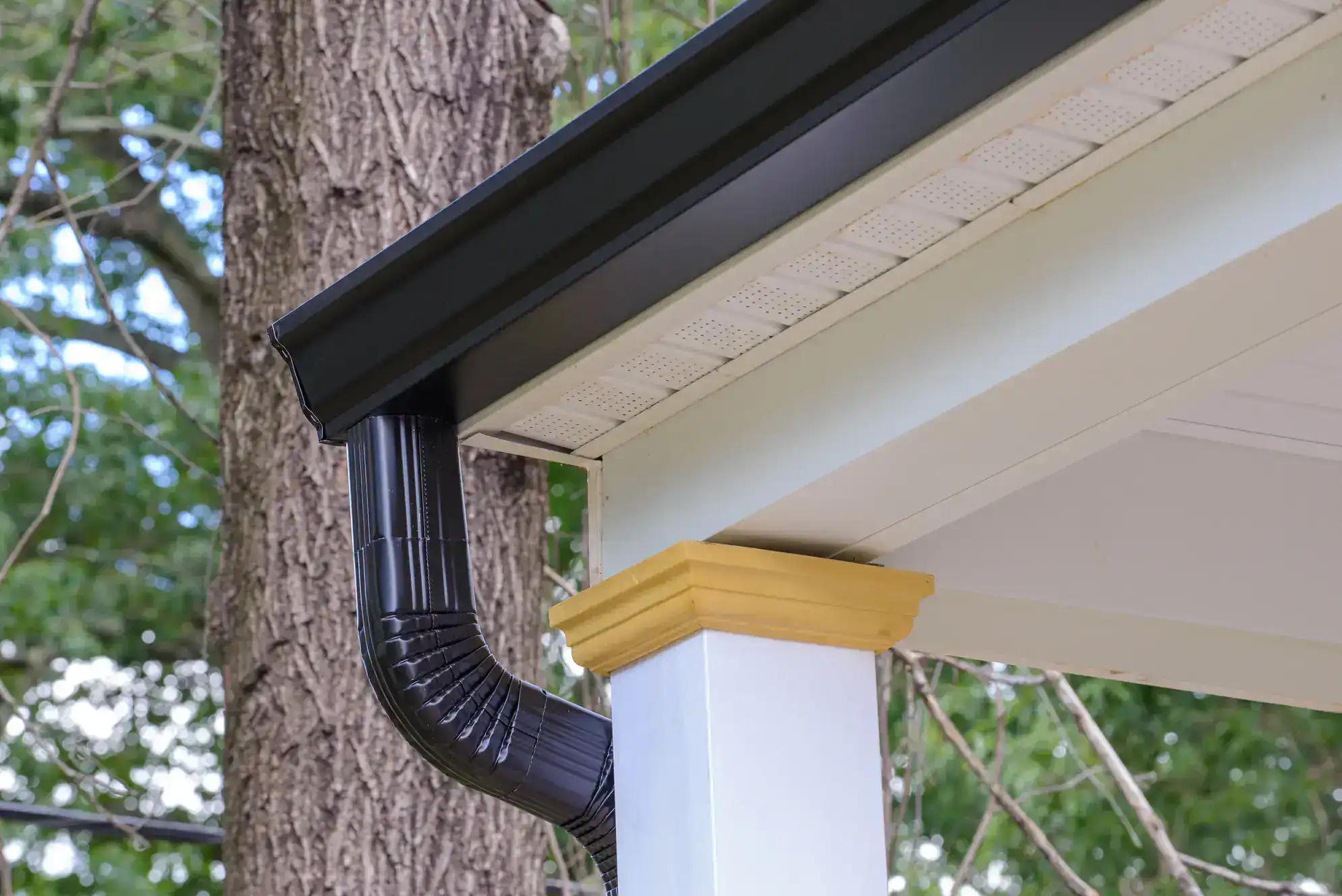
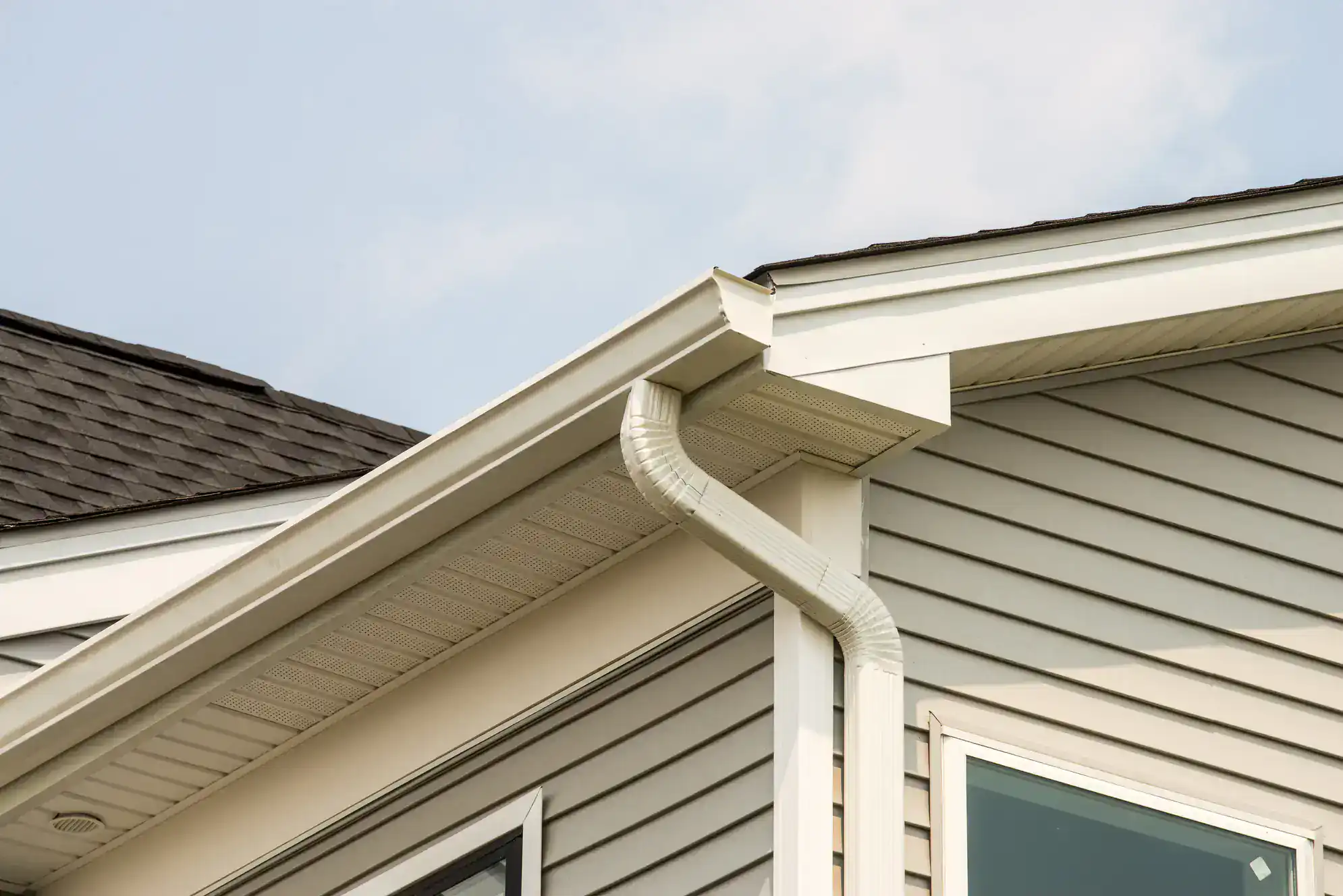
We specialize in seamless aluminum gutter installation — fabricated on-site, cut to your home’s exact measurements, and installed with correct pitch and proper downspout sizing. No pre-cut sections, no seam points where water pools and eventually leaks. Aluminum is the right material for central New Jersey’s four-season weather: it handles the summer heat, the freeze-thaw cycles in January and February, and the weight of wet leaves and ice without warping or cracking under normal conditions.
Beyond the gutter line itself, every installation includes an evaluation of the fascia boards the gutters mount to. In Piscataway’s older housing stock — particularly the homes built through the 1960s and 1970s in neighborhoods like Lake Nelson and Possumtown — rotted or soft fascia is one of the most common reasons a new gutter system fails within a few years of installation. If the fascia needs attention, that gets flagged before installation begins, not discovered after.
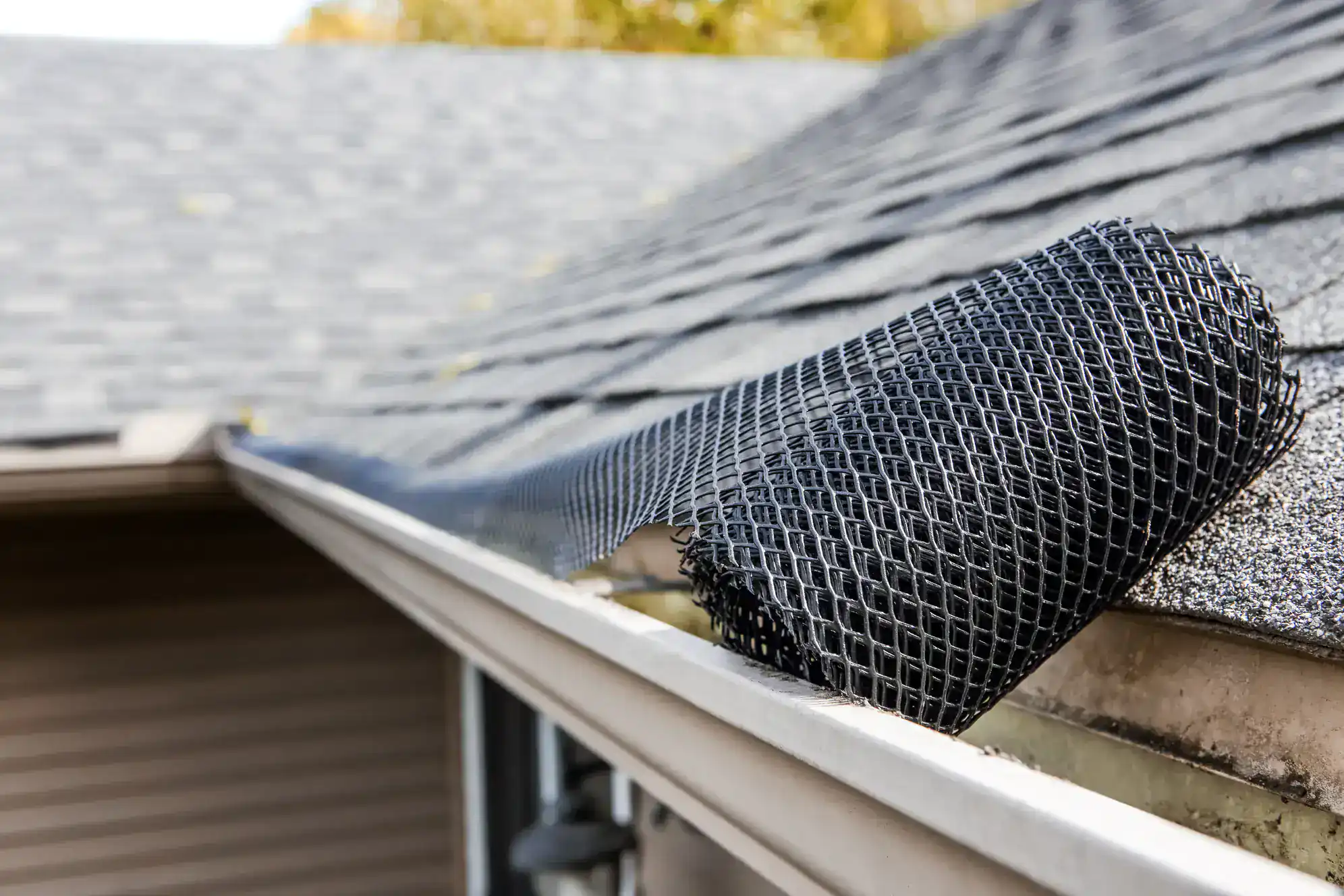
Gutter guards are available as an add-on for homeowners who want to reduce seasonal maintenance. Given the leaf load from Piscataway’s mature tree canopy, they’re worth a conversation during the estimate. We also assist with storm damage insurance claims — documenting the damage, communicating with adjusters, and helping you understand what your homeowner’s policy actually covers. That’s a service most local gutter contractors in Middlesex County don’t offer, and it matters when a storm has done real damage to your exterior.
Do I need a permit for gutter installation in Piscataway, NJ?
In most cases, a standalone gutter installation in Piscataway does not require a building permit. Gutter work is generally classified as routine home improvement under New Jersey’s construction code, and it typically falls below the threshold that triggers a formal permit application with the township’s Construction Code Office.
That said, if the installation involves structural repairs to the fascia, soffit, or roofline — or if it’s part of a larger exterior project — a permit may be required depending on the scope. The safest way to handle this is to work with a licensed NJ Home Improvement Contractor, which is a legal requirement for any contractor doing home improvement work in Piscataway regardless of permit status. We hold HIC License #13VH10605800, verifiable through the NJ Division of Consumer Affairs, and handle all work in compliance with applicable code requirements.
How do I know if I need new gutters or just a repair in Piscataway?
It depends on what’s actually failing, and that’s exactly what the free inspection is designed to answer. Some issues — a loose bracket, a minor seam separation, a downspout that’s come disconnected — are straightforward repairs that don’t justify full replacement. Others are signs that the system is at the end of its useful life: gutters that are visibly pulling away from the fascia along multiple sections, persistent overflow during moderate rain (not just during extreme storms), significant rust or corrosion, or gutters that were undersized for the roofline to begin with.
In Piscataway, where summer storms can drop two inches of rain in under an hour and fall leaf loads from the township’s mature tree canopy put consistent stress on older systems, gutters that were marginal five years ago may simply be done. Homes built in the 1960s through 1980s — which make up a large portion of Piscataway’s single-family housing stock — are often on their original or first-replacement gutter system. An honest inspection tells you which situation you’re actually in, and that’s the only way to make a decision that makes financial sense.
What size gutters does my Piscataway home actually need?
Most residential homes use either five-inch or six-inch gutters, and the right choice depends on your roof’s square footage, pitch, and the local rainfall intensity your system needs to handle. In Piscataway, where the National Weather Service has documented flash flood conditions with rainfall rates of one to two inches per hour, sizing matters more than it does in drier or lower-intensity climates. A five-inch gutter that handles average rainfall can overflow completely during a summer microburst if it’s not sized for peak volume.
Downspout sizing is equally important and often overlooked. A standard two-by-three-inch downspout handles roughly 600 square feet of roof area. Many of Piscataway’s larger colonial and split-level homes — particularly in neighborhoods like Society Hill and Lake Nelson — have roof areas that require three-by-four-inch downspouts, or multiple downspouts per run, to move water fast enough during heavy rain. Getting this wrong doesn’t show up on a dry day. It shows up when you need the system most.
How long do gutters typically last on homes in central New Jersey?
Aluminum gutters — the most common material used in residential gutter installation — have a general lifespan of twenty to thirty years under normal conditions. In central New Jersey, “normal conditions” includes a full four-season stress cycle: summer thunderstorms, fall leaf loads, winter freeze-thaw cycles that stress mounting hardware and joints, and spring snowmelt. That cycle shortens the effective lifespan compared to more temperate climates, particularly for older sectional systems where the seams are the first point of failure.
For Piscataway homeowners, the bigger factor is often installation quality rather than material age alone. Gutters installed without correct slope pool standing water, which accelerates corrosion from the inside. Gutters mounted to deteriorating fascia boards pull away from the house regardless of how new the aluminum is. A system that was installed correctly and maintained reasonably — kept clear of debris through the fall season — can realistically reach the upper end of that lifespan. One that wasn’t installed right may need replacement in ten years or less.
Can storm damage to my gutters be covered by homeowner's insurance in NJ?
Yes, in many cases it can — but the outcome depends heavily on how the damage is documented and whether it’s attributed to a covered event. Most standard homeowner’s insurance policies in New Jersey cover sudden, storm-related damage from wind, hail, or falling debris. What they typically don’t cover is damage from deferred maintenance — gutters that failed because they were old and neglected, not because a storm caused the failure.
Piscataway homeowners who’ve dealt with storm events know that the adjuster process isn’t always straightforward. Damage needs to be correctly identified, photographed, and tied to a specific weather event. We assist with that process — documenting the damage, communicating directly with your insurance company, and helping you understand what your policy actually covers before any work begins. Given the Raritan basin’s history with storms like Hurricane Floyd and Ida’s remnants, this isn’t an edge case for this area. It’s a real, recurring situation that a lot of homeowners in Middlesex County have had to navigate.
Why does it matter whether my gutter contractor is licensed in New Jersey?
In New Jersey, any contractor performing home improvement work is legally required to be registered with the NJ Division of Consumer Affairs as a Home Improvement Contractor. This isn’t optional — it’s state law, and it exists specifically to protect homeowners from contractors who take payment and disappear, do substandard work with no recourse, or create liability issues when workers are injured on your property without proper insurance.
Hiring an unlicensed contractor in Piscataway carries real financial risk beyond just the quality of the work. If something goes wrong — a worker gets hurt, the installation fails, a warranty claim needs to be filed — you may have no legal standing to recover anything. Manufacturer warranties on materials are also typically void when installation isn’t performed by a licensed contractor. We hold NJ HIC License #13VH10605800, which you can verify directly through the NJ Division of Consumer Affairs website. That license number exists so you don’t have to take anyone’s word for it.