
Gutter Installation in Rutherford, NJ
Rutherford's Older Homes Deserve More Than a Quick Gutter Swap
Hear from Our Customers
Rain Gutter Installation in Bergen County
Most gutter failures don’t announce themselves with a collapse. They show up as a water stain running down your brick, a soft spot along the fascia, or a basement that stays damp after every hard rain. By the time you notice it, the damage has usually been building for a while.
Rutherford gets hit with serious summer storms — the kind that drop two inches of rain in under an hour. If your gutters are undersized, clogged, or pitched wrong, that water doesn’t go down the downspout. It goes over the edge and straight toward your foundation. On the tight lots that make up most of Rutherford’s residential streets, that water has nowhere to spread — it pools against your house or pushes toward the property next door.
Then there’s the fall. The mature oaks and maples lining streets throughout the borough are part of what makes Rutherford look the way it does — but they drop a serious leaf load every October. Gutters that aren’t sized and sloped correctly turn into leaf traps, and leaf traps turn into overflow channels every time it rains. A properly installed seamless system, sized for your actual roof area and positioned with the right slope, handles all of it — the summer downpours, the fall debris, and the freeze-thaw cycles that stress every joint every winter.
Gutter Contractors in Rutherford, NJ
We’ve been doing exterior work across northern New Jersey for over ten years. We’re licensed with the NJ Division of Consumer Affairs (HIC #13VH10605800), certified by major manufacturers, and we’ve worked on enough pre-war homes in Bergen County to know that a gutter job is rarely just a gutter job.
When we come out to your home in Rutherford — whether it’s a Colonial on a side street off Park Avenue or a two-family near the Rutherford Station area — we’re not just measuring linear footage. We’re checking the fascia boards, evaluating the roofline, and looking at where the water goes when it leaves the downspout. Because on Rutherford’s smaller lots, that last part matters more than most people realize.
We don’t do high-pressure estimates or vague invoices. You get a written quote with line-item pricing before anything starts. No surprises, no upsells you didn’t ask for.
Home Gutter Installation Rutherford, NJ
It starts with a free inspection. We come out, look at your existing gutters, check the fascia and roofline condition, and tell you honestly what we find — whether that’s a straightforward replacement, a repair, or something that needs to be addressed before new gutters go up. If your fascia boards have taken on moisture over the years, which is common in homes throughout Rutherford’s older residential grid, we’ll tell you upfront rather than let that become your problem six months later.
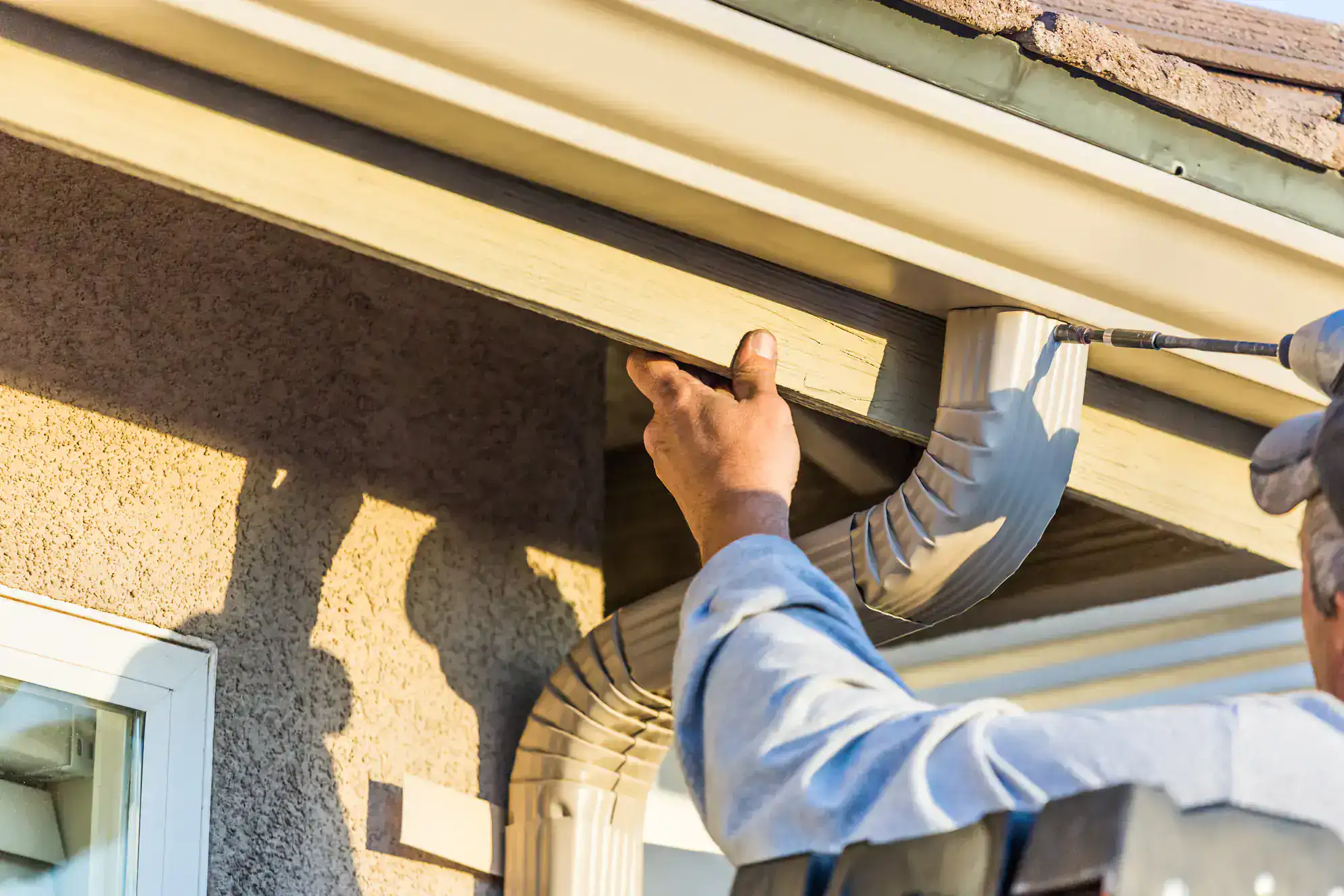
If you move forward, we fabricate your seamless gutters on-site using a portable roll-forming machine. That means your gutters are cut to the exact length of each run on your specific roofline — not pieced together from pre-cut sections. Fewer seams means fewer places for water to escape, and fewer failure points when Bergen County’s winters start doing what they do.
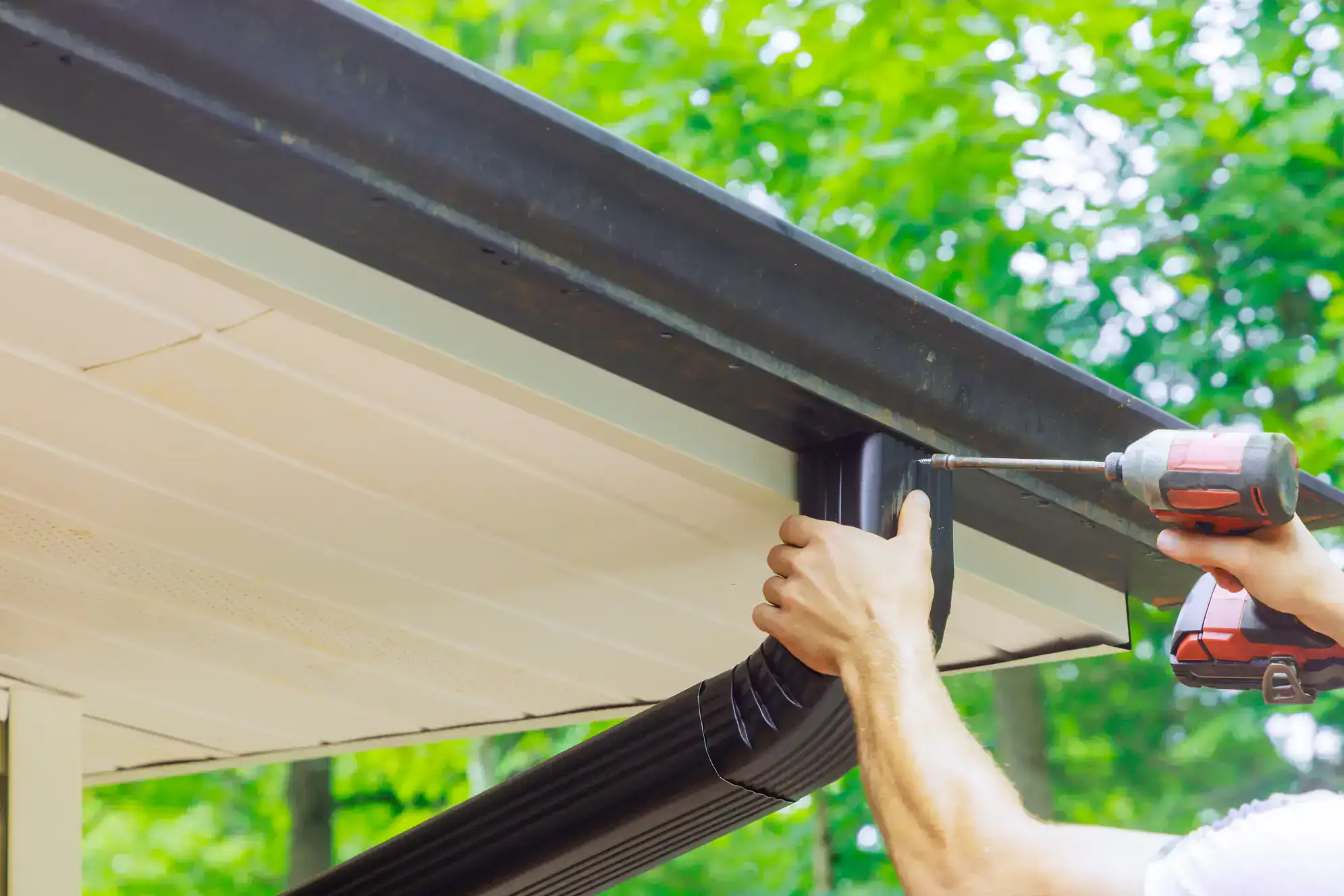
Installation includes proper slope calculation, secure bracket mounting, and downspout placement that directs water away from your foundation — not toward it. Given how close homes sit to each other throughout most of the borough, we’re deliberate about where that water ends up. Before we leave, everything gets checked, cleaned up, and confirmed to be draining the way it should.
Ready to get started?
Roof Gutter Installation Company Rutherford, NJ
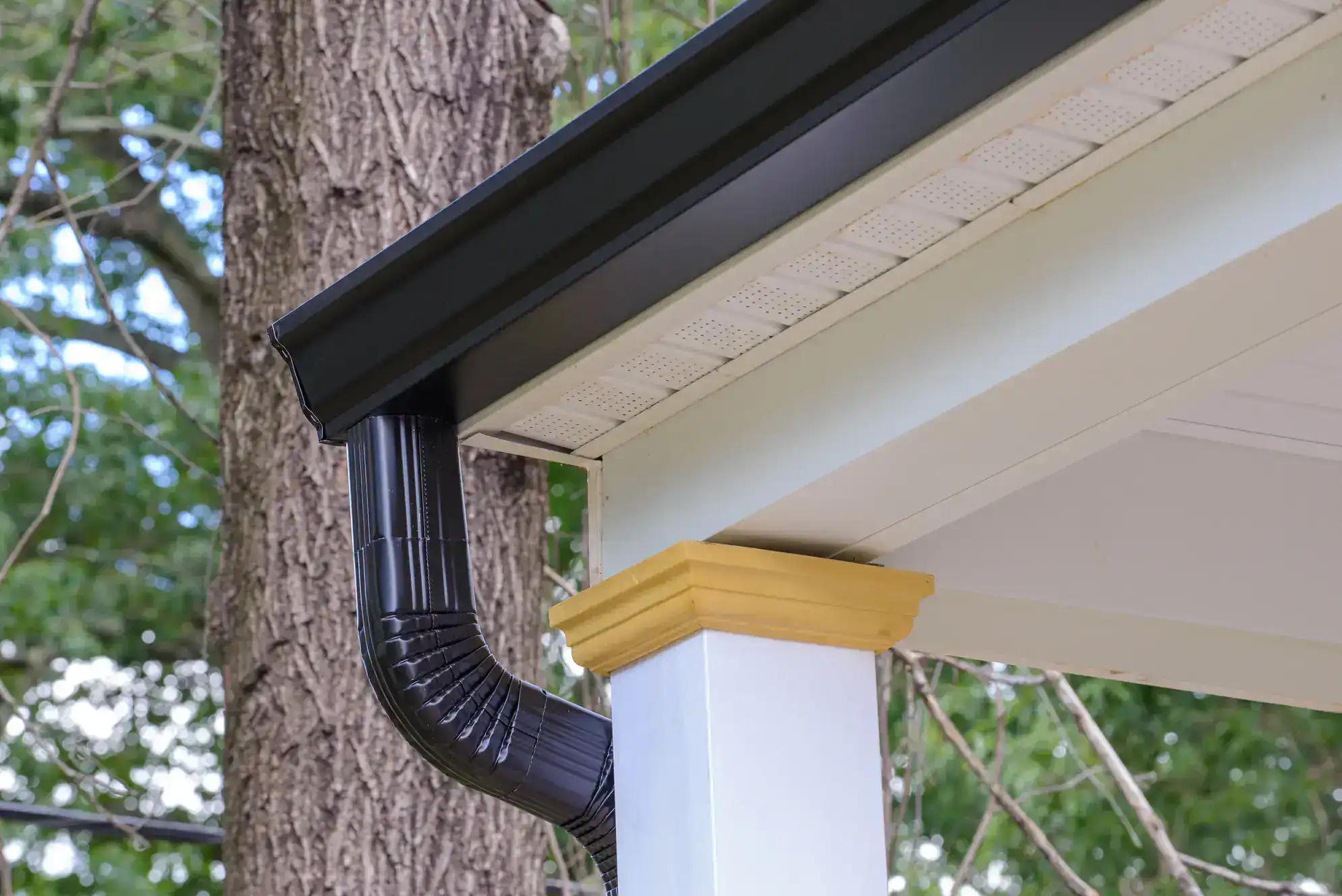
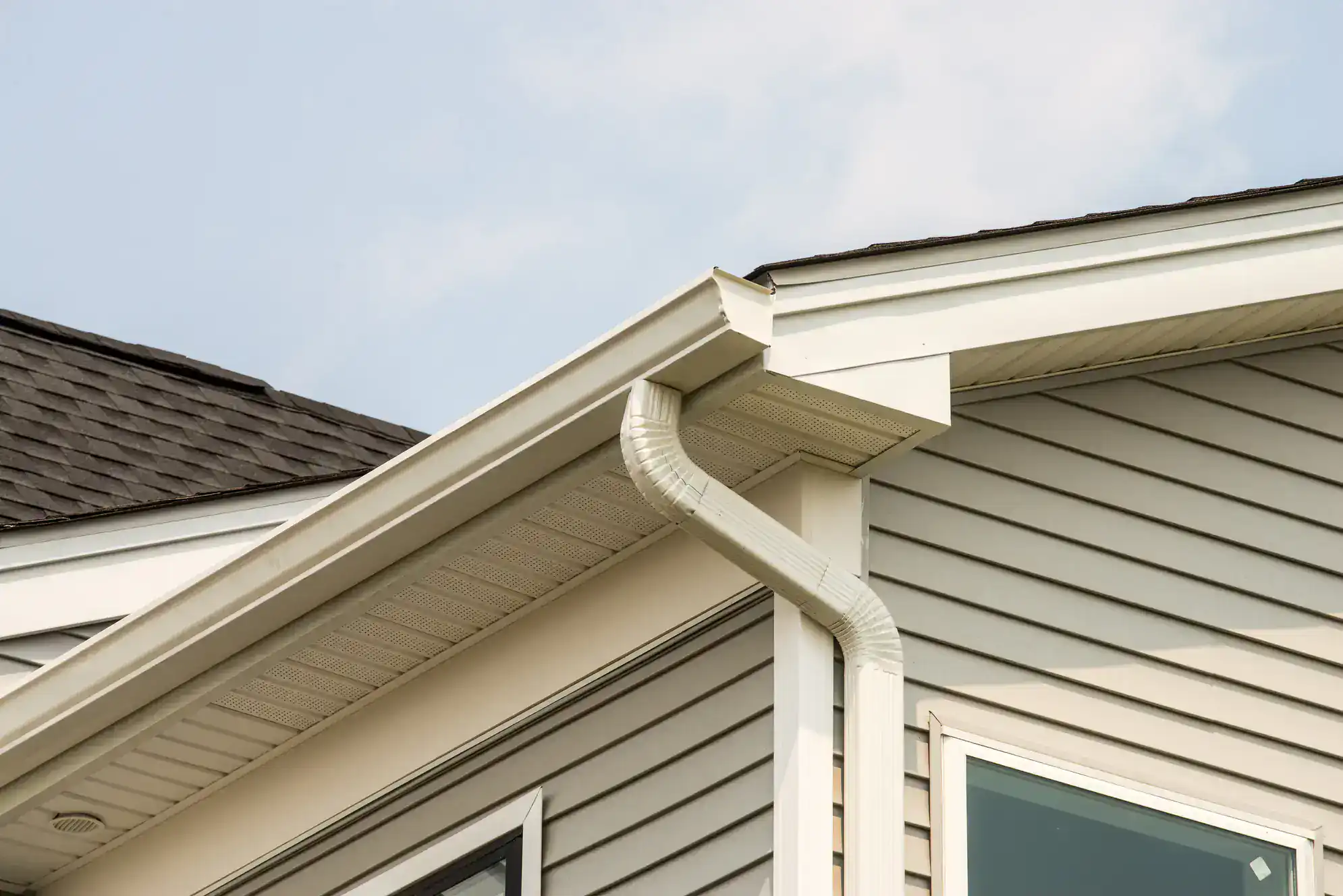
The standard seamless aluminum gutter system we install is custom-fabricated for each home, available in over 20 colors, and built to handle what New Jersey actually throws at a house — not just light rain and mild winters. For most Rutherford homes, we recommend 5-inch or 6-inch K-style gutters depending on roof pitch and square footage, with downspout sizing matched to the drainage load. We don’t apply a one-size formula; we size the system to your roof.
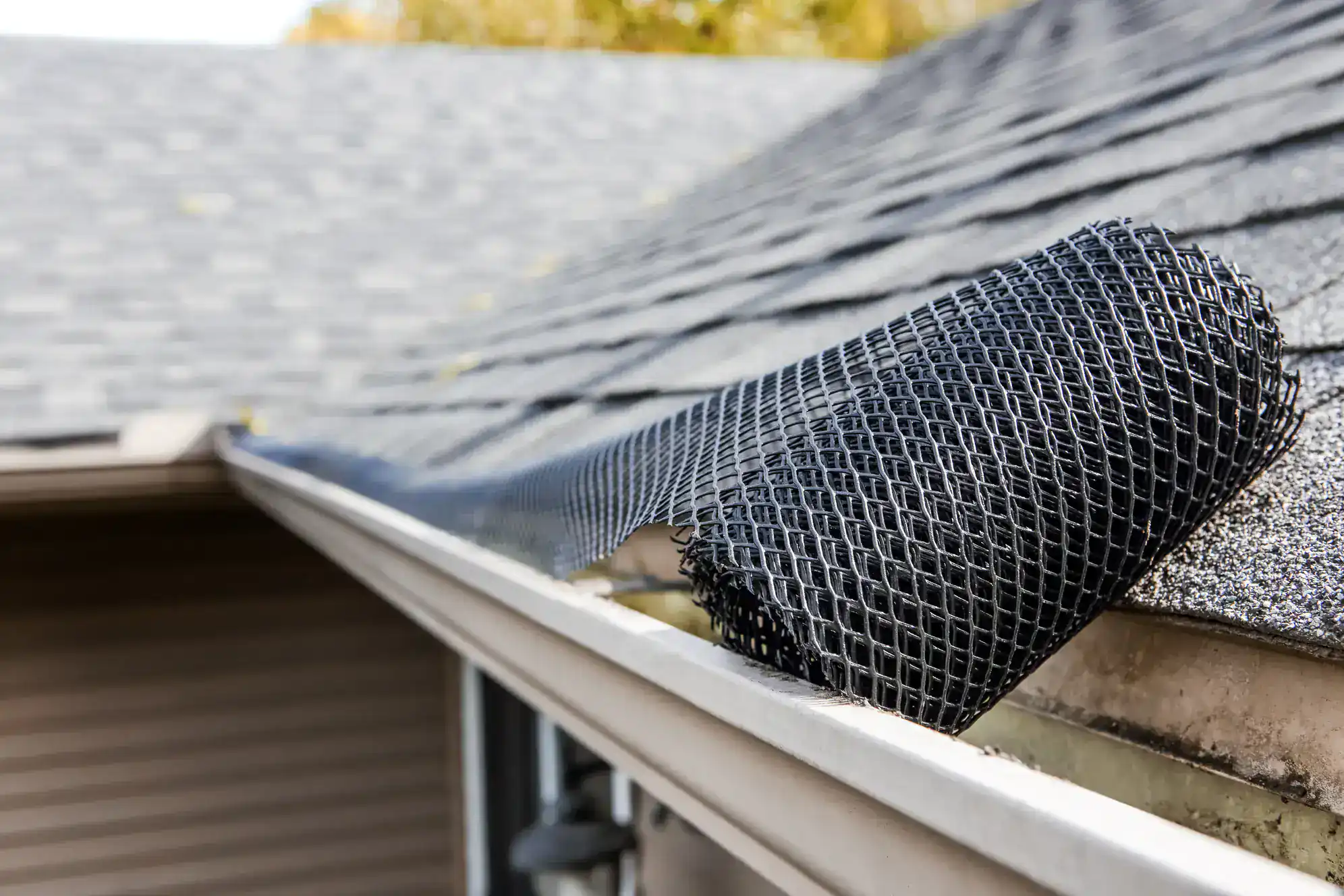
Because so many homes in Rutherford were built between 1920 and 1960, we frequently find that fascia boards need attention before a new gutter system goes up. We address that as part of the scope rather than leaving it as a loose end. We also evaluate whether gutter guards make sense for your specific situation — if you’re surrounded by mature trees, the conversation about guards is worth having before leaf season hits again.
If your gutters were damaged in a storm, your homeowner’s insurance may cover part or all of the replacement. We document the damage, help you build the claim, and work directly with your adjuster so you’re not navigating that process alone. It’s a service we’ve provided to homeowners across Bergen County, and it’s included — not an add-on.
How do I know if my gutters need full replacement or just a repair?
The honest answer is that it depends on what’s actually failing. If you’re dealing with one or two leaking seams or a downspout that came loose, a targeted repair often makes more sense than replacing the whole system. But if your gutters are pulling away from the fascia along multiple runs, showing visible rust or corrosion, or consistently overflowing despite being clear of debris, replacement is usually the more cost-effective call — because repairs on a failing system tend to compound.
In Rutherford specifically, we see a lot of older sectional gutter systems where the spike-and-ferrule fasteners have worked their way out of softened fascia boards over the years. That’s not a repair situation — that’s a structural issue with the mounting surface that needs to be addressed before any new gutter system goes up. When we do your inspection, we’ll show you exactly what we’re looking at and explain what makes sense, so you’re making an informed decision rather than just taking our word for it.
What does seamless gutter installation actually cost in Rutherford, NJ?
For a typical single-family home in Rutherford, seamless aluminum gutter installation generally runs between $1,800 and $4,500 depending on the linear footage, the number of stories, downspout count, and whether any fascia repair is needed before installation. Homes on the larger end of Rutherford’s housing stock — two-story Colonials with longer rooflines — tend to land in the higher part of that range.
What affects cost most isn’t always the gutters themselves. It’s the condition of what the gutters attach to. Older homes throughout the borough often have fascia boards that have absorbed years of moisture from failing gutters, and addressing that properly adds to the scope. We include a written, itemized estimate before any work begins, so you know exactly what you’re paying for and why. There are no line items that appear after the job starts.
Can clogged or failing gutters actually cause basement flooding in my home?
Yes — and it’s one of the more common connections that homeowners don’t make until after the fact. When gutters overflow, the water doesn’t just run down the side of the house. It saturates the soil directly against your foundation, and over time that hydrostatic pressure finds its way in through cracks, mortar joints, or basement window wells. In Rutherford’s older housing stock, where foundations are frequently original stone or early concrete block, that vulnerability is real.
The western sections of Rutherford near the Passaic River corridor already deal with elevated groundwater concerns during heavy rain events. For homes in those areas, proper gutter drainage isn’t an abstract maintenance item — it’s part of a larger water management picture that starts at the roofline and ends at the foundation. Correctly sized gutters, properly sloped, with downspouts extended at least six feet from the house, meaningfully reduce the amount of water your foundation has to deal with every time Bergen County gets a serious storm.
Do I need a permit for gutter installation in Rutherford, NJ?
For a standard like-for-like gutter replacement on an existing residential structure in New Jersey, a building permit is typically not required. Most boroughs, including Rutherford, treat straightforward gutter replacement as routine exterior maintenance rather than a structural alteration. That said, if the scope of work includes significant fascia repair, changes to how drainage connects to the ground, or anything that affects grading near the foundation, it’s worth confirming with the Rutherford Borough Building Department at Borough Hall on Park Avenue before work begins.
What is required regardless of permit status is that your contractor holds a valid NJ Home Improvement Contractor license issued by the Division of Consumer Affairs. That’s a statewide requirement, not borough-specific, and it’s the most important credential to verify before signing anything. Our HIC license number is #13VH10605800 — it’s publicly searchable on the NJ Division of Consumer Affairs website if you want to confirm it yourself.
How do Rutherford's winters affect gutters, and what should I watch for?
Bergen County winters run through repeated freeze-thaw cycles — temperatures drop, water in the gutters freezes, then it thaws and refreezes again. That cycle puts stress on every joint in a sectional gutter system and can cause gutters to pull away from the fascia under the weight of ice buildup. It also creates the conditions for ice dams, where ice forms at the gutter line and forces meltwater back up under the shingles, causing roof and interior damage that has nothing to do with the gutters themselves but starts there.
Seamless gutters handle this better than sectional systems because there are no joints to stress and crack. Proper slope and downspout sizing also help — water that drains efficiently doesn’t sit in the gutter long enough to freeze in the first place. If you’ve noticed your gutters sagging, pulling away from the roofline, or developing visible gaps after winter, that’s worth having looked at before the next season. Spring is when most of that winter damage becomes visible, and it’s also the best window to get ahead of it before the summer storm season starts.
Will my homeowner's insurance cover storm-damaged gutters in Rutherford?
It depends on the cause. Homeowner’s insurance in New Jersey typically covers sudden, accidental damage — wind, hail, a fallen branch — but doesn’t cover damage that resulted from wear, age, or lack of maintenance. If a storm took out a section of your gutters or bent downspouts off the house, there’s a reasonable chance your policy covers some or all of the replacement cost, minus your deductible.
The part most homeowners get stuck on is the documentation and the adjuster conversation. Insurers don’t always volunteer the full scope of what’s covered, and adjusters sometimes minimize storm damage claims without pushback. We’ve helped homeowners throughout Bergen County document gutter and exterior damage, prepare the claim correctly, and work through the adjuster process — not as a separate service, but as part of how we handle storm-related jobs. If you’re not sure whether your damage qualifies, the free inspection is the right starting point. We’ll tell you what we see, and if it looks like a viable claim, we’ll help you move it forward.