
Gutter Installation in River Edge, NJ
River Edge Homes Are Old — Your Gutters Probably Are Too
Hear from Our Customers
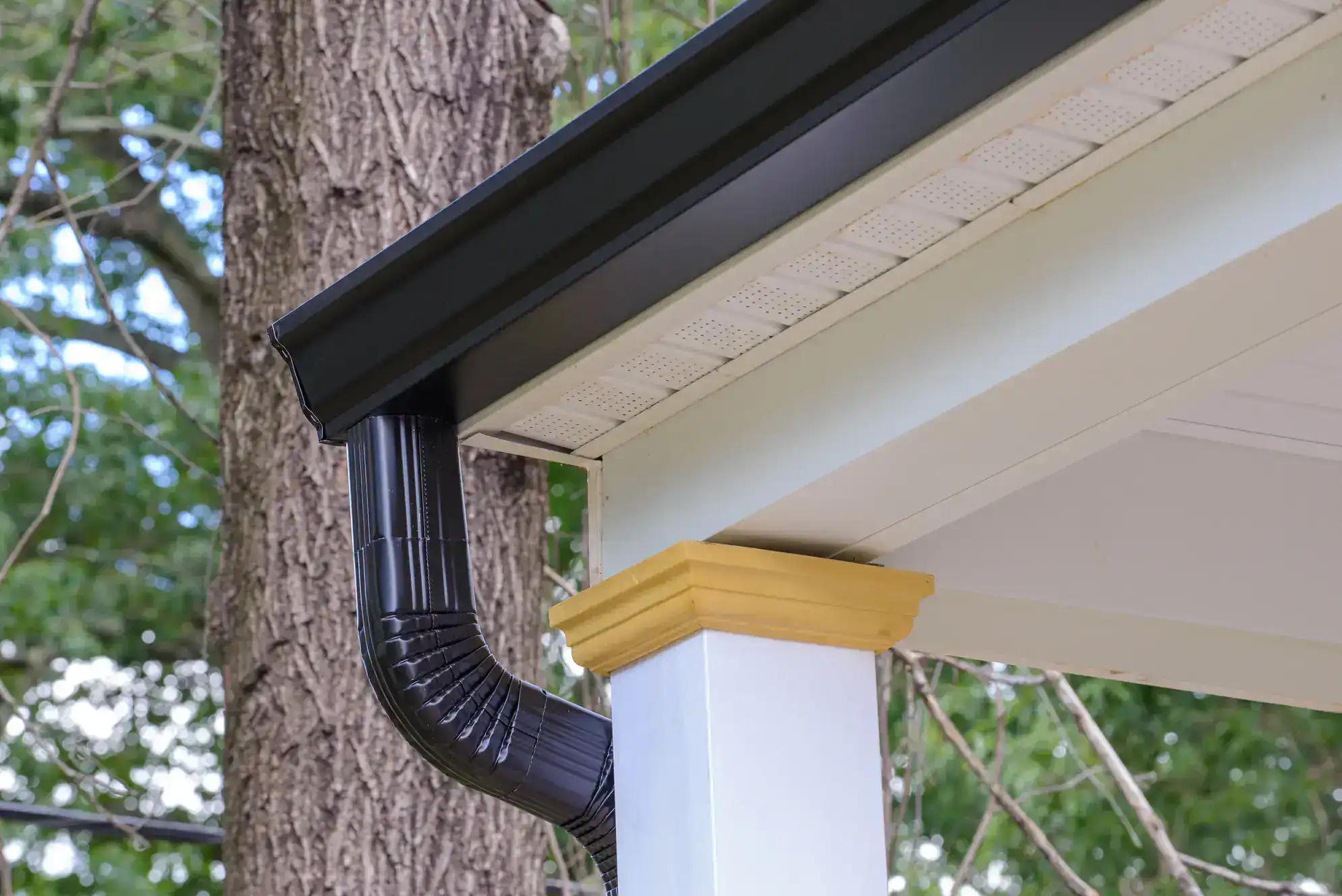
Rain Gutter Installation in Bergen County
When gutters are doing their job, water moves off your roof and away from your home in a controlled, predictable path. That means no overflow sheeting down your siding, no pooling against your foundation, and no slow water damage working its way into your basement over time. For a lot of River Edge homeowners, that last one is the real concern — and it should be.
The homes throughout River Edge were mostly built in the post-war era, and many of them sit on full basements. When gutters fail — whether from age, clogged debris, or improper slope — that water has to go somewhere. It usually goes toward the foundation. In a borough that sits along the Hackensack River and has lived through its share of Bergen County storms, that’s not a small risk.
Beyond the structural side, properly installed gutters protect your fascia boards, your siding, and your landscaping from the kind of gradual erosion that’s easy to miss until the repair bill is hard to ignore. River Edge’s mature tree canopy means heavy leaf loads every fall, and undersized or aging gutters can’t keep up. Getting this right isn’t about aesthetics — it’s about protecting a home that’s worth protecting.
Gutter Contractors Serving River Edge, NJ
We’ve been working on exterior renovations across River Edge and northern New Jersey for over ten years. We’re licensed through the NJ Division of Consumer Affairs (HIC #13VH10605800), certified by major manufacturers, and built almost entirely on referrals — which means our track record speaks before we do.
What sets us apart from gutter-only specialists is that we look at the full picture. When we come out to a River Edge home — whether it’s a cape cod off Bogert Road or a colonial near Cherry Hill School — we’re checking the fascia condition, evaluating the roof’s drainage load, and making sure the downspout placement actually makes sense for your property. A lot of gutter failures trace back to problems that have nothing to do with the gutter itself.
We offer free inspections and written estimates with no hidden fees. No pressure, no vague quotes — just a clear answer on what your home needs and what it’s going to cost.
Home Gutter Installation in River Edge, NJ
It starts with a free on-site inspection. We come out, look at your existing gutters, check the fascia boards, assess the roofline, and figure out what’s actually going on. On homes in River Edge — where the housing stock is older and previous work has often been done in layers — that inspection step matters more than people realize. We’ve found rotted fascia, improper slope, and undersized downspouts on homes that looked fine from the street.
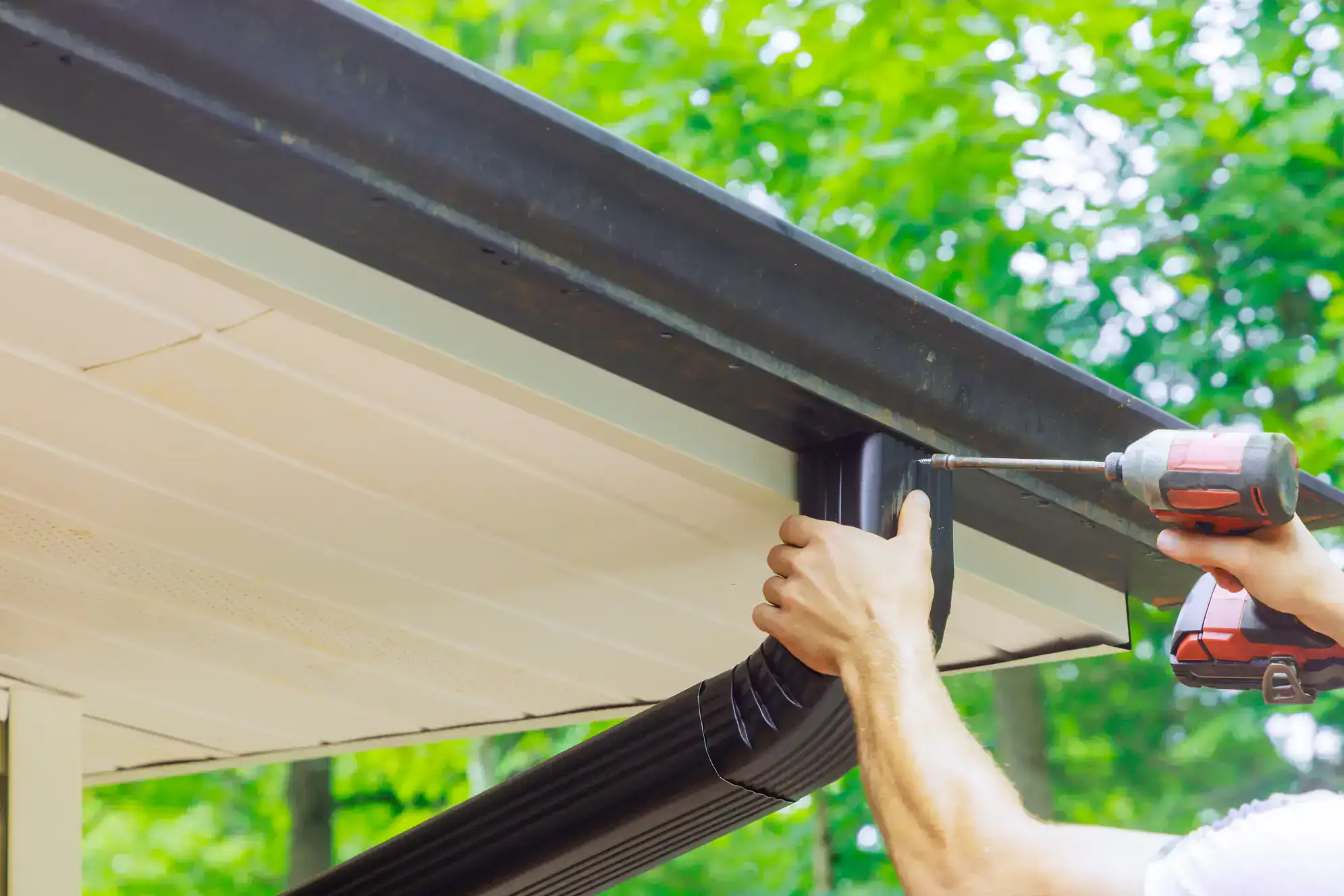
Once we know what we’re working with, we give you a written estimate that breaks down exactly what’s included and what it costs. If the fascia needs attention before new gutters go up, we’ll tell you that upfront — not after we’ve already started. From there, we fabricate seamless aluminum gutters on-site, cut to the exact dimensions of your roofline. No pre-cut sections, no field seams, no guessing.
Installation day is straightforward. We mount the gutters with the correct slope — a quarter inch of pitch per ten feet toward the downspout — position the downspouts to move water well away from your foundation, and clean up before we leave. If your project involves storm damage, we can also work directly with your insurance adjuster to document everything properly and help you get the coverage you’re entitled to under your policy.
Ready to get started?
Roof Gutter Installation Company in River Edge, NJ
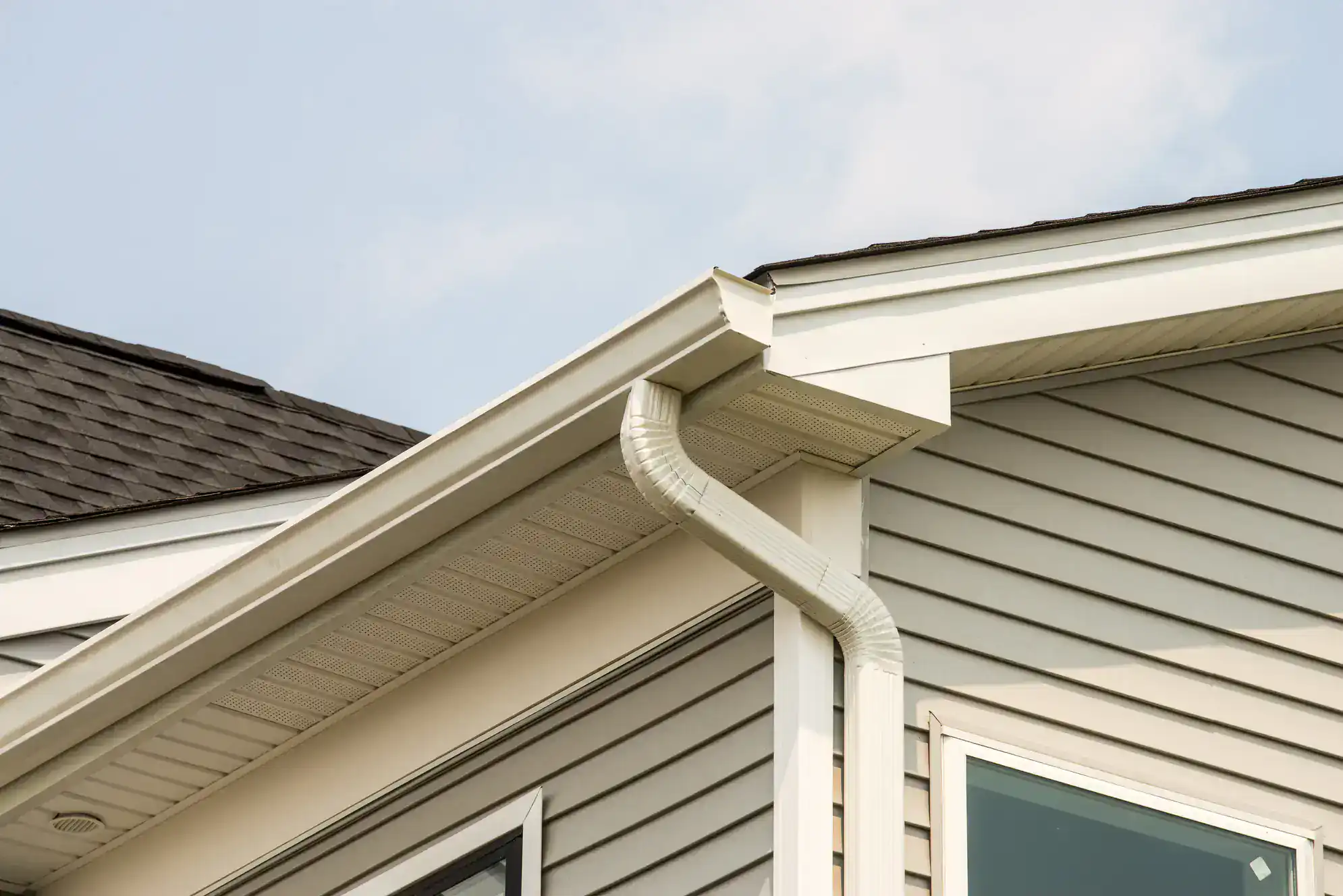
The core of what we install is seamless aluminum gutters, fabricated on-site to fit your home’s exact roofline. Seamless means no joints along the run — and no joints means far fewer leak points over time. For River Edge homes with complex rooflines, multiple dormers, or uneven eave lines from decades of settling, that custom fit makes a real difference in how the system performs.
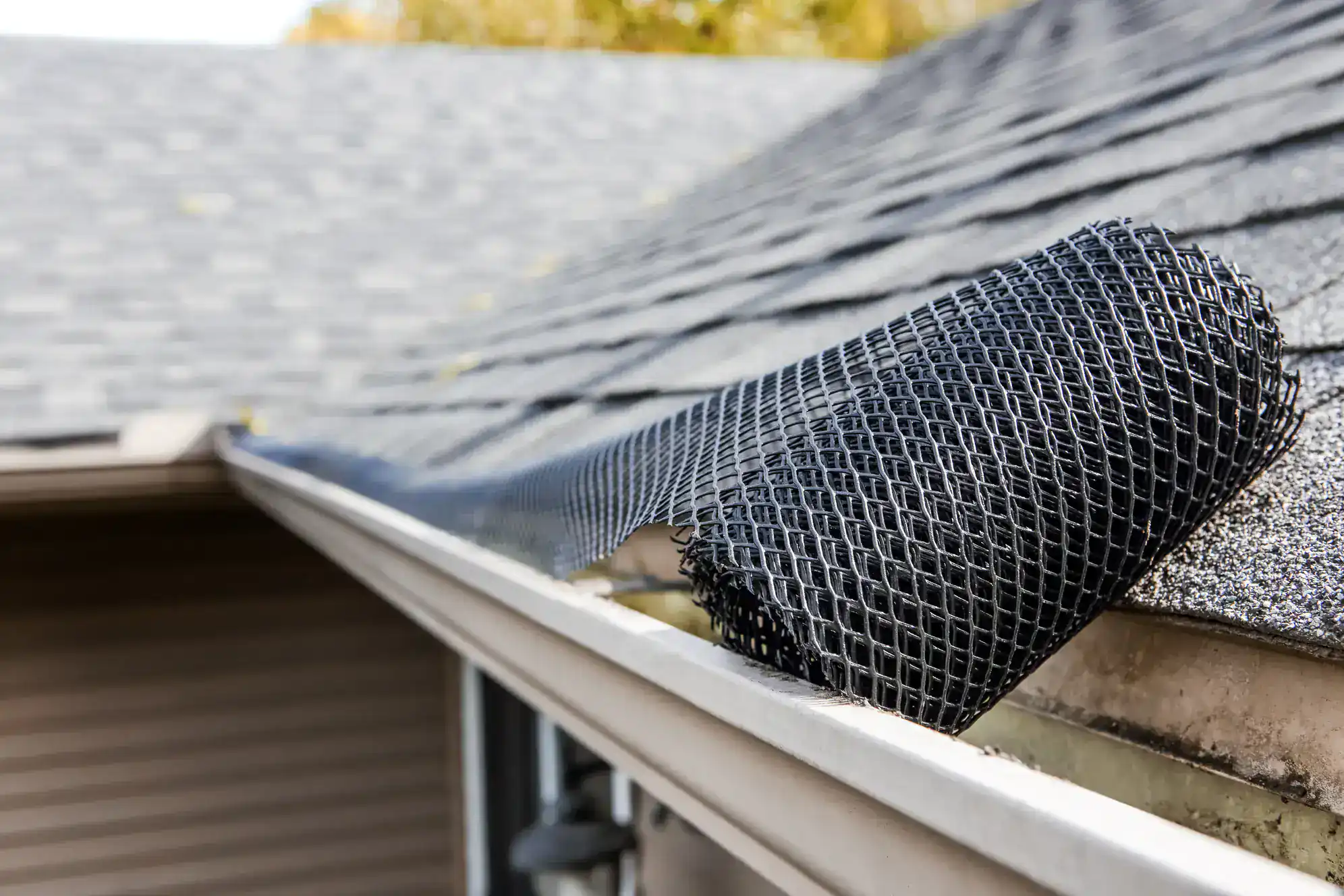
We size gutters and downspouts based on your roof’s actual square footage and the rainfall intensity that Bergen County storms deliver — not a generic formula. The county has recorded nearly double the national average for major weather events, and an undersized system will show you exactly why that matters the first time a summer storm rolls through. We also evaluate whether gutter guards make sense for your property, particularly on homes surrounded by the oak and maple canopy that lines most of River Edge’s residential streets.
Every installation includes a fascia evaluation, proper slope calibration, and downspout positioning designed to carry water far enough from your foundation to actually matter. We’re also fully familiar with the NJ Uniform Construction Code requirements enforced by the River Edge Building Department, so if your project triggers permit requirements — particularly when fascia or structural components are involved — we handle that correctly from the start.
Do I need a permit for gutter installation in River Edge, NJ?
For a straightforward like-for-like gutter replacement, a permit is typically not required in River Edge. But the answer changes depending on what else is involved. If the fascia boards need to be replaced, if there are structural modifications to the roof edge, or if the scope of work goes beyond swapping out the gutters themselves, you may be looking at permit requirements under the New Jersey Uniform Construction Code — which the River Edge Building Department enforces at 705 Kinderkamack Road.
The safest approach is to have a licensed contractor evaluate the full scope before assuming no permit is needed. River Edge’s own guidance to homeowners specifically flags the risk of skipping this step and of hiring unlicensed contractors. We hold NJ HIC License #13VH10605800, which means we’re already operating within the framework the borough expects — and we’ll flag any permit requirements before work begins, not after.
How do I know if my gutters need to be replaced or just repaired?
The honest answer is that it depends on what’s actually failing. Isolated leaks at a seam or a single sagging section can often be repaired. But if you’re seeing multiple problem areas, if the gutters are pulling away from the fascia in more than one spot, or if the system is 25 to 30 years old, you’re usually better off replacing than patching.
In River Edge, where the median home age is around 74 years, a lot of the gutters we inspect were installed during the 1980s or 1990s renovation wave. That puts them well past their expected service life. Aluminum gutters typically last 20 to 25 years under normal conditions — and Bergen County winters, with their freeze-thaw cycles, tend to accelerate wear on older systems. A free inspection will give you a clear picture of which category your gutters fall into, so you’re not spending money on repairs that won’t hold.
Why are my gutters overflowing during heavy rain even though they look clean?
If the gutters look clear but water is still spilling over the edge during a storm, the most common culprit is improper slope. Gutters need a quarter inch of pitch per ten feet of run toward the downspout. If that slope is off — which happens frequently on older River Edge homes where the fascia has settled or shifted over decades — water pools in the middle of the run instead of draining toward the outlet. That pooling leads to overflow, and eventually to corrosion and bracket failure.
The second most common cause is undersized gutters or downspouts. A 4-inch or early 5-inch gutter system on a home with a large roof area simply can’t move water fast enough when Bergen County delivers a heavy convective storm — the kind that drops two inches of rain in under an hour. We size every system to your actual roof square footage and local rainfall data, not a one-size-fits-all spec.
What size gutters does a typical River Edge home actually need?
Most residential homes in River Edge are well-served by 5-inch K-style gutters, but a meaningful number — particularly colonials with steeper roof pitches or larger footprints — need 6-inch gutters to handle the drainage volume properly. The right answer depends on your roof’s square footage, the pitch of the roof, and where the downspouts are positioned.
What we see fairly often on older homes throughout River Edge is original 4-inch gutters that were never upgraded when the home was renovated. Those systems are undersized by today’s standards and will overflow in any significant rain event regardless of how well they’re maintained. We calculate the correct sizing during the inspection, so you’re not installing a new system that’s already behind on capacity from day one.
Can damaged gutters actually cause basement flooding in an older Bergen County home?
Yes — and it’s one of the more direct connections that homeowners don’t always make until after the fact. When gutters overflow or downspouts discharge water too close to the foundation, that water saturates the soil along the foundation wall. Over time, hydrostatic pressure builds up against the wall and water finds its way in through cracks, gaps at the footing, or through porous block construction — which is common in River Edge’s older housing stock.
Bergen County has documented flood risk that goes beyond just the Hackensack River corridor. For homes in River Edge, proper gutter function is one of the most cost-effective things you can do to reduce basement water intrusion risk. It won’t solve a serious structural drainage problem on its own, but failed gutters are frequently the first link in a chain that ends with a wet basement and a much larger repair bill. Getting the gutters right is the logical first step.
Does homeowner's insurance cover gutter replacement after storm damage in New Jersey?
It can, but it depends on how the damage occurred and how it’s documented. Most standard homeowner’s insurance policies in New Jersey cover sudden storm damage — wind, hail, falling tree limbs, or debris impact. What they typically don’t cover is wear and tear or gradual deterioration over time. The distinction matters, and how the damage is written up in the claim often determines whether it gets approved.
Bergen County’s storm history — nine documented hurricanes, multiple severe storm events, and regular high-wind episodes — means that legitimate storm damage claims are not unusual here. The problem is that many homeowners either don’t realize their gutters were damaged in a storm, or they document it in a way that doesn’t satisfy the adjuster. We work directly with insurance adjusters, know how to photograph and document storm damage properly, and can help you understand what your policy actually covers before you decide how to proceed. A free inspection is the right starting point either way.