
Gutter Installation in Northvale, NJ
Built for Northvale's Trees, Weather, and Homes
Hear from Our Customers
Rain Gutter Installation Northvale, NJ
When gutters fail in Northvale, the damage doesn’t announce itself. It shows up quietly — in a damp basement corner, a fascia board that’s soft to the touch, or a foundation crack that didn’t exist five years ago. By the time it’s visible, the repair bill is real. A properly installed gutter system stops that chain before it starts.
Northvale’s housing stock is a big part of why this matters more here than in newer developments. A lot of the colonials, split-levels, and ranch homes throughout the borough were built in the mid-twentieth century — and many are still running on original or near-original drainage systems. Add the mature oak and maple canopy that lines most residential streets, and you have gutters dealing with serious leaf load every fall, right before the freeze-thaw cycle hits. That seasonal one-two punch — debris accumulation followed by ice — is exactly what causes gutters to pull away from the fascia, overflow during summer downpours, and send water toward foundations on sloped Northern Valley lots.
The outcome you’re after isn’t just “new gutters.” It’s a drainage system that handles what Bergen County actually throws at it — heavy summer storms, October leaf drops, January ice — without sending water somewhere it shouldn’t go. That’s what a properly evaluated and installed system delivers.
Gutter Contractors in Northvale, NJ
We’ve been working on residential exteriors across Northern New Jersey for over ten years, with deep experience on the specific homes and conditions you find in Northvale and the surrounding Bergen County area. That means we understand the aging drainage systems on post-war colonials, the wear patterns that come from real northeastern weather seasons, and the foundation protection challenges that come with sloped Northern Valley lots.
We hold NJ Home Improvement Contractor License #13VH10605800, issued by the NJ Division of Consumer Affairs, which is publicly verifiable and legally required for any contractor performing this work in Northvale.
What actually sets us apart isn’t a tagline. It’s the fact that every estimate starts with a full exterior evaluation — fascia condition, roof drainage volume, downspout placement, slope calculation — before a single bracket gets mounted. Gutters don’t exist in isolation, and neither does our work. We also carry manufacturer certifications that make enhanced, manufacturer-backed warranties available to you, not just a contractor’s verbal promise.
Free estimates, no hidden fees, and insurance claim assistance for storm-damaged systems are standard. No surprises at invoice time.
Home Gutter Installation Northvale, NJ
It starts with a free on-site inspection. Before any materials are ordered or any pricing is discussed, we evaluate the full exterior — the fascia boards behind where the gutters will mount, the roof’s drainage area, the grade of the lot, and where water needs to go once it leaves the downspout. On Northvale’s sloped Northern Valley terrain, that last point matters more than people expect. A downspout that terminates too close to the foundation on a graded lot doesn’t protect anything — it just redirects the problem.
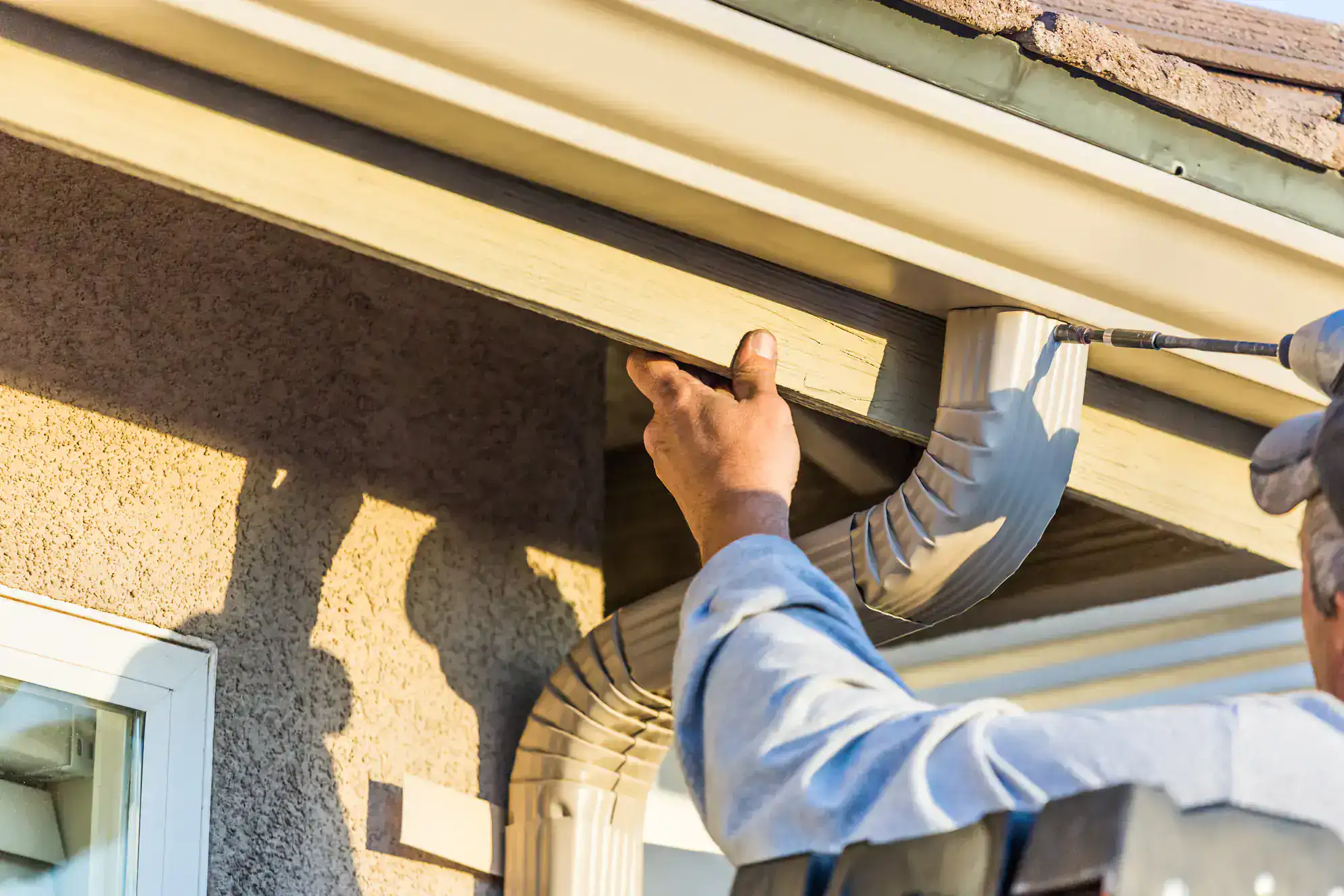
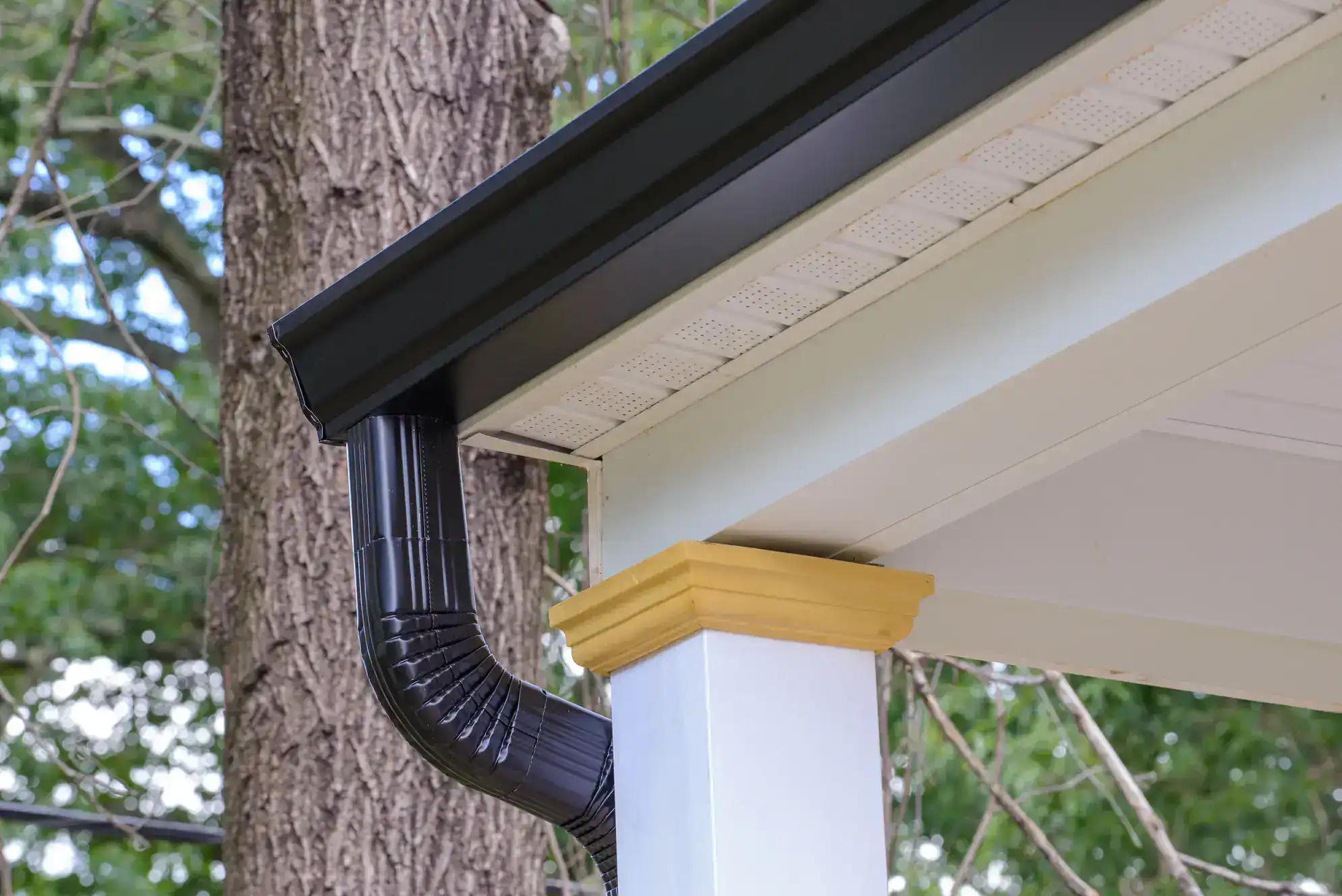
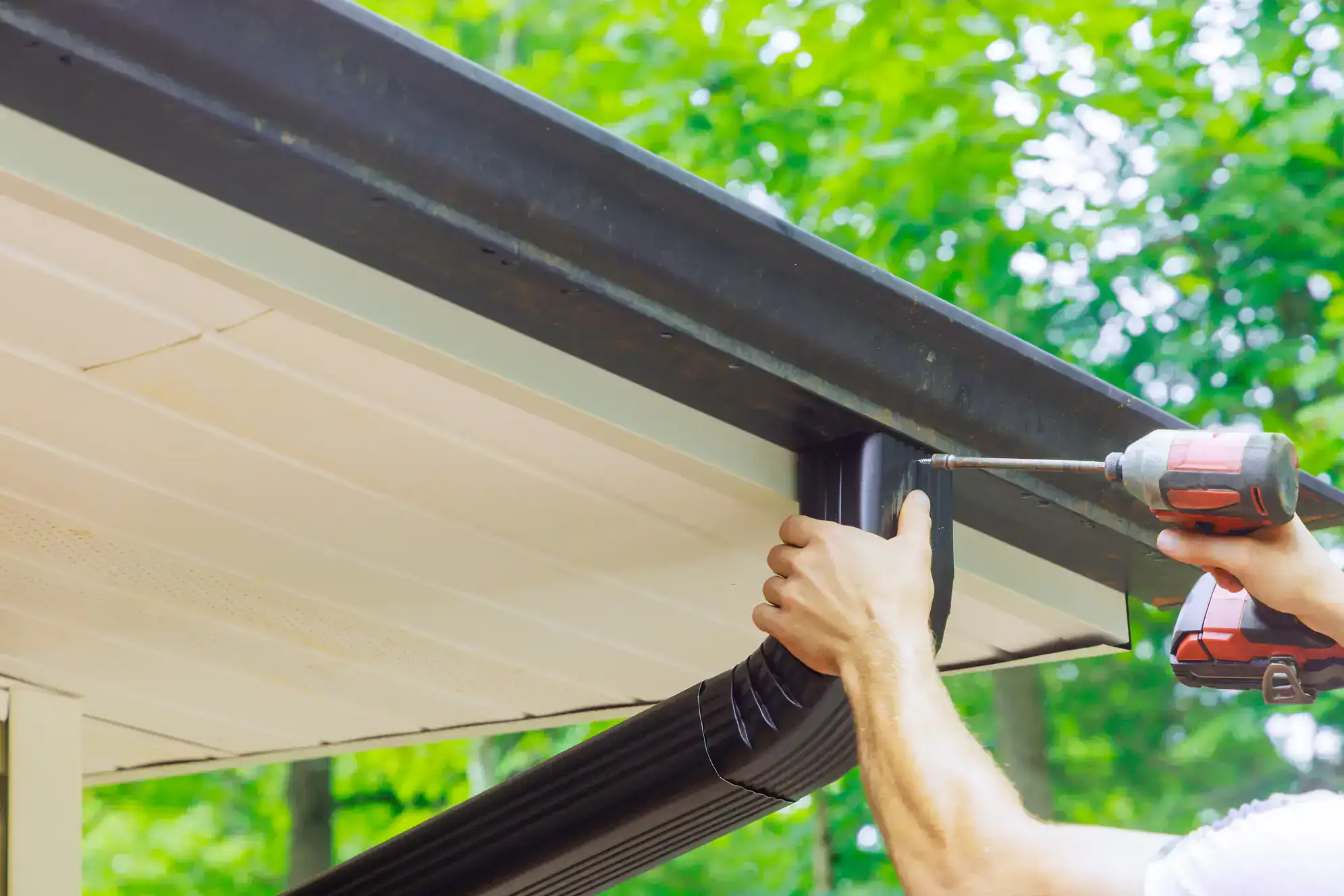
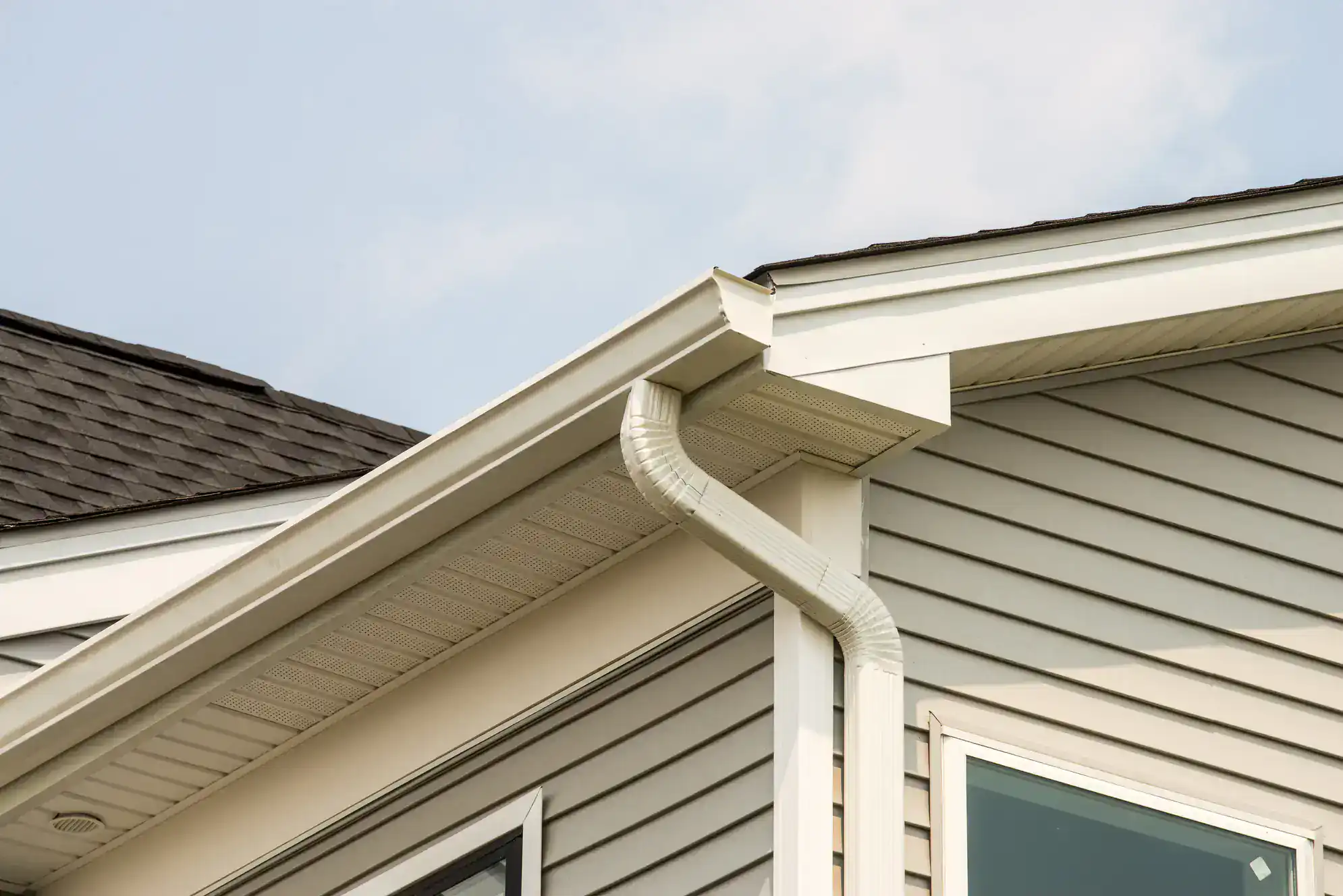
From there, we custom-fabricate seamless aluminum gutters on-site using a continuous roll of material cut to the exact length of each run. No pre-cut sections, no joints every few feet, no seams where leaks typically start. Slope is calculated before installation — the standard is a quarter inch of drop per ten feet of run toward the downspout, but that has to be measured against your actual roofline, not assumed. Downspouts are sized for Bergen County’s peak rainfall intensity, not a national average, because the difference shows up during the kind of summer storm that drops three inches in under an hour.
Once the system is installed, the job site is cleaned, the work is reviewed with you, and you have a written record of everything we did. If your gutter damage was storm-related and you’re filing an insurance claim, we work directly with adjusters to document it properly — a step most contractors leave entirely to the homeowner.
Ready to get started?
Roof Gutter Installation Northvale, NJ
Our gutter installation covers seamless aluminum fabrication, proper slope calculation, bracket installation, downspout sizing and placement, and extension positioning to move water away from your foundation. But the evaluation that happens before installation is just as important as the installation itself — and it’s part of every job, not an upsell.
In Northvale specifically, that means checking the fascia boards on post-war homes that may have decades of moisture exposure behind them. A gutter mounted to deteriorated wood will fail within a season regardless of how well the gutter itself was installed. It means accounting for the leaf load that comes off mature hardwood trees every fall — and discussing whether gutter guards make sense for your specific lot and tree coverage. Homeowners throughout the borough, especially those in the Paris Square 55+ community, benefit from guard systems that reduce the need for seasonal cleaning. It means confirming that downspout extensions are long enough to protect the foundation given the grade of your property.
Gutter installation in NJ does not typically require a building permit for like-for-like residential replacement, but any work involving structural changes to the fascia or roofline may trigger a local inspection requirement. The Northvale Borough building department is the right call to confirm what applies to your specific project scope. We hold NJ HIC License #13VH10605800 and meet all state registration requirements for this work.
How do I know if I need full gutter replacement or just repairs in Northvale?
The honest answer is that it depends on what the inspection reveals — and that’s exactly why the inspection matters before any recommendation is made. If your gutters are pulling away from the fascia, sagging between brackets, or showing rust and corrosion at the seams, those are signs the system is past repair. Sectional gutters that have opened at multiple joints are rarely worth patching, because the underlying issue is usually age and metal fatigue, not just a single failed seam.
In Northvale’s older housing stock — colonials and split-levels built from the 1940s through the 1970s — it’s common to find original or near-original gutter systems that have simply reached the end of their service life. Aluminum gutters typically last 20 to 30 years under reasonable conditions, but Bergen County’s seasonal cycle of summer storms, fall leaf accumulation, and winter ice shortens that window for systems that haven’t been maintained. If the fascia board behind the gutter is also deteriorating, that needs to be addressed before any new gutter goes up — otherwise you’re mounting a new system to a compromised surface.
What size gutters does a Northvale home actually need?
Most residential homes in Northvale work well with 5-inch gutters, but 6-inch gutters are the right call for homes with steeper roof pitches, larger drainage areas, or roof sections that funnel a high volume of water into a single run. The calculation isn’t guesswork — it’s based on the square footage of the roof area draining into each gutter section and the rainfall intensity the system needs to handle at peak conditions.
Bergen County’s summer storm season is the stress test. The region regularly sees convective storms that deliver two to four inches of rain in under an hour. A gutter system sized for average rainfall will overflow visibly during those events — and that overflow goes directly against your siding, behind your fascia, and toward your foundation. Getting the sizing right from the start means your system performs when it actually needs to, not just on mild rain days. Downspout sizing is part of the same calculation — an undersized downspout creates a bottleneck even when the gutter channel itself is the right width.
Can clogged gutters actually cause basement flooding in my home?
Yes, and it’s one of the more common hidden connections homeowners don’t make until the damage is already done. When gutters are blocked with debris and water overflows at the roofline instead of draining through the downspout, it falls directly against the foundation wall. On a sloped lot — which describes a meaningful share of Northvale’s Northern Valley terrain — that water follows the grade toward the lowest point, which is often the basement wall or the area immediately adjacent to the foundation footing.
Over time, that repeated saturation creates hydrostatic pressure against the foundation, which is one of the primary causes of basement seepage and wall cracking in older homes. The connection between a clogged gutter and a wet basement isn’t always obvious because there’s usually a delay between the event and the visible symptom. Fall is the highest-risk season in Northvale — gutters fill with leaf debris from the mature hardwood canopy right before the heavy November rains arrive, and a system that’s already blocked going into that period is going to overflow every time it rains.
Does homeowner's insurance cover storm-damaged gutters in New Jersey?
It often does, but the coverage depends on how the damage occurred and how it’s documented. In New Jersey, homeowner’s insurance policies typically cover sudden and accidental damage from wind, hail, falling tree limbs, and ice accumulation — all of which are real and recurring events in Bergen County. What they generally don’t cover is damage from deferred maintenance or gradual deterioration, which is why the documentation of how and when the damage occurred matters significantly.
The part most homeowners don’t realize is that the way the claim is presented to the adjuster affects the outcome. If the damage is documented as storm-caused with clear evidence — photos, timeline, a contractor’s written assessment — the claim is much more likely to be approved and at a fair value. We work directly with insurance adjusters on storm damage claims, document the damage properly, and help make sure you’re not leaving coverage on the table. If your gutters were damaged in a storm and you haven’t filed a claim, it’s worth having the inspection done before you assume it’s out of pocket.
How long does gutter installation take on a typical Northvale home?
For most single-family homes in Northvale — colonials, split-levels, ranch homes — a full gutter installation is typically completed in one day. The timeline depends on the linear footage of gutter being installed, the number of downspouts, whether any fascia repair work is needed before installation can begin, and whether the existing system needs to be removed first.
The on-site fabrication process for seamless gutters is efficient because the material is cut to the exact length of each run at your home, not pre-cut at a shop and transported in sections. That eliminates the fitting and trimming time that comes with sectional systems. If the inspection reveals fascia damage that needs to be addressed before the gutters go up — which is not uncommon on Northvale’s older housing stock — that work adds time but is necessary for the installation to hold. Scheduling in late summer or early fall tends to work well for Northvale homeowners who want the system ready before the October leaf drop and the heavier fall rain season that follows.
What's the best gutter guard option for homes with heavy tree coverage in Northvale?
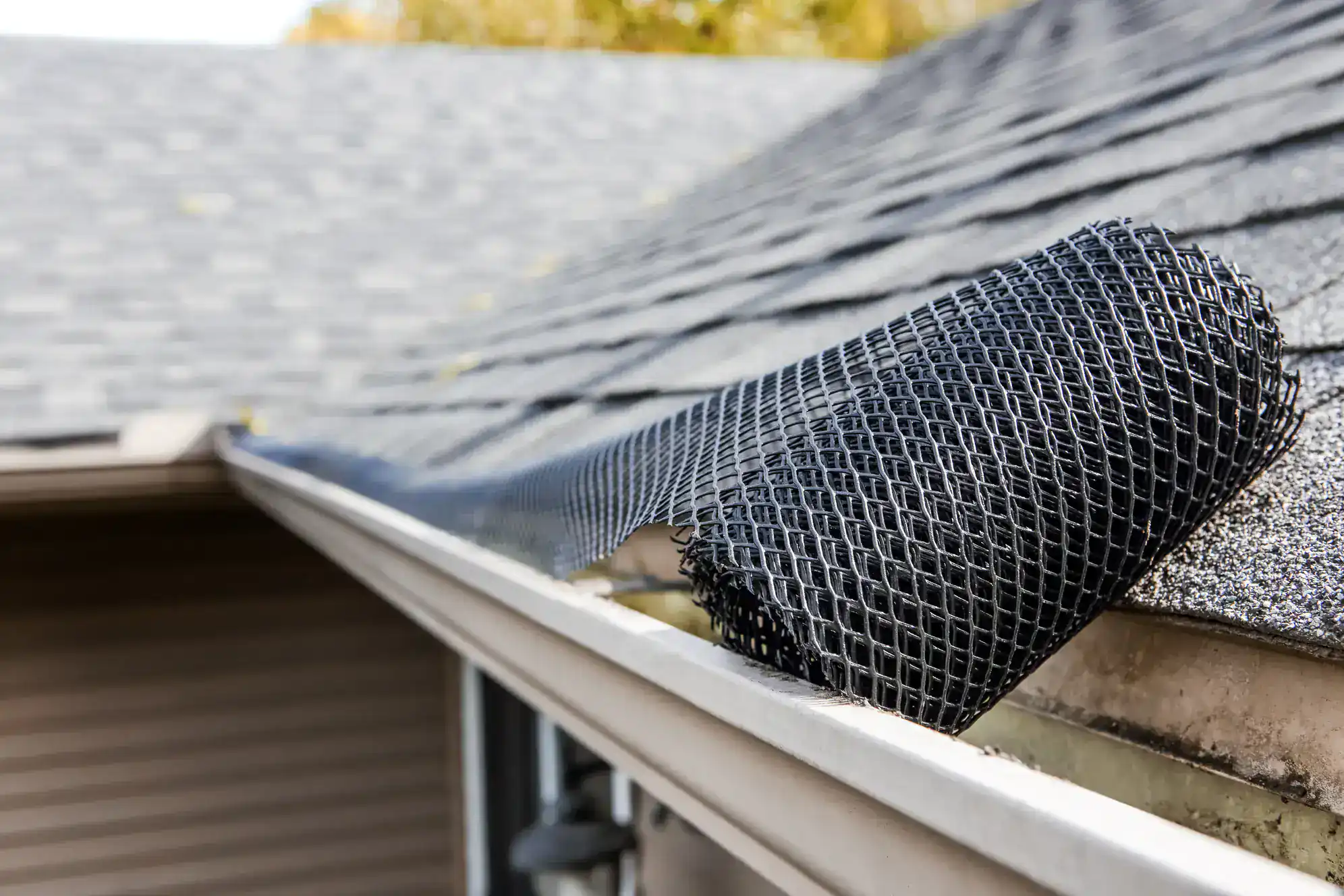
For homes with significant hardwood tree coverage — which describes most of the established residential streets in Northvale — micro-mesh gutter guards are generally the most effective option. They allow water to pass through while blocking the leaf debris, seed pods, and small twigs that accumulate from oak and maple trees throughout the fall season. Surface tension guards and basic screen covers tend to struggle with the volume and type of debris that Northern Bergen County’s mature canopy produces.
That said, no gutter guard eliminates maintenance entirely — they reduce it significantly. Fine debris like oak tassels and seed helicopters can still accumulate on top of the guard surface over time, and the guards themselves should be checked periodically. The real value in a wooded area like Northvale is that you’re not dealing with a fully blocked system heading into November, which is when the combination of leaf accumulation and heavy fall rain creates the overflow and ice dam conditions that cause the most damage. If you’re in the Paris Square community or simply want to reduce the frequency of exterior maintenance, pairing new gutters with a quality guard system at installation is the most cost-effective approach — adding them later costs more in labor.