
Gutter Installation in Dumont, NJ
Bergen County Storms Don't Wait — Neither Should Your Gutters
Hear from Our Customers
Rain Gutter Installation in Bergen County
The most expensive gutter problem isn’t the gutter — it’s what happens when you ignore it long enough. Water that overflows or misdirects doesn’t just run off. In Dumont, where homes sit on modest lots with limited grade separation from neighboring properties, it pools against your foundation, saturates the soil, and quietly works its way into your basement. A $3,500 gutter replacement today is a very different conversation than a $20,000 foundation repair two years from now.
Dumont’s housing stock makes this more urgent than most homeowners realize. The split-levels and colonials that define this borough were built in the 1950s and 1960s — and their gutter systems, whether original or replaced once along the way, are aging in ways that aren’t always visible from the street. Sectional gutters develop leaks at every seam. Spike-and-ferrule fasteners loosen over decades. Gutters that were pitched correctly on install shift gradually until they’re holding water instead of moving it.
Then there’s the tree canopy. Dumont’s residential streets are lined with mature trees — one of the things that makes the neighborhood feel the way it does — but that canopy drops a serious leaf load every fall. Gutters that are even slightly undersized or marginally clogged will fail during the kind of intense convective storms Bergen County sees every summer. When you get a system that’s properly sized, correctly pitched, and built without seams, you stop watching your gutters overflow from the window and start trusting that they’re doing their job.
Gutter Contractors in Dumont, NJ
We’ve been working exterior renovations across Bergen County for over ten years, with deep experience in communities like Dumont where the housing stock is dominated by 1950s and 1960s colonials and split-levels. That tenure means we’ve seen what happens to aging fascia boards when gutters pull away, and we know how to evaluate the whole picture before recommending anything.
We’re a licensed NJ Home Improvement Contractor (License #13VH10605800), and we hold manufacturer certifications that back the materials we install — not just our own word. When we give you a written estimate, that number doesn’t change when we show up. No surprise line items, no fees that appear after the job starts.
We’ve worked throughout Bergen County in communities just like Dumont, where homeowners are protecting real equity in homes they’ve invested in for the long term. That familiarity with this county’s housing stock, its permit requirements, and its weather patterns is what makes the difference between a gutter install that lasts and one that needs attention again in three years.
Home Gutter Installation in Dumont, NJ
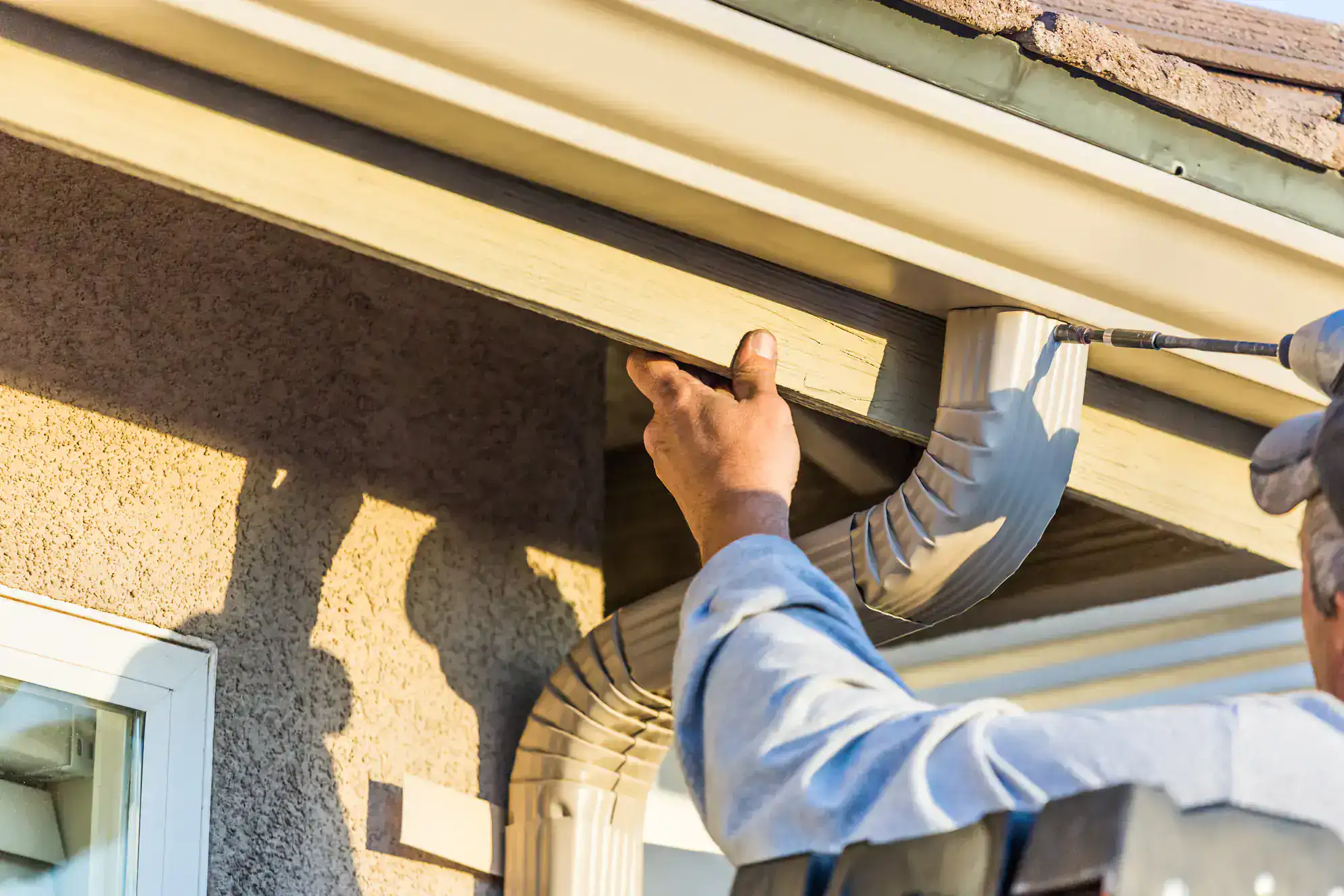
It starts with a free inspection. We come out, look at your existing system, evaluate the fascia condition, check the pitch, and assess whether your current downspout configuration can actually handle your roof’s water volume. A lot of contractors skip this part and go straight to a per-foot price. We don’t, because what we find during that inspection directly affects what we recommend — and we’d rather tell you the honest answer upfront than have you call us back about a problem we could have caught.
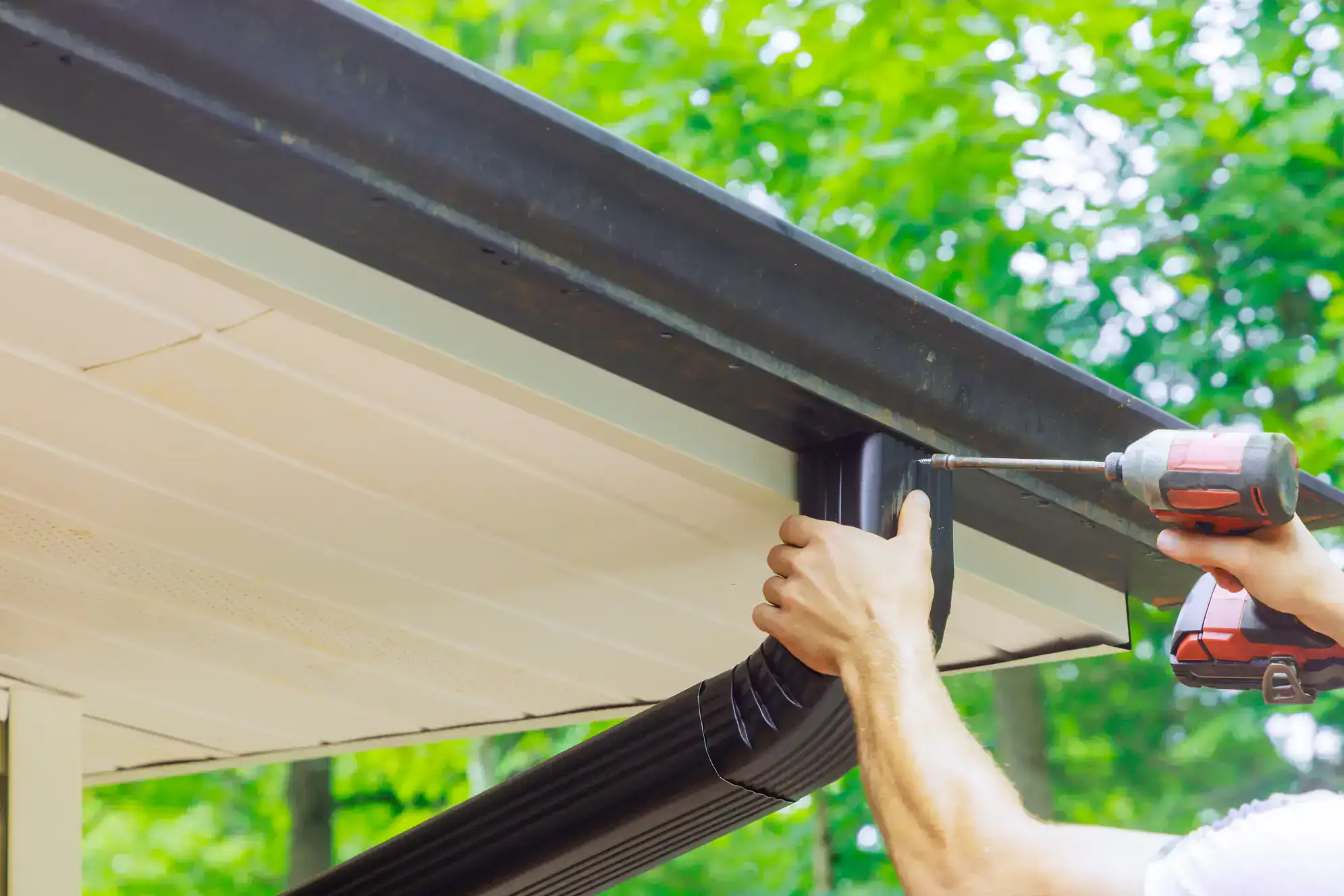
If replacement is the right call, we fabricate your gutters on-site. Every run is custom-cut to the exact measurements of your roofline — no pre-cut sections, no seams where separate pieces meet. We calculate slope based on your specific run length before a single bracket goes up, because a gutter that’s off by even a fraction of an inch per foot will hold water instead of draining it. For Dumont homes with steep-pitched colonials or the multi-level rooflines common on split-levels throughout the borough, that precision isn’t optional.
Once the system is installed, we walk you through what was done, where the downspouts discharge, and what to watch for going forward. If your project requires a permit through the Dumont Building Department at 50 Washington Avenue, we’ll advise you on that before work begins — not after. You leave with a complete system and a clear understanding of what you paid for.
Ready to get started?
Roof Gutter Installation Company in Dumont
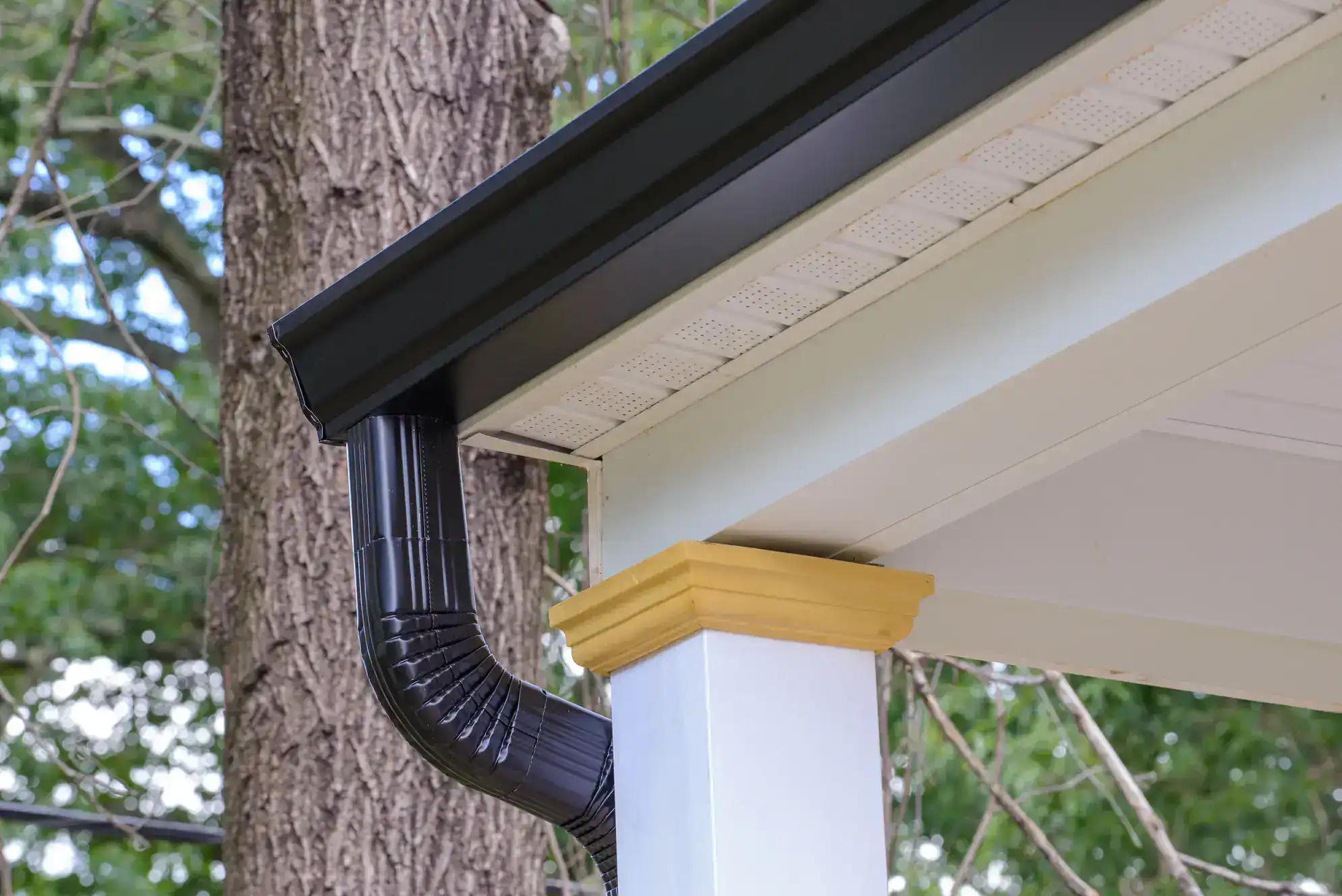
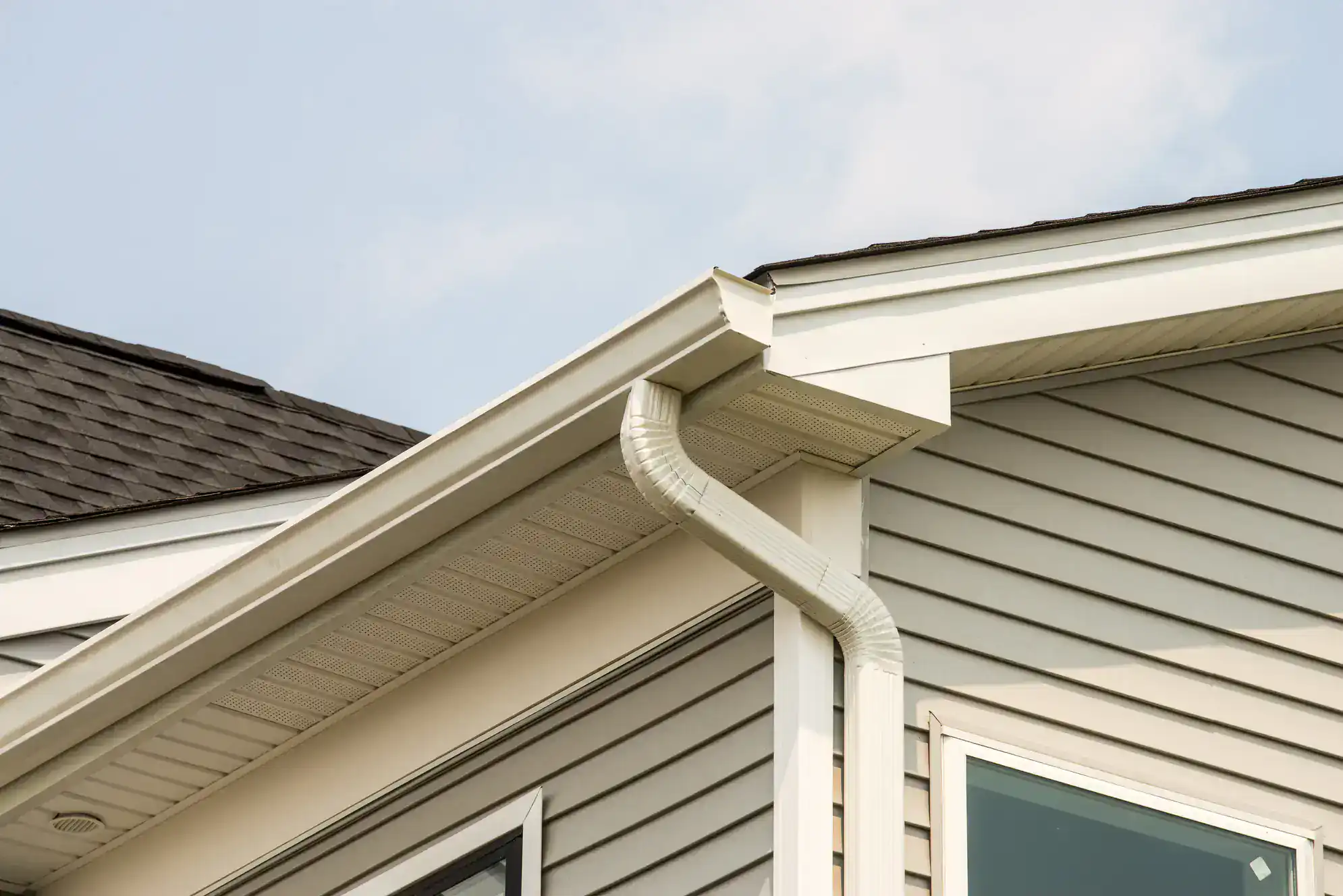
The core of what we install is seamless aluminum gutters, custom-fabricated on-site to fit your home’s exact roofline. Aluminum holds up well in Bergen County’s climate — it doesn’t rust, it handles freeze-thaw cycles without cracking, and it’s light enough not to stress aging fascia boards the way heavier materials can. We size the gutters and downspouts based on your roof’s actual square footage and pitch, not a one-size estimate. A 2,000-square-foot Dumont colonial with a steep roof pitch generates significantly more water volume per linear foot of gutter than a flatter structure — and that difference matters when a summer storm drops three inches of rain in an hour.
Beyond the gutters themselves, we look at the full drainage path. That means evaluating fascia board condition before we mount anything — because new gutters on rotted fascia won’t hold, and we’d rather tell you that upfront than watch the system fail in six months. It means positioning downspout discharge points far enough from your foundation to prevent soil saturation near your basement. And it means checking that the overall system integrates with your roof’s drainage rather than working against it.
If your gutters were damaged by wind, hail, or a fallen branch — which happens in Bergen County more than most homeowners expect — we also work directly with insurance adjusters. We document the damage the way adjusters need to see it and handle that part of the process so you’re not navigating it alone.
Do I need a permit for gutter installation in Dumont, NJ?
It depends on the scope of the work. Dumont’s building department generally requires permits for most home improvement projects, but a straightforward like-for-like gutter replacement — same size, same location — may fall below the permit threshold under New Jersey’s Uniform Construction Code. New gutter installation on a structure that previously had none, or significant changes to the drainage configuration, are more likely to require a permit.
The honest answer is that you should confirm with the Dumont Building Department directly at 50 Washington Avenue before any work begins. When we come out for your free inspection, we’ll give you our read on whether your specific project is likely to require one and what that process looks like. We’ve worked through Bergen County’s permit requirements enough times to walk you through it without it becoming a headache.
How much does gutter installation typically cost for a home in Dumont?
For most single-family homes in Dumont, a full seamless aluminum gutter replacement runs somewhere between $2,800 and $5,200 depending on the home’s size, roofline complexity, and the condition of the fascia boards. Seamless gutters installed on-site run approximately $8 to $28 per linear foot — the range reflects variables like gutter profile size, downspout count, and whether any fascia repair is needed before installation.
Dumont’s mid-century housing stock — particularly the split-levels and colonials built in the 1950s and 1960s — often has fascia boards that need attention before new gutters go up. That’s something we assess during the free inspection so there are no surprises in the final number. We provide a written, itemized estimate before any work begins, and that’s the number on your invoice. No add-ons that appear after the crew shows up.
How do I know if my gutters need replacing or just cleaning and repair?
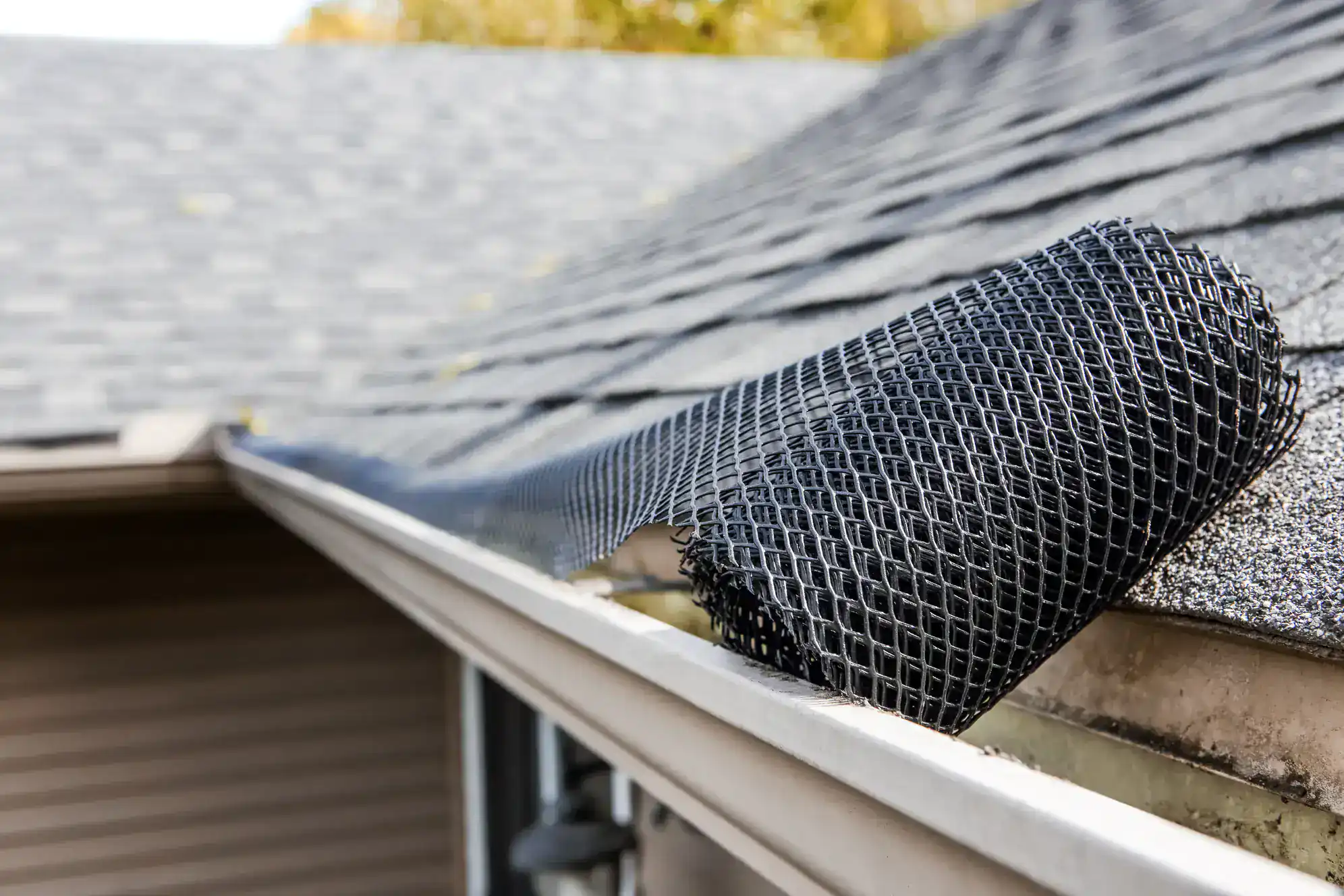
Cleaning fixes clogs. Repair fixes isolated damage — a separated seam, a single sagging section, a downspout that came loose. Replacement is the right call when the system itself has reached the end of its functional life: gutters that are pulling away from the fascia along multiple runs, sections that have corroded through, or a sectional system where the seams are failing faster than they can be resealed.
For a lot of Dumont homes, the honest answer is somewhere in between. A 60-year-old sectional gutter system that’s been cleaned and patched a few times may be at the point where continued repair costs more over the next five years than a new seamless system would today. That’s the kind of assessment we give you during the free inspection — not a default recommendation to replace everything, but an honest read on what the system actually needs and what makes financial sense for your specific home.
Can clogged or failing gutters really cause basement water problems in Dumont?
Yes — and it’s one of the more common sequences we see in Bergen County. When gutters overflow or discharge water too close to the foundation, the soil directly against your basement wall becomes saturated. Dumont’s residential lots tend to be modest in size, which means there’s limited distance between where water lands and where your foundation begins. Over time, that repeated saturation creates hydrostatic pressure against the basement wall, and that pressure finds its way through cracks, gaps at the footer, or window wells.
The connection between gutter failure and basement moisture isn’t always obvious because it doesn’t happen in a single storm — it’s cumulative. Homeowners often spend money on interior waterproofing solutions without fixing the drainage problem that’s driving the moisture in the first place. Getting the gutters right, with proper sizing and downspouts that discharge well away from the foundation, is frequently the first and most cost-effective fix.
What gutter size is right for my home, and does it matter in Bergen County?
It matters more than most people think. The standard residential gutter is a 5-inch K-style profile, and it’s adequate for a lot of homes — but not all of them. If your roof has a steep pitch, a large drainage area, or a valley that concentrates water into a single run, a 5-inch gutter can be undersized even if it’s clean and perfectly pitched. Bergen County’s summer storms are the stress test: when a convective storm drops two to three inches of rain in under an hour, an undersized gutter will overflow regardless of how well it was installed.
We size gutters based on your roof’s actual square footage and pitch angle — there’s a calculation for it, and we run it before recommending a profile size. For larger Dumont colonials with complex rooflines, a 6-inch profile is often the right call. It’s a detail that makes a real difference in performance during the storms that actually test the system.
Does homeowner's insurance cover gutter damage from storms in New Jersey?
It can, and more Dumont homeowners qualify than realize it. Standard homeowner’s insurance policies in New Jersey typically cover sudden, accidental damage caused by a covered peril — wind, hail, falling trees or branches. If a nor’easter tears a gutter section away from your fascia, or a storm sends a branch through your downspout, that damage is often covered. What’s generally not covered is gradual deterioration — gutters that failed because they were old and unmaintained rather than damaged by a specific event.
The challenge is documentation. Insurance adjusters need to see the damage attributed clearly to a covered event, and claims that are poorly documented or submitted without the right supporting detail get denied or underpaid. We work directly with adjusters on storm damage claims — we know how to photograph the damage, document the cause, and present the claim in a way that holds up to review. If you’re not sure whether your situation qualifies, the free inspection is a good starting point.