
Roof Inspection in South Hackensack, NJ
South Hackensack Roofs Take a Beating — Here's What's Actually Up There
Hear from Our Customers
Roof Damage Inspection South Hackensack, NJ
Bergen County winters don’t go easy on roofs. The freeze-thaw cycles alone — temperatures crossing 32°F over and over through the season — stress flashing seals, crack pipe boots, and quietly work water under shingles in ways you won’t see from the ground. By the time there’s a stain on the ceiling, the damage has usually been building for months. Our roof inspections in South Hackensack, NJ catch it before that point.
South Hackensack’s housing stock adds another layer to this. A large portion of the township’s homes were built mid-century, which means original flashing on many of these roofs has been through decades of thermal expansion and contraction. That kind of age doesn’t always look like a problem — until it is one. An inspection gives you a clear, documented picture of what’s holding up and what isn’t, so you’re making decisions based on facts instead of guesswork.
What you walk away with is clarity. You’ll know the current condition of your roof, where the vulnerabilities are, what needs attention now, and what can wait. If everything looks solid, you’ll hear that too. No pressure, no inflated findings — just an honest assessment from a contractor who’s been working on Bergen County roofs long enough to know the difference.
Licensed Roof Inspector South Hackensack, NJ
We’ve been doing exterior work across the local New Jersey market for close to ten years — roofing first, with gutters and siding rounding out the picture. We’re not a general contractor who added roofing to the menu. Roofing is what we do, and the rest follows from it naturally.
We hold contractor licenses and manufacturer certifications from major shingle brands — certifications that a small fraction of roofing contractors in the country actually earn. For you, that means access to enhanced warranty coverage that most local contractors simply can’t offer. It also means the inspection you get is backed by real training, not just a ladder and a flashlight.
South Hackensack is a small township with fewer than 3,000 residents, and most of them know their neighbors. Word travels fast in a community like that, which is exactly why every inspection we do here gets our full attention. Our growth has come from reviews and referrals, not advertising — and that’s only possible when the work and the honesty are both consistent.

Roof Inspection Company South Hackensack, NJ
It starts with a call or a form submission. You tell us what’s going on — maybe you noticed something after the last nor’easter, maybe you just haven’t had the roof looked at in years, or maybe you’re dealing with an active leak and need answers fast. We schedule a time that works for you and show up when we say we will.
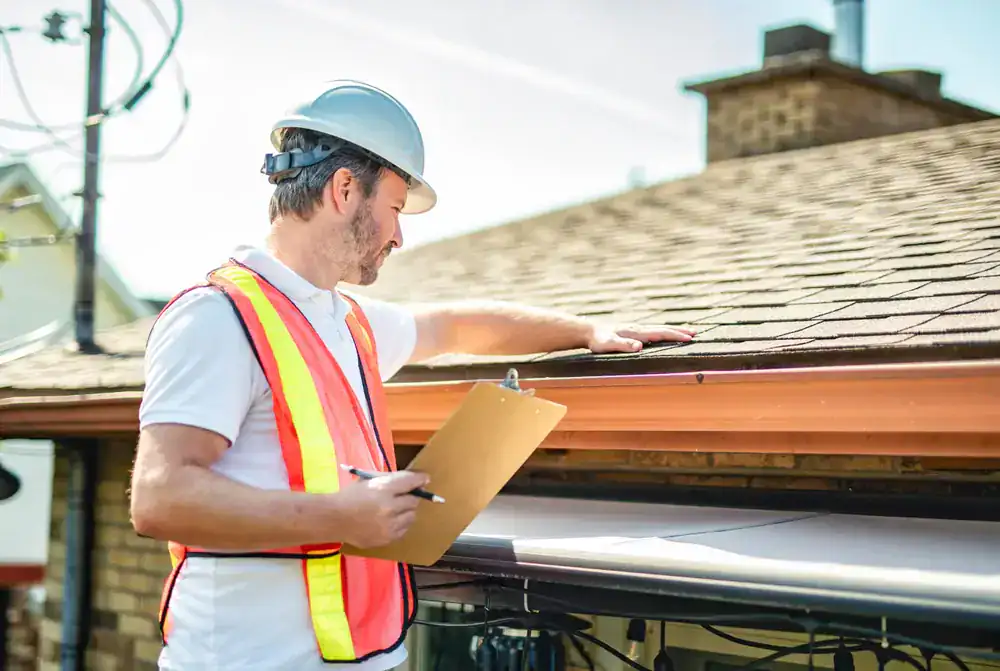
On the day of the inspection, one of our certified roof inspectors goes over the full roof surface — shingles, flashing at the chimney, pipe boots, valley intersections, eaves, and any areas where water is most likely to find a way in. We look at the gutters and exterior trim as well, because storm damage in Bergen County rarely stops at the shingles. If I-80 brought wind through the area last week, we’re checking everything the wind touched. The inspection is photographically documented so you have a clear record of what was found.
After the inspection, we walk you through the findings in plain language. If there’s damage, you’ll know what it is, where it is, and what it takes to fix it. If South Hackensack’s Building Department requires a permit for the work — which New Jersey’s Uniform Construction Code typically does for full replacements — we handle that process. Nothing gets started without your full understanding and your go-ahead.
Ready to get started?
Certified Roof Inspector South Hackensack, NJ
Our roof inspections in South Hackensack, NJ cover the full exterior envelope — not just a quick look at the shingles from the driveway. We inspect the roof surface for granule loss, cracking, curling, and missing shingles. We check every flashing point: chimney base, wall junctions, valleys, and pipe penetrations. These are the spots that fail first on mid-century Bergen County homes, and they’re the spots that cause the most interior damage when they go unaddressed.
We also assess the gutters and downspouts, soffit and fascia condition, and any visible signs of moisture intrusion at the roofline. South Hackensack sits close to the Hackensack River watershed and the broader Meadowlands corridor — that ambient moisture environment means that even a small breach in the roof system can accelerate wood rot and mold growth faster than it would in a drier climate. We look for those early signs before they compound.
For landlords and investment property owners — and with roughly half of South Hackensack’s housing being renter-occupied, there are quite a few of you — the inspection produces documented findings that hold up for insurance purposes, tenant habitability concerns, and property maintenance records. New Jersey requires licensed contractors for roofing work on non-owner-occupied properties, and every inspection we conduct is backed by full licensing, general liability coverage, and workers’ compensation insurance. Our roof leak inspections in South Hackensack, NJ cover what you actually need covered.

How often should I schedule a roof inspection in South Hackensack, NJ?
The general industry recommendation is twice a year — once in the spring after winter has done its damage, and once in the fall before the cold sets back in. For South Hackensack specifically, the spring inspection is especially important. Bergen County winters put roofs through repeated freeze-thaw cycles, and ice dam formation is a real and documented issue in this area. By the time the snow melts, flashing seals may have shifted, granule loss may have accelerated, and water may have already worked its way under the surface without any visible interior sign yet.
Beyond the twice-yearly baseline, you should also schedule a roof damage inspection after any significant weather event — a nor’easter, a high-wind storm, or a hail event. Waiting until you see a ceiling stain means the damage has already had time to spread. Catching it early, with a documented inspection, keeps repair costs down and keeps your options open.
What does a roof inspection actually look for, and how long does it take?
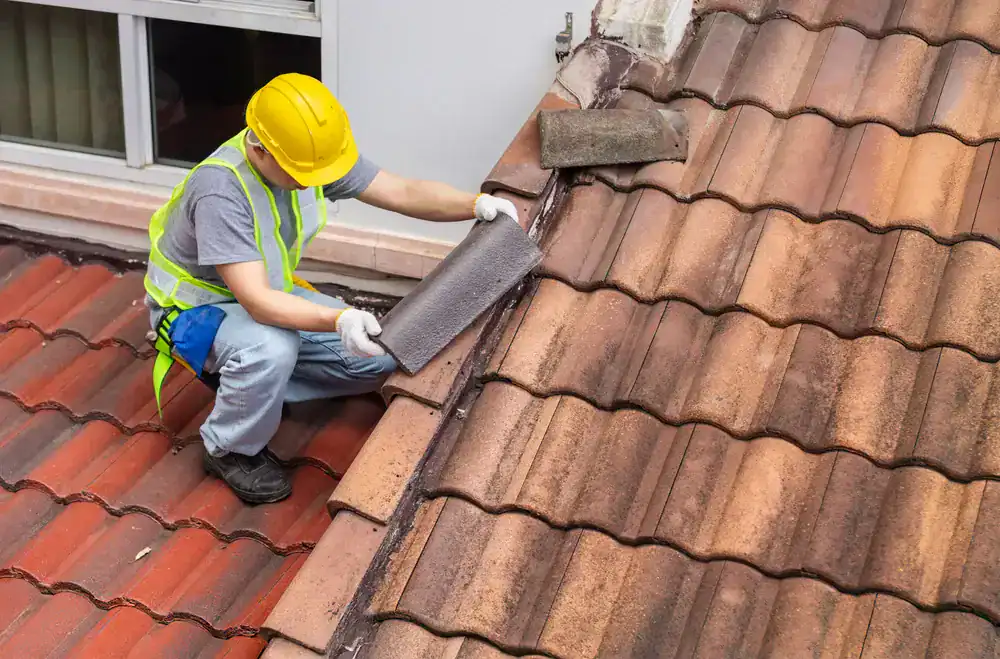
A thorough inspection covers the full roof surface — shingle condition, granule coverage, curling or cracking, and any areas where shingles are lifting or missing. Beyond the surface, we check every flashing point: chimney base, pipe boots, wall junctions, and valleys. These are the most common failure points on Bergen County homes, particularly on mid-century construction where original flashing may have been in place for 40 or 50 years.
The inspection also includes the gutters, soffit, fascia, and any visible signs of moisture intrusion at the roofline. For most single-family homes in South Hackensack, a complete inspection typically takes between 45 minutes and an hour and a half depending on roof size, pitch, and complexity. You’ll receive a documented summary of findings with photographs before any recommendation is made — so you have a clear record of what was found and why.
My roof isn't leaking yet — do I still need a roof inspection?
Yes, and this is actually one of the most important things to understand about roofing. The absence of a visible leak does not mean the roof is in good shape. Water can enter through a compromised flashing seal or a cracked pipe boot and travel several feet along the decking before it ever shows up as a ceiling stain. By the time you see interior moisture, the damage is already compounded — rotted decking, saturated insulation, and sometimes mold growth that wasn’t there six months ago.
In South Hackensack, where a significant portion of homes are mid-century construction and where the Meadowlands-adjacent geography creates elevated ambient humidity, that progression happens faster than it would in a drier environment. A proactive roof inspection is about catching what you can’t see before it turns into something you can’t ignore. The cost of an early repair is almost always a fraction of what deferred damage ends up requiring.
Can a roof inspection help with an insurance claim in South Hackensack, NJ?
It can, and in many cases it’s the most important step you take before or during the claims process. Insurance adjusters assess damage from the carrier’s perspective — their job is to evaluate the claim accurately, but they’re not your advocate. A roof damage inspection conducted by a licensed, certified roofing contractor gives you an independent, documented assessment of what the storm actually did to your roof. That documentation — with photographs and a written findings report — can support your claim, provide a basis for challenging an underpayment, or simply give you a clear picture of what you’re dealing with before the adjuster arrives.
Bergen County sees its share of nor’easters and high-wind events, and post-storm insurance claims are common in the area. Getting your own inspection done quickly after a weather event matters — both because secondary damage can compound fast, and because having your own documentation on record before the adjuster visit puts you in a stronger position throughout the process.
How do I know if my roof needs to be replaced or just repaired?
That’s exactly what a professional inspection is designed to answer — and it’s a question where honest assessment matters more than anything else. The short version: age, extent of damage, and the condition of the underlying decking are the three biggest factors. Asphalt shingle roofs typically have a functional lifespan of 20 to 30 years depending on the product and installation quality. If your South Hackensack home was built in the 1960s, 70s, or 80s and the roof hasn’t been replaced since, you’re likely in the range where a full assessment is overdue.
That said, age alone doesn’t automatically mean replacement. Localized damage — a section of failed flashing, a few missing shingles, a compromised valley — can often be addressed with targeted repairs that extend the roof’s useful life by several years. We can tell you which situation you’re in based on what’s actually found, not based on what generates the largest job. If repairs are the honest answer, that’s what you’ll hear.
Why is our roof inspection free — what's the catch?
There’s no catch. The free inspection exists because it removes the one thing that keeps most homeowners from getting their roof looked at until a problem is already serious — the hesitation to spend money just to find out what’s going on. South Hackensack is a working community, and spending $150 or $200 just for someone to tell you your roof might be fine isn’t something most homeowners want to do. So we removed that barrier entirely.
What we get in return is straightforward: the opportunity to show you what we do and how we work. If the inspection turns up something that needs attention and you decide we’re the right fit for the job, that’s how the business grows. If your roof is in good shape and you don’t need anything right now, you leave with a documented inspection and peace of mind — and hopefully you remember us when the time comes. That’s a fair trade, and it’s how a company that runs on referrals and reviews stays in business for a decade in communities like this one.