
Roof Inspection in River Vale, NJ
River Vale Roofs Take a Beating — Here's What's Actually Up There
Hear from Our Customers
Certified Roof Inspector in River Vale, NJ
River Vale homes are established, well-kept, and valuable — and the majority were built before 1970. That means a lot of roofing systems in this town are working through the back half of their lifespan, quietly accumulating wear that isn’t obvious from the driveway. Our professional roof inspection gives you a clear picture of what’s actually going on before it becomes an emergency.
Bergen County winters are hard on roofing materials. When temperatures bounce around freezing from November through March — which they regularly do here — water finds its way into the smallest gaps, freezes, and widens those gaps. That cycle repeats all season. By the time spring arrives, flashing seals that looked fine in October may have already failed. An inspection catches exactly that kind of damage, when it’s still a repair and not a full replacement.
The mature trees throughout River Vale’s residential corridors add another layer of exposure. Branches, debris, and moss buildup accelerate wear on shingle surfaces and clog gutters in ways that redirect water toward your fascia and foundation. Because we also handle gutters and siding, one inspection call covers the entire exterior — not just the shingles. You get the full picture, not a partial one.
Licensed Roof Inspector in River Vale, NJ
We’ve been working on homes across River Vale and Bergen County for over ten years. We’re family-operated, fully licensed under New Jersey’s Home Improvement Contractor registration program, and certified by major shingle manufacturers — credentials that matter because they determine what kind of warranty coverage your roof can actually carry.
Our business grows through referrals and reviews, not advertising. That means every job has to hold up, because the next call often comes from a neighbor down the street in River Vale. In a community where word travels fast and homeowners do their homework, that kind of accountability isn’t a talking point. It’s just how we operate.
What that means for you is straightforward: you’ll get an honest assessment. If your roof has several good years left, you’ll hear that. If something needs attention, you’ll get a clear explanation of what it is, why it matters, and what your options are — without pressure.

Roof Inspection Company in River Vale, NJ
It starts with a call or a form submission. Once you’re scheduled, an inspector comes to your home at the agreed time — no vague windows, no last-minute rescheduling. Given the age of most homes along Westwood Avenue, Rivervale Road, and the surrounding residential streets, inspections here tend to cover more ground than a basic shingle check. Complex rooflines, multiple pitches, chimneys, dormers, and aging flashing systems are common in River Vale, and every one of those points gets checked.
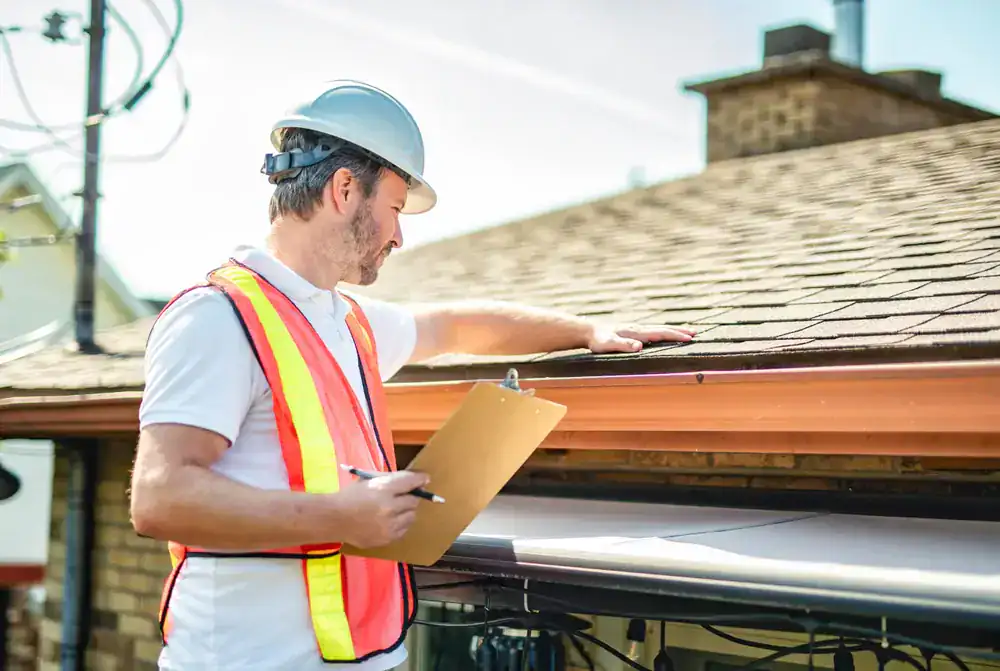
On the roof, we work through the full surface — shingle condition, granule loss, ridge caps, valleys, and every penetration point where a vent, pipe, or chimney meets the roofline. Flashing is examined at each joint. Gutters are checked for attachment, drainage, and debris buildup. If there’s siding involved at the roofline transition, that gets looked at too.
After the inspection, you get a clear report of what was found. If River Vale’s Building Department requires a permit for any follow-up work, we handle that process as a fully licensed contractor — so nothing gets done without the proper paperwork in place. From first call to final report, the goal is that you walk away knowing exactly what you’re working with.
Ready to get started?
Roof Damage Inspection in River Vale, NJ
A roof inspection in River Vale isn’t a quick visual pass from the ground. It’s a methodical review of every component that keeps water out of your home — shingles, flashing, ridge caps, valleys, vent boots, gutters, and the fascia and soffit beneath them. With roughly 14% of River Vale’s housing stock predating 1940 and the majority built in the 1960s, the inspection process here often turns up issues that have been quietly developing for years: dried-out flashing sealant, granule-stripped shingles near the end of their cycle, or gutter sections pulling away from the fascia under the weight of winter ice.
Because we hold certifications from major shingle manufacturers, the inspection also includes an honest assessment of what warranty coverage your current or future roof system can carry. Manufacturer-certified contractors can offer warranty protection that uncertified contractors legally cannot — a meaningful difference when you’re deciding whether to repair or replace.
If you’ve recently come through a nor’easter or a summer hailstorm, the inspection doubles as damage documentation. That report carries real weight with insurance adjusters and ensures nothing gets missed in the claims process. Whether you’re doing routine maintenance, preparing to list your home, or responding to a specific weather event, the inspection gives you the information you need to make a smart decision.

Does a roof inspection in River Vale, NJ require a permit or any fees?
The inspection itself doesn’t require a permit — that only comes into play if repair or replacement work follows. River Vale Township does require permits for roofing and reroofing projects, administered by the River Vale Building Department under the New Jersey Uniform Construction Code. Permit fees for residential roofing work start at a minimum of $80, with fees for principal buildings beginning at $950 depending on project scope.
This matters more than most homeowners realize. Work done without the required permits can create real complications when you go to sell your home — title issues, failed buyer inspections, and potential liability if something goes wrong. Hiring a fully licensed contractor like us means permits get pulled correctly from the start, and every project on your property is documented and compliant. You don’t have to manage that process yourself.
How do I know if my roof actually needs to be replaced or just repaired?
That’s exactly what a professional inspection is designed to answer — and the honest answer isn’t always replacement. The condition of your roof depends on several factors: the age of the system, the type of shingles installed, how well the flashing and ventilation have held up, and what kind of weather exposure the roof has seen. In River Vale, where a significant portion of homes were built in the 1960s, many roofing systems are working through their second or final service cycle.
A thorough inspection looks at granule loss, shingle brittleness, flashing integrity, and whether there’s any evidence of moisture infiltration in the decking below. If the structural components are sound and the damage is isolated, repair is often the right call. If the shingles are losing granules across the full surface, the flashing is failing at multiple points, and the system is 20-plus years old, replacement is likely the more cost-effective decision long-term. You’ll get a straight answer either way — not a recommendation built around what generates the bigger job.
What roof damage should River Vale homeowners look for after a nor'easter?
Nor’easters are one of the most common causes of roof damage in Bergen County, and the damage they leave isn’t always obvious from the ground. After a significant wind event, the most common issues are displaced or missing ridge cap shingles, lifted shingle tabs along the edges and rakes, and flashing that has been pulled away from chimneys or wall junctions. Any of these creates an opening for water infiltration that may not show up inside the house until weeks later.
Beyond the shingles themselves, nor’easters frequently damage gutters — either pulling them away from the fascia under wind load or filling them with debris that causes water to back up against the roofline. In the freeze-thaw conditions that often follow a winter storm in River Vale, that backed-up water can work its way under shingles and into the decking before temperatures warm enough for it to drain. A post-storm inspection catches all of this while it’s still manageable — before a displaced ridge cap becomes a rotted deck board.
What does a certified roof inspector check that a general contractor might miss?
A certified roof inspector is specifically trained to evaluate roofing systems as integrated assemblies — not just the visible shingle surface. That means the inspection covers flashing at every penetration point, the condition of vent boots and pipe collars, the integrity of valley flashing where two roof planes meet, ridge cap attachment, and the performance of the ventilation system underneath. These are the areas where most roof failures actually begin, and they’re often overlooked by contractors who aren’t roofing specialists.
Manufacturer certifications add another layer. Inspectors working for certified contractors understand the specific installation standards and performance benchmarks that manufacturers require for warranty coverage. In practical terms, that means we know what a failing flashing seal looks like before it becomes a leak, what granule loss patterns indicate end-of-life shingles versus normal wear, and how to assess whether a roof system qualifies for manufacturer-backed warranty protection going forward. For River Vale homeowners with homes valued well above $700,000, that level of specificity is worth having on your side.
Is a roof inspection worth it before listing a home for sale in River Vale?
Yes — and it’s one of the smarter moves you can make before putting a River Vale home on the market. Roof condition is consistently one of the top items flagged during buyer home inspections, and a surprise finding at that stage can delay closing, trigger price renegotiations, or kill a deal entirely. Getting a professional inspection before you list gives you the chance to address issues on your timeline, at your contractor of choice, rather than under deadline pressure from a buyer’s agent.
Beyond deal protection, a clean inspection report with documentation from a licensed, manufacturer-certified contractor is a genuine selling asset in a market like River Vale, where buyers are financially sophisticated and scrutinize every detail of a high-value purchase. It signals that the home has been maintained responsibly and removes one of the most common sources of buyer hesitation. Given that the typical River Vale home sells above $730,000, the cost of a pre-listing inspection — especially when it’s free — is an easy decision.
How does ice dam damage affect roofs in River Vale, and can an inspection catch it?
Ice dams are a real and recurring issue for Bergen County homeowners, and River Vale’s winter temperature patterns make this area particularly susceptible. When heat escapes through the roof deck and melts snow near the ridge, that water runs down toward the colder eaves and refreezes. Over time, the ice buildup forces water back up under the shingles — past the point where it can drain — and into the decking, insulation, and eventually the interior of the home. The average January low in River Vale is around 23°F, and temperatures regularly oscillate around freezing throughout the winter, creating exactly the conditions where ice dams form and reform.
A professional roof inspection after a cold stretch or a significant snowfall can identify the signs of ice dam damage even after the ice itself has melted: staining on the decking visible from the attic, lifted or cracked shingles along the eave line, and compromised flashing at the lower roof edge. Catching this early is the difference between replacing a few shingles and replacing a section of decking and insulation. If your home has experienced ice buildup along the eaves this past winter, an inspection now — before the next cold season — is the right call.