
Gutter Installation in River Vale, NJ
River Vale's Tree Canopy Is Beautiful — Until It Destroys Your Gutters
Hear from Our Customers
Rain Gutter Installation in Bergen County
Most homeowners in River Vale don’t think about their gutters until something goes wrong — water staining the siding, pooling at the foundation, or a section pulling clean off the fascia after a hard winter. By that point, the damage has usually already started. Getting ahead of it means your basement stays dry, your landscaping stays intact, and you’re not watching water pour over the edge of a clogged gutter during the next summer thunderstorm.
River Vale’s mature oaks and maples are part of what makes this township one of the nicest places to live in Bergen County. They’re also why gutters here clog faster and fail sooner than in newer, less wooded communities. A properly installed seamless gutter system — sized and sloped for your specific roofline — handles that seasonal leaf and debris load instead of surrendering to it every fall.
For homes near the Pascack Brook corridor, where the ground is already prone to saturation during heavy rain, functional gutters aren’t optional maintenance. They’re the first line of defense between a heavy storm and a water intrusion problem that costs far more to fix than the gutters ever would have.
Gutter Contractors in River Vale, NJ
We’ve been doing exterior work across Bergen County for over ten years. Not franchise work — actual hands-on roofing, gutter installation, and siding work on real homes in real neighborhoods, including the colonial and split-level housing stock that makes up most of River Vale. We hold a New Jersey Home Improvement Contractor license (#13VH10605800), which you can look up directly through the NJ Division of Consumer Affairs. We’re also certified by major shingle manufacturers, which means the warranties we offer are backed by the brands, not just our word.
We don’t run a call center. When you reach out, you’re talking to people who know this area — who understand what Bergen County winters do to older gutter systems, and what it means when a homeowner near Rivervale Road says their basement smells like moisture every spring. Our growth has come from referrals and repeat customers, and that only happens when the work holds up.
Home Gutter Installation in River Vale, NJ
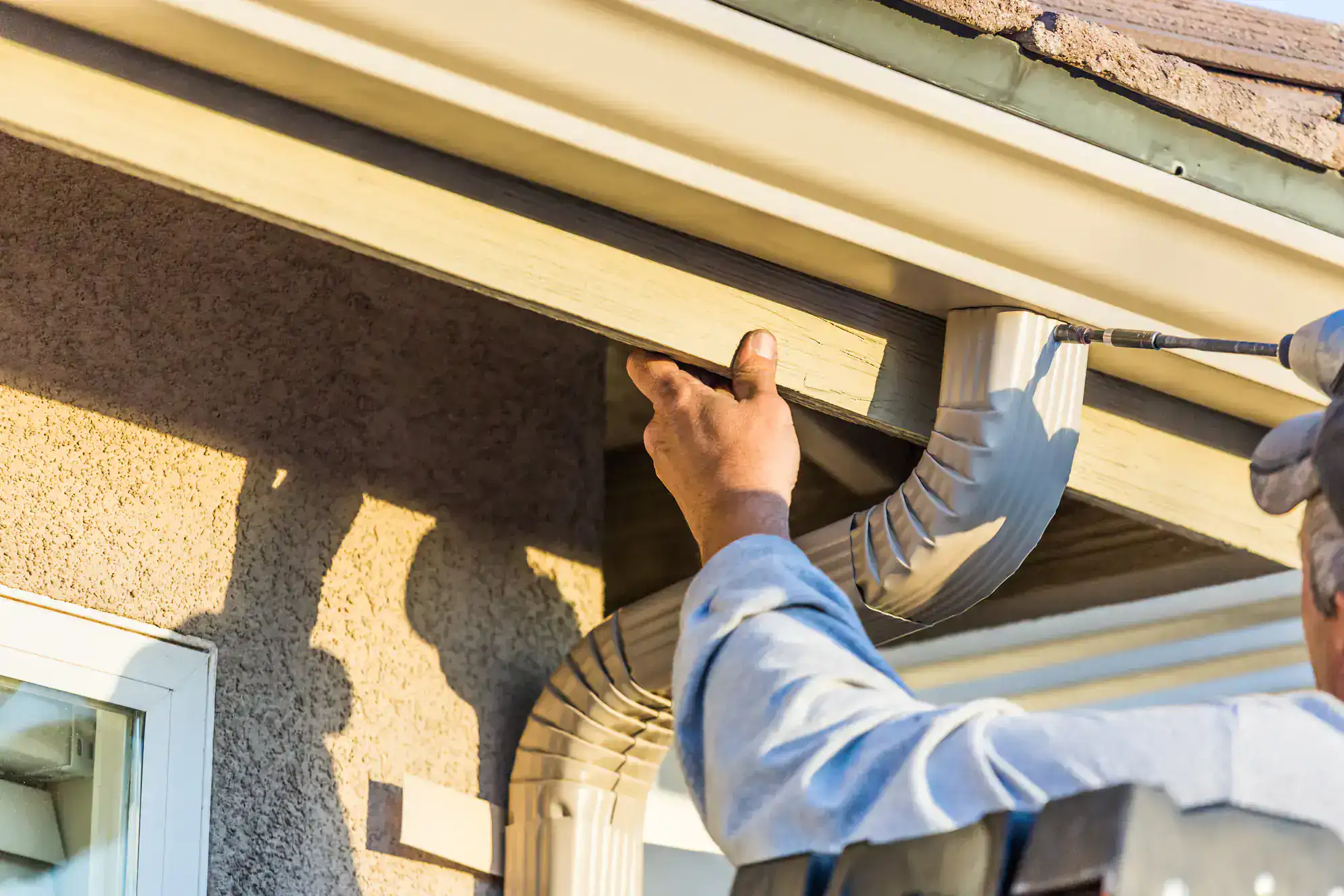
It starts with a free inspection. We come out, look at your existing gutters, check the fascia boards for rot or damage, and assess how your roof is channeling water. River Vale’s colonial and split-level homes often have complex rooflines — multiple slopes, dormers, and valleys that concentrate water flow in specific spots. We account for all of that before a single bracket goes up.
From there, you get a written estimate with every line item explained. If your gutters just need targeted repairs, we’ll tell you. If the system is past the point where repairs make sense — which is common in homes built in the 1960s and 1970s, and River Vale has plenty of those — we’ll explain why replacement is the better call and what that looks like for your specific home.
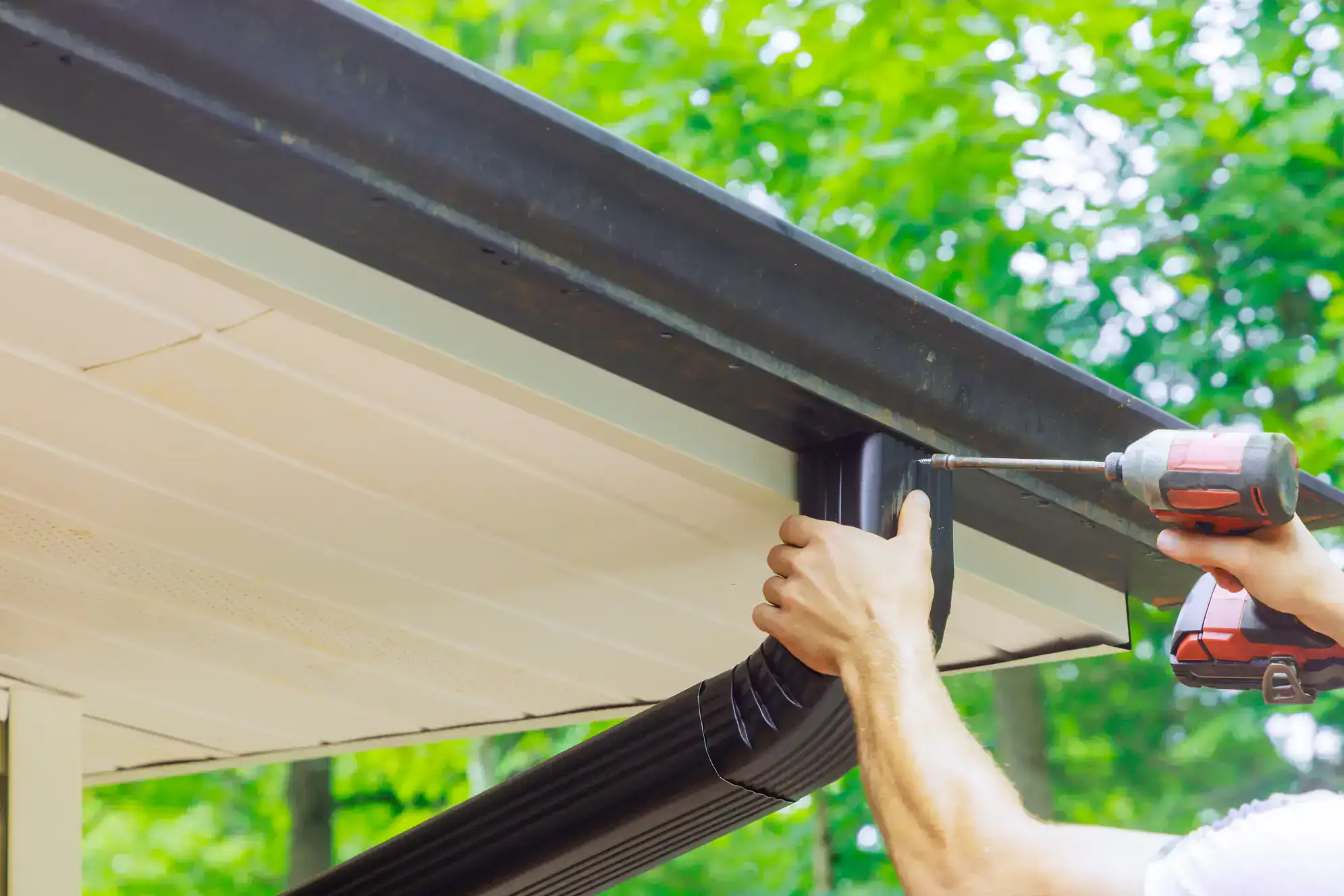
Installation day is straightforward. We fabricate seamless aluminum gutters on-site to match your exact measurements, set the correct slope for drainage, and position downspouts where they’ll actually move water away from your foundation. When we leave, the site is clean and the system is ready to work. If your gutters were damaged by a storm and you’re dealing with a homeowner’s insurance claim, we can help you document and navigate that process too — it’s something we’ve done for Bergen County homeowners more times than we can count.
Ready to get started?
Roof Gutter Installation in River Vale, NJ
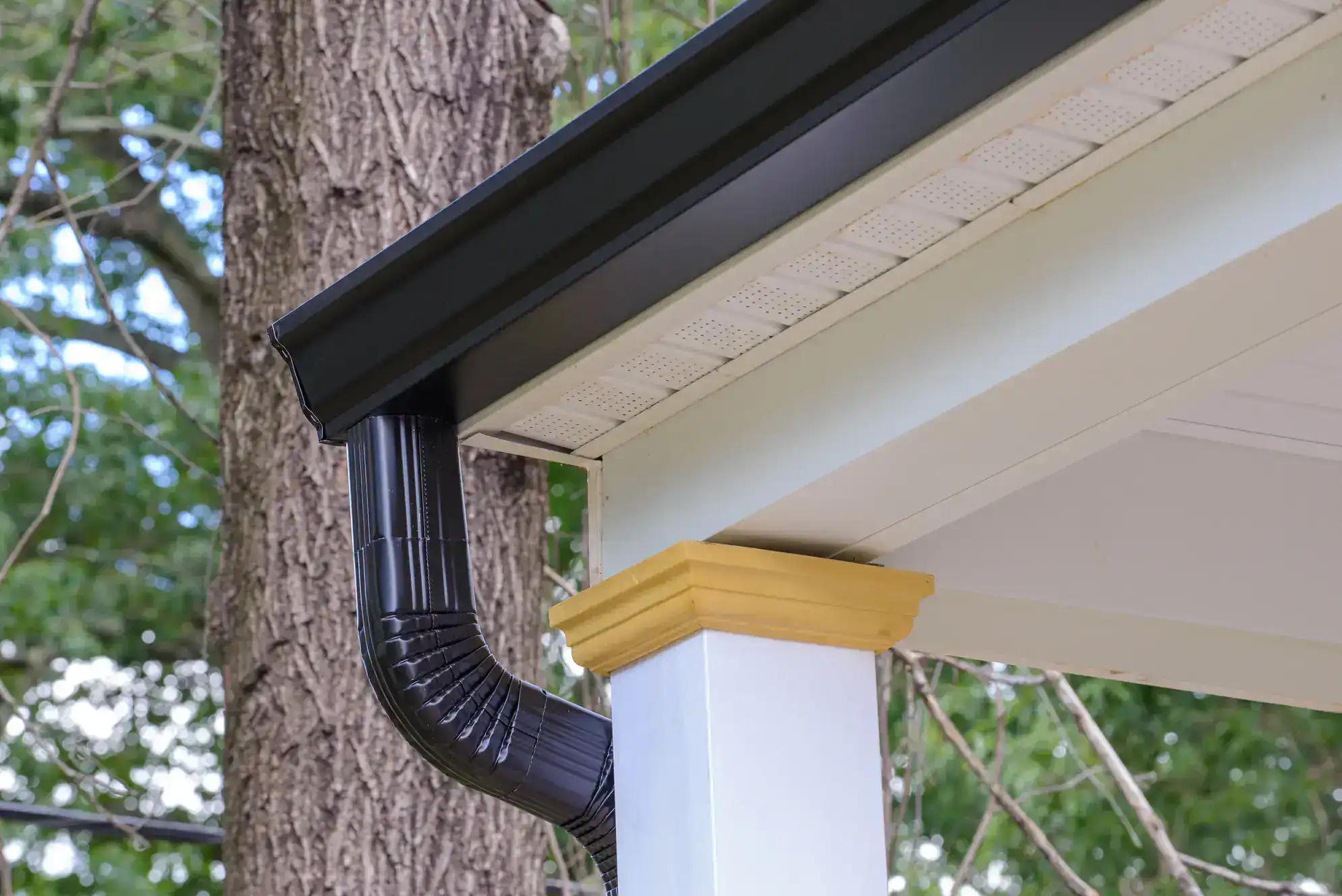
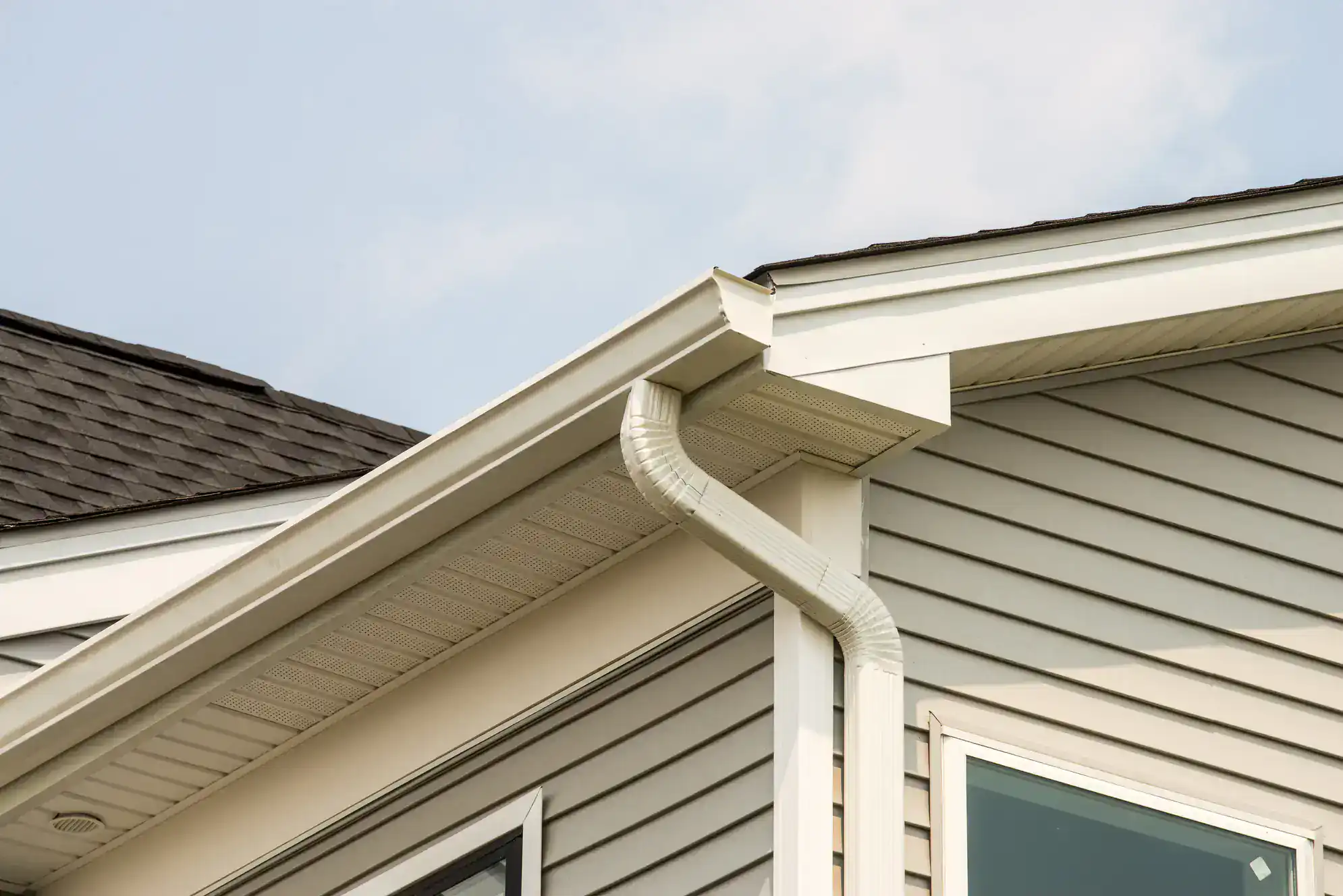
The gutters we install are seamless aluminum, fabricated on-site to your home’s exact dimensions. No pre-cut sections, no seams every ten feet where leaks eventually start. We calculate the correct slope — a quarter inch of pitch per ten feet of run — before anything gets mounted, because gutters that don’t drain properly fail regardless of how new they are. Downspout sizing and placement get the same attention, especially on larger colonials where a single undersized downspout can’t handle the volume coming off a multi-slope roof during a Bergen County thunderstorm.
For homes in River Vale that have been through multiple winters, fascia board condition is something we check carefully. Ice load and freeze-thaw cycling put real stress on older fastening systems, and installing new gutters on compromised fascia just means the problem comes back sooner. If the fascia needs attention before the gutters go up, we’ll tell you upfront — not after the fact.
Every installation comes with a free estimate, a written scope of work, and no hidden fees. We’re licensed under NJ HIC #13VH10605800, and the manufacturer certifications we carry mean your installation qualifies for warranty coverage that goes beyond what an uncertified contractor can offer. If you’re not sure whether you need full replacement or something more targeted, the inspection will give you a clear answer either way.
How do I know if my gutters need replacing or just cleaning?
Cleaning makes sense when the gutters themselves are structurally sound — no visible sagging, no sections pulling away from the fascia, no rust or cracks along the seams. If cleaning solves the overflow problem and the system holds up through a full season, you’re probably fine for a few more years.
Replacement becomes the better answer when you’re seeing physical failure: gutters that have separated from the roofline, seams that leak regardless of how clean they are, or sections that have visibly bent or corroded. For River Vale homes built in the 1960s and 1970s — which make up a significant portion of the township’s housing stock — original or first-generation gutter systems are often at or past the end of their functional lifespan. A free inspection will give you a straight answer on which category your gutters fall into, without any pressure to go one direction or the other.
Do I need a permit for gutter installation in River Vale, NJ?
In most cases, straightforward gutter replacement on an existing system does not require a permit in River Vale. New Jersey’s Uniform Construction Code generally classifies standard gutter replacement as routine home improvement work that falls below the permit threshold.
That said, if the scope of work includes fascia board replacement, structural repairs, or any modification to the roofline drainage configuration, a permit may be required depending on the extent of the work. Before any job starts, it’s worth confirming current requirements directly with the River Vale Township Building Department at 406 Rivervale Road. We handle this kind of pre-job coordination regularly and can help you understand what applies to your specific project so there are no surprises.
What's the difference between seamless and sectional gutters, and which is better?
Sectional gutters are pre-cut lengths joined together with seams every few feet. Those seams are where leaks almost always start — the sealant degrades, the joint shifts slightly over time, and water finds its way through. In a climate like northern Bergen County’s, where gutters go through repeated freeze-thaw cycles every winter, that seam degradation happens faster than it would in milder regions.
Seamless gutters are fabricated in one continuous run to match your home’s exact measurements. There are no mid-run joints, which means far fewer failure points and a significantly longer functional lifespan. They’re also a cleaner visual fit on the home. For most River Vale homeowners replacing an aging system, seamless aluminum is the clear choice — the cost difference compared to sectional is modest, and the performance difference over ten to fifteen years is substantial.
Can clogged or failing gutters actually cause basement flooding?
Yes — and it’s one of the more common causes of basement water intrusion that homeowners don’t immediately connect to their gutters. When gutters overflow or drain too close to the foundation, water saturates the soil directly against the house. Over time, that hydrostatic pressure works against the foundation wall, and water finds its way in through cracks, gaps around window wells, or through the floor-wall joint.
For homes in River Vale near the Pascack Brook corridor, where the soil is already prone to saturation during significant rain events, this risk is higher than in communities with better natural drainage. A properly installed gutter system with correctly positioned and extended downspouts moves water away from the foundation before it has a chance to accumulate. It’s not a dramatic fix — but it’s one of the most cost-effective things you can do to protect a finished basement or a crawl space from recurring moisture problems.
Does homeowner's insurance cover gutter damage from storms in New Jersey?
It depends on the cause. Most standard homeowner’s insurance policies in New Jersey cover sudden, storm-related damage — including gutter damage from a nor’easter, a microburst, or hail. What policies typically don’t cover is damage from gradual wear and deferred maintenance, so the distinction between storm damage and age-related failure matters when you’re filing a claim.
Bergen County sees its share of significant weather events — summer thunderstorms that can drop two or more inches of rain in under an hour, plus the occasional nor’easter that puts real stress on exterior systems. If your gutters were damaged in one of those events, there’s a reasonable chance your policy covers at least part of the replacement. We’ve helped homeowners document storm damage, work with adjusters, and get claims processed correctly. If you’re not sure whether your situation qualifies, a free inspection is a good starting point — we can assess the damage and help you understand what you’re working with before you call your insurance company.
How much does gutter installation cost for a home in River Vale, NJ?
For a typical single-family home, full gutter replacement generally runs somewhere between $2,800 and $5,200 — but that range is wide for a reason. The final number depends on your home’s linear footage of gutter runs, how many stories the installation involves, downspout count and placement, whether any fascia work is needed beforehand, and the material and profile you choose.
River Vale’s housing stock skews toward larger colonials and split-levels with more complex rooflines than a simple ranch or cape cod. More roof slopes mean more linear footage, more downspout locations, and sometimes more challenging access — all of which affect the final cost. The only way to give you a number that actually means something for your specific home is to look at it. That’s what the free estimate is for. You’ll get a written, itemized breakdown with no ambiguity — and if there’s a way to solve the problem for less than a full replacement, we’ll tell you that too.