
Roof Inspection in Fort Lee, NJ
Fort Lee Roofs Take a Hit — Here's What's Actually Up There
Hear from Our Customers
Roof Damage Inspection, Fort Lee NJ
A lot of Fort Lee homeowners don’t find out their roof has a problem until water shows up somewhere it shouldn’t. By then, what could have been a straightforward repair has turned into something bigger. A roof damage inspection in Fort Lee, NJ catches those issues while they’re still manageable — before they reach your ceilings, your walls, or your wallet.
Fort Lee’s position on top of the Palisades puts your home in a different wind exposure category than most of Bergen County. Properties along Hudson Terrace and Palisade Avenue deal with sustained gusts off the Hudson River corridor that accelerate granule loss, stress flashing at chimneys and dormers, and lift shingles in ways that aren’t always visible from the ground. If your home is in Coytesville or one of the central neighborhoods, you’re likely dealing with a mid-century roof that’s been through decades of freeze-thaw cycles — and those cycles are hard on flashing seals and ridge caps.
The inspection itself gives you something concrete: a clear picture of what’s holding up, what’s borderline, and what needs attention now. Whether you’re planning to stay in your Fort Lee home for another twenty years or you’re getting ready to list it in this borough’s active real estate market, that information is worth having before someone else finds it for you.
Licensed Roof Inspector, Fort Lee NJ
USA Home Remodeling has been doing exterior work across New Jersey for over ten years — roofing first, with gutters and siding as natural extensions of that same focus. Roofing isn’t one service among several here. It’s the core of everything we do, and that depth shows in how inspections are handled.
We are fully licensed as a Home Improvement Contractor with the NJ Division of Consumer Affairs and carry both general liability and workers’ compensation insurance. Beyond that, USA Home Remodeling holds certifications from major shingle manufacturers — credentials that fewer than a small fraction of roofing contractors nationwide ever earn, and that unlock enhanced warranty coverage that uncertified contractors simply can’t offer.
Fort Lee homeowners from Coytesville to the GWB corridor have trusted our team with some of the most important decisions they make about their homes. Our business has grown almost entirely through reviews and referrals — not ad spend. That’s not a talking point. It’s just what happens when you give people straight answers and do the work right.

Roof Inspection Company in Fort Lee, NJ
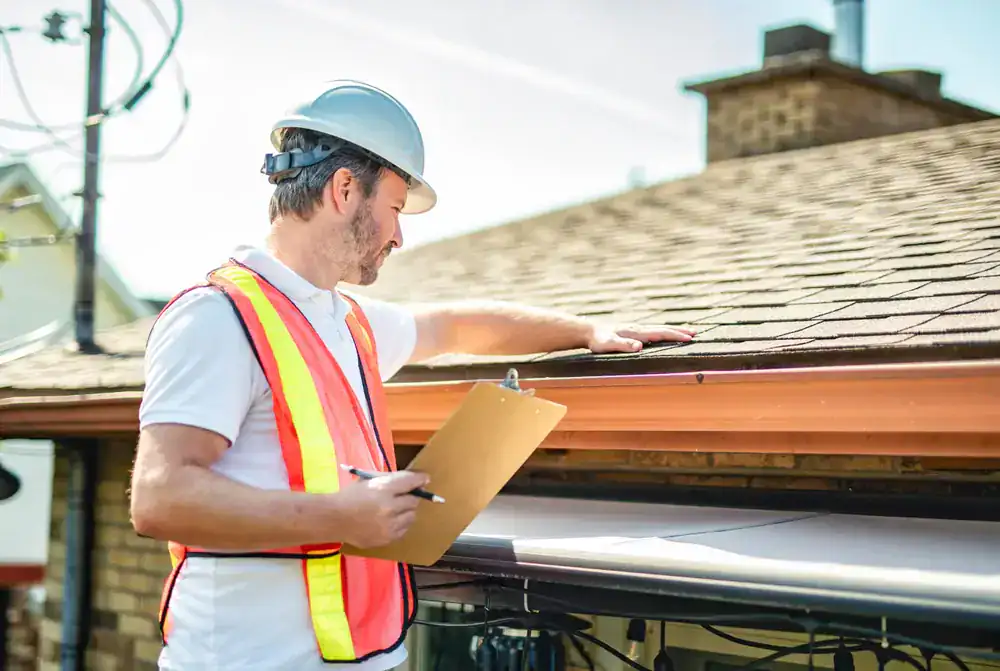
It starts with a free inspection — no cost, no obligation, no pressure. When our inspector arrives at your Fort Lee home, they’re not walking around looking for ways to justify a replacement. They’re doing a thorough assessment of what’s actually there: shingle condition, granule loss, flashing integrity at every penetration point, ridge cap wear, soffit and fascia condition, and any visible signs of moisture intrusion or structural stress.
In Fort Lee, that process takes into account what your specific roof has been up against. Homes on the Palisades edge face different wind and moisture conditions than homes set back from the cliff. Older homes in Coytesville may show wear patterns that newer construction doesn’t. Our inspector reads those details in context — not against a generic checklist.
After the inspection, you get a clear summary of findings. If repairs are needed, you’ll receive a detailed estimate before anything is scheduled. If a full replacement is warranted, we handle the required construction permit through Fort Lee’s Building Department — that’s standard for any full tear-off and re-roof in the borough. If your roof is in solid shape, you’ll hear that too. The goal is an honest answer, not a sales pitch.
Ready to get started?
Certified Roof Inspector in Fort Lee, NJ
A roof leak inspection in Fort Lee, NJ through USA Home Remodeling isn’t a five-minute walk-around. The inspection covers the full exterior roofing system — shingles, underlayment exposure where accessible, all flashing points including chimney, pipe boots, skylights and wall junctions, ridge and hip caps, drip edge condition, and the gutters and fascia where they connect to the roofline. If there are signs of interior moisture damage visible from the attic, that gets noted too.
Because we also handle gutter installation, gutter repair, siding installation, and siding repair, our inspection naturally extends to the components that work alongside your roof. A failed gutter attachment or compromised siding above the roofline can drive water into places that look like a roofing problem but aren’t — and knowing the difference saves you from fixing the wrong thing.
For Fort Lee homeowners dealing with a potential insurance claim after a nor’easter or hail event — both of which are documented local hazards in Bergen County — the inspection produces documented findings that carry real weight with adjusters. For homeowners in the middle of a real estate transaction in Fort Lee’s competitive market, that same documentation gives buyers and sellers a credible, professional baseline. Either way, you leave with something useful in hand.

Does a roof inspection in Fort Lee, NJ cost anything upfront?
No — we offer free roof inspections in Fort Lee with no obligation attached. You don’t pay anything to find out what condition your roof is in, and there’s no pressure to commit to any work afterward. If the inspection turns up nothing urgent, you’ll hear that clearly. If repairs or a replacement are warranted, you’ll receive a detailed estimate before any decision is made.
This matters in Fort Lee’s market specifically because homeowners here are making decisions tied to high-value properties. The average home in this borough transacts well above $500,000, and in many cases significantly higher. Getting an honest professional assessment at no cost before committing to any scope of work is a straightforward way to protect that investment — whether you’re staying put, preparing to sell, or just trying to get ahead of the next nor’easter season.
How do I know if my roof actually needs replacing or just a repair?
That’s exactly the question a good inspection is designed to answer — and the honest answer is that it depends on what’s actually there, not on a general rule of thumb. Age alone doesn’t tell the full story. A 20-year-old roof that’s been properly maintained and ventilated may have several years left. A 12-year-old roof on a Coytesville colonial with chronic ice dam issues and failed flashing may need more immediate attention.
The inspection looks at the specific wear patterns on your roof — granule loss, shingle cracking or curling, flashing condition at every penetration point, and any signs of moisture getting past the surface layer. In Fort Lee, freeze-thaw cycling through Bergen County winters puts particular stress on flashing seals and ridge caps, and that’s where problems often start before they become visible inside. Once our inspector has a complete picture, you’ll get a straight assessment of what’s holding up and what isn’t — with the scope of any recommended work explained clearly before you decide anything.
Do I need a permit for roof work in Fort Lee, NJ?
It depends on the scope of the work. Fort Lee’s building requirements specifically exempt roof repairs that don’t exceed 25% of the total roof area within a 12-month period — so minor repairs, patching after storm damage, or replacing a limited section of shingles typically don’t require a permit. That work can be completed without involving the Building Department.
A full roof replacement — meaning a complete tear-off and re-roof — does require a construction permit through the Fort Lee Building Department, which enforces New Jersey’s Uniform Construction Code. Any contractor who proposes a full replacement without pulling that permit is operating outside the law, and that has real consequences for your homeowner’s insurance coverage and your warranty protections. We handle the permitting process as part of any full replacement project, so you’re not left navigating that on your own. It’s one less thing to manage, and it means the work is done with the proper documentation from start to finish.
What roof problems are most common in Fort Lee homes after winter?
The two most common post-winter issues in Fort Lee are ice dam damage and flashing failures — and they’re often connected. Ice dams form when heat escapes through the attic, melts snow on the upper portion of the roof, and that meltwater refreezes at the colder eave edge. The resulting ice ridge traps water against the roof surface, and over time that water works its way under shingles and through any weak point in the flashing. Fort Lee’s older housing stock — particularly the mid-century colonials and split-levels in the central neighborhoods, and the early 20th-century homes in Coytesville — is especially susceptible because many of these homes were built before modern attic insulation and ventilation standards existed.
Beyond ice dams, nor’easters that move up the Hudson River corridor can cause direct shingle damage — lifted tabs, cracked surfaces, and granule loss that accelerates shingle degradation. The borough’s elevated position on the Palisades means cliff-side properties face wind loads that interior Bergen County neighborhoods don’t. Spring is the right time to get eyes on your roof after a full winter, before any existing damage has a chance to compound through the warmer months.
How does a certified roof inspector differ from a general home inspector?
A general home inspector covers a wide range of systems — electrical, plumbing, HVAC, foundation, and roofing — which means roofing gets a portion of the inspection rather than the full focus. They’re looking for obvious red flags, not the detailed pattern-level assessment that a roofing specialist brings.
A certified roof inspector from a manufacturer-certified contractor is specifically trained in roofing systems — the materials, the failure modes, the installation standards, and the specific wear patterns that indicate real problems versus normal aging. USA Home Remodeling holds certifications from major shingle manufacturers, which means our inspectors understand what those manufacturer standards require and what deviations from those standards look like in the field. For a Fort Lee homeowner dealing with a potential insurance claim, a pre-listing inspection, or a post-storm assessment, that level of specificity in the findings carries more weight than a general home inspection report’s roofing section. You’re getting a roof inspection, not a checkbox.
Is it worth getting a roof inspection before selling my home in Fort Lee?
In Fort Lee’s real estate market — where homes regularly transact above $500,000 and the pace of sales has been notably active — a pre-listing roof inspection is one of the most straightforward ways to protect your position as a seller. When a buyer’s inspector finds a roofing issue during the transaction, it almost always results in a price reduction request, a repair credit demand, or a delayed closing. Getting ahead of those findings on your own timeline gives you options that waiting does not.
A documented inspection from a licensed, certified roof inspector in Fort Lee, NJ also carries more credibility with buyers than a verbal assurance. It shows the condition of the roof has been professionally assessed, and if any work was completed, it gives buyers a clear record of what was done and by whom. For a property at this price point, that documentation is a real asset — it reduces buyer hesitation and removes one of the most common friction points in the closing process. The inspection is free. The information it gives you is not something you want to find out for the first time at the negotiating table.