
Roofer in Fort Lee, NJ
Palisades-Tested Roofing for Fort Lee Homes
Hear from Our Customers
Fort Lee Roofing Company Results
A roof that’s been properly replaced or repaired isn’t something you think about anymore. No more water stains creeping across your ceiling after a storm. No more anxiety every time a nor’easter rolls through the GWB corridor and the wind picks up at the cliff edge. You just live in your home without the background worry.
For Fort Lee homeowners — especially in neighborhoods like Coytesville and the Bluff Section — that peace of mind is worth more than people realize. These are older homes, many built in the late 1950s and early 1960s, sitting at elevation with full exposure to Hudson River wind patterns. A roof that was installed without understanding that environment isn’t going to last as long as one that was. The difference shows up in your attic, your ceilings, and eventually your wallet.
When the job is done right, you also walk away with documentation. A manufacturer-backed warranty, a permitted project on record with Fort Lee’s Building Department, and a roof that adds real value to a home that’s likely worth $700,000 or more. That’s protection on a significant asset.
Local Roofers Serving Fort Lee, NJ
We’re a family-owned exterior renovation company based in New Jersey, serving Fort Lee and Bergen County homeowners for over a decade. Our work is roofing-first — inspections, repairs, full replacements — with gutters and siding handled as part of the same exterior picture. Our NJ Home Improvement Contractor License #13VH10605800 is publicly verifiable through the NJ Division of Consumer Affairs. That’s the baseline for doing this work legally in New Jersey.
We hold certifications from major shingle manufacturers, which matters because those certifications unlock enhanced system warranties that most contractors in the Fort Lee market simply aren’t authorized to offer. Our growth has been organic — built on reviews and referrals from homeowners in Coytesville, the Bluff Section, and throughout Bergen County who got what they were promised and told their neighbors about it.
Fort Lee Roof Repair and Replacement Process
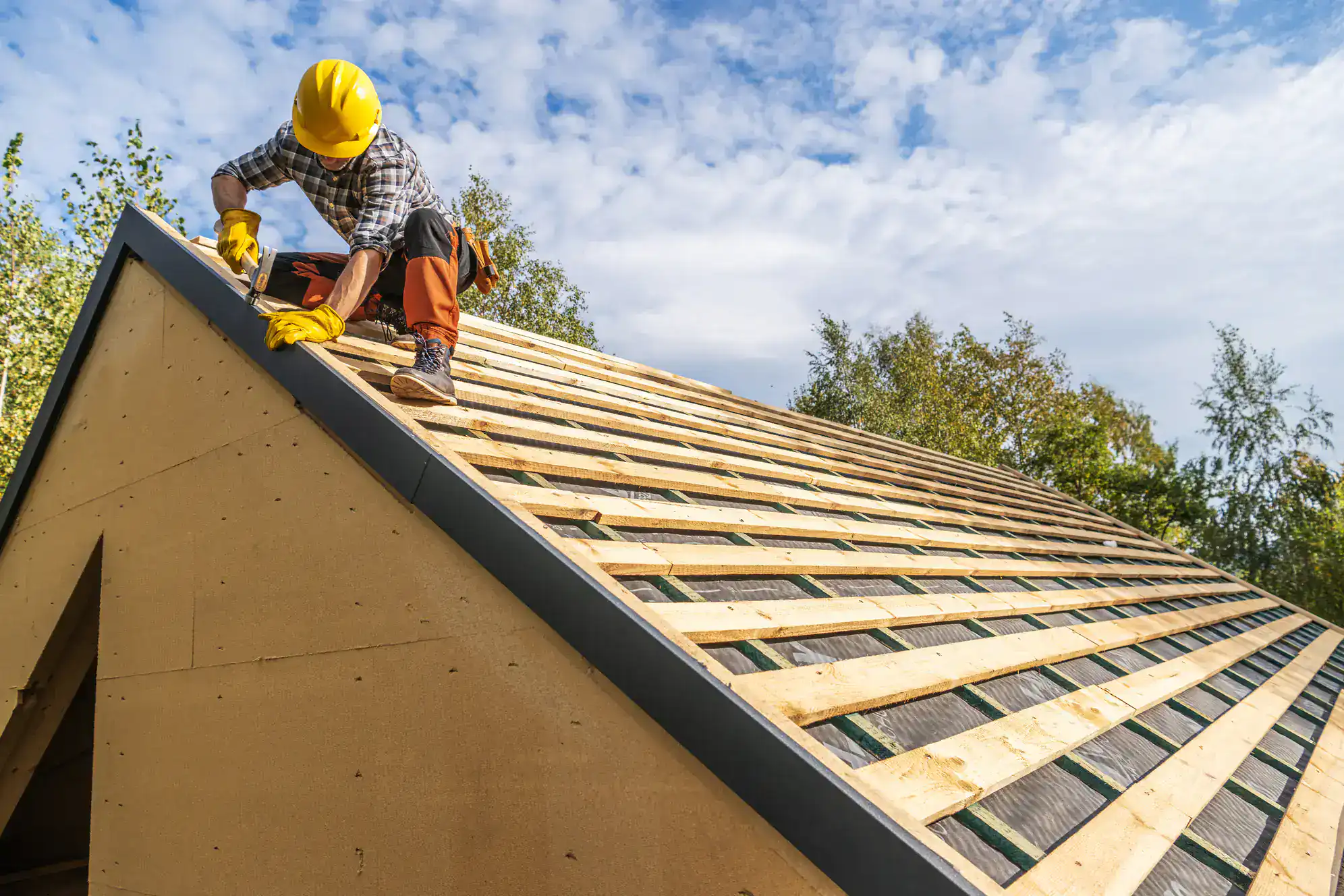
It starts with a free inspection — no obligation, no pressure. We walk your roof, check flashing at every penetration and transition, assess drainage, look at ventilation, and document everything with photos. You get that report to keep, whether you move forward with us or not. For Fort Lee homes, this inspection pays particular attention to cliff-edge wind exposure, ice dam vulnerability at the eaves, and the condition of the roof deck — because 60-plus-year-old decking doesn’t always look bad from the street.
From there, you get a full, itemized quote before anything is scheduled. Fort Lee’s building code requires a permit for any roofing work covering more than 25% of the total roof area — and always for full replacements. We pull that permit before the job starts, not after. The work itself follows manufacturer installation standards precisely, because that’s what keeps the warranty valid. Cleanup is part of the job, not an afterthought.
After the project is complete, you receive your warranty documentation and a record of the permitted work — something that matters when it comes time to sell a home or file an insurance claim. The process is straightforward because it’s designed to be.
Ready to get started?
Roofing Services in Fort Lee, NJ
The roofing work we cover runs the full range — free inspections, minor repairs, partial replacements, and complete tear-offs with new installations. For Fort Lee’s single-family and two-family homes, that typically means asphalt shingle systems, though the borough’s significant high-rise and flat-roof inventory means TPO and EPDM work is part of the conversation too. If you’re managing a condo unit or working with a building HOA on a flat roof issue, that’s a different scope and we treat it as one.
Emergency roof repair is available around the clock, which matters in a borough that sits at the top of the Palisades with real exposure to nor’easter wind events and summer downburst storms. Fort Lee’s own emergency preparedness materials flag downburst winds and hail as recurring threats — the kind that strip shingles at 10pm on a Wednesday. When that happens, you need someone who actually answers.
Gutters and siding are handled alongside roofing because they’re part of the same exterior system. A lot of Fort Lee’s older homes have compromised gutters that can’t handle drainage properly, and siding that’s taken the same weather damage as the roof. Getting everything assessed in one visit — and addressed by one contractor — saves time and eliminates the coordination headache of managing multiple crews.
Does replacing a roof in Fort Lee, NJ require a building permit?
Yes, in most cases. Fort Lee’s building code has a specific threshold worth knowing: if roofing repairs cover more than 25% of the total roof area within a 12-month period, a permit is required from the Fort Lee Building Department. A full replacement always requires a permit, no exceptions. This isn’t a gray area.
Working with a contractor who skips the permit process creates real problems down the line. It can void your homeowner’s insurance coverage, complicate a future home sale, and leave you personally liable if something goes wrong during the work. We handle the permit process as part of every qualifying project — it’s included, not an add-on. Fort Lee’s building inspectors enforce the NJ Uniform Construction Code, and every job is documented accordingly.
How do I know if my roof needs to be repaired or fully replaced?
The honest answer is that you usually can’t tell from the ground, and neither can most homeowners from the attic alone. What looks like a few missing shingles on the surface can mean compromised decking underneath — especially in Fort Lee homes built in the 1950s and 1960s, where the average single-family home is now around 66 years old. Original roof decking from that era doesn’t always show visible rot until it’s been saturated repeatedly.
The inspection is what tells the real story. A thorough assessment covers the shingle surface, flashing at chimneys, vents, and wall transitions, attic ventilation, drainage patterns, and the structural condition of the deck where accessible. After that, the decision between repair and replacement is based on actual findings — not a sales pitch. If your roof has useful life left, you’ll hear that. If it doesn’t, you’ll see the documentation that explains why.
What causes ice dams, and are Fort Lee homes especially at risk?
Ice dams form when heat escaping from the living space warms the roof deck, melts snow from the inside out, and that water refreezes at the cold eaves and gutters. The result is a dam of ice that forces water back up under the shingles, saturating the decking and eventually causing interior leaks — often in places that aren’t visible until the damage is already significant.
Fort Lee’s elevation on the Hudson Palisades makes this a more active problem than it is in lower-lying Bergen County towns. Cold air drains down the cliff face at night, creating sharper temperature swings between the roof deck and the eaves. Older homes in Coytesville and the Bluff Section — with original ventilation systems that weren’t designed to modern standards — are particularly susceptible. Proper attic ventilation and the right insulation profile are the long-term fix. A good inspection will flag ice dam vulnerability before it becomes a ceiling stain.
How long does a roof typically last in New Jersey, and what affects that timeline?
A standard asphalt shingle roof installed correctly in New Jersey typically lasts between 20 and 30 years, depending on the shingle grade, installation quality, and how the roof is ventilated. Architectural shingles on the higher end of that range, three-tab shingles on the lower end. Premium shingle systems with proper underlayment and ventilation can push beyond 30 years.
In Fort Lee specifically, a few factors can shorten that window. The wind exposure on the Palisades cliff edge is more intense than most inland Bergen County locations — sustained winds during nor’easters and summer downburst events put more stress on shingle fasteners and flashing than the same storm would in a sheltered inland neighborhood. Homes near the I-95 and Route 4 corridors also experience low-level vibration from heavy traffic over time, which can gradually loosen flashing at roof penetrations. Installation quality and material selection matter more here than in calmer environments.
What should I look for when hiring a roofer in Fort Lee, NJ?
Start with the license. New Jersey requires Home Improvement Contractors to hold an active HIC license issued by the NJ Division of Consumer Affairs — and that license number is publicly searchable online. Any contractor operating in Fort Lee without one is working illegally, and any damage or dispute that arises leaves you with very limited recourse. Verifying takes about 60 seconds and tells you immediately whether you’re dealing with a legitimate operation.
Beyond that, ask specifically about manufacturer certifications. These certifications aren’t just marketing badges — they determine what warranty coverage the contractor is authorized to provide. A non-certified contractor can install the same shingles, but they cannot offer the enhanced system warranty that comes with certified installation. For a Fort Lee home valued at $700,000 or more, that warranty is a transferable asset worth asking about. Also ask whether the contractor will pull the required permits — if they suggest skipping that step to save time or money, that’s your answer about how the rest of the job will go.
Does homeowner's insurance typically cover roof damage from storms in New Jersey?
Most standard homeowner’s insurance policies in New Jersey cover sudden, storm-related roof damage — wind, hail, falling debris — as a covered peril. What they typically don’t cover is damage attributed to age, neglect, or gradual deterioration. That distinction matters, and it’s often where disputes between homeowners and insurers happen.
After a nor’easter or a summer storm in Fort Lee, the documentation you have on hand makes a real difference in how a claim gets processed. A detailed inspection report with photos — the kind we provide after every free inspection — gives your insurance adjuster something concrete to work with rather than a verbal description of what you saw from the yard. It also helps establish that the damage is storm-related rather than pre-existing wear. If you’re filing a claim, having that report before the adjuster arrives puts you in a significantly stronger position. Emergency tarping to stop active water intrusion is also something to ask your contractor about immediately after a storm event — stopping the damage from spreading is step one, and it’s documented evidence that you acted promptly.