
Roof Repair in Fort Lee, NJ
Palisades Wind, Aging Roofs, and No Room for Guesswork

Hear from Our Customers
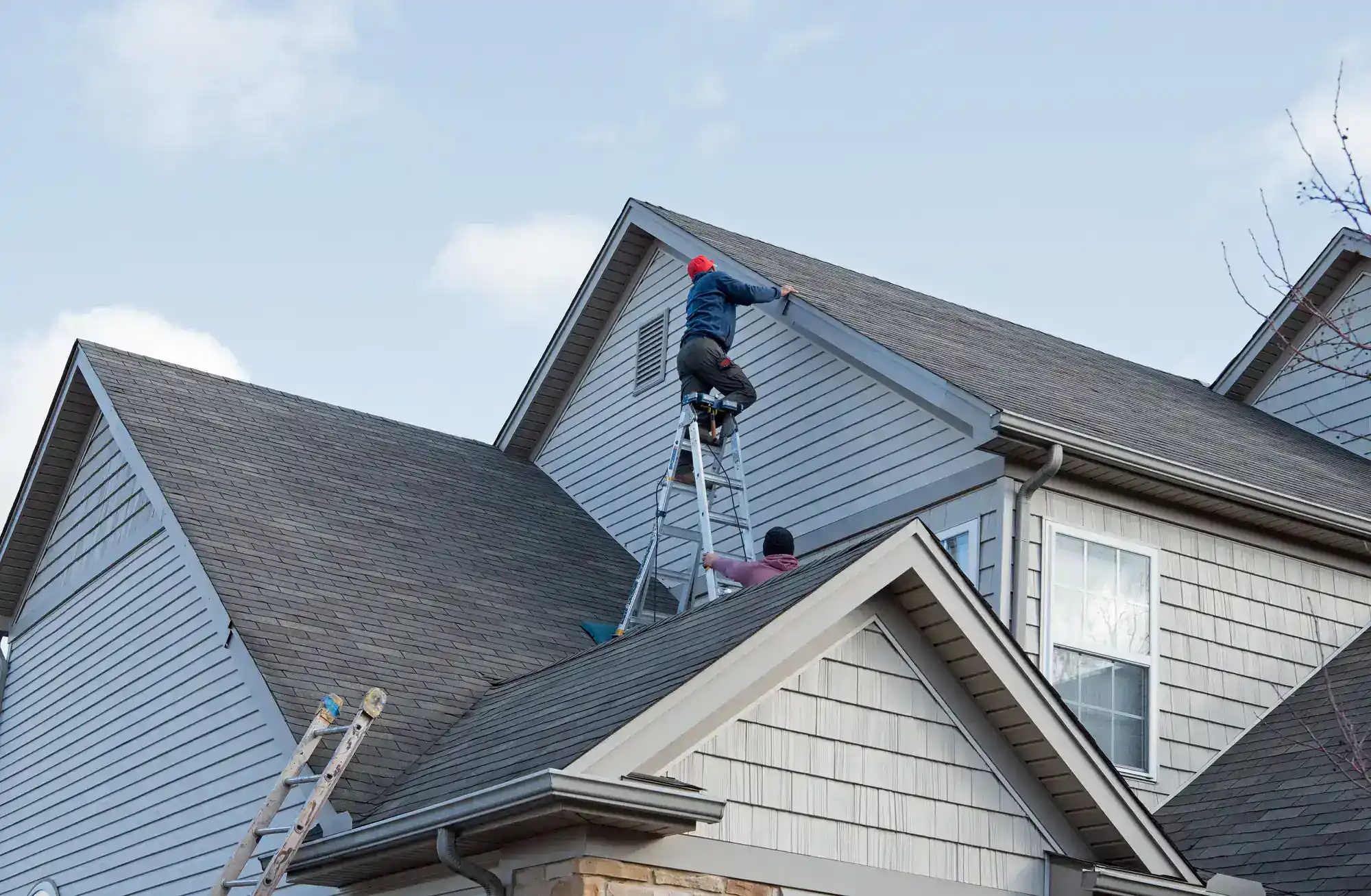
Fort Lee Roof Leak Repair
A roof repair done right means you stop watching the ceiling every time it rains. No more buckets, no more wondering if that water stain is spreading, no more putting off a call because you’re not sure what you’re dealing with. That’s the outcome — not a sales pitch, just what happens when the problem is actually solved.
Fort Lee has a specific set of conditions that accelerate roof wear faster than most people expect. Sitting atop the Palisades, your home is exposed to Hudson River wind patterns that inland Bergen County towns simply don’t face. That constant wind loading pulls at shingles, stresses flashing seams, and works its way into every vulnerable point on the roof — especially around chimneys, skylights, and the edges where the roof meets the wall. The freeze-thaw cycle that runs through every Fort Lee winter makes it worse, expanding and contracting those same vulnerable points until water finds a way in.
If you’re in the Coytesville section or anywhere in Fort Lee West, there’s a good chance your home was built in the 1940s through the 1960s — which puts your roof squarely at or past the end of its expected lifespan. And if you’re in one of the borough’s many condos or townhomes, flat roof issues are a different problem entirely, with their own failure modes that a pitched-roof contractor won’t catch. Getting the right diagnosis matters as much as the repair itself.
Certified Roof Repair Contractor Fort Lee
We’ve been repairing and replacing roofs across Fort Lee and Bergen County for over ten years. That’s not ten years of doing the same easy job — it’s ten years of working through hail seasons, nor’easters, ice dam damage, and the full range of roofing conditions this region produces. Our team holds contractor licenses and certifications from major shingle manufacturers, which means the repairs we do qualify for manufacturer-backed warranty coverage that most contractors in this market can’t offer.
What that means for you practically is this: the estimate you get is written down, itemized, and it’s what you’ll pay. No vague verbal quotes that shift at invoice. No subcontracted crew showing up that you’ve never met. The same people who walk your roof and write the scope are the ones accountable for the finished work — and in a borough as dense and connected as Fort Lee, that accountability isn’t abstract.

Roof Repair Process Fort Lee, NJ
It starts with a free inspection. We come out, get on the roof, and look at what’s actually happening — not a drive-by estimate from the street. In Fort Lee, that means checking the specific things this borough’s roofs are prone to: flashing failures around chimneys and skylights, shingle lift along the windward edges that face the Hudson, and on flat or low-slope sections, membrane seams and parapet flashing that may have opened up over the winter.
After the inspection, you get a written estimate that breaks down exactly what needs to happen and what it costs. If the scope of work covers less than 25% of your total roof area — which is the case for most targeted repairs — no permit is required under Fort Lee’s building code. For larger repairs or anything approaching a full replacement, a permit gets pulled from the Fort Lee Building Department as part of the process. We handle that for you, not hand it off to you.
Once the work is approved and scheduled, our crew shows up, does the job, and cleans up completely before they leave. In a borough where your neighbors are close and your driveway might be shared, that cleanup step isn’t optional — it’s part of the job. When it’s done, you’ll know exactly what was repaired, why, and what to watch for going forward.
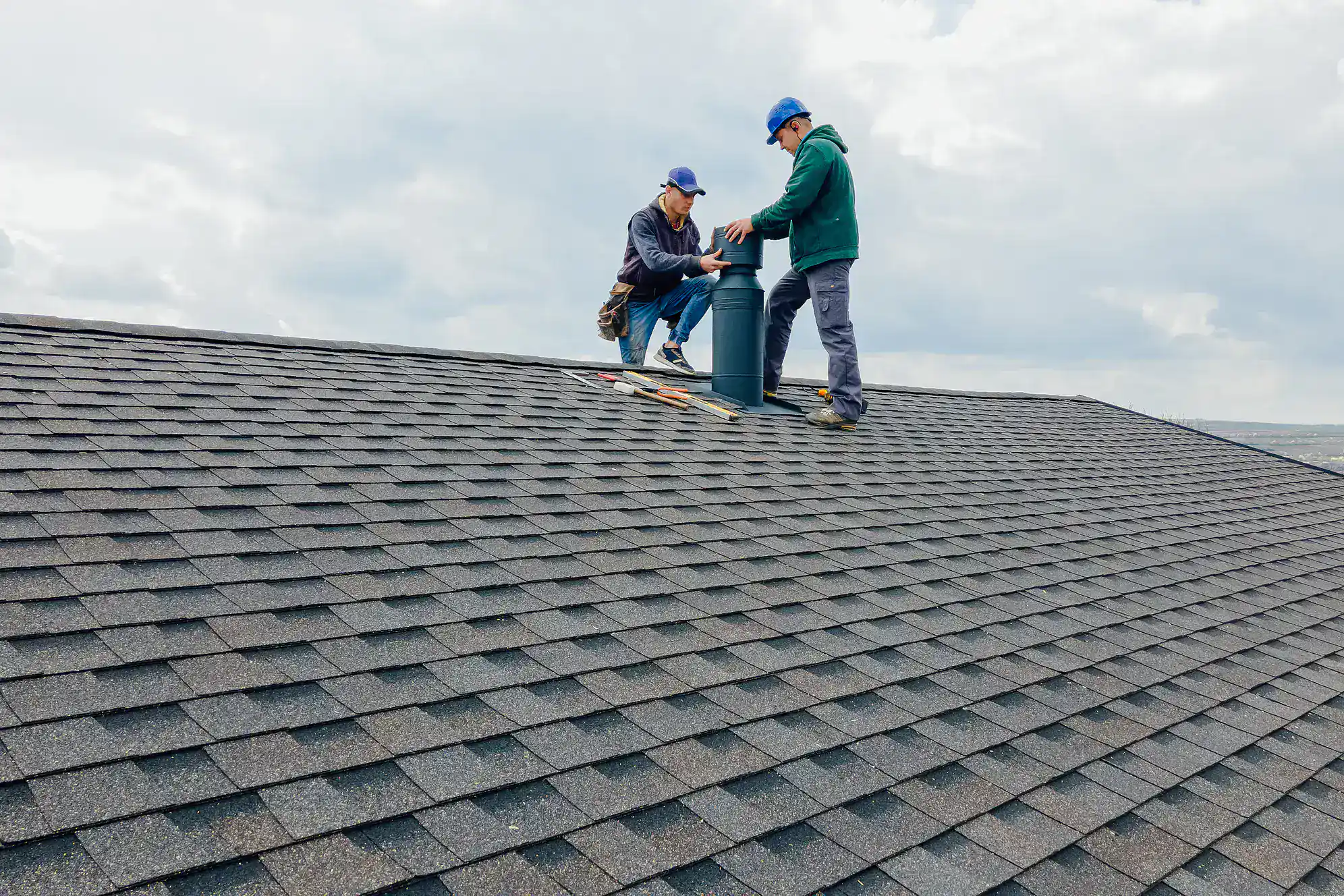
Ready to get started?
Shingle and Flat Roof Repair Fort Lee
Fort Lee isn’t a one-roof-type borough. The Coytesville section and the single-family homes throughout Fort Lee West and Linwood Park are mostly pitched shingle roofs — asphalt, aging, and dealing with the same wind and freeze-thaw exposure that hits every elevated property in this part of Bergen County. For shingle roof repair in Fort Lee, we focus on proper flashing restoration, matched replacement shingles that don’t stand out like a patch job, and a finished result that holds up through the next storm season.
The condos, townhomes, and mixed-use buildings that make up a large share of Fort Lee’s housing stock are a different conversation. Flat and low-slope roofs — TPO membranes, EPDM rubber, modified bitumen — fail differently than shingles do. Ponding water, seam separations, and failed parapet flashing are the common culprits, and they require a contractor who actually works on these systems regularly, not one who occasionally patches them between shingle jobs.
Beyond the roof surface itself, we also address the connected systems that contribute to roof failures — gutters that are backing up and causing water to pool at the eaves, siding seams where water is entering behind the wall, and the full exterior picture that a single-service contractor might miss. Whether it’s emergency roof repair after a storm, a slow leak that’s been building since last winter, or a flat roof that’s overdue for a proper assessment, the process starts the same way: a free inspection, an honest answer, and a written estimate before any work begins.
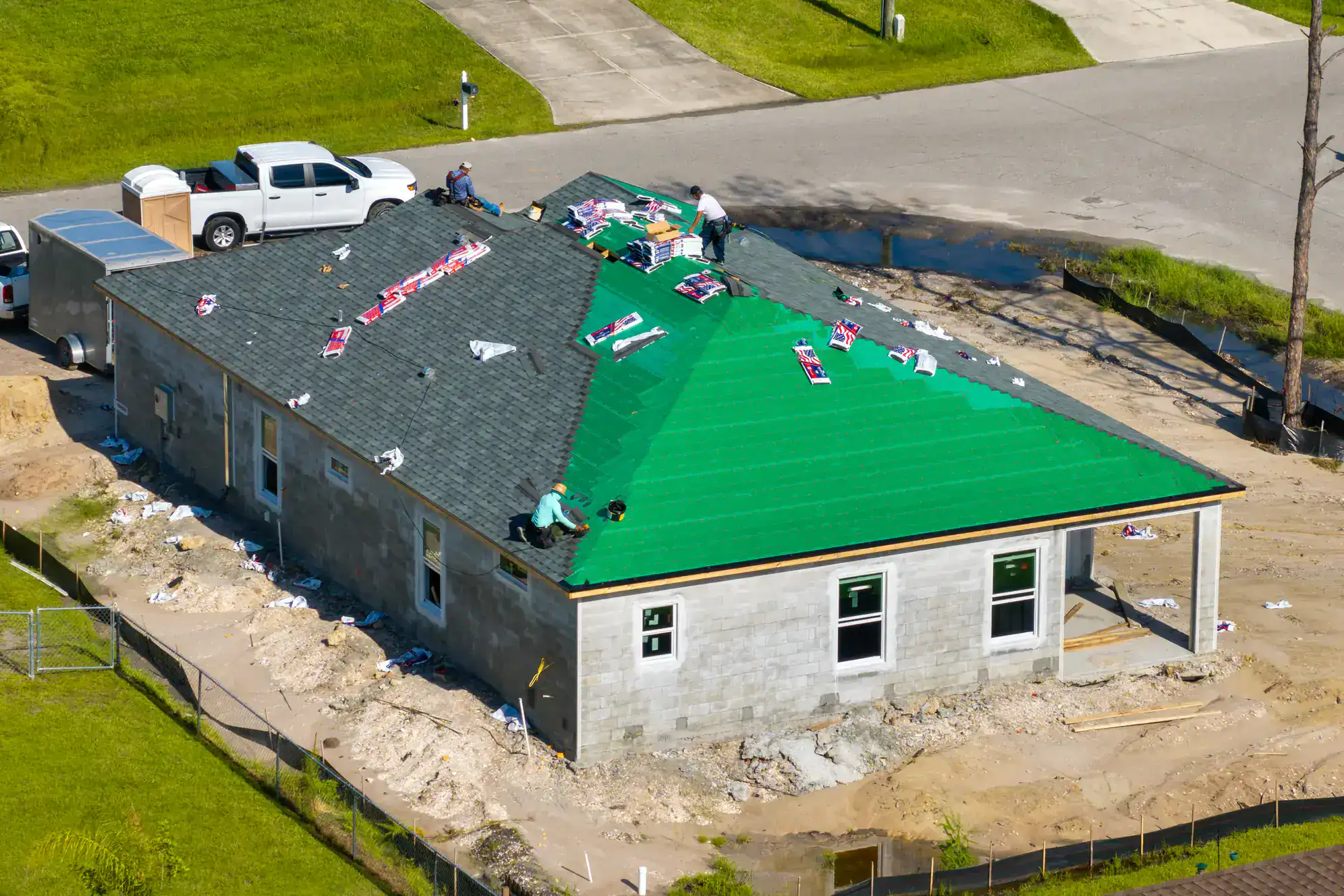
Does roof repair in Fort Lee, NJ require a building permit?
It depends on the scope of the work. Fort Lee’s Building Department follows the New Jersey Uniform Construction Code, and there’s a specific threshold that determines whether a permit is needed: if the repair covers less than 25% of your total roof area within a 12-month period, the work is generally exempt from permit requirements. That covers most targeted repairs — replacing a section of damaged shingles, repairing flashing around a chimney, patching a flat roof membrane, or addressing storm damage to a specific area of the roof.
Once the scope crosses that 25% threshold — or if the work involves structural elements like roof decking or rafters — a construction permit is required and inspections will follow. For anything approaching a full replacement, the permit process applies regardless of scope. We handle this determination as part of the estimate process, so you’re not left guessing whether your project needs a permit. If it does, we get it pulled. If it doesn’t, you’ll know exactly why.
How do I know if I need a roof repair or a full replacement?
This is one of the most common questions homeowners face, and it’s also where a lot of contractors will steer you toward the more expensive option if they’re not being straight with you. The honest answer depends on the age of your roof, the extent of the damage, and whether the underlying structure is compromised. If your roof is relatively recent and the damage is isolated — a few missing shingles, a flashing failure, a specific leak point — repair is usually the right call.
If your roof is approaching or past 25–30 years old and you’re seeing widespread granule loss, multiple leak points, or shingles that are brittle and cracking across large sections, repair starts to become a short-term fix on a long-term problem. In Fort Lee, where a significant share of the housing stock was built between the 1940s and 1960s, this scenario is common — especially in the Coytesville section and other mid-century neighborhoods. A free inspection gives you an honest picture of where your roof actually stands, without a sales agenda attached to the answer.
What causes most roof leaks in Fort Lee homes?
In Fort Lee specifically, the most common sources of roof leaks come down to a few recurring problems. Flashing failures are at the top of the list — the metal flashing around chimneys, skylights, and roof-to-wall junctions is under constant stress from the freeze-thaw cycle that runs through every Bergen County winter. That repeated expansion and contraction breaks down sealants and opens gaps that water finds quickly. Skylights are particularly vulnerable in Fort Lee because the Hudson River wind exposure accelerates the wear on the flashing junction between the skylight frame and the surrounding roof deck.
On pitched shingle roofs, wind-driven shingle lift is a significant factor. The elevated position of Fort Lee on the Palisades cliffs means roofs here face wind loading that inland Bergen County towns don’t experience at the same level. On flat and low-slope roofs — which are common in the borough’s many condos and townhomes — the typical failure points are membrane seam separations, ponding water that hasn’t been properly drained, and parapet flashing that has pulled away from the wall. Knowing which type of failure you’re dealing with determines the right repair, which is why a proper inspection matters more than a quick patch.
How much does roof repair cost in Fort Lee, NJ?
Roof repair costs vary widely depending on what’s actually wrong, what type of roof you have, and how accessible the repair area is. For minor repairs — replacing a handful of damaged shingles, resealing a flashing joint, or patching a small flat roof membrane failure — costs typically fall in the range of a few hundred dollars. More involved repairs, like replacing a larger section of shingles after storm damage, addressing significant flashing deterioration, or repairing a flat roof membrane seam that has opened across a wide area, can run into the low thousands.
In Fort Lee’s market, where home values sit near $575,000 and the cost of deferred maintenance compounds quickly, the more useful question is usually what it costs to leave the problem alone. A $400 flashing repair that gets ignored becomes a $4,000 decking replacement when water has been sitting on the structural layer for two seasons. We provide written, itemized estimates before any work starts — so you know exactly what you’re looking at before you make any decision. There are no vague verbal quotes and no invoices that look different from what was discussed.
Can storm damage roof repair in Fort Lee be covered by homeowners insurance?
In many cases, yes — and Bergen County’s documented history of severe thunderstorms and hail events means this question comes up regularly. Homeowners insurance policies typically cover sudden and accidental storm damage, including wind-driven shingle loss, hail impact damage, and damage caused by falling debris. What they generally don’t cover is damage that results from deferred maintenance or gradual deterioration over time, which is why the distinction between storm damage and age-related wear matters when you’re filing a claim.
The practical challenge is documentation. Insurance adjusters need to see clear evidence that the damage is storm-related — and the way that evidence is gathered and presented affects how the claim is processed. A contractor who understands what adjusters look for, and who can provide a written damage assessment that aligns with your policy’s coverage language, makes a meaningful difference in the outcome. If you suspect storm damage to your Fort Lee roof, getting a professional inspection done before you file — or at least alongside the process — gives you the clearest picture of what you’re working with and what your claim should reflect.
How do flat roof repairs in Fort Lee differ from standard shingle repairs?
Flat and low-slope roofs fail differently than pitched shingle roofs, and they require a different diagnostic approach. On a shingle roof, you’re usually looking for visible damage — missing shingles, cracked tabs, lifted edges, deteriorated flashing. On a flat roof, the damage is often less obvious from a visual scan. Membrane seam separations, small punctures, and flashing failures at parapet walls or mechanical penetrations can be letting water in without any surface sign that’s easy to spot from below.
In Fort Lee, flat roof systems are common across the borough’s many condos, high-rise buildings, and townhome complexes — far more so than in most other Bergen County towns. These systems — TPO, EPDM, modified bitumen — also respond differently to the borough’s freeze-thaw cycle. Membrane materials that contract in cold temperatures and expand in heat are under constant stress at seam points, and that stress accumulates over time. Repairs on these systems require materials and techniques specific to the membrane type — you can’t apply a shingle repair mindset to a flat roof problem and expect it to hold. If your Fort Lee property has a flat or low-slope roof section, the inspection process needs to account for that specifically, not treat it as an afterthought to the pitched roof above it.