
Siding Installation in Piscataway, NJ
Piscataway Homes Deserve More Than a Quick Fix
Hear from Our Customers
Residential Siding Contractors in Piscataway
When your siding is doing its job, you stop thinking about it. No more noticing that soft spot near the corner, no more wondering if last night’s rain got behind the panels, no more watching your energy bills creep up without a clear reason. That is what good siding installation actually delivers — not just a better-looking house, but a house that holds up.
In Piscataway, that matters more than most people realize. The Raritan River corridor brings real weather events — not theoretical ones. Hurricane Ida in 2021 flooded entire sections of the township. The January 2024 cresting of the Raritan had residents near River Road moving vehicles and preparing to evacuate. That same wind-driven rain that floods low-lying areas pushes moisture into every gap, crack, and failing seam in your siding. If your exterior cladding is aging — and in neighborhoods like Grandview, where homes date back to the 1920s, a lot of it is — that moisture has somewhere to go, and it is going there whether you notice it or not.
New siding is not a cosmetic decision. It is the decision that keeps water out of your wall sheathing, keeps your insulation working, and keeps a manageable project from turning into a structural one. When it is done right, you feel it in the house — tighter, quieter, more efficient — and you stop worrying about what the next storm is going to find.
Local Siding Company in Piscataway, NJ
We have been working on homes throughout Piscataway and Middlesex County for close to ten years. Not a franchise. Not a call center that dispatches whoever is available. A family-run operation where the people doing the work are accountable for what we leave behind — because our name is attached to every job we take.
We are fully licensed, carry general liability and workers’ compensation insurance, and hold manufacturer certifications that most local contractors do not bother with. That last part is not a small detail — it is what unlocks the full manufacturer warranty on your new siding, and it is what separates an installation done to spec from one that just looks right on the day it goes up.
From the split-levels in Stelton to the ranches in Grandview to the newer builds in Heritage at Piscataway, we have worked across the full range of housing stock this township has to offer. We know what we are looking at when we show up — and we know how to handle what we find.

Siding Installers in Piscataway, NJ
It starts with a free inspection. Before anything is priced or scheduled, a qualified member of our team walks your home’s exterior and gives you an honest read on what is actually happening. If repair is the right call, that is what you will hear. If replacement makes more sense given the age of the material and the condition of what is underneath, we will show you why. No pressure either way.
From there, you get a written estimate — itemized, specific, and accurate. What it covers, what it costs, and what you can expect. In Piscataway, full siding replacement typically requires a permit through the township’s Building Division at 505 Sidney Road, and we handle that process. You do not have to track down forms or figure out the NJ Uniform Construction Code on your own. That is part of the job.
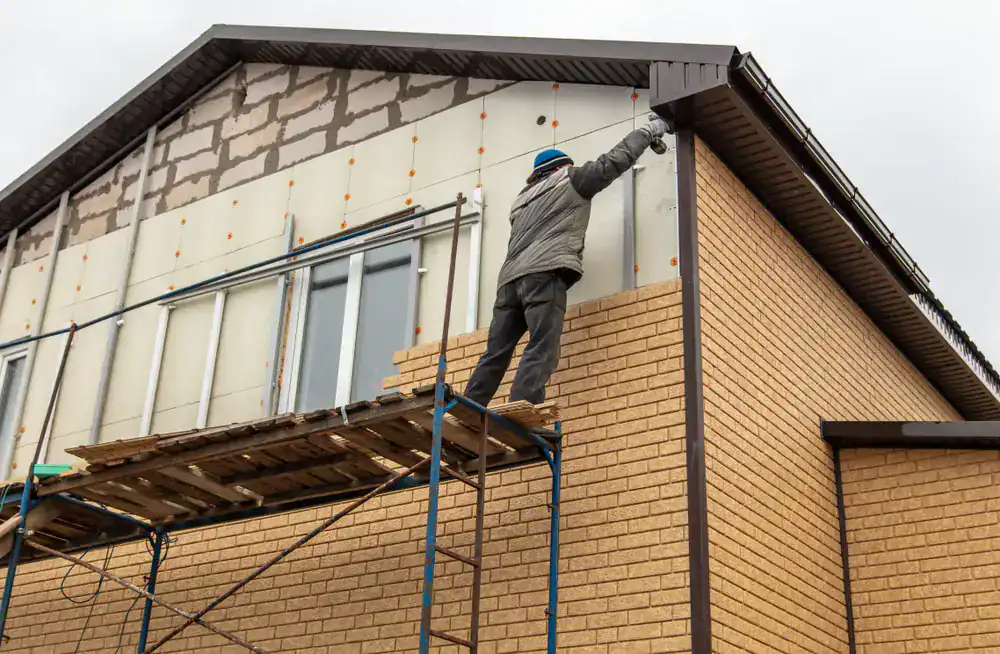
Installation day is straightforward. The old material comes off, the substrate gets inspected, the housewrap and moisture barrier go in correctly, and the new panels are installed to the manufacturer’s specifications — which matters for both performance and warranty. Cleanup is included. When our crew leaves, the job is finished, not just started. You get a walkthrough, you get your documentation, and you know exactly what was done and what it is backed by.

Ready to get started?
Vinyl Siding Contractors in Piscataway, NJ
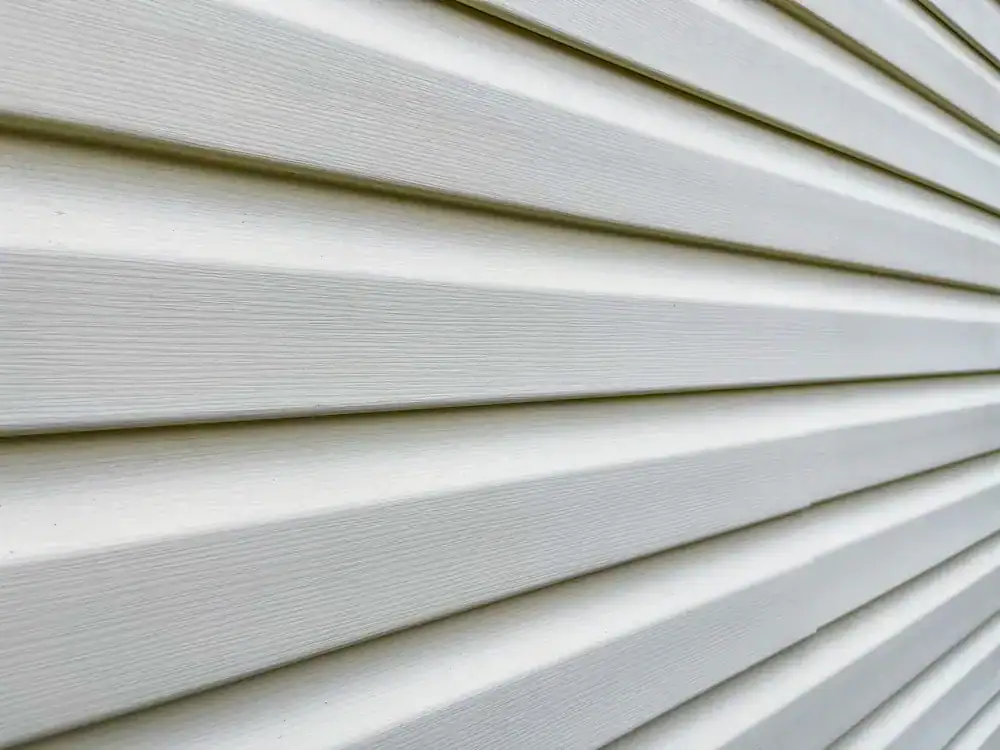
Vinyl siding is the most common choice for Piscataway homeowners, and for good reason. It handles the freeze-thaw cycles of central New Jersey winters without cracking the way older materials do, it does not require painting, and it holds up well against the kind of wind-driven rain that comes with the nor’easters and late-season tropical remnants that hit Middlesex County regularly. Not all vinyl is the same, though — thickness, grade, and installation method make a significant difference in how it performs over time, especially on older homes where the substrate may need attention before anything new goes on.
Fiber cement is the other material worth knowing about, particularly for homes in Piscataway where the architectural style calls for something that looks more substantial. It handles moisture exceptionally well, it does not expand and contract the way vinyl does in temperature swings, and it carries strong warranty terms when installed by a certified contractor. It costs more upfront, but for a home in the $450,000 to $550,000 range — which is where much of Piscataway’s housing market sits — the durability and curb appeal return tend to justify it.
Regardless of which material fits your home, our installation standard is the same: proper housewrap, correct fastening, sealed penetrations, and trim work that closes every potential entry point for moisture. That is what separates a siding job that lasts twenty years from one that starts showing problems in five.

Do I need a permit for siding installation in Piscataway, NJ?
Yes, in most cases. Piscataway Township’s Building Division, located at 505 Sidney Road, enforces the New Jersey Uniform Construction Code, and full siding replacement — meaning removal of the existing material and installation of new cladding — typically qualifies as rehabilitation of an existing structure’s exterior envelope, which requires a permit. Routine patching or minor repairs may fall under ordinary maintenance and do not trigger the permit requirement, but if you are replacing the siding on a significant portion of your home, plan on a permit being part of the process.
This matters beyond just following the rules. When you sell your home in Piscataway, buyers’ attorneys and home inspectors routinely pull permit histories. Unpermitted exterior work can create real complications at closing — delays, required remediation, or price adjustments. We handle the permit application as part of the project, so you are not chasing paperwork or trying to interpret code language on your own. The permit gets pulled, the inspection gets scheduled, and the work is documented correctly from start to finish.
How long does siding installation typically take for a Piscataway home?
For a typical single-family home in Piscataway — whether that is a ranch in Grandview, a split-level in Stelton, or a colonial-style home elsewhere in the township — a full siding replacement usually takes somewhere between two and five days once our crew is on-site. The actual timeline depends on the size of the house, the number of stories, the material being installed, and what the substrate looks like once the old siding comes off. If there is moisture damage or rot in the sheathing underneath, that adds time because it needs to be addressed before new material goes on.
Scheduling lead time is the other variable worth knowing about. Spring and fall are the busiest seasons for siding contractors in Middlesex County — spring because homeowners are assessing winter damage, fall because everyone wants work done before cold weather sets in. If you are planning a project for either of those windows, getting your estimate and locking in your schedule early is the practical move. Summer installation is also common and generally goes smoothly, though the humidity in central New Jersey during July and August requires attention to moisture barrier installation to make sure everything is sealed correctly before the panels go on.
How do I know if my siding needs to be repaired or fully replaced?
The honest answer is that it depends on what is happening beneath the surface, not just what you can see from the driveway. Visible cracking, warping, fading, or panels that have pulled away from the wall are obvious signs that something needs attention. But the more important question is whether the damage is isolated or whether it reflects a pattern across the whole exterior — because localized damage can often be repaired, while widespread deterioration almost always points toward replacement being the more cost-effective path.
In Piscataway’s climate, freeze-thaw cycling is a major driver of siding failure that often starts small and spreads. Water gets into a hairline crack, freezes, expands, and widens the opening. Over a few winters, what started as a minor issue becomes a compromised section of wall. On homes in neighborhoods like Grandview where the housing stock dates back decades, this process may have been running quietly for years before it becomes visible. A free inspection from us gives you a clear picture of what you are actually dealing with — not a guess from the curb, but a real assessment of the material condition and what is underneath it. That is the only way to make a decision you will not regret.
What is the difference between vinyl and fiber cement siding for New Jersey weather?
Both materials hold up well in New Jersey’s climate, but they handle it differently. Vinyl is lightweight, low-maintenance, and does not require painting — it comes pre-colored and holds that color reasonably well over time. It expands and contracts with temperature changes, which is why proper installation technique matters. If it is fastened too tightly, it will buckle in summer heat. If the panels are not overlapped correctly, wind-driven rain — the kind that comes with the nor’easters that regularly move through Middlesex County — can get behind them.
Fiber cement is denser and more dimensionally stable. It does not expand and contract the way vinyl does, which makes it a strong choice for homes with more architectural detail or for homeowners who want the look of wood without the maintenance. It handles moisture exceptionally well, which is a real advantage in the Raritan Valley where humidity and storm exposure are part of the annual cycle. The tradeoff is cost — fiber cement installation runs higher than vinyl, both for the material itself and the labor involved. For most Piscataway homeowners, the decision comes down to the home’s style, the budget, and how long you plan to stay in the house. Both are solid options when installed correctly by a certified contractor.
What should I look for when hiring siding contractors in Piscataway, NJ?
Start with the basics: New Jersey Home Improvement Contractor registration, general liability insurance, and workers’ compensation coverage for the crew. These are not optional — they are legal requirements and financial protections for you as the homeowner. An unregistered contractor in New Jersey is operating in violation of the Consumer Fraud Act, and if something goes wrong, you may have very limited recourse. Ask for proof of insurance before anyone sets foot on your property. Any legitimate contractor will have it ready.
Beyond licensing, look at how we communicate before the job starts. Do we give you a written, itemized estimate or a number on a napkin? Do we explain what is included — removal, substrate inspection, housewrap, trim, cleanup — or do you have to ask? In a community like Piscataway, where a significant portion of homeowners are engineers, researchers, and professionals who ask detailed questions for a living, a contractor who cannot answer those questions clearly is telling you something. Also check reviews for specifics: not just star ratings, but descriptions of how the contractor handled problems when they came up. That is where you find out what working with them is actually like.
How much does siding installation cost in Piscataway, NJ?
For a whole-home siding replacement in Piscataway, most homeowners are looking at a range of roughly $10,000 to $25,000 depending on the size of the house, the material selected, and the condition of the substrate once the old siding comes off. Vinyl installations on a standard single-family home tend to come in at the lower end of that range. Fiber cement projects, larger two-story homes, or jobs where the sheathing underneath needs repair before new material can go on will move toward the higher end.
What matters more than the total number is understanding what is actually included in the estimate. A low quote that does not account for substrate inspection, proper housewrap, or permit costs is not a better deal — it is an incomplete scope that will either cost more once the work starts or result in an installation that fails earlier than it should. With median home values in Piscataway sitting in the $450,000 to $550,000 range, the exterior cladding on your home is protecting a significant asset. A written, itemized estimate from a licensed contractor gives you a real number and a real scope — which is the only basis for making a comparison that actually means something. We provide free estimates with no obligation, so you can get that clarity before you commit to anything.