
Siding Installation in Norwood, NJ
Norwood Homes Deserve More Than a Fresh Coat of Curb Appeal
Hear from Our Customers
Siding Contractors Serving Norwood, NJ
When siding starts to fail in Norwood’s climate, it rarely announces itself with something obvious. It’s a slightly higher energy bill. A soft spot near a window frame. Paint that keeps peeling no matter how many times it’s touched up. By the time it’s visible from the street, water has usually been working behind the scenes for a while.
New siding changes that. You get a sealed, properly installed exterior that handles what Norwood actually throws at it — repeated freeze-thaw cycles from November through March, wind-driven rain from nor’easters, and summer humidity that finds every gap a rushed installation left behind. Many homes throughout Norwood’s residential neighborhoods are mid-century builds carrying siding that’s 30, 40, even 50 years old. That’s not a cosmetic issue anymore — that’s a moisture management issue.
Beyond performance, there’s the real estate angle. Norwood’s median home value has climbed past $709,000, and a clean, well-installed exterior is one of the fastest ways to protect and reflect that value. Whether you’re staying for another 20 years or starting to think about a future sale, the exterior of your home is doing a lot of work — it should look and function like it.
Licensed Siding Contractors in Norwood, NJ
We’ve been working on exterior renovations across Bergen County for close to ten years, and we started in roofing. That background matters more than it might seem — understanding how a roof handles weather in this part of New Jersey means understanding the full exterior envelope, including how siding integrates with rooflines, flashing, and gutters. That’s not something every siding contractor brings to the table.
Our work is family-driven, which in practice means the people making decisions about your project are the same people whose reputation is on the line when it’s done. Norwood is a small borough — fewer than 6,000 residents in under three square miles — and in a community this size, relationships matter. We’ve built our presence here through real reviews from real homeowners, not ad spend.
Every project starts with a free inspection and a written estimate that reflects the actual scope of work. No lowball number to win the job, no surprises when the invoice arrives.

Residential Siding Installation Process in Norwood
It starts with a free inspection. Before any numbers are discussed, we assess the condition of your existing siding — what’s failing, what’s salvageable, and what the substrate underneath looks like. In older Norwood homes, especially those built in the 1960s and 1970s, it’s not uncommon to find moisture damage or deteriorated sheathing once the old siding comes off. Finding that early means it gets addressed properly, not covered up.
From there, you get a written estimate that lays out the full scope: material selection, removal of existing siding, moisture barrier installation, trim work, and cleanup. Nothing is assumed or left vague. If you’re replacing siding on a Norwood home, a building permit is required through the borough’s Construction Code Enforcement office at 455 Broadway — we handle that process as part of the project, so you’re not left navigating municipal paperwork on your own.
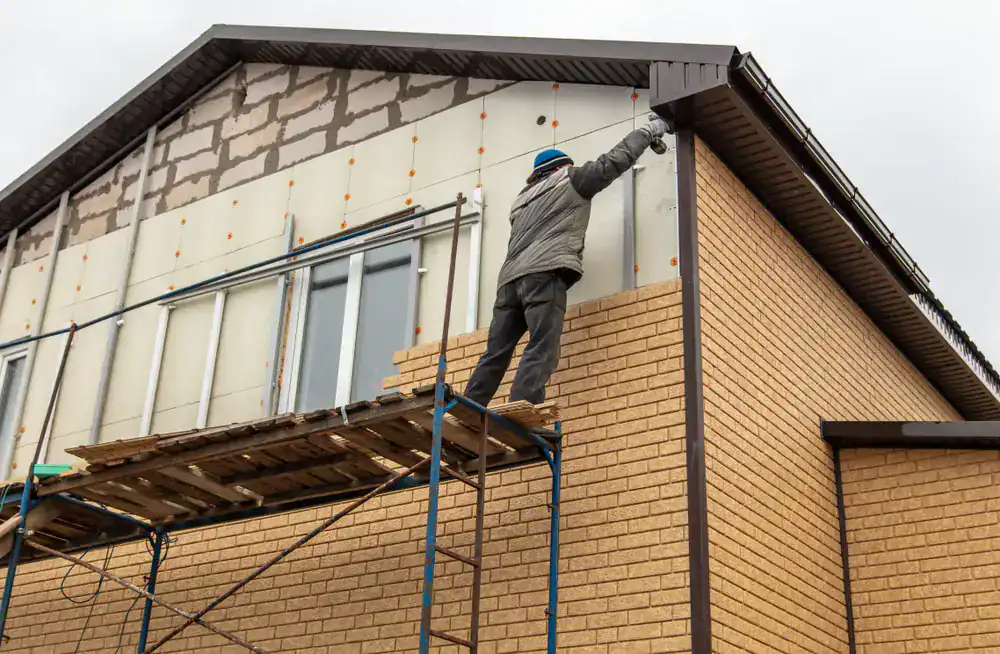
Installation follows a sequenced process built around weatherproofing first. The moisture barrier goes up before a single panel is fastened. Flashing is set correctly at every window, door, and roof-wall intersection. Panels are installed with proper expansion gaps — critical in a climate where temperatures swing 80 degrees between January and July. When we leave, the site is clean, the work is inspected, and you have documentation of a permitted, code-compliant installation on record.

Ready to get started?
Vinyl Siding Contractors in Norwood, NJ
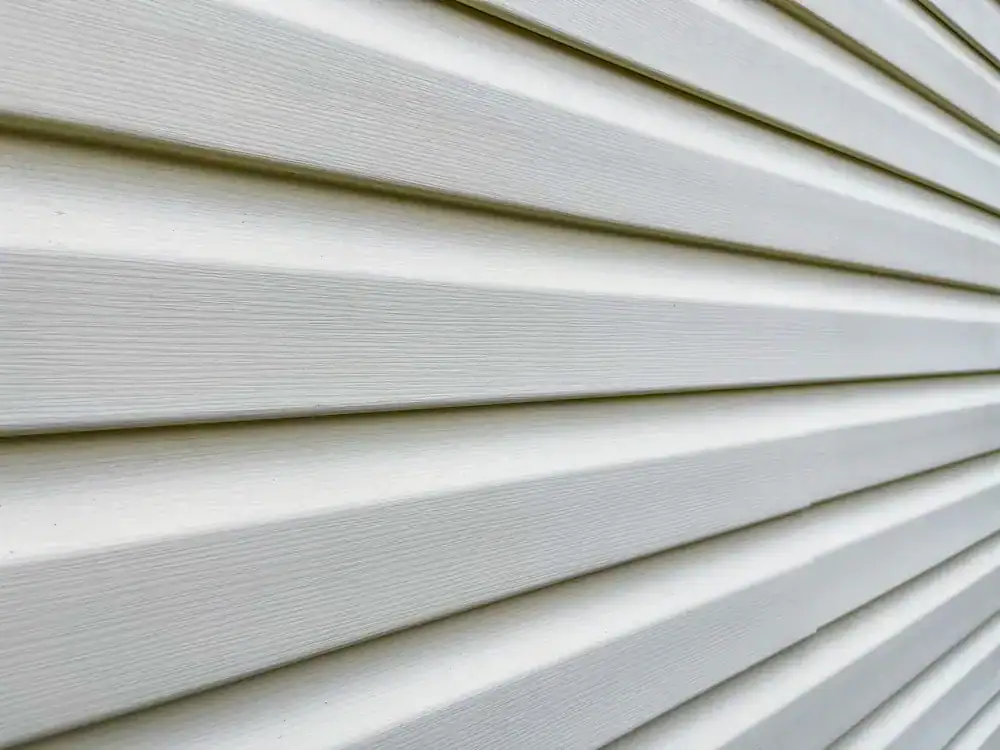
Not every siding material performs the same way in a northern Bergen County winter, and the right choice depends on your home, your priorities, and your budget. Vinyl siding is the most common option — lower upfront cost, minimal maintenance, and a wide range of profiles and colors. The catch is that quality varies significantly between product lines, and installation technique matters just as much as the material itself. Vinyl installed without proper expansion gaps will buckle. Panels fastened too tightly crack in the cold.
Fiber cement — James Hardie being the most recognized brand — is the premium choice for homeowners who want a longer-lasting exterior with better resistance to impact, fire, and moisture. It holds paint well, handles humidity without warping, and carries a lifespan that can exceed 50 years when installed correctly. For a home valued above $700,000 in Norwood’s market, fiber cement is often the investment that makes the most sense long-term.
Engineered wood, such as LP SmartSide, offers a natural wood look with significantly better moisture resistance than traditional wood siding — a real advantage given the mature tree canopy and shaded north-facing elevations common on Norwood’s residential lots. We recommend based on your specific home and conditions — not whatever’s easiest to install or highest-margin to sell.

Do I need a permit for siding installation in Norwood, NJ?
Yes — siding replacement in Norwood requires a building permit through the borough’s Construction Code Enforcement office, located at the Municipal Building at 455 Broadway. The minimum permit fee for siding work starts at $50, with the total depending on project scope. This isn’t a formality. Permitted work is inspected, approved, and on record — which matters significantly when it comes time to sell a home in Norwood’s market, where buyers and their attorneys look closely at what’s been done and whether it was done correctly.
Skipping the permit isn’t just a code violation — it can create real complications at closing, require work to be redone, or leave you without legal recourse if something goes wrong. We handle the permit process on your behalf as part of every siding project so the paperwork doesn’t become your problem.
How do I know if my siding needs to be fully replaced or just repaired?
The honest answer is that it depends on what’s underneath. A few cracked or loose panels might be a straightforward repair. But in a lot of Norwood’s mid-century housing stock — homes built in the 1960s and 1970s that have been through 50-plus winters — surface damage is often a sign of something deeper. When moisture has been getting behind the siding for years, the sheathing and framing behind it can be compromised in ways you can’t see from the outside.
A free inspection gives you a clear answer. The condition of the substrate, the extent of any moisture intrusion, and the age and type of existing siding all factor into whether repair makes sense or whether replacement is the smarter call. If repair is genuinely the right move, that’s what we’ll tell you — there’s no incentive to oversell a full replacement when it isn’t needed.
What siding material holds up best in Bergen County winters?
For northern Bergen County specifically, the freeze-thaw cycle is the biggest stress on exterior cladding. Water gets into small gaps, freezes, expands, and widens those gaps over time — and that process repeats dozens of times between November and March. Vinyl siding handles this reasonably well when it’s installed correctly with proper expansion allowances, but it does become brittle in extreme cold and can crack from impact during winter months.
Fiber cement is generally the most durable option in this climate. It doesn’t absorb moisture, it doesn’t become brittle in cold temperatures, and it holds up well against the wind-driven rain that nor’easters bring through Bergen County. It’s also more resistant to the organic debris — leaves, moisture, biological growth — that accumulates on shaded elevations under Norwood’s tree canopy. The trade-off is a higher upfront cost, but the lifespan and performance in this specific climate typically justify it for homeowners planning to stay long-term.
How long does siding installation typically take on a Norwood home?
For a standard single-family home in Norwood, a full siding replacement typically takes between three and seven days of active installation, depending on the size of the home, the material being installed, and what’s found once the old siding comes off. Fiber cement takes longer to install than vinyl due to the weight of the panels and the precision required at cuts and joints. Homes with complex rooflines, dormers, or a lot of trim detail also add time.
Weather is a real factor in northern Bergen County. Vinyl installation in extreme cold requires extra care because of the material’s brittleness, and we don’t rush panels onto a house in the middle of a January cold snap. Spring and early fall are the most predictable installation windows in this area. If timing is a factor for your project — a listing date, a planned renovation sequence, or a winter deadline — we discuss that upfront so the schedule is set realistically from the start.
What should I look for when hiring siding contractors in Norwood, NJ?
Start with the basics: New Jersey requires all home improvement contractors to be registered with the NJ Division of Consumer Affairs under the Home Improvement Contractor Registration program. That registration is your legal baseline — without it, your recourse under the Consumer Fraud Act is significantly limited if something goes wrong. Ask for the registration number and verify it. Ask for proof of general liability insurance and workers’ compensation coverage. A contractor who hesitates on either of those questions is a contractor worth passing on.
Beyond licensing and insurance, look at how the estimate is delivered. A written estimate that breaks down materials, labor, removal, and permit costs is a contractor who’s being straight with you. A verbal number or a one-line quote is a setup for a different conversation once the job is underway. In Norwood, where homes are worth well over half a million dollars, the contractors with real track records are the ones with verifiable reviews and consistent work in the area — not the ones with the lowest opening number.
How much does siding installation cost for a home in Norwood, NJ?
For a typical single-family home in Norwood, vinyl siding installation generally runs between $8,000 and $15,000 depending on the size of the home, the product line selected, and the condition of what’s underneath. Fiber cement installation — James Hardie being the most common brand in this market — typically falls in the $15,000 to $25,000 range for a whole-home project, reflecting both the material cost and the additional labor required for correct installation.
Those ranges assume a reasonably straightforward substrate. If moisture damage or deteriorated sheathing is found during removal — which is not uncommon in Norwood’s older housing stock — there may be additional repair costs before new siding goes on. That’s a reality of working on homes that are 40 to 60 years old, and it’s exactly why a thorough inspection before the estimate matters. The written estimate you receive will reflect real numbers for your specific home, so the final invoice matches what was agreed on at the start.