
Siding Installation in Ho-Ho-Kus, NJ
Ho-Ho-Kus Homes Deserve More Than a Quick Re-Side
Hear from Our Customers
Residential Siding Contractors in Bergen County
The homes in Ho-Ho-Kus aren’t average, and the work done on them shouldn’t be either. A lot of the housing stock here dates back to the mid-1900s — some of it even earlier, especially in the Cheelcroft section where you’ve got brick-and-flagstone Tudors and Colonials that were built in the 1920s and 30s. When siding on a home like that starts to fail, it’s not just a cosmetic issue. Water gets behind the panels, works into the sheathing, and by the time you notice something’s wrong, you’re dealing with a repair bill that dwarfs what the siding job would have cost.
Bergen County winters are hard on exterior cladding. The freeze-thaw cycle that runs through every NJ winter — water seeping into micro-cracks, freezing, expanding, repeating — accelerates deterioration faster than most homeowners realize. Add in the nor’easters that roll through this part of the state and drive rain sideways into every seam and window junction, and you start to understand why siding that was installed 20 or 25 years ago is likely past its useful life, even if it doesn’t look terrible from the street.
Done right, new siding does a few things at once. It closes off the moisture pathways that have been quietly threatening your wall assembly. It improves the thermal performance of the home, which matters in a house that predates modern insulation standards. And in Ho-Ho-Kus, where home values are climbing and curb appeal is tied directly to what your property is worth — it makes your home look exactly the way it should.
Local Siding Company Serving Ho-Ho-Kus, NJ
We’ve been working on homes across Bergen County for close to ten years. That’s not a marketing number — it’s the difference between a crew that knows what they’re doing and one that’s still figuring it out on your dime. We’re family-operated, which means the people making decisions about your project are the same people accountable for how it turns out.
Our work covers the full exterior — roofing, siding, gutters — and that matters more than it sounds. Siding doesn’t exist in isolation. It meets your roofline, wraps around your windows, and connects to every other system on the outside of your home. A contractor who only does siding will install panels. We catch the flashing issue at the roofline, identify the gutter condition that’s been directing water behind your cladding, and make sure the whole system works together.
From the historic homes near The Hermitage to the larger properties on the east side of Route 17 in Ho-Ho-Kus, we’ve worked on the range of homes that define this community — and we bring that familiarity to every estimate and every job.

Siding Installation Process in Ho-Ho-Kus, NJ
It starts with a free inspection. Before anything is quoted or scheduled, we come out to look at what you’re actually working with — existing siding condition, substrate integrity, any moisture intrusion that needs to be addressed before new material goes on. In older Ho-Ho-Kus homes, especially those built before 1960, this step matters more than people expect. You can’t just panel over a problem and call it done.
From there, you get a written estimate that breaks down material, labor, removal of the existing siding, housewrap and moisture barrier installation, trim work, and cleanup. The number on that estimate is the number on the invoice. Ho-Ho-Kus Borough requires a permit for siding replacement under the New Jersey Uniform Construction Code — we handle that process as a standard part of every project. You don’t have to chase down the borough’s construction department or figure out the approval process yourself.
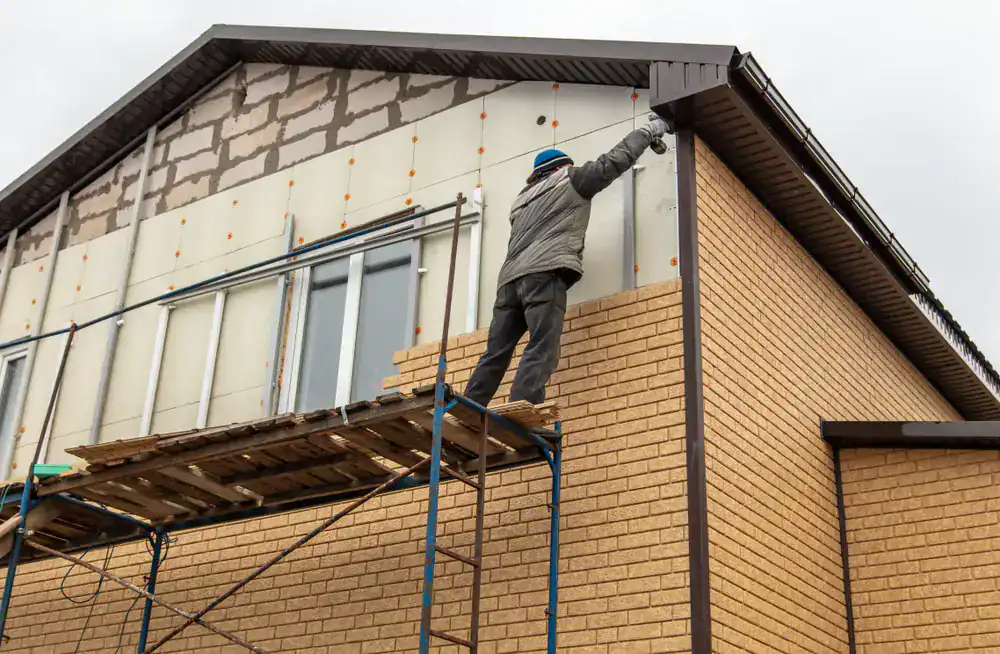
Once work begins, our crew follows manufacturer installation specs designed for Northeast climate performance: proper fastening that accounts for thermal expansion, tight flashing at every window, door, and roof-wall junction, and a finished product that’s built to handle what Bergen County winters actually throw at it. When the job is done, it’s inspected, approved, and on record — which matters when it’s time to sell.

Ready to get started?
Vinyl Siding Contractors in Ho-Ho-Kus, NJ
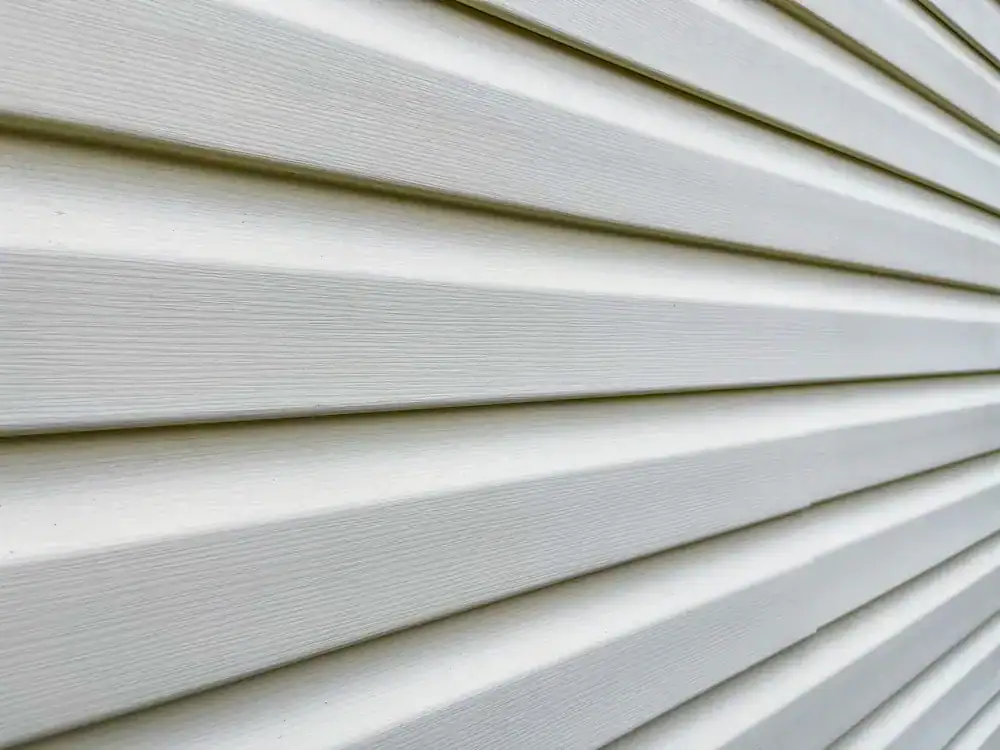
Vinyl siding is the most widely installed product in the country for a reason — it’s cost-effective, low-maintenance, and holds up well in the Northeast climate when it’s installed correctly. For a lot of Ho-Ho-Kus homes, particularly the mid-century colonials and Cape Cods that make up a significant portion of the borough’s housing stock, premium vinyl is a smart, durable choice. Insulated vinyl — which reduces thermal bridging through wall studs — is worth a serious look in homes that predate modern insulation standards, which describes a lot of what you’ll find on both sides of Route 17.
For homeowners in the Cheelcroft section or on properties with strong architectural character, fiber cement — particularly James Hardie — is often the better fit. It replicates the look of wood grain without the maintenance burden, holds paint longer, and performs exceptionally well in climates with significant moisture exposure. It’s a higher upfront investment, typically putting a whole-home project in the $20,000 to $35,000 range depending on home size, but for a home with a seven-figure value and a distinct architectural identity, it’s often the right call.
We have this conversation about which material is right for your home every day. You’ll get a straight answer based on your home’s construction, your goals, and what will actually perform — not based on what’s easiest to move off a supplier’s shelf.

Do I need a permit for siding replacement in Ho-Ho-Kus, NJ?
Yes — siding replacement in Ho-Ho-Kus requires a permit under the New Jersey Uniform Construction Code, which governs all renovation and alteration work on residential structures statewide. The Ho-Ho-Kus Borough Construction Department administers this locally, and the permit process involves submitting for approval before work begins and passing a final inspection before the job is considered complete.
This matters for a practical reason beyond compliance: unpermitted exterior work can surface during a home sale. In a market like Ho-Ho-Kus, where transactions involve thorough legal due diligence and buyers are represented by attorneys, unpermitted work on a $1M+ home creates real complications. We handle the permit process as a standard part of every siding installation project — it’s not an add-on, and it’s not something you have to manage on your own. When the job is finished, the work is inspected, approved, and on record.
How much does siding installation cost for a home in Ho-Ho-Kus?
The honest answer is that it depends on the material you choose, the size of your home, and what’s found during the inspection of the existing substrate. For a whole-home vinyl siding replacement on a typical Ho-Ho-Kus single-family home, you’re generally looking at a range of $15,000 to $25,000. Fiber cement projects — James Hardie and similar products — tend to run $20,000 to $35,000 or more, depending on home size and the complexity of the trim work involved.
Ho-Ho-Kus homes tend to be larger than average for Bergen County, and many of them — particularly those built before 1960 — have architectural details that require more careful material handling and installation time. If there’s moisture damage to the sheathing beneath the existing siding, that needs to be addressed before new material goes on, which adds to the scope. A free inspection upfront is the best way to get a realistic number before any commitment is made.
What siding material holds up best in Bergen County's winters?
Both vinyl and fiber cement perform well in Bergen County’s climate when they’re installed correctly — and the “installed correctly” part is where most failures actually originate. The Northeast’s freeze-thaw cycle is the primary stress factor: water infiltrates gaps and seams, freezes, expands, and works its way into the wall assembly over time. Proper housewrap installation, tight flashing at every penetration point, and fastening that allows for thermal expansion are what separate a siding job that lasts 30 years from one that starts showing problems in five.
For homes with significant exposure — particularly on the east side of Route 17 where larger lots mean more open exposure to wind-driven rain — insulated vinyl or fiber cement with a quality moisture barrier system is worth the investment. Fiber cement is dimensionally stable in temperature swings and holds paint significantly longer than wood, which reduces long-term maintenance costs. Vinyl, when properly installed with the right panel profile, is also a strong performer in this climate and doesn’t require repainting.
How do I know if I need full siding replacement or just repairs in Ho-Ho-Kus?
The short answer: it depends on how widespread the damage is and how old the existing siding is. Localized damage — a few cracked or warped panels, impact damage from a storm, a section that took a hit — is often repairable without replacing the whole home. But when siding is approaching or past the end of its expected service life, repair starts to become a losing proposition. You’re patching a system that’s going to keep failing in new places.
In Ho-Ho-Kus, where a significant portion of the housing stock was built in the 1950s and 60s — and some homes in Cheelcroft date back to the 1920s and 30s — it’s not uncommon to find siding that’s been patched and re-patched over decades. The free inspection that we offer is specifically designed to answer this question honestly. If repair is the right call, that’s what you’ll hear. If the substrate condition or the age and extent of the damage makes replacement the smarter move, the inspection will show you exactly why.
Is fiber cement siding a good fit for older, architecturally distinct homes in Ho-Ho-Kus?
For many of the homes in Ho-Ho-Kus — particularly in the Cheelcroft section, where you have 1920s and 1930s Tudors and Colonials with strong architectural character — fiber cement is often the most appropriate choice. It’s available in profiles that replicate the look of wood lap siding, shingles, and board-and-batten, which means it can complement the existing aesthetic of an older home without looking like a generic re-side.
Beyond aesthetics, fiber cement is dimensionally stable, resists moisture, and holds paint far longer than wood — which is a meaningful benefit for a home that may have original or early wood trim elements that already require regular maintenance. It’s also non-combustible and resistant to insect damage, both of which matter in a wooded, mature-landscaped community like Ho-Ho-Kus. The tradeoff is cost: fiber cement is a higher upfront investment than vinyl. But for a home with real architectural identity and a seven-figure market value, it’s typically the material that makes the most sense long-term.
How do I find a licensed, trustworthy siding contractor in Ho-Ho-Kus, NJ?
Start with the basics: New Jersey requires all home improvement contractors to register under the NJ Home Improvement Contractor program through the Division of Consumer Affairs. An unregistered contractor isn’t just cutting a corner — hiring one leaves you without legal recourse under the Consumer Fraud Act if something goes wrong. Ask for the registration number upfront, and verify it. Ask for proof of general liability insurance and workers’ compensation coverage. A legitimate contractor will provide both without hesitation.
Beyond licensing, look for manufacturer certifications — particularly if you’re considering fiber cement or premium vinyl. Certified installers have demonstrated installation knowledge and can unlock enhanced product warranties that non-certified contractors simply can’t offer. In a community as small and connected as Ho-Ho-Kus, word-of-mouth carries real weight — ask neighbors who they used, check Google reviews from local Bergen County homeowners, and pay attention to whether the contractor can speak specifically about your home’s construction and the borough’s permit requirements. A contractor who knows Ho-Ho-Kus will show it in the conversation before the contract is ever signed.