
Siding Installation in Fair Lawn, NJ
Bergen County Winters Don't Forgive Aging Siding
Hear from Our Customers
Siding Contractors in Fair Lawn, NJ
New siding does more than improve curb appeal — it stops the slow leak of energy, moisture, and money that failing exterior cladding causes every single season. When your siding is properly installed, your walls stop absorbing what Bergen County’s winters throw at them. No more bubbling paint, no more soft spots behind the panels, no more wondering what’s happening inside the wall cavity after a nor’easter.
For Fair Lawn homeowners specifically, this matters more than it might in other markets. The borough sits between the Passaic River to the south and the Saddle River to the east, which means ambient moisture levels here are consistently higher than in drier, inland communities. That moisture finds its way into aging siding faster than most people realize — and by the time you see it on the surface, it’s usually been working on the structure for a while.
The homes in neighborhoods like Warren Point, Memorial Park, and throughout Fair Lawn’s postwar residential streets were largely built in the 1940s through 1960s. That’s 60 to 80 years of exposure. If your siding hasn’t been replaced — or if the replacement is now 25 to 30 years old itself — what you’re looking at on the outside is probably the least of what’s going on. New siding, installed correctly with proper moisture barriers and tight flashing at every window and door, gives your home a genuine reset on its exterior envelope.
Residential Siding Contractors in Fair Lawn, NJ
We’ve been doing exterior work in Fair Lawn and Bergen County for close to ten years. That’s not a marketing number — it’s the span of time it takes to build a reputation in a market where homeowners talk to each other, check reviews before calling, and remember who showed up and who didn’t.
Fair Lawn is exactly that kind of community. Whether it’s a Radburn homeowner protecting a landmark-adjacent property or a family in Central Fair Lawn replacing siding for the first time in three decades, the expectation is the same: show up when you say you will, do the work right, and be reachable if something comes up. That’s how we’ve grown — not through advertising, but through results that neighbors share with neighbors.
We’re fully licensed and registered with the New Jersey Division of Consumer Affairs — which, if you’ve visited Fair Lawn’s own borough website, is exactly what your local government tells you to verify before hiring anyone. That’s not a coincidence. It’s the baseline we hold ourselves to on every project.

Fair Lawn Siding Installation Process
It starts with a free inspection. A real one — not a sales pitch dressed up as an assessment. The goal is to figure out what your siding actually needs: whether that’s targeted repair, a full replacement, or something in between. If repair is the honest answer, that’s what you’ll hear. If the material has reached the end of its useful life, the inspection will show you exactly why.
From there, you get a written estimate before anything is scheduled. The number you see is the number you pay. Once the scope is agreed on, we handle permitting through the Fair Lawn Building Department — siding replacement in NJ typically requires a construction permit under the state’s Uniform Construction Code, and zoning review may apply depending on your property. That’s not your problem to manage. It’s part of what we handle.
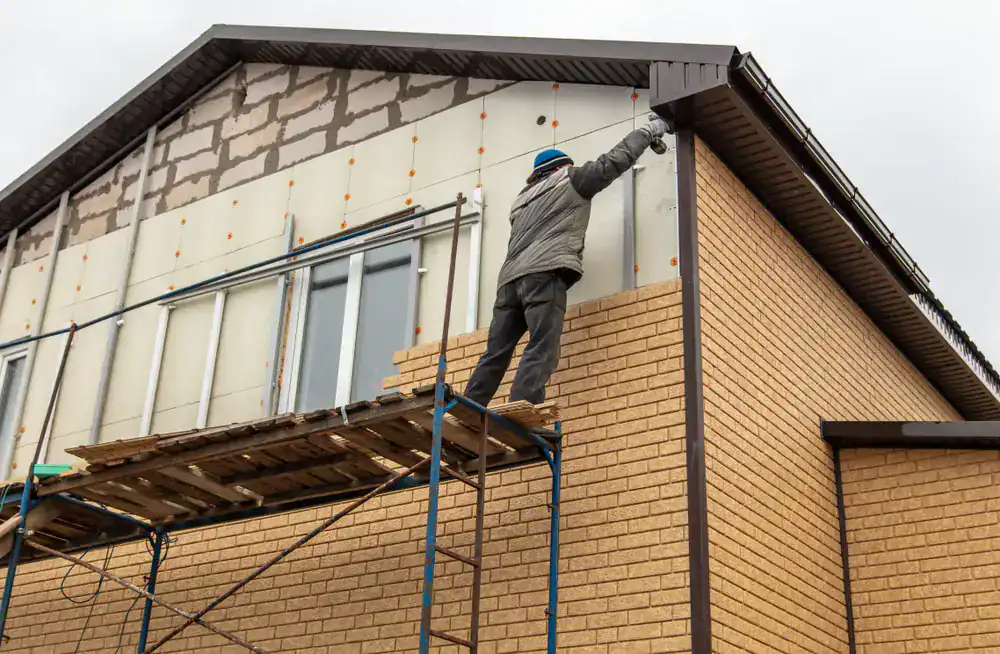
Installation includes proper housewrap and moisture barrier, correct fastening with expansion gaps sized for the temperature swings this climate actually produces, and tight flashing at every penetration point — windows, doors, corners, utility entries. Bergen County homes go from below freezing in January to humid 90-degree summers, and siding that isn’t installed with that range in mind will show it within a few years. When the job is done, you’ll have documentation of the work, manufacturer warranty information, and a clear point of contact if anything needs attention after the fact.

Ready to get started?
Vinyl Siding Contractors in Fair Lawn, NJ
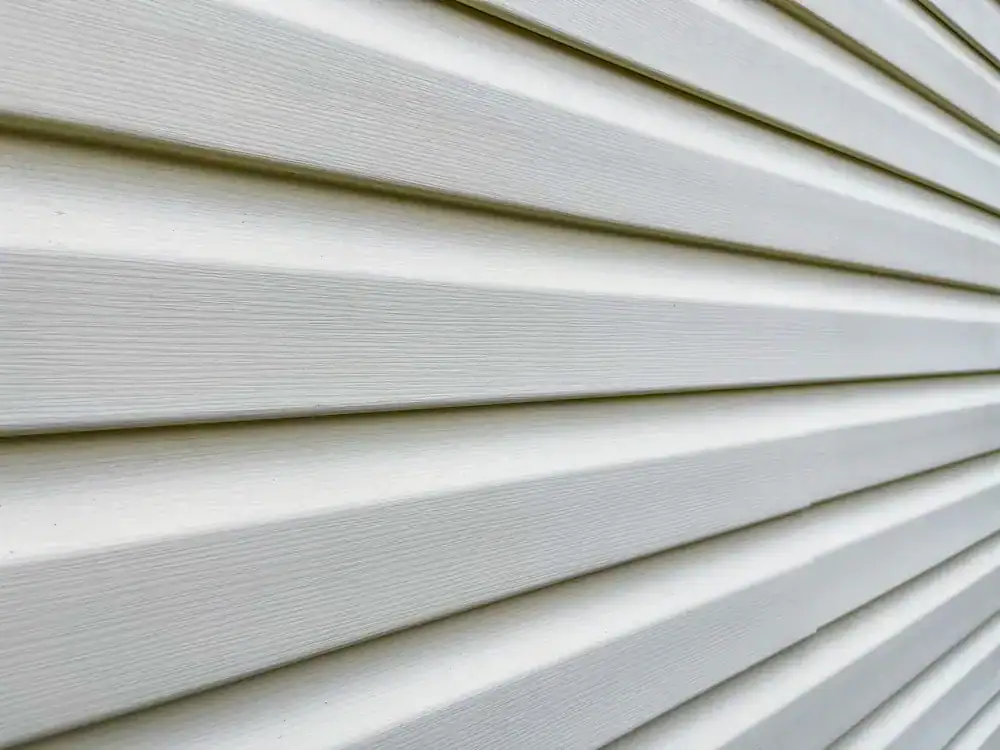
Not every siding product makes sense for every home in Fair Lawn, and we’ll tell you that upfront. Modern insulated vinyl siding is the most common choice for the borough’s mid-century single-family homes — it performs well in freeze-thaw conditions, holds up against moisture, and comes in a range of profiles that suit the architectural character of neighborhoods like Berdan Grove and Central Fair Lawn without looking out of place.
For homes in higher-value areas — including parts of the Radburn neighborhood, where median real estate values exceed $845,000 and the community carries National Historic Landmark status — fiber cement products like James Hardie are worth the conversation. Fiber cement is dimensionally stable, resistant to moisture intrusion, and offers a finished appearance that holds up under scrutiny in architecturally distinctive neighborhoods. It costs more than vinyl, and it’s worth understanding why before making the call either way.
Engineered wood options are also available for homeowners who want a more traditional aesthetic without the maintenance burden of real wood. Whatever direction makes sense for your home, the recommendation you get will be based on your specific property, your neighborhood’s character, and what actually performs in Bergen County’s climate — not on what’s easiest to install or highest margin. We also handle roofing and gutters, which means if your siding project uncovers issues at roof-wall intersections or with your gutter drainage, those don’t become a second contractor problem.

Do I need a permit for siding replacement in Fair Lawn, NJ?
Yes, in most cases. Siding replacement in Fair Lawn falls under the New Jersey Uniform Construction Code, which means a construction permit is typically required through the Fair Lawn Building Department. Depending on your property, a zoning review may also be part of the process before work can begin.
This is one of the reasons hiring a licensed, registered contractor matters here specifically — Fair Lawn’s borough website explicitly tells residents to verify that any home improvement contractor holds a valid NJ Home Improvement Contractor registration before signing anything. We handle the permit process as part of the job, so you’re not left navigating the Building Department on your own or discovering after the fact that work was done without required approvals. Unpermitted work can create real problems when you go to sell the home, and in a market where Fair Lawn properties are valued well above $500,000 on average, that’s not a risk worth taking.
How much does siding installation cost for a Fair Lawn home?
The honest answer is that it depends on the size of your home, the material you choose, and what’s found during the inspection — but you can expect a full siding replacement on a typical Fair Lawn single-family home to run somewhere between $8,000 and $20,000 for vinyl, and higher for fiber cement or engineered wood products. Those ranges reflect Bergen County labor and material costs, which run above national averages.
What drives cost up or down is usually the condition of what’s underneath. Homes in Fair Lawn’s older residential neighborhoods — particularly those built in the postwar decades along streets in Memorial Park or Warren Point — sometimes have deteriorated sheathing or moisture damage behind the existing panels that needs to be addressed before new siding goes on. That work adds cost, but skipping it would mean installing new material over a compromised substrate. A written estimate after a real inspection is the only way to get a number you can actually rely on, which is why we offer the free inspection.
What siding material holds up best in Bergen County's climate?
For most Fair Lawn homes, insulated vinyl siding is the most practical choice — it handles freeze-thaw cycling well, resists moisture, and doesn’t require the maintenance that wood demands. The insulation layer also helps with energy efficiency, which matters in a climate that swings from below-freezing winters to humid summers. Proper installation with correct expansion gaps is critical here; vinyl that’s fastened too tightly will buckle in summer heat or crack in winter cold.
Fiber cement is the stronger performer in high-moisture environments and holds up exceptionally well near the Passaic River corridor where ambient moisture is higher. It’s also the better choice aesthetically for homes where appearance matters at a higher price point — Radburn properties, for example, where the neighborhood’s architectural character is worth preserving. The tradeoff is cost and installation complexity. Fiber cement is heavier, requires more care during installation, and costs more upfront — but it typically outlasts vinyl and holds paint longer. The right answer depends on your specific home, your budget, and where you live within Fair Lawn.
How long does a full siding installation take in Fair Lawn?
For a standard single-family home in Fair Lawn, a full siding replacement typically takes two to five days of active installation once materials are on-site and permits are in hand. Larger homes, homes with complex rooflines or multiple stories, or projects that uncover substrate repairs can run longer — but a week is a reasonable outer boundary for most residential jobs in this area.
The permit process is the variable that most homeowners don’t account for when they’re planning a timeline. In Fair Lawn, permit review through the Building Department adds time before the crew can start — typically one to two weeks depending on current workload at the department. Scheduling the inspection, pulling the permit, and ordering materials all happen in parallel when the job is managed properly, so you’re not waiting on each step sequentially. If you’re a commuter with a tight schedule, the practical reality is that most of the active work happens while you’re out of the house — which is fine, as long as you’re working with a crew that communicates clearly and doesn’t need you there to manage them.
What are the signs that my siding actually needs to be replaced, not just repaired?
There are a few things that typically cross the line from repair territory into replacement territory. If you’re seeing warping, buckling, or panels that have pulled away from the wall, that’s usually a sign the material has degraded past the point where patching makes sense. Soft spots or sponginess when you press on the siding surface — especially on older Fair Lawn homes — often indicate moisture has gotten behind the panels and into the sheathing, which means the damage is already structural.
Fading and chalking on older vinyl is cosmetic on its own, but when it’s combined with cracking, brittleness, or panels that break rather than flex, the material has reached end-of-life. For Fair Lawn homes from the postwar era, this is a common scenario — aluminum siding from the 1950s and 1960s dents, corrodes, and loses its ability to seal against moisture over time. If your energy bills have been creeping up and there’s no obvious HVAC explanation, failing siding with no insulation value is sometimes the culprit. A free inspection will tell you clearly which category you’re in — and if repair is the honest answer, that’s what you’ll hear.
How do I verify that a siding contractor in Fair Lawn is actually licensed?
The New Jersey Division of Consumer Affairs maintains a public database where you can search any contractor’s Home Improvement Contractor registration by name or license number. It takes about two minutes and tells you whether the registration is active, when it was issued, and whether any complaints have been filed. Fair Lawn’s own borough website specifically directs residents to verify this before hiring — which tells you something about how seriously the municipality takes contractor accountability.
Beyond the HIC registration, you want to confirm general liability insurance and workers’ compensation coverage. Ask for certificates, not just verbal confirmation — a legitimate contractor will have them ready. Workers’ comp matters specifically because siding installation involves crews on ladders and scaffolding, and if someone is injured on your property and the contractor doesn’t carry coverage, you could be looking at a homeowner’s liability claim. In a borough where the average home is worth well over half a million dollars, that’s not a theoretical risk. We carry full licensing and insurance, and documentation is available before any contract is signed.