
Siding Installation in Cragmere Park, NJ
Historic Homes Here Demand More Than a Standard Install
Hear from Our Customers
Residential Siding Contractors in Cragmere Park, NJ
New siding does more than improve how your home looks from the street. It closes the gaps that let cold air in, stops moisture from working its way into your walls, and gives your home a fighting chance against winters that hit harder up here than most of Bergen County realizes.
Cragmere Park sits at roughly 515 feet above sea level, right at the foot of the Ramapo Mountains. That elevation means more freeze-thaw cycles, stronger wind exposure during nor’easters, and conditions that age siding faster than homeowners expect. If your home was built before 1940 or somewhere between 1970 and 1999 — which describes most of the housing stock in Cragmere Park — there’s a real chance your siding is either at or past the end of its useful life, even if it doesn’t look that way on the surface.
When the exterior envelope is tight and properly installed, you stop patching and start protecting. Energy costs stabilize. Moisture issues that quietly rot sheathing behind the scenes stop before they start. And in a neighborhood where homes regularly sell north of $800,000, the condition of your exterior isn’t just a maintenance question — it’s a direct reflection of the investment you’ve made.
Local Siding Company in Cragmere Park, NJ
We’ve been handling exterior renovations across Bergen County for close to a decade. We’re family-operated, fully licensed, and insured — and the people doing the work are accountable for the outcome in the way that only a family business can be.
Cragmere Park is a neighborhood with a long memory. It’s been a planned residential community since 1908, and the homeowners here — many of them long-term, some of them raising families in homes that have been in the family for generations — notice the difference between a contractor who knows what they’re doing and one who doesn’t. That reputation matters to us, because it’s how we’ve grown.
We hold manufacturer certifications, carry both general liability and workers’ compensation coverage, and offer free written estimates before any work begins. No pressure, no vague numbers, no surprises after the fact.

Siding Contractors in Cragmere Park, NJ
It starts with a free inspection. We come out, take a real look at what’s going on with your current siding — not just the surface, but the seams, the flashing around windows and doors, and anything that suggests moisture has already started working its way in. For homes in Cragmere Park built before 1970, that inspection often turns up issues that weren’t visible from the curb.
From there, you get a written estimate that breaks down materials, removal, disposal, housewrap, trim, and labor. Everything is itemized. If we find something unexpected during the job — damaged sheathing, a compromised moisture barrier — we talk to you before touching it. The number in your estimate is the number you pay unless you’ve agreed to something additional.
One thing worth knowing if your home is in the historic Cragmere section: Mahwah Township requires a building permit for full siding replacement, and some properties may also be subject to review by the Mahwah Historic Preservation Commission. We’re familiar with both processes and can help you understand what applies to your home before the project starts — not after. Installation follows once permits are confirmed, materials are ordered, and the schedule is set. The job site gets cleaned up daily, and we’re not done until the work looks the way it should.

Ready to get started?
Vinyl Siding Contractors in Cragmere Park, NJ
Not every siding product belongs on every home, and in Cragmere Park, that matters more than in most places. You have Tudor Revival homes from the 1920s sitting on the same streets as mid-century colonials and late-20th-century construction. The right material depends on the age of the home, the architectural character, the exposure conditions, and — for some properties — what the Mahwah Historic Preservation Commission will approve.
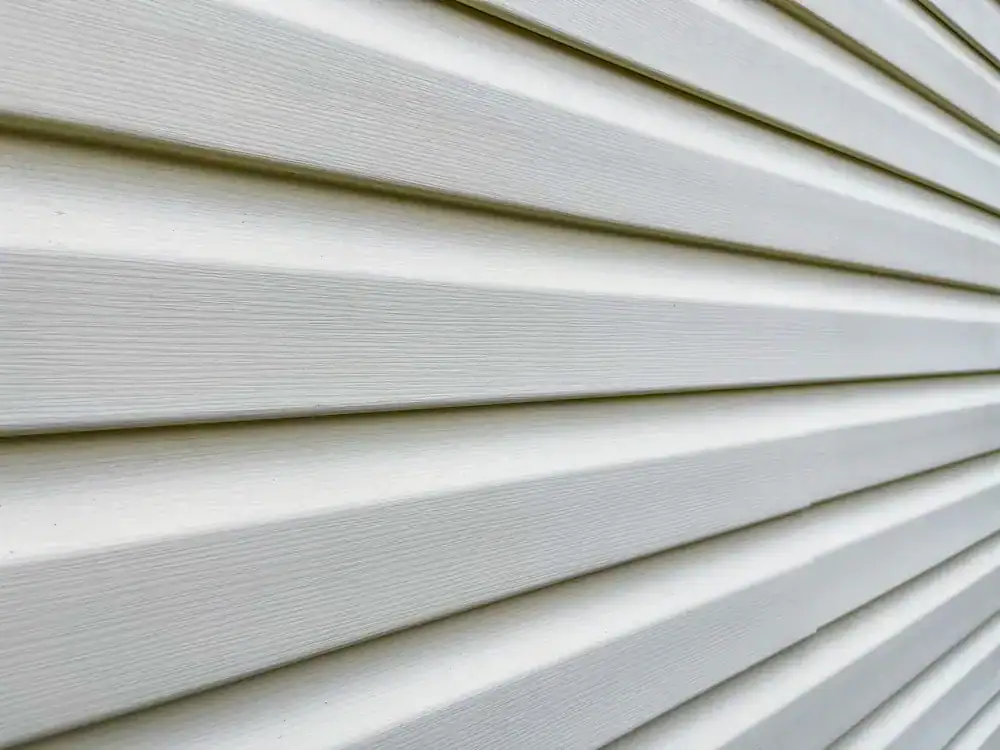
For most homes in Cragmere Park, insulated vinyl siding is the practical choice: durable, low-maintenance, and available in profiles that complement traditional architecture without looking out of place. Premium options like vinyl cedar shake or board-and-batten profiles work well on homes where the original design called for wood. Fiber cement is worth the conversation on older homes where paint retention and dimensional stability matter — it holds up well in the freeze-thaw conditions that come with living near the Ramapos, and it can be finished to closely replicate original wood siding.
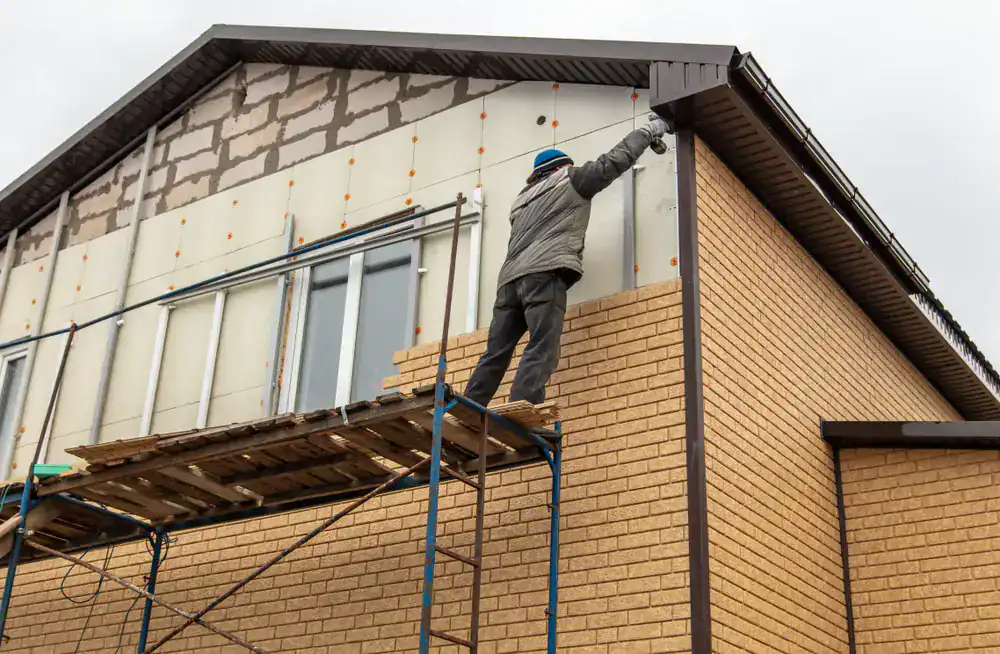
Whatever material makes sense for your home, our installation process is the same: proper housewrap and moisture barrier, correct fastening that accounts for thermal expansion in a climate with serious temperature swings, and trim work that’s finished cleanly at every edge and opening. The goal isn’t just a home that looks good on install day — it’s one that still looks good and performs correctly five winters from now.

Do I need a permit for siding installation in Mahwah, NJ?
For most full siding replacement projects in Mahwah Township, yes — a building permit is required. Under New Jersey’s Uniform Construction Code, you can repair or replace existing siding with like material on a one- or two-family home without a permit as long as the work doesn’t exceed 25% of the total exterior wall area. Once you go beyond that threshold, which a full replacement always does, a permit from Mahwah Township’s Construction Office is required.
If your home is in the historic Cragmere section and is listed as a designated or survey-eligible structure, there’s an additional step: the Mahwah Historic Preservation Commission may need to review the permit application before work can begin. This applies to some pre-1940 homes in Cragmere Park and is worth confirming with the township before you sign any contract. We’re familiar with both the standard permit process and the HPC review layer, and we factor that into the project timeline from the start.
How do I know if my siding needs to be replaced or just repaired?
The honest answer is that you often can’t tell from the outside — at least not completely. Siding that looks acceptable from the curb can be hiding moisture damage, failed seams, or compromised flashing that’s been letting water into the wall cavity for years. This is especially common in Cragmere Park homes built between 1970 and 1999, where vinyl siding installed decades ago is now at or past the end of its useful life, even if it hasn’t visibly cracked or warped yet.
A professional inspection looks beyond the surface. We check seams, corners, window and door flashing, and any areas where the siding meets a different material — those transition points are where problems usually start. If the damage is isolated, repair may be all you need. If moisture has worked its way into the sheathing or the siding has lost its structural integrity across a significant portion of the home, replacement is the more cost-effective answer in the long run. The inspection is free, and it gives you a real picture of what you’re working with before you make any decisions.
What siding material holds up best in Cragmere Park's climate?
Cragmere Park’s elevation — roughly 515 feet, at the foot of the Ramapo Mountains — puts it in a more demanding weather environment than most of Bergen County. You’re dealing with more freeze-thaw cycles, higher wind loads during nor’easters, and winters that are genuinely colder than what homeowners in lower-elevation towns experience. That matters when you’re choosing siding.
Insulated vinyl is the most practical choice for the majority of homes here. The insulation layer adds thermal performance and reduces the expansion-contraction stress that standard vinyl faces in wide temperature swings. Fiber cement is a strong option for older homes where architectural detail matters — it holds paint longer, resists moisture better than wood, and doesn’t crack under freeze-thaw stress the way some materials do. Engineered wood products are worth considering on homes where a wood-grain appearance is important and the original character of the home needs to be preserved. We’d recommend avoiding low-grade vinyl installed without proper housewrap — in this climate, that combination tends to fail faster than homeowners expect.
How long does a siding installation project typically take?
For a standard single-family home in Cragmere Park, most siding installation projects run between three and seven days once the crew is on-site. The actual timeline depends on the size of the home, the material being installed, and whether the inspection revealed any substrate issues — rotted sheathing or damaged moisture barriers — that need to be addressed before new siding goes up.
Permitting adds time to the front end of the project. Mahwah Township’s Construction Office processes building permit applications before work can begin, and if your property requires HPC review, that step runs concurrently but needs to be factored in. We account for permitting lead time when we build your project schedule so there are no surprises. In terms of seasonal timing, spring and fall are the busiest periods for siding in this area — homeowners are either addressing winter damage or trying to button up the exterior before the next cold season. During those windows, booking four to six weeks out is typical for a quality crew.
Can siding installation be done on a historic home in Cragmere Park?
Yes — but it requires more thought than a standard replacement project, and the material choices matter significantly. Cragmere Park has been a planned residential neighborhood since 1908, and many of the homes here — particularly the Tudor Revival and Colonial Revival styles built in the 1920s and 1930s — have architectural details that need to be respected in any exterior renovation.
The Mahwah Historic Preservation Commission maintains a survey of historic sites in the township, and the Cragmere section was formally surveyed in 2003. If your home is a designated or survey-eligible structure, the HPC may review your permit application to ensure the proposed siding material and installation approach are appropriate for the property. This doesn’t mean you can’t replace your siding — it means the material selection needs to be compatible with the home’s historic character. Fiber cement, premium vinyl profiles, and engineered wood products can all be appropriate depending on the home. We’re familiar with working on older homes in Cragmere Park and can help you identify what makes sense for your specific property before the permit process begins.
How much does siding installation cost for a home in Cragmere Park, NJ?
For a typical single-family home in Cragmere Park, siding installation generally runs between $8,000 and $20,000 depending on the size of the home, the material selected, and the condition of the substrate underneath the existing siding. Vinyl is on the lower end of that range; fiber cement and engineered wood products sit higher because the material cost and installation labor are both greater.
A few things specific to this neighborhood can affect the final number. Homes with complex rooflines, decorative trim details, or multiple material transitions — common in the Tudor Revival and Colonial Revival styles built here in the early 1900s — take more time and material to finish correctly than a straightforward ranch or colonial. If the inspection turns up damaged sheathing or moisture barrier issues, addressing those adds to the cost but is not optional — skipping it just means the new siding fails faster. The written estimate you receive before any work begins will break all of this down line by line so you know exactly what you’re paying for and why. There are no ballpark numbers that turn into something different once the crew shows up.