
Siding Installation in Rochelle Park, NJ
Bergen County Winters Don't Forgive Aging Siding
Hear from Our Customers
Siding Contractors in Rochelle Park, NJ
Most homes in Rochelle Park were built around 1956. That means the siding on a significant number of homes in this township is either original or was replaced sometime in the 1980s or 1990s — which puts it squarely at or past the end of its useful life. When siding fails quietly, water gets in before you ever notice the damage. By the time you see it on the inside, the problem has usually been building for a while.
New siding changes that equation. You get a sealed, properly flashed exterior that handles what Bergen County winters actually deliver — single-digit temperatures, freeze-thaw cycling, heavy snow, and wind-driven rain that finds every gap in aging panels. Homes near Route 17’s eastern corridor also deal with road spray and airborne particulates that accelerate surface wear faster than most homeowners realize. The right installation, done correctly, puts a stop to all of it.
Beyond protection, there’s the simple reality that Rochelle Park is a compact, close-knit township of just over one square mile. Your home is visible to your neighbors every single day. New siding doesn’t just protect your investment — in a community this size, it reflects it.
Local Siding Company Serving Rochelle Park, NJ
We’ve been working on exterior renovations across Bergen County for close to ten years, with a significant portion of that work right here in Rochelle Park. We’re not a franchise, and there’s no call center between you and the people doing the work. When something comes up on a job — and sometimes things do — you’re talking to someone who’s accountable, not someone reading from a script.
What sets us apart from a siding-only shop is the full-picture perspective we bring from years of roofing work. Siding doesn’t exist in isolation. It works with your roof, your gutters, and your moisture barrier as one system. We see the whole envelope, which means we catch things that a contractor focused only on panels would miss.
We’ve worked on homes throughout Rochelle Park and the surrounding Bergen County communities — the kind of mid-century colonials and Cape Cods that define this area. We know the construction methods, the common failure points, and what it takes to do the job right the first time.

Vinyl Siding Contractors in Rochelle Park, NJ
It starts with a free inspection. We come out, walk the exterior with you, and give you an honest assessment of what’s actually going on — whether that’s targeted repair, full replacement, or something in between. You get a written estimate before anything moves forward, and that number doesn’t change unless something genuinely unexpected turns up during the work. If it does, we talk to you before we touch it.
Once you’re ready to proceed, we handle the permit process. Rochelle Park requires building permits for most exterior construction work, and our team coordinates directly with the township’s Building Department on West Passaic Street so you don’t have to manage that piece. We schedule around Bergen County’s seasonal window — spring and early fall are ideal, but we work year-round when conditions allow and the material choice supports it.
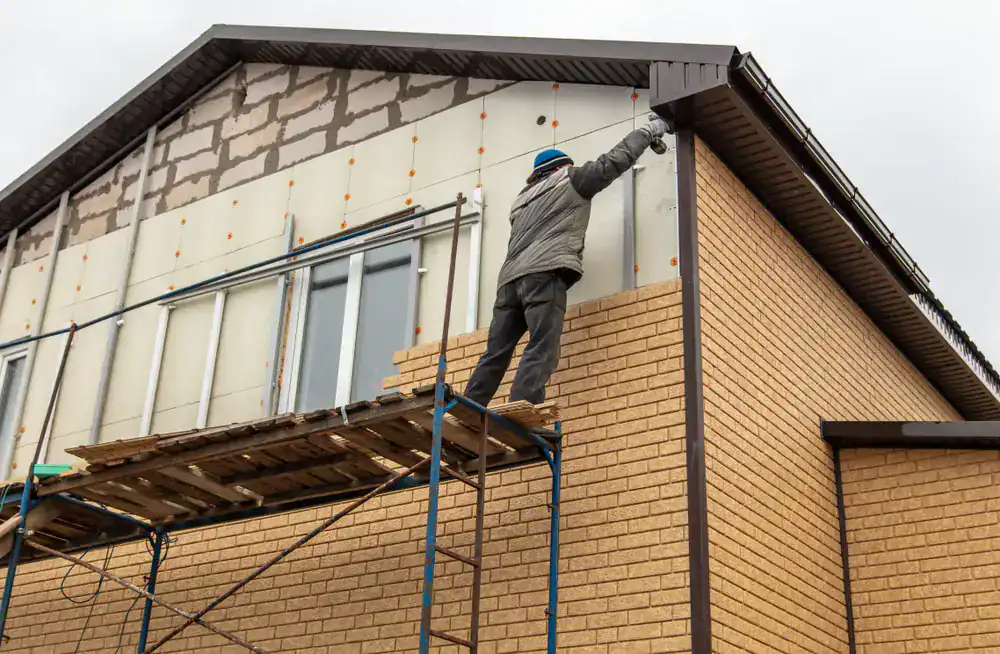
Installation is methodical. Old siding comes off cleanly, we inspect the sheathing underneath for any moisture damage that needs to be addressed before new panels go on, and every window, door, and corner gets properly flashed and sealed. We don’t cut corners on the details that aren’t visible when the job is done — because those are exactly the details that determine how long the installation lasts.

Ready to get started?
Residential Siding Contractors in Rochelle Park, NJ
Not every siding option is right for every home, and a contractor who pushes the same material on every job isn’t thinking about your situation — they’re thinking about their workflow. We carry and install vinyl siding, insulated vinyl, and fiber cement siding, and we’ll walk you through the honest trade-offs of each based on your home’s age, your budget, and what the Bergen County climate actually demands.
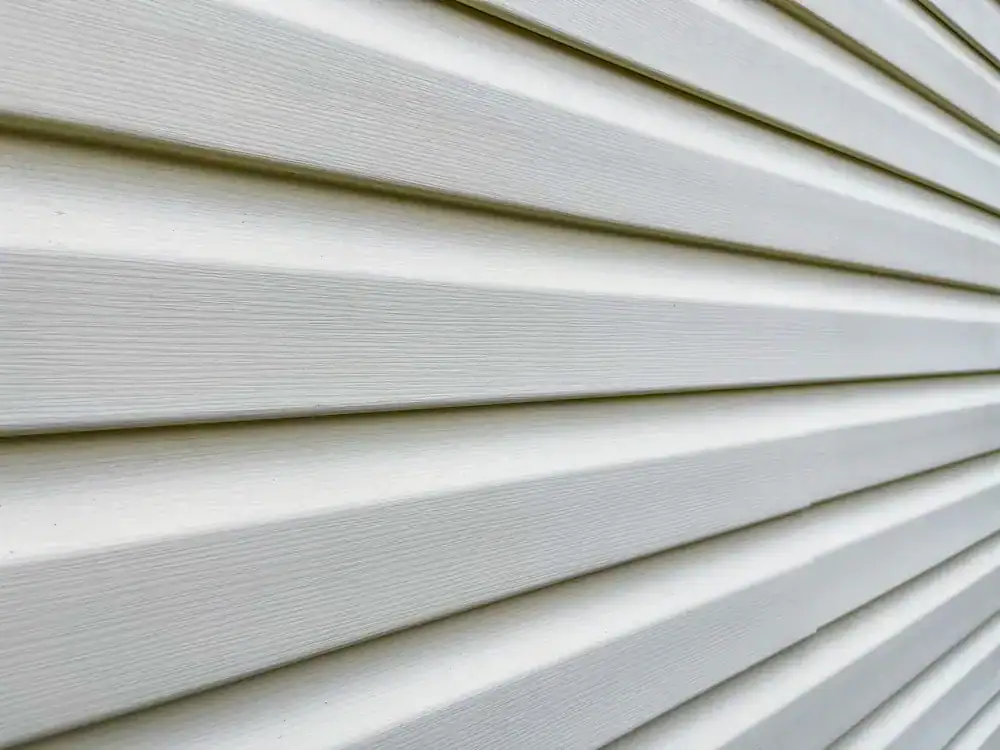
Vinyl siding is the most common choice for good reason — it’s cost-effective, low-maintenance, and today’s options look significantly better than what was available twenty years ago. Insulated vinyl adds a layer of energy performance that makes a real difference in a home that’s heating and cooling through a full Northeast winter. Fiber cement, like James Hardie, is the more durable option — it handles moisture, impact, and temperature swings better than vinyl and holds paint longer, which matters on a home that’s been standing since the mid-1900s.
Every installation includes removal of existing siding, a moisture barrier, proper flashing at all openings and transitions, new trim work, and full cleanup when the crew leaves. We also hold manufacturer certifications that allow us to offer extended warranty coverage that non-certified local siding installers simply can’t provide. That warranty protection is a real financial benefit on a project of this size — not a marketing footnote.

Do I need a permit for siding installation in Rochelle Park, NJ?
Yes, in most cases you do. Rochelle Park’s Building Department requires permits for exterior construction and alterations on residential properties, and siding replacement typically falls under that requirement. The permit process exists to ensure the work meets New Jersey’s building code standards — which cover things like moisture barriers, flashing, and proper fastening — not just to create paperwork.
The practical thing to know is that once a permit is issued in Rochelle Park, the township’s municipal code requires exterior construction to be substantially complete within one year. That’s a reasonable window for a siding project, but it’s worth understanding before you start. We handle the permit coordination as part of the project, so you’re not left navigating the Building Department on your own. If you want to confirm requirements for your specific property before committing to anything, the Building Department can be reached at (201) 556-0523.
How do I know if my siding needs to be repaired or fully replaced?
The honest answer is that it depends on how widespread the damage is and how old the material is. If you’re dealing with one or two cracked panels after a storm, repair usually makes sense. But if your siding was installed in the 1980s or 1990s — which is common for homes in Rochelle Park given the township’s median construction year of 1956 — you’re likely looking at material that’s 30 to 40 years old and approaching the end of its expected service life across the board.
At that point, patching individual sections can become a losing game. New panels rarely match the color of weathered existing siding, and if the underlying moisture barrier has degraded, spot repairs don’t address the real exposure. A full inspection will tell you what’s actually going on beneath the surface. That’s exactly what our free inspection covers — and we’ll give you a straight answer about which direction makes more financial sense for your home, not just the answer that leads to a bigger job.
How does Bergen County's winter climate affect siding and how long it lasts?
Bergen County winters are genuinely hard on exterior materials. Temperatures can drop into the single digits, and the freeze-thaw cycling that happens repeatedly through a typical NJ winter is one of the most damaging forces siding faces. Water infiltrates small cracks or gaps in aging panels, freezes, expands, and widens those gaps with each cycle. Over years, this process degrades even well-installed siding — and accelerates the failure of siding that wasn’t installed correctly in the first place.
Vinyl siding can also become brittle in extreme cold, which is why installation technique and material quality both matter in this climate. Homes near the Garden State Parkway corridor in Rochelle Park’s northwest corner also face more wind exposure due to the open right-of-way, which drives rain into seams and around trim more aggressively than in more sheltered locations. The right installation accounts for all of this — proper flashing, a continuous moisture barrier, and materials rated for the temperature range this area actually sees. That’s not something you want to leave to guesswork or the lowest bid.
What siding materials work best for older homes in Rochelle Park?
For a mid-century home — the kind that makes up most of Rochelle Park’s housing stock — the material choice comes down to what you’re prioritizing. If you want the most cost-effective option with the least ongoing maintenance, quality vinyl siding is a solid choice. It’s come a long way in terms of appearance and performance, and modern vinyl handles Bergen County’s temperature swings better than the products available when many of these homes were last re-sided.
If durability and longevity are the priority, fiber cement siding is worth the additional investment. It doesn’t warp, it resists moisture better than vinyl, and it holds paint for significantly longer — which matters on a home that’s already been through decades of Northeast weather. Insulated vinyl is a strong middle-ground option if energy efficiency is a concern, since older homes in this area often have less insulation in the wall cavity than newer construction. We’ll assess your specific home and give you a real recommendation based on its condition, not just a price-point preference.
How much does siding installation typically cost in Rochelle Park, NJ?
Siding installation costs vary based on the size of your home, the material you choose, and the condition of what’s underneath the existing siding. For a typical single-family home in Rochelle Park, a full vinyl siding replacement generally runs somewhere in the range of $8,000 to $15,000. Fiber cement installations typically come in higher — often $15,000 to $25,000 or more depending on the scope — because the material itself costs more and requires additional labor.
Those ranges are starting points, not guarantees, because the condition of the sheathing and moisture barrier underneath existing siding isn’t always known until the old panels come off. If there’s moisture damage or rot that needs to be addressed before new siding goes on — which is not uncommon on homes of this age in a climate like Bergen County’s — that affects the final number. What we can tell you is that the estimate you receive from us is written, detailed, and specific. It doesn’t change after the job starts unless something genuinely unexpected is found, and if it is, that conversation happens before any additional work proceeds.
Why does USA Home Remodeling offer free siding inspections in Rochelle Park?
A lot of homeowners in Rochelle Park put off calling a contractor because they’re not sure whether they actually have a problem or they’re worried about being pushed into a project they don’t need yet. The free inspection removes that barrier. You get a professional set of eyes on your exterior with no obligation attached — and you walk away knowing exactly what’s going on, whether that’s a minor issue, something to monitor, or a situation that genuinely needs attention now.
It also reflects how we think about building relationships in a community this size. Rochelle Park is a township where people know each other. We’re not interested in selling a job to someone who doesn’t need it — that’s not how you build a decade-long reputation in Bergen County. The inspection is straightforward: we look at what’s there, we tell you what we see, and we let you decide what to do with that information. If you’re ready to move forward, great. If not, you at least know where things stand.