
Siding Installation in Bergenfield, NJ
Bergenfield Homes Are Old. Your Siding Shouldn't Show It.
Hear from Our Customers
Siding Contractors in Bergenfield, NJ
New siding isn’t just about looks. In Bergenfield, where homes average 75 to 85 years old and winters bring freeze-thaw cycles that crack and widen every weak point in your exterior, failing siding is a moisture problem waiting to get expensive. Water gets behind the panels, works into the sheathing, and by the time you notice it inside the house, the damage has already been building for a while.
When the siding is right, that stops. Your home stays dry, your insulation performs the way it’s supposed to, and you’re not patching the same spots every spring after another nor’easter comes through. That matters in Bergenfield, where the weather doesn’t give your exterior much of a break between October and April.
There’s also the equity side of it. With median home values sitting around $615,000 in this borough, your exterior isn’t just curb appeal — it’s part of a real financial asset. New siding consistently ranks as one of the highest-return exterior investments at resale, and in a community where buyers and real estate agents notice the condition of a home’s exterior immediately, it’s a visible signal that the property has been maintained.
Local Siding Company Serving Bergenfield, NJ
We’ve been doing exterior work in Bergen County for close to ten years. That’s not a long time by some measures, but in this climate — with the nor’easters, the freeze-thaw cycles, and the aging housing stock that runs through Bergenfield, Dumont, River Edge, and New Milford — it’s enough time to know exactly what holds up and what doesn’t.
This is a family-run operation, not a franchise. The people making decisions on your project are accountable for the outcome in a way that a large company with rotating crews simply isn’t. You’ll get a straight answer on what your siding actually needs, a written estimate that reflects the real scope, and a crew that treats your home on Washington Avenue or New Bridge Road the same way they’d treat their own.
Licensing, manufacturer certifications, and permit compliance aren’t things we mention to fill space — they’re the baseline for doing this work correctly in New Jersey, and we handle all of it.

Residential Siding Contractors in Bergenfield, NJ
It starts with a free inspection. You don’t need to know whether you need a repair or a full replacement before you call — that’s what the inspection is for. A lot of Bergenfield homeowners have been patching their siding for years and genuinely aren’t sure where the line is. We’ll look at the full exterior, tell you what we’re seeing, and give you an honest read on what makes sense for your specific home and budget.
If the project moves forward, we handle the building permit through Bergenfield’s Building and Zoning Department at Borough Hall. This isn’t optional — the borough explicitly requires a permit for siding installation, and skipping it creates real problems if you ever sell. The Certificate of Occupancy required at resale will flag unpermitted work, and that’s a headache nobody needs at closing. We manage that process so you don’t have to think about it.
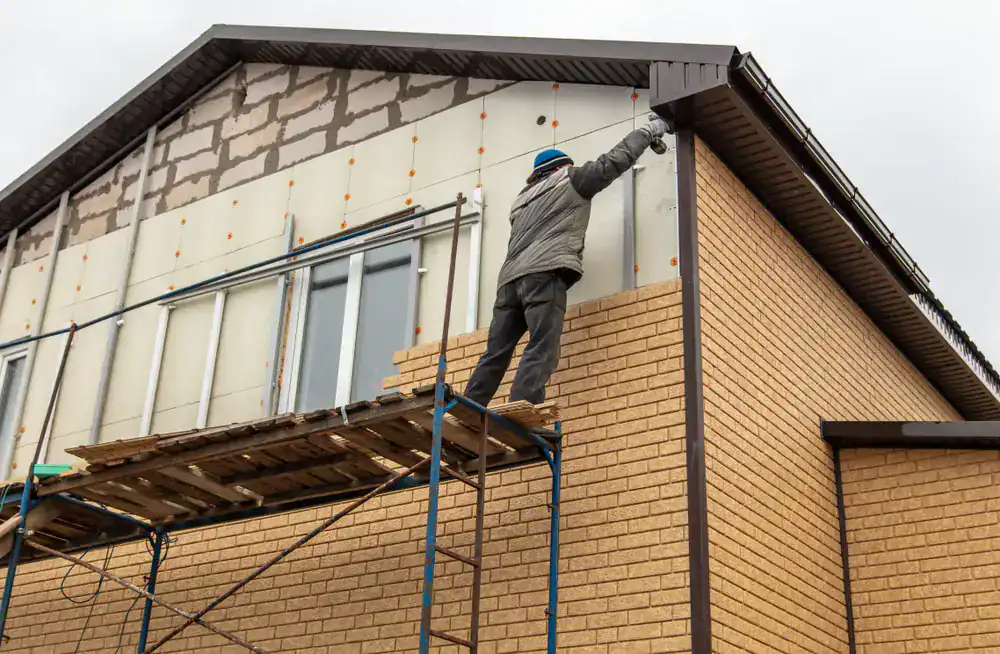
Once permits are in order, installation is straightforward. Old material comes off, the substrate gets inspected and addressed if needed, and new siding goes on correctly — with proper moisture barriers, flashing, and the installation technique that actually holds up through Bergen County winters. When the job is done, the site is cleaned up and you’ll know exactly what was done and why.

Ready to get started?
Vinyl Siding Contractors in Bergenfield, NJ
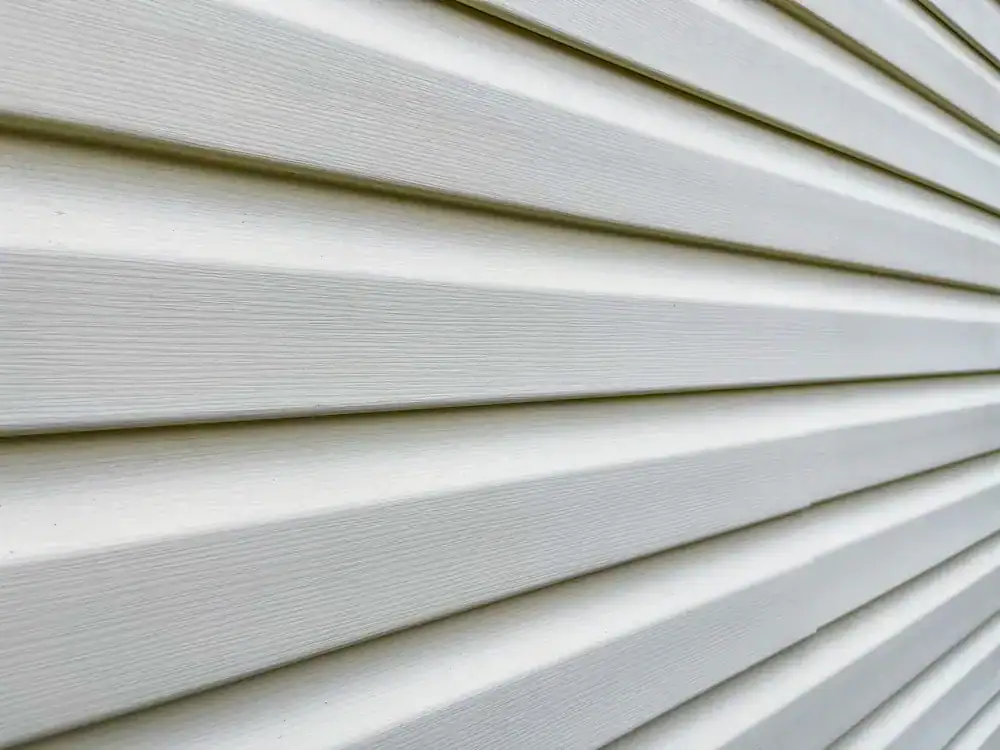
Not every siding material performs the same in this climate. Vinyl is the most common choice for Bergen County homes — it handles the temperature swings well, requires minimal maintenance, and holds its appearance over time when it’s installed correctly. But the grade of vinyl matters, and so does the installation. Low-grade panels installed without accounting for thermal expansion will buckle and gap after a few winters. That’s something you can see on houses throughout Bergenfield and the surrounding area.
Fiber cement is worth considering if you want something with more structural rigidity and a different aesthetic profile. It performs well in freeze-thaw conditions and is a strong option for older homes where the substrate is in good shape. Engineered wood is another option for homeowners who want the look of wood without the maintenance demands that come with it in a Northeast climate.
What you actually need depends on your home’s age, the current condition of your sheathing and housewrap, your budget, and what you’re trying to accomplish — whether that’s protecting the home long-term, improving curb appeal before a sale, or both. The free inspection gives you a clear picture before any material decision is made. Every estimate is written and specific, so you know what you’re getting and what it costs before anything starts.

Do I need a building permit for siding installation in Bergenfield, NJ?
Yes — and this is one of the more important things to get right. The Borough of Bergenfield explicitly requires a building permit for siding installation. Applications go through the Building and Zoning Department located in the basement level of Borough Hall at 198 N. Washington Ave. You can reach them at (201) 387-4055, ext. 4 if you have questions about the process.
The reason this matters beyond just following the rules: Bergenfield requires a Certificate of Occupancy on all home resales. If siding work was done without a permit, that unpermitted work will surface during the resale process and can complicate or delay your closing. With home values in this borough sitting around $615,000, that’s not a risk worth taking. We handle the permit process as part of every project, so you don’t have to navigate it yourself.
How much does siding installation typically cost in Bergen County, NJ?
For a typical single-family home in Bergenfield, whole-home siding replacement generally runs somewhere between $8,000 and $20,000, depending on the material you choose, the size of your home, and what the inspection turns up underneath the existing siding. Vinyl is usually at the lower end of that range. Fiber cement and engineered wood tend to run higher because of material costs and installation complexity.
The homes in Bergenfield were primarily built in the 1940s, which means there’s sometimes additional work needed at the substrate level before new siding can go on correctly. If the sheathing has moisture damage or the housewrap is deteriorated, addressing that is part of doing the job right — and a contractor who skips it is leaving you with a problem that will show up again in a few years. The written estimate you receive from us will reflect the actual scope, so the number you see upfront is the number you pay.
Should I repair my existing siding or replace it completely?
It depends on a few things: how widespread the damage is, how old the material is, and what condition the underlying structure is in. If you have isolated damage — a few cracked panels, minor warping in one area — repair is often a reasonable short-term solution. But if the siding is original to a home built in the 1940s or 1950s, or if you’re seeing widespread cracking, fading, or soft spots behind the panels, you’re typically past the point where patching makes financial sense.
In Bergenfield specifically, where a large percentage of the housing stock is 75 to 85 years old, the repair-versus-replace question comes up constantly. The freeze-thaw cycles this area gets every winter accelerate deterioration, and what looks like surface damage is often a sign of deeper moisture infiltration behind the panels. The free inspection is designed to answer exactly this question — you’ll get an honest assessment of what’s actually going on, not a default recommendation to replace everything.
What siding material holds up best in New Jersey winters?
For Bergen County’s climate, vinyl and fiber cement are the two most reliable options. Vinyl is popular for a reason — it’s low maintenance, handles temperature swings without cracking when it’s installed correctly, and holds up well against the kind of moisture exposure Bergenfield homes deal with from fall through early spring. The key is using a quality grade of vinyl and installing it with the right clearances for thermal expansion. Cheap vinyl installed tight will buckle.
Fiber cement is more rigid and handles freeze-thaw conditions very well. It also gives you a different aesthetic — it can be finished to look like wood without the maintenance demands that actual wood siding carries in a Northeast climate. The tradeoff is cost and installation complexity. For older homes in Bergenfield where the substrate is in solid shape, fiber cement is worth the conversation. For homeowners prioritizing long-term durability with lower maintenance, it’s often the right call.
How long does siding installation take on a typical Bergenfield home?
For most single-family homes in Bergenfield, the installation itself takes anywhere from two to five days once the project is underway. That range depends on the size of the home, the material being installed, and whether any substrate or moisture barrier work needs to happen before the new siding goes on. Two-family homes or properties with more complex rooflines or trim work will typically run toward the higher end of that range.
What adds time to the overall timeline is the permit process. Bergenfield’s Building Department requires a permit before work begins, and processing time varies. We factor that into the project schedule from the start so there are no surprises on timing. If you’re planning a project ahead of a spring or fall deadline — or trying to get work done before nor’easter season — the earlier you get the inspection and estimate done, the better your position. Bergen County contractors book out four to eight weeks during peak season.
How do I know if a siding contractor in Bergenfield is actually licensed?
In New Jersey, home improvement contractors are required to be registered with the NJ Division of Consumer Affairs under the Home Improvement Contractor (HIC) registration law. You can verify any contractor’s registration through the Division’s online lookup tool. This isn’t a minor formality — if you hire an unregistered contractor and something goes wrong, you have limited legal recourse under the New Jersey Consumer Fraud Act. That’s a real exposure, not a theoretical one.
Beyond state registration, look for manufacturer certifications, which indicate the contractor has been trained on specific product installation requirements. These certifications also unlock enhanced manufacturer warranties that aren’t available when a product is installed by an uncertified contractor. In Bergenfield, where the Building Department enforces permit requirements and where resale compliance is tied to permitted work, hiring a licensed and certified contractor protects your investment on multiple levels. We hold contractor licensing and manufacturer certifications, and we’re happy to provide documentation before any work begins.
Other Services we provide in Bergenfield