
Roofer in Bergenfield, NJ
Bergenfield Roofs Built for What Winter Actually Does Here
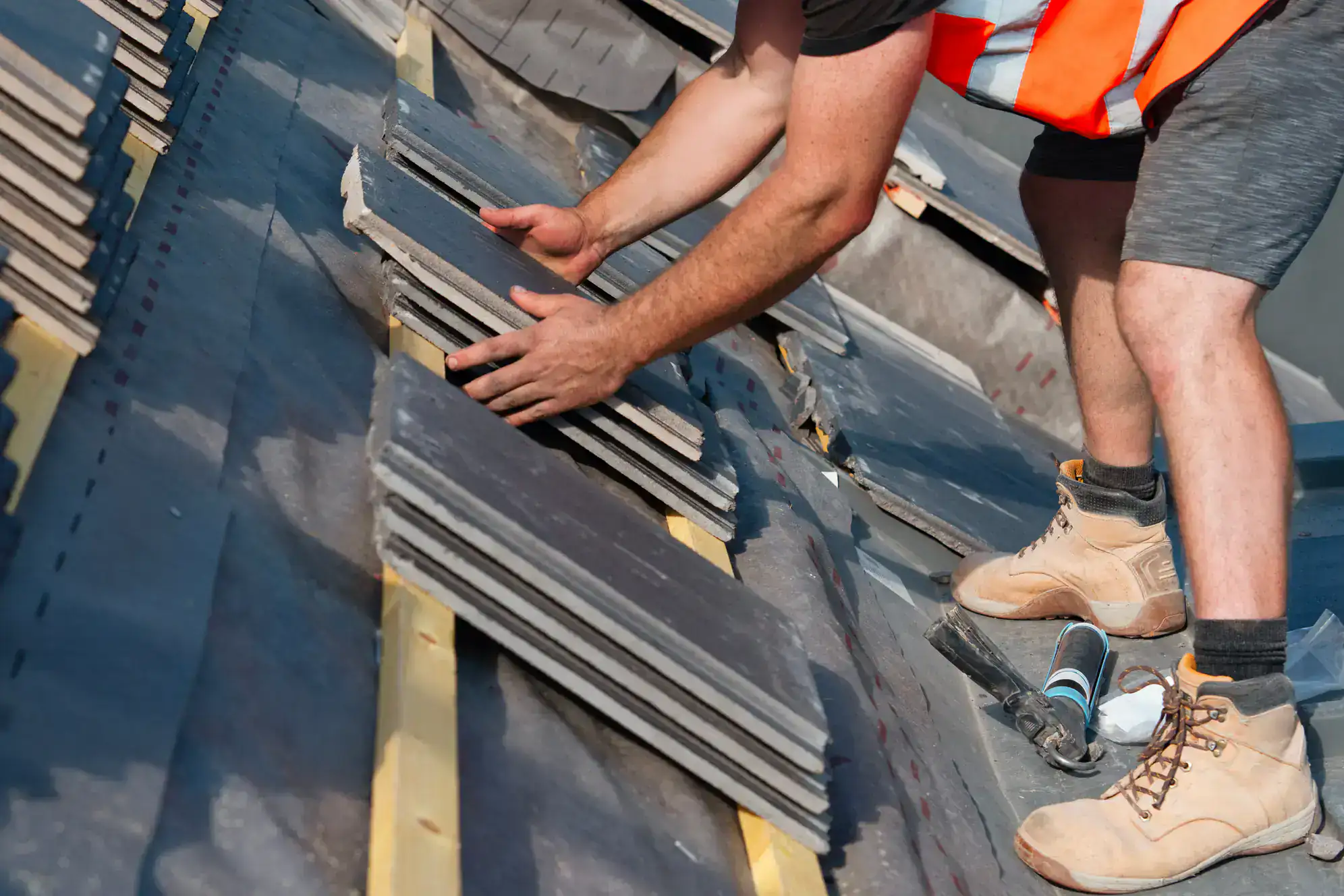
Hear from Our Customers
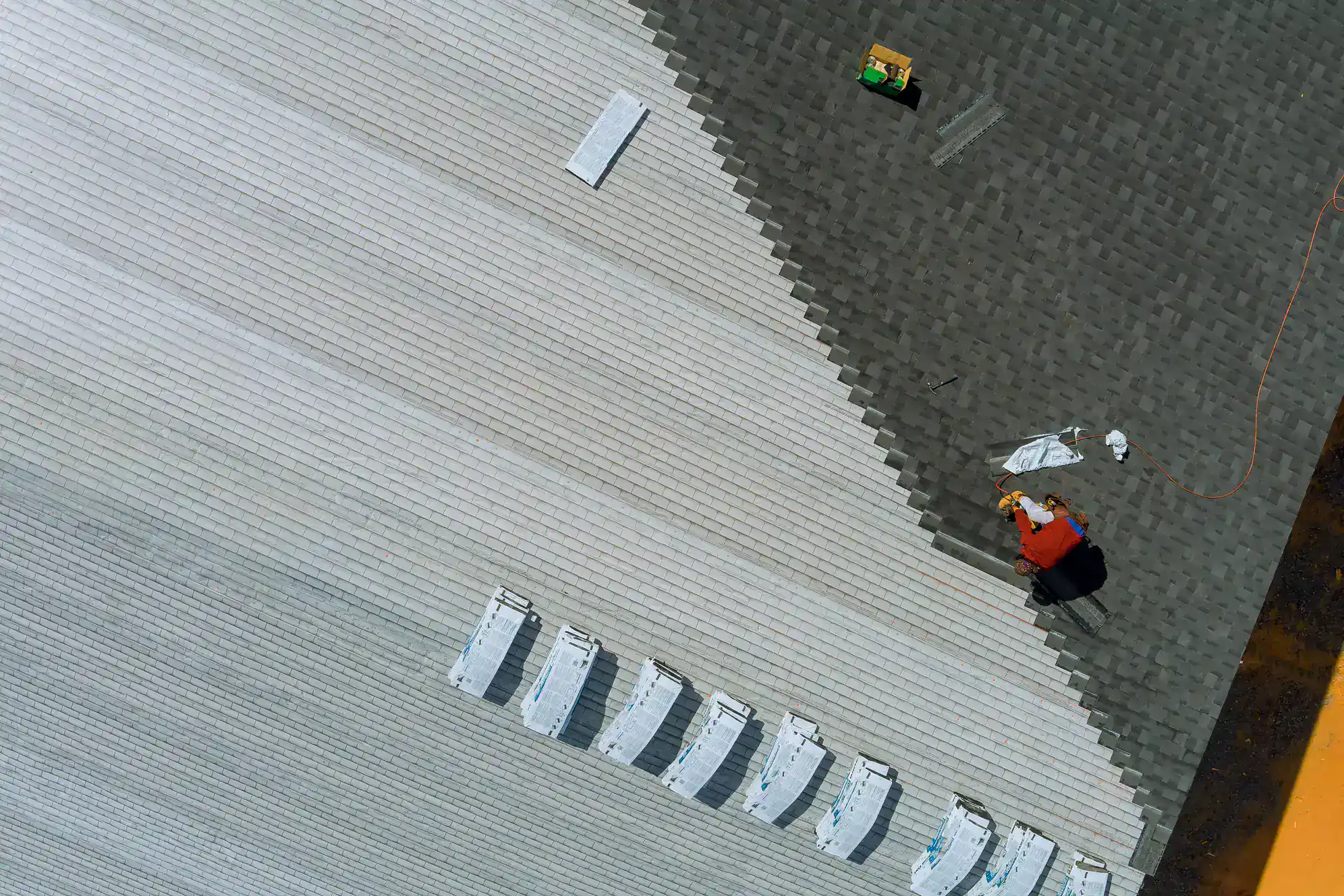
Roofing Company in Bergenfield, NJ
A roof that’s installed correctly doesn’t just stop leaks — it stops the chain reaction. Water gets in, insulation gets saturated, mold takes hold, and by the time you see a stain on the ceiling, the damage behind it is already weeks old. Getting ahead of that is the whole point.
Bergenfield’s housing stock tells a specific story. Most of the Cape Cods and Colonials in this borough were built in the 1940s through 1960s, and a roof that was last replaced in the 1990s is now well past its lifespan. When you add Bergen County’s freeze-thaw cycles to an aging roof, you get ice dams forming at the eaves, water backing up under shingles, and moisture working its way into wall cavities before spring even arrives.
The good news is that a properly installed roof — with the right materials, correct flashing, and a manufacturer-backed warranty — holds up to exactly these conditions. With median home values in Bergenfield now reaching $652,500, protecting that investment isn’t optional. A roof that’s done right is one less thing you have to think about for the next 30 years.
Local Roofing Company Bergenfield, NJ
We are a licensed New Jersey Home Improvement Contractor (License #13VH10605800) with over a decade of experience serving Bergen County homeowners, including those throughout Bergenfield. That license number is publicly searchable through the NJ Division of Consumer Affairs — which means you can verify it before you ever pick up the phone.
Beyond licensing, we hold manufacturer certifications from major shingle brands — a credential that only a small percentage of U.S. roofing contractors carry. That certification matters because it’s what unlocks enhanced system warranties, often 30 to 50 years, that uncertified contractors simply cannot offer. For a Bergenfield homeowner with a two-family Colonial near the Washington Avenue corridor or a Cape Cod closer to the Dumont border, that warranty is a transferable asset that follows the home.
Every estimate is free, every price is upfront, and every job gets handled with the same level of attention — no subcontractors rotating in and out, no surprise charges at the end. We speak Spanish, because clear communication matters for every homeowner in this community.
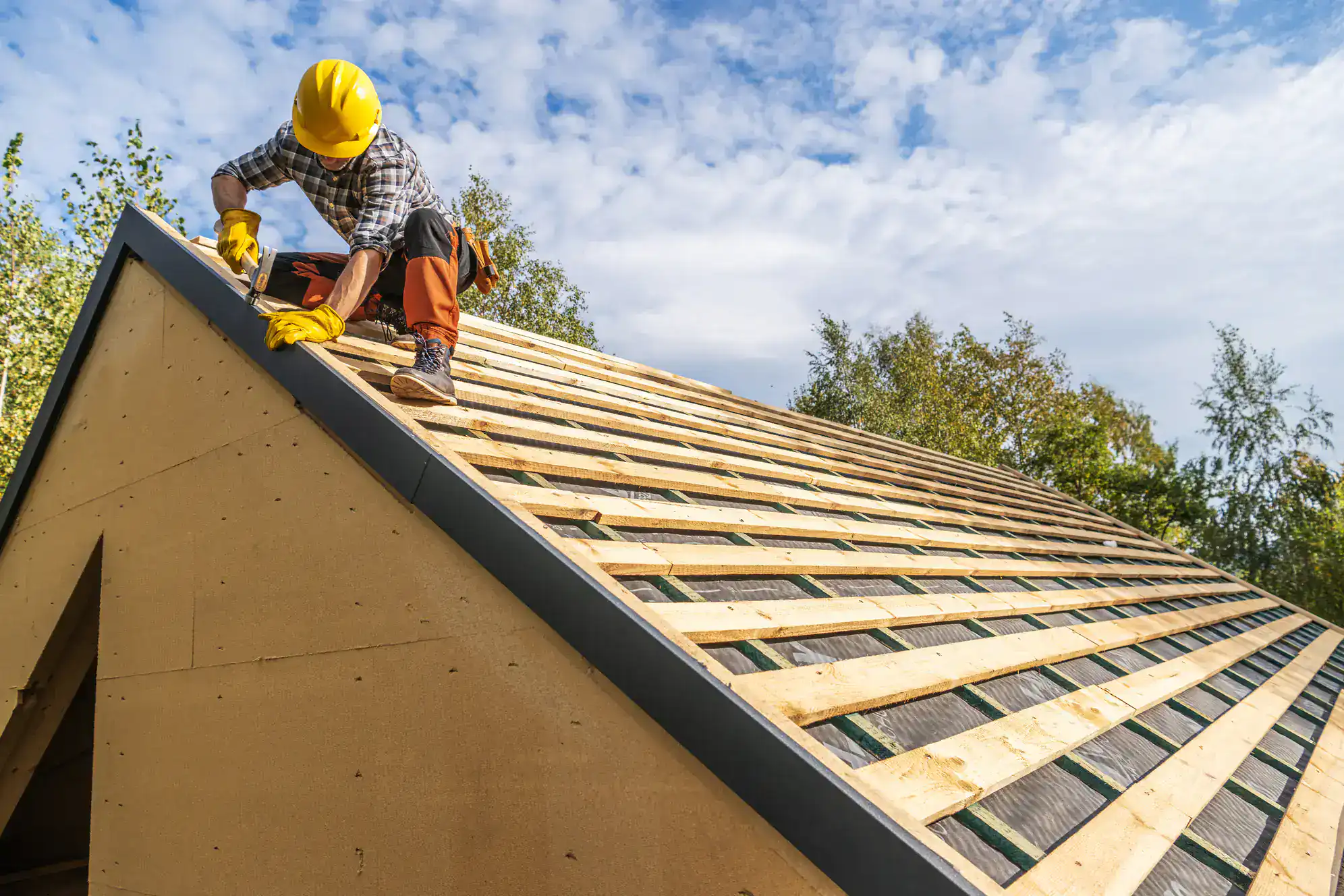
Emergency Roof Repair in Bergenfield, NJ
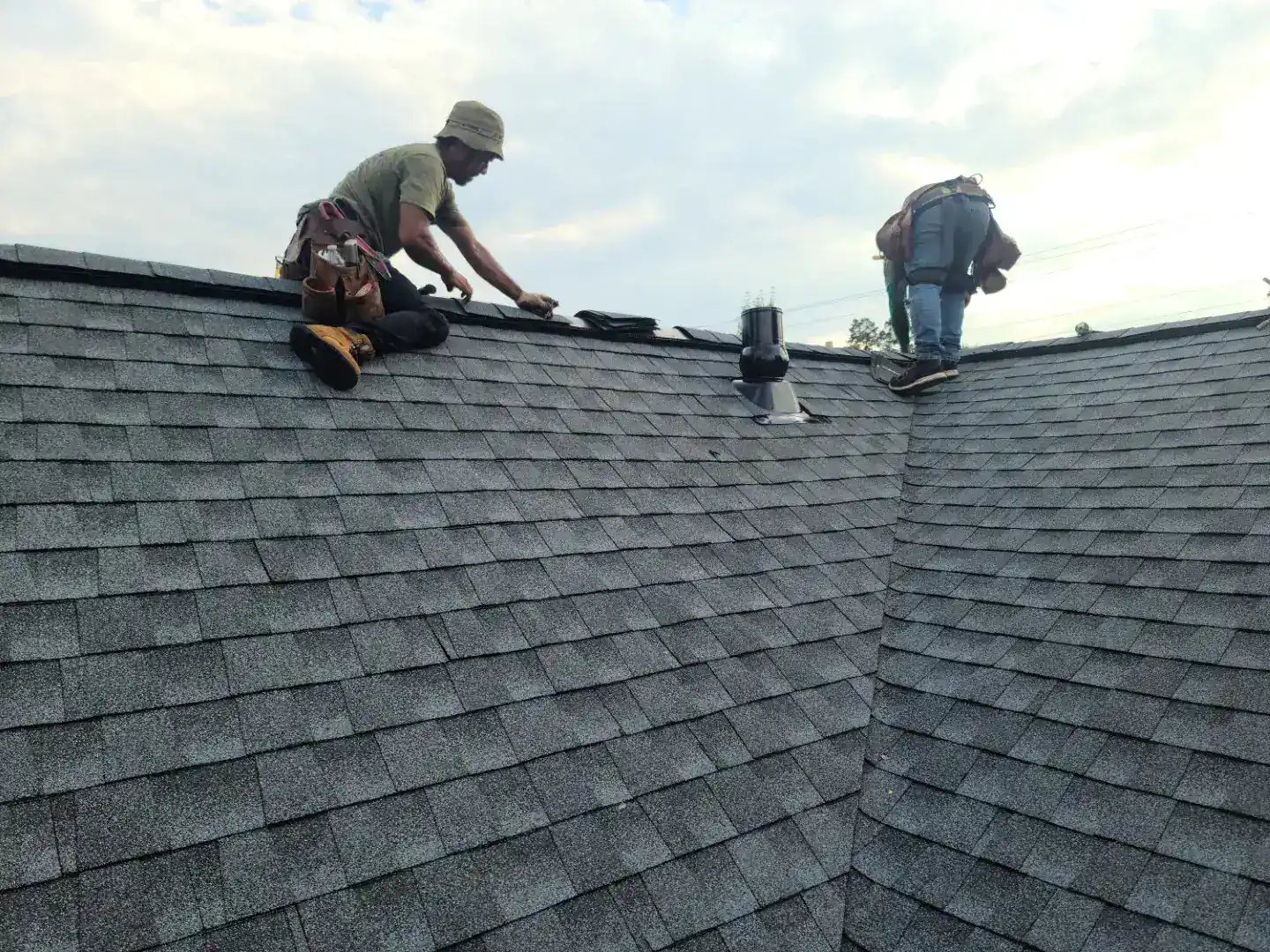
It starts with a free roof inspection. One of our technicians walks the exterior, checks the attic, examines the flashing around chimneys and vents, and looks at drainage and gutter condition. You get a photo report of everything found — whether you move forward with any work or not. That report is yours to keep.
If work is needed, you receive a fully itemized estimate before anything is scheduled. In Bergenfield, roofing work requires a building permit through the Borough’s Construction Code Office at 198 N. Washington Ave., and we handle that process as a standard part of the job — not an add-on, not something left for you to figure out. The permit protects you: it means the work gets inspected, it’s code-compliant under the NJ Uniform Construction Code, and it’s properly documented for resale. Skipping that step is how homeowners end up with complications at closing.
Once work begins, our crew handles material delivery, installation, and full site cleanup. When the job is done, we conduct a final walkthrough to confirm everything meets spec. If something needs to be addressed, we address it — before anyone leaves your property.
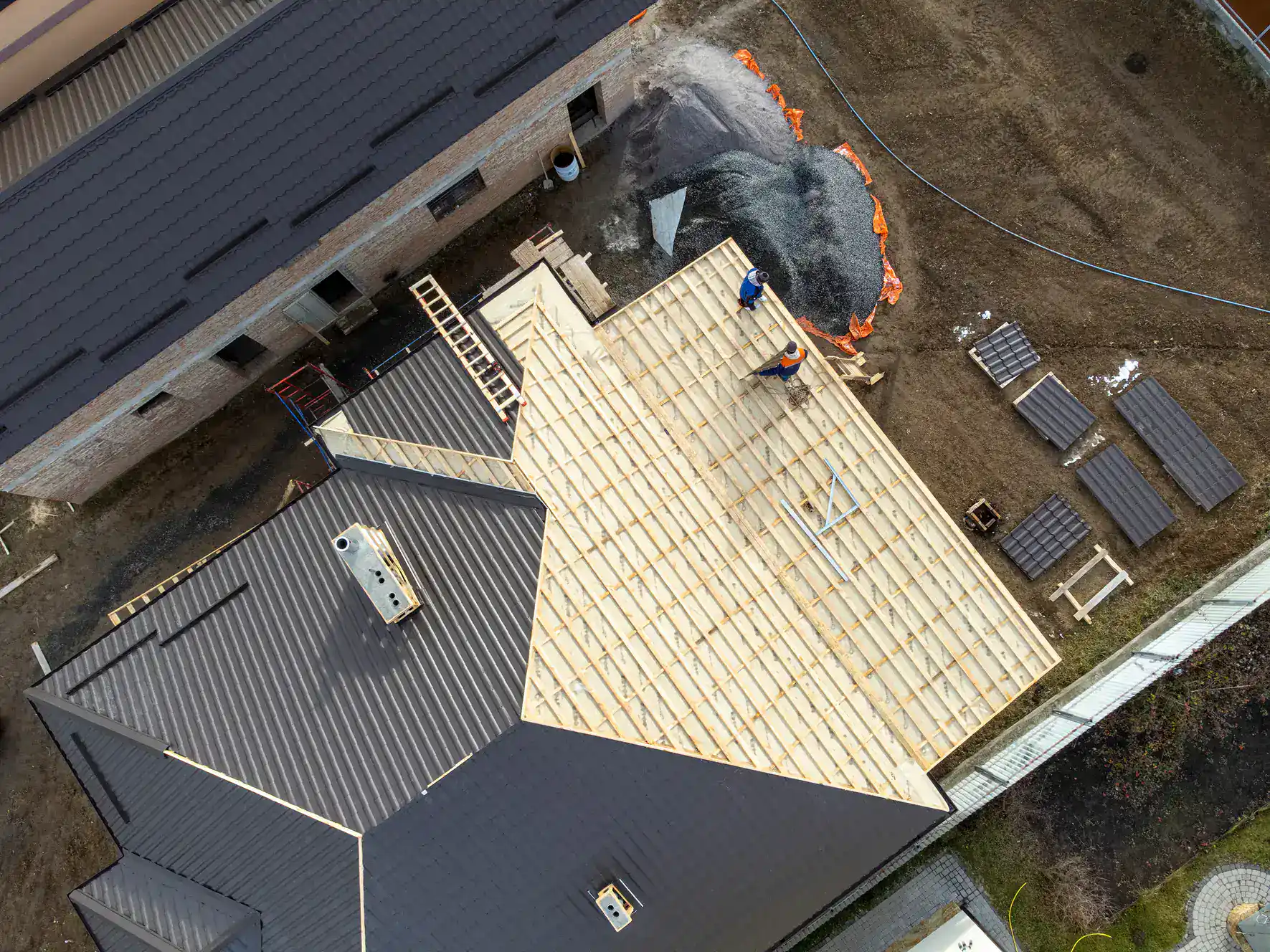
Ready to get started?
Affordable Roofers in Bergenfield, NJ
Roof replacement in Bergenfield typically means working with mid-century housing — Cape Cods, Side-Hall Colonials, and two-family homes that often have a mix of pitched and flat or low-slope sections over rear additions and porches. We address both. Asphalt shingle replacement, TPO and EPDM flat roofing, flashing repair, ridge ventilation, ice and water shield along the eaves — these aren’t upsells, they’re what a complete roof job actually requires in Bergen County’s climate.
Gutters and siding often come up during a roof inspection, and for good reason. On older Bergenfield homes, failing fascia boards and clogged or damaged gutters contribute directly to water intrusion and ice dam formation. If those issues exist, you’ll hear about them — and you can decide how to handle them. Nothing gets added to the scope without your approval first.
Pricing is transparent from the start. You’ll see an itemized estimate that breaks down materials, labor, and permit costs before work begins. There are no hidden fees and no mid-project surprises. If you’ve received another quote, bring it — we beat or match it. What you approve is what you pay.
Do I need a building permit to replace my roof in Bergenfield, NJ?
Yes — and this is one of the most important things to confirm before hiring any contractor in Bergenfield. The Borough explicitly requires building permits for roofing work, enforced by the Construction Code Office located in the basement of Borough Hall at 198 N. Washington Ave. The office operates under the NJ Uniform Construction Code and issues permits, schedules inspections, and verifies code compliance on every permitted project.
What this means practically is that any contractor who tells you a permit isn’t necessary — or who simply skips it to move faster — is putting you at risk. Unpermitted roofing work can trigger fines, failed inspections, and real complications when you go to sell your home, since a Certificate of Occupancy is required for all residential sales in Bergenfield. We handle the permit application and inspection scheduling as part of the job. If your contractor isn’t offering that, it’s worth asking why.
How much does a roof replacement cost in Bergenfield, NJ?
For most Bergenfield homes — Cape Cods, Colonials, and two-family properties in the 1,500 to 2,500 square foot range — a full asphalt shingle roof replacement typically runs between $9,000 and $14,000. That range accounts for materials, labor, permit costs, and disposal. Homes with flat or low-slope sections over additions or rear porches, which are common in Bergenfield’s older housing stock, may run higher depending on the square footage and membrane material used.
A few things move that number: the pitch of the roof, the number of layers being removed, the condition of the decking underneath, and whether flashing around chimneys or skylights needs to be replaced. That’s exactly why a free inspection matters — it gives you an accurate scope before anyone quotes you a number. A quote without an inspection is a guess, and guesses tend to come with surprises at the end.
How do I know if my roof actually needs to be replaced or just repaired?
The honest answer is that it depends on the age of the roof, the extent of the damage, and what’s happening underneath the surface. A roof that’s 15 years old with a few missing shingles after a nor’easter is usually a repair situation. A roof that’s 25 to 30 years old with granule loss, curling edges, and soft spots in the decking is a replacement conversation — because repairs at that stage are just buying time, and not much of it.
In Bergenfield specifically, the freeze-thaw cycle creates a compounding problem. Ice dams form when heat escapes through an aging roof, melts snow at the ridge, and refreezes at the cold eaves. That trapped water forces its way under shingles and into the attic. If that’s been happening for a few winters, the damage may be more significant than what’s visible from the ground. A proper inspection — including an attic check — is the only way to know for certain what you’re actually dealing with.
What roofing materials hold up best in Bergen County's climate?
For pitched roofs in Bergenfield, architectural asphalt shingles are the standard for good reason — they’re durable, cost-effective, and when installed with proper ice and water shield along the eaves, they hold up well against the freeze-thaw cycles and wind-driven rain that Bergen County sees every winter. Manufacturer-certified installation matters here because it determines whether you qualify for an enhanced system warranty, which can extend coverage to 30 or 50 years depending on the product line.
For flat or low-slope sections — common on Bergenfield’s older two-family homes and Colonial additions — TPO and EPDM membranes are the right materials. They’re designed specifically for low-slope applications and handle standing water and temperature swings far better than modified bitumen products that were common in older installations. If your home has a flat section that’s been patched multiple times, it’s worth having that assessed separately from the pitched portion of your roof.
What happens to my roof claim if a storm damages my home in Bergenfield?
The first step is getting a documented inspection as quickly as possible after the storm. Insurance companies require evidence of damage — photos, written assessments, and a clear scope of what needs to be repaired or replaced. A roofing contractor who shows up after a nor’easter and hands you a verbal estimate without documentation isn’t going to help you much when the adjuster asks for specifics.
When we respond to a storm damage call in Bergenfield, the inspection includes a full photo report of all damaged areas — shingles, flashing, gutters, fascia — that you can submit directly to your insurance carrier. If emergency tarping is needed to stop active water intrusion while the claim processes, we handle that first. The goal is to protect the home immediately and then document everything thoroughly so your claim has the best possible foundation. Bergen County sees enough nor’easters that this process matters more than most homeowners realize until they’re in the middle of one.
Why does it matter if my roofer is manufacturer-certified in Bergenfield, NJ?
Most roofing contractors can install shingles. A manufacturer-certified contractor installs them in a way that meets the manufacturer’s specific standards — and that distinction determines what warranty you actually receive. Without certified installation, you typically get a standard shingle warranty that covers the material itself but not the labor or the system as a whole. With certified installation, you can qualify for an enhanced system warranty that covers both, often for 30 to 50 years, and that warranty is transferable to the next owner.
In Bergenfield’s real estate market — where homes are selling for a median of $652,500 and moving in an average of 41 days — a transferable manufacturer-backed warranty is a documented selling point, not just peace of mind. It tells a buyer’s inspector that the roof was installed correctly, by a verified contractor, under a warranty that survives the sale. Only a small percentage of roofing contractors in the U.S. hold these certifications, which means most homeowners never get offered this option. It’s worth asking about before you sign anything.