
Roof Repair in Moonachie, NJ
Meadowlands Homes Need More Than a Quick Fix

Hear from Our Customers
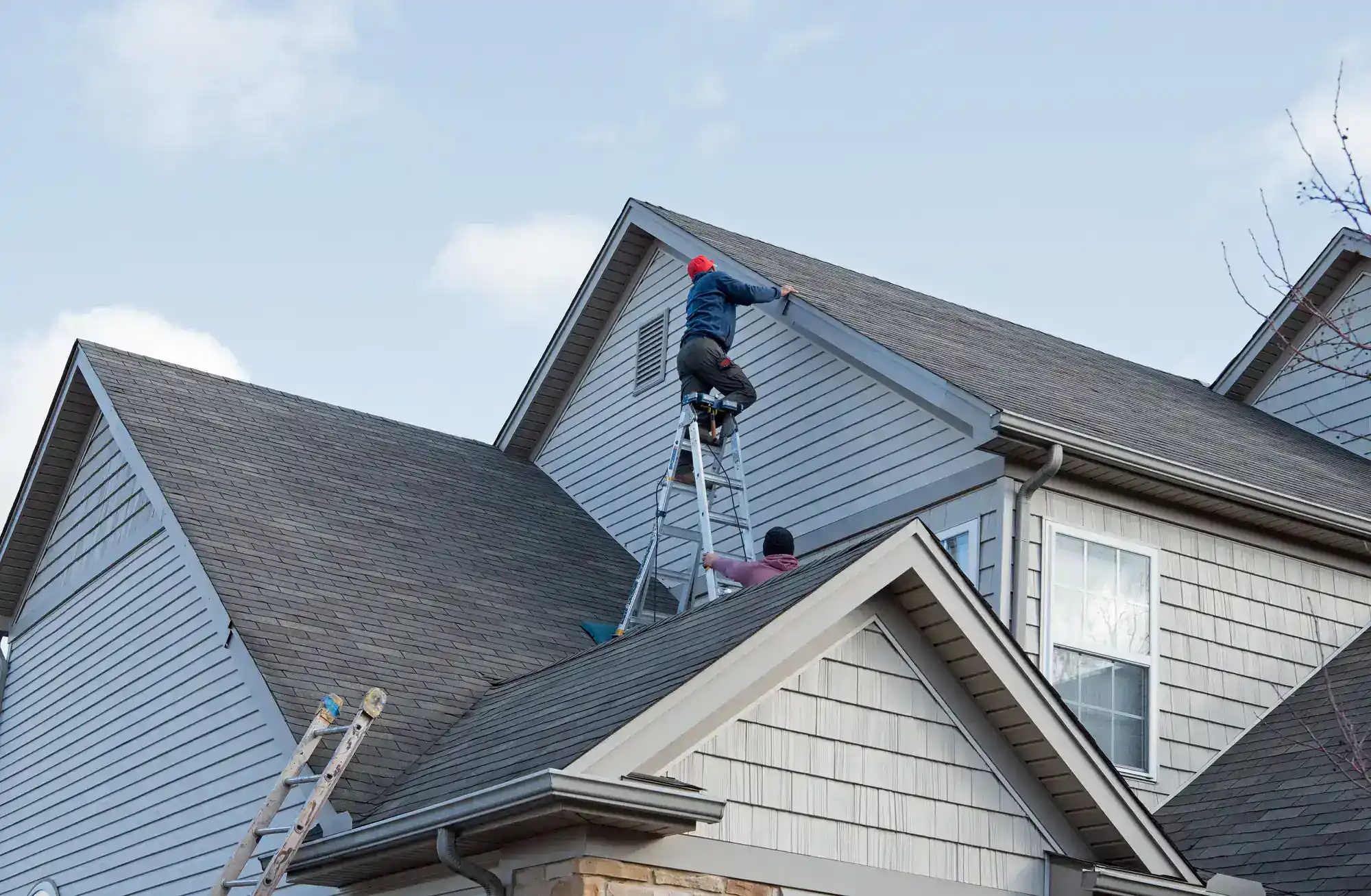
Bergen County Roof Repair Results
A repaired roof is not just about stopping a leak. It is about keeping everything underneath it intact — your insulation, your framing, your ceilings, your peace of mind. When the repair is done correctly the first time, you stop the cycle of patching one spot only to find another problem three months later.
For homeowners in Moonachie, that cycle carries extra weight. This borough sits in the Meadowlands, and the moisture environment here is not the same as an elevated inland town. The humidity, the tidal influence from Moonachie Creek, and the recurring storm exposure mean that a roof with even a minor compromise does not stay minor for long. Water finds its way in fast, and once it reaches your decking or insulation, the repair scope grows quickly.
The other thing that changes is your standing with your insurance company. A properly documented repair — done by a licensed contractor with written records — protects your claim history and gives you something real to stand on if storm damage comes up again. In a community where homeowners insurance claims after storm events are common, that paper trail matters more than most people realize until they need it.
Roof Repair Contractor in Moonachie, NJ
USA Home Remodeling is a family-operated exterior renovation company with over a decade of hands-on roofing experience across Bergen County. We work throughout Moonachie and the surrounding Meadowlands communities, handling roof repair, roof replacement, and roof inspections, alongside gutter and siding services — because in this part of New Jersey, storms rarely damage just one system at a time.
We hold active contractor licenses and manufacturer certifications that most roofing contractors in the state simply do not carry. Those credentials are not framed on a wall — they translate directly into warranty coverage options that uncertified contractors cannot offer you, no matter what their estimate says.
Moonachie is a borough that has been through a lot. From the flooding that followed Sandy to the recurring stress that Moonachie Creek puts on properties near its banks, this community deserves a contractor who understands the local context — not one who showed up after a storm and will be gone before the next one. We have been here, and we will be here after the job is done.

Moonachie Roof Repair Process Explained
It starts with a free roof inspection. We come out, get on the roof, and give you an honest read on what is going on — not a sales pitch, not a worst-case scenario designed to push you toward a full replacement. If the problem is a handful of lifted shingles and failing flashing, that is what you will hear. The inspection is documented so you have a clear record, which matters if an insurance claim is part of the picture.
From there, you receive a written, itemized estimate. Every line item is explained. The scope is clear. The price is fixed to that scope, so there are no surprises when the invoice arrives. In Moonachie, where properties in FEMA flood zones may trigger additional permit review requirements through the borough’s Building Department, we handle the local code process correctly from the start — so you are not left managing paperwork complications after the fact.
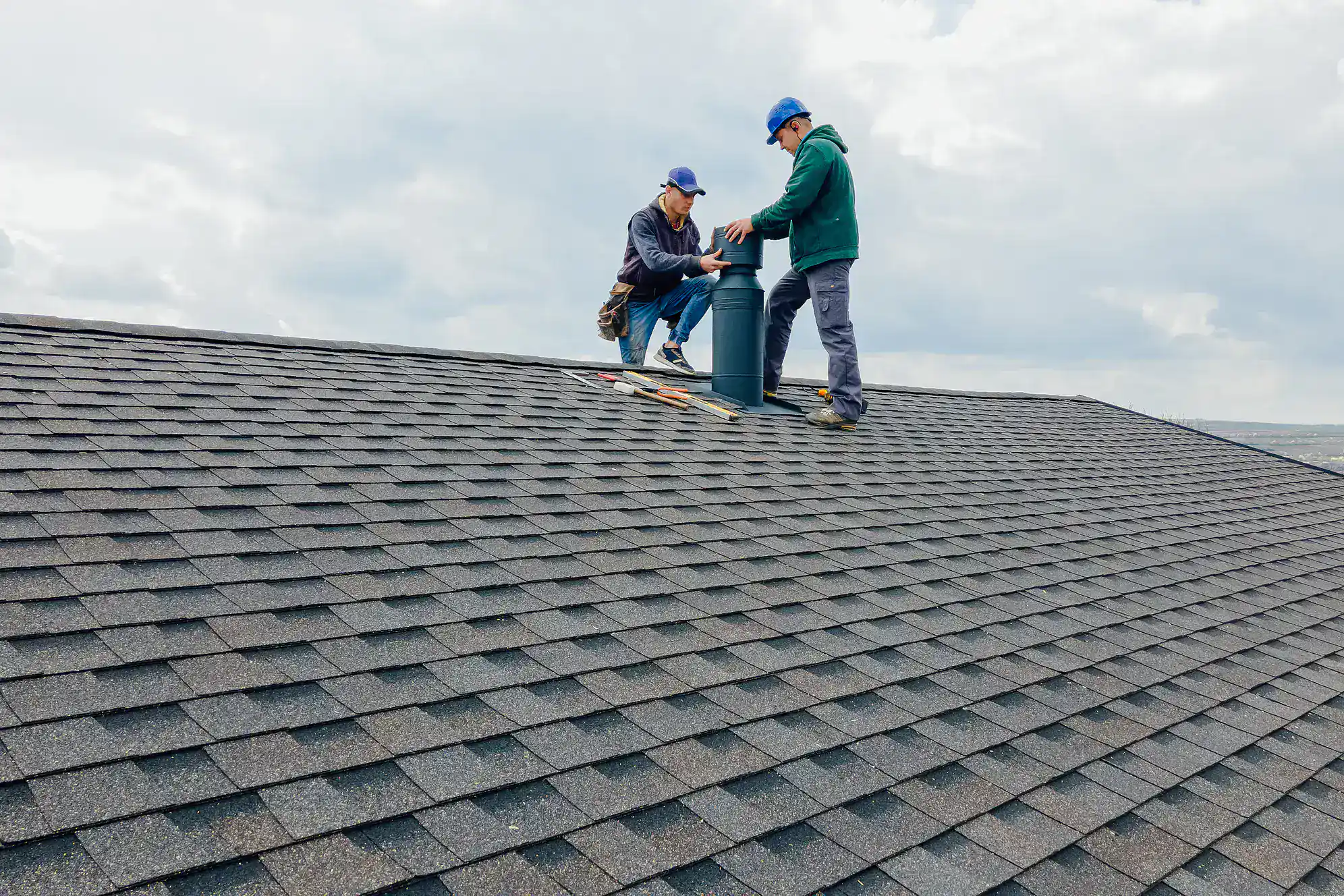
Once the work begins, our crew works through the repair systematically — removing damaged material, inspecting the decking beneath, and completing the repair with materials matched to your existing roof. Cleanup is part of the job. Magnetic nail sweeps, debris removal, and a final walkthrough happen before anyone leaves. You should not be able to tell a crew was there, except that the problem is fixed.
Ready to get started?
Roof Repair Services in Moonachie, NJ
Roof repair in Moonachie covers more ground than it does in a lot of other Bergen County towns. Emergency roof repair after a nor’easter or a fast-moving summer storm means we get a crew out quickly, deploy temporary protection if needed, and stop the damage before it compounds. In a borough this size — just 1.73 square miles — response time is not an excuse. The whole community is reachable fast.
Roof leak repair here often traces back to flashing failures, lifted shingles along ridges and edges, or deteriorated sealant around penetrations. The Meadowlands humidity accelerates all of these failure points faster than homeowners expect. Shingle roof repair on the asphalt systems that cover the majority of Moonachie’s housing stock involves careful material matching so the repaired section blends in — not just functionally, but visually. With median home values in Moonachie approaching $470,000, aesthetics are not a secondary concern.
Flat roof repair is also a real need in this borough. The mixed residential and light-industrial character of the area means flat-roof additions, garages, and commercial-adjacent structures are common. Flat roofs in a high-moisture environment require the right membrane materials and proper drainage slope — a general roofer without flat roof experience will often make the problem worse. Roof storm damage repair, regardless of roof type, includes full damage documentation for insurance purposes. And every project starts with a free roof repair estimate — written, itemized, and delivered before any commitment is made.
Does roof repair in Moonachie, NJ require a permit from the borough?
It depends on the scope of the work. Minor repairs — spot shingle replacement, sealant patching, small flashing fixes — typically do not require a permit in Moonachie. But any work that involves replacing the roof decking, installing new underlayment across a significant area, or constitutes a full layer replacement will generally require a permit pulled through the Moonachie Building Department, which administers the New Jersey Uniform Construction Code for all construction and alteration work in the borough.
There is an additional layer to be aware of in Moonachie specifically. A significant portion of the borough falls within FEMA-designated flood zones, and properties in those zones may be subject to Advisory Base Flood Elevation requirements when reconstruction or substantial repair work is performed. We are familiar with Bergen County permit processes and handle this correctly from the start — pulling the required permits, ensuring the work is code-compliant, and protecting you from complications that arise when documentation is missing or incomplete.
How do I know if my roof needs repair or a full replacement?
The honest answer is that you need a professional inspection to know for certain — and that inspection should come from someone with no financial incentive to push you toward the more expensive option. The signs that typically indicate repair is sufficient include isolated shingle damage, localized flashing failure, a single leak source with no evidence of widespread decking compromise, and a roof that is under 15 years old with otherwise sound structure.
Replacement becomes the right conversation when the decking shows widespread rot or soft spots, when granule loss is severe across most of the surface, when the roof is approaching or past its expected lifespan, or when the cumulative cost of ongoing repairs is approaching the cost of a new system. For Moonachie homeowners whose properties were rebuilt or elevated after Sandy, it is worth noting that those post-2012 roofs are now over a decade old — which puts them in the range where a thorough inspection makes sense even if no obvious problem has surfaced yet.
What does roof storm damage repair in Moonachie typically involve?
After a storm moves through the Meadowlands, the most common damage patterns on Moonachie roofs are lifted or missing shingles along ridges and eaves, damaged flashing around chimneys and pipe boots, and in more severe events, punctures or tears from debris. Wind-driven rain is particularly aggressive here because the low-elevation, open character of the Meadowlands means there are fewer natural windbreaks than you would find in more elevated or wooded Bergen County communities.
The repair process starts with a full damage assessment — documented with photos and written notes in a format that works for insurance claims. Temporary protection goes up if there is an active breach. Permanent repairs follow once materials are sourced and matched. If the damage was caused by a named storm event, the documentation we gather during the repair process becomes part of your insurance claim file. We have worked through this process with Bergen County homeowners enough times to know what adjusters need and how to make sure the claim reflects the actual scope of damage.
How much does roof repair in Moonachie, NJ typically cost?
Roof repair costs in Moonachie vary based on the type of damage, the roof system involved, and the scope of work required. Minor repairs — replacing a few shingles, resealing flashing, patching a small leak — typically run in the range of $300 to $700. Mid-range repairs involving a larger section of shingles, flashing replacement around a chimney or skylight, or addressing a more significant leak source generally fall between $700 and $2,000. More involved repairs that include decking replacement or extensive flashing work on a flat roof system can run higher.
The most important thing to understand is that deferred repair almost always costs more than prompt repair. A $400 fix left unaddressed for six months in a high-moisture environment like Moonachie can escalate into a $4,000 or $5,000 repair once water has reached the insulation and decking. We provide a free inspection and free written estimate so you have an accurate number before you commit to anything — without any financial pressure.
Can I file a homeowners insurance claim for roof repair in Moonachie?
Yes, and in Moonachie it is a question worth taking seriously. Storm damage to roofing systems — wind, hail, falling debris — is typically covered under standard homeowners insurance policies, subject to your deductible and policy terms. What is generally not covered is damage attributed to age, wear, or lack of maintenance, which is why the distinction between storm damage and pre-existing deterioration matters so much when the adjuster reviews the claim.
The key to a successful claim is documentation. Photos taken immediately after the storm, a written damage assessment from a licensed contractor, and a clear repair scope that matches what the claim covers — these are the elements that determine whether a claim gets approved at the right amount or gets underpaid. We document roof damage in the format that insurance adjusters work with, and stay engaged through the process rather than handing you a report and disappearing. For Moonachie homeowners who may have navigated a difficult post-Sandy claim in the past, that kind of contractor involvement makes a real difference.
How does flat roof repair in Moonachie differ from standard shingle repair?
Flat and low-slope roofs operate on a completely different set of principles than pitched shingle roofs, and the repair approach reflects that. Where a shingle roof sheds water through gravity and slope, a flat roof relies on membrane integrity and proper drainage to keep water from pooling. The most common flat roof systems in Moonachie — TPO, EPDM, and modified bitumen — each require specific repair materials and techniques. Using the wrong product on a membrane repair does not just fail to fix the problem — it can void the existing membrane warranty and accelerate deterioration.
In the Meadowlands environment, flat roofs face particular stress from the combination of standing water risk, high humidity, and freeze-thaw cycling through winter. Ponding water on a flat roof that has even a minor membrane compromise will find its way through faster here than in a drier climate. The repair process involves identifying the source of the failure — which is not always directly below where the leak appears inside — cleaning and preparing the membrane surface, and applying the correct repair system for that specific membrane type. Getting this right requires experience with flat roof systems specifically, not just general roofing knowledge.