
Roof Repair in Edgewater, NJ
When the Hudson Winds Hit, Your Roof Shouldn't Be the Weak Link
Hear from Our Customers
Edgewater, NJ Roof Leak Repair
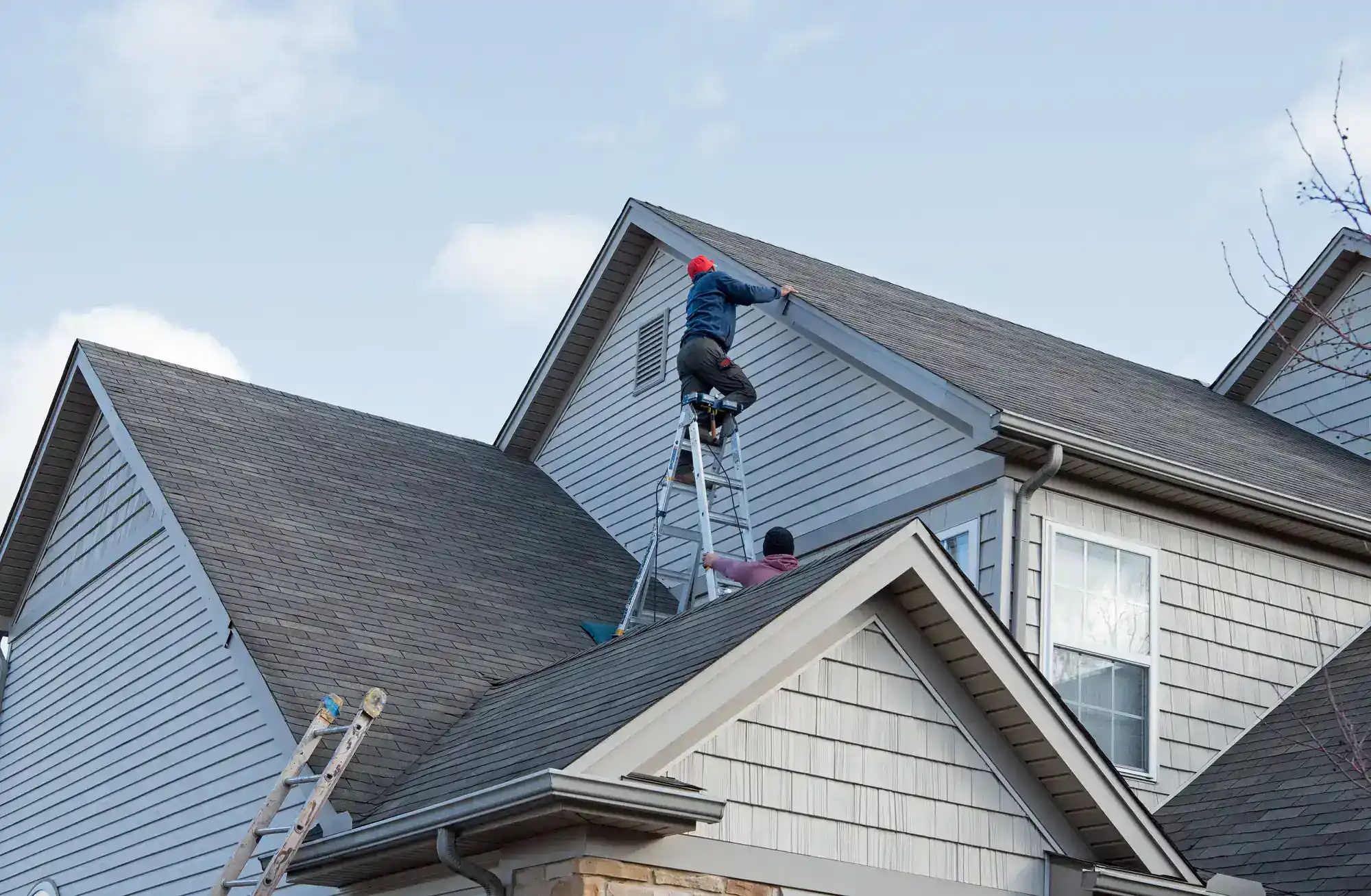
Living along the Hudson isn’t just a view — it’s a wind corridor. Properties on River Road and up the Palisades hillside take sustained exposure that inland Bergen County homes simply don’t face. That kind of constant pressure on your shingles, flashing, and sealed penetrations adds up quietly, until it doesn’t.
When roof repair in Edgewater, NJ is done right, you stop the damage before it reaches your decking, your insulation, or your interior. That matters even more in a borough where the median single-family home is worth over a million dollars. A $600 repair handled early doesn’t become a $12,000 problem later.
Edgewater’s housing stock is also different from most of Bergen County. A large portion of homes here are townhouses and condominiums — many with flat or low-slope roofs that behave completely differently than pitched shingle roofs. Whether you’re dealing with a membrane issue on a flat roof or wind-lifted shingles on a Palisades hillside property, the fix needs to match the system. That’s not something every contractor in this area actually understands.
Edgewater, NJ Roofing Contractor
We’ve been serving homeowners across Bergen County for over a decade, and we’ve been here in Edgewater through every season. We were here before Superstorm Sandy tore through the borough with 76-plus mile-per-hour winds, and we’ve been here ever since. We know River Road — literally, since it’s the only way in and out of this borough — and we know the roofing conditions that come with it.
This is a family-operated business, which means the person who walks your property and writes your estimate is accountable for what gets done. There’s no commissioned sales rep handing you off to a crew you’ve never met. Manufacturer certifications back the work, and full liability insurance and workers’ compensation protect you throughout the job.
If you’ve been approached by door-knockers after a storm, you already know the difference between a contractor with roots in Edgewater and one just passing through. We’re the former.
Roof Repair Process in Edgewater, NJ
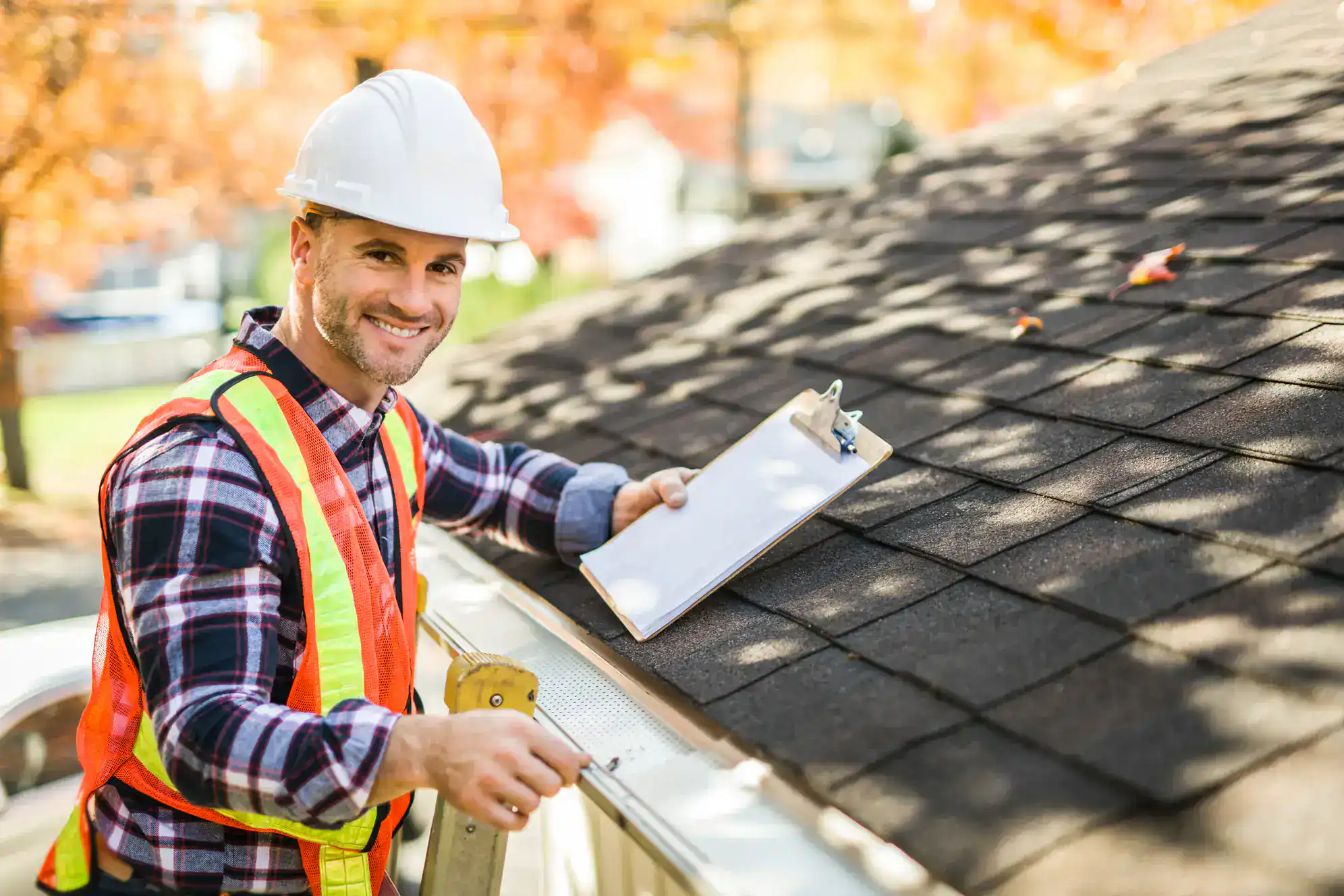
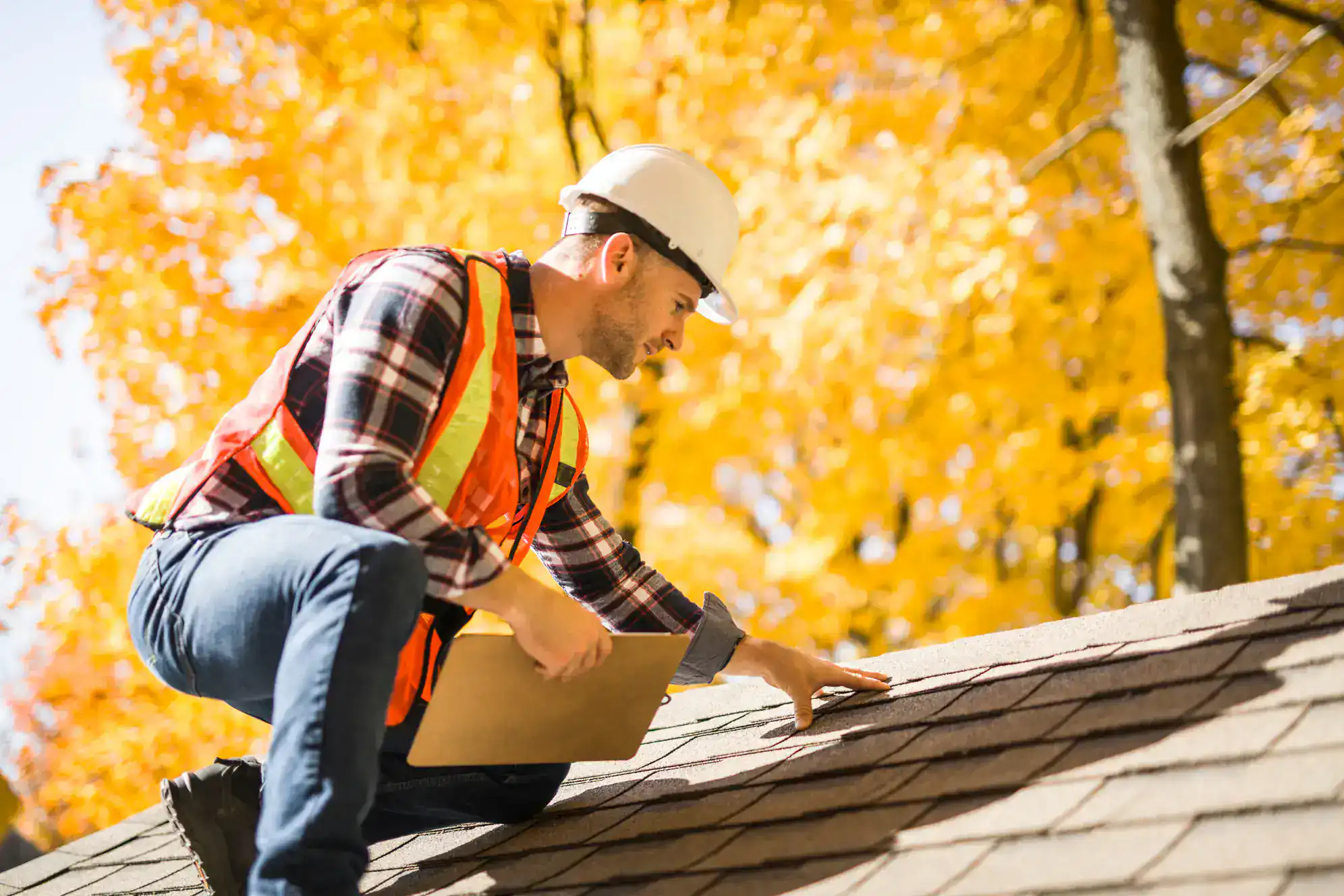
It starts with a free inspection. We come out, get on the roof, and tell you exactly what we see — no pressure, no upsell, no vague “you might want to think about replacing the whole thing” without a real reason. In Edgewater, that inspection looks specifically at the areas most vulnerable to waterfront wind exposure: flashing around chimneys and skylights, shingle edges on the windward side, and drainage points on flat roofs where ponding water accelerates membrane wear.
If a permit is required for your repair — which Edgewater’s Building Department determines based on the scope of work under the NJ Uniform Construction Code — we handle that before anything starts. Straightforward repairs like targeted shingle replacement or a flashing reseal typically don’t require one, but anything involving structural decking or a full re-roof does. You’ll know upfront.
Once the scope is agreed on, you get a written estimate with a line-by-line breakdown. That number doesn’t change unless you change the scope. Our crew shows up, does the work, and does a full cleanup before we leave — magnetic nail sweeps included. In a dense borough like Edgewater where driveways and shared courtyards are tight, that’s not optional. It’s just how the job gets done.
Ready to get started?
Shingle and Flat Roof Repair in Edgewater, NJ
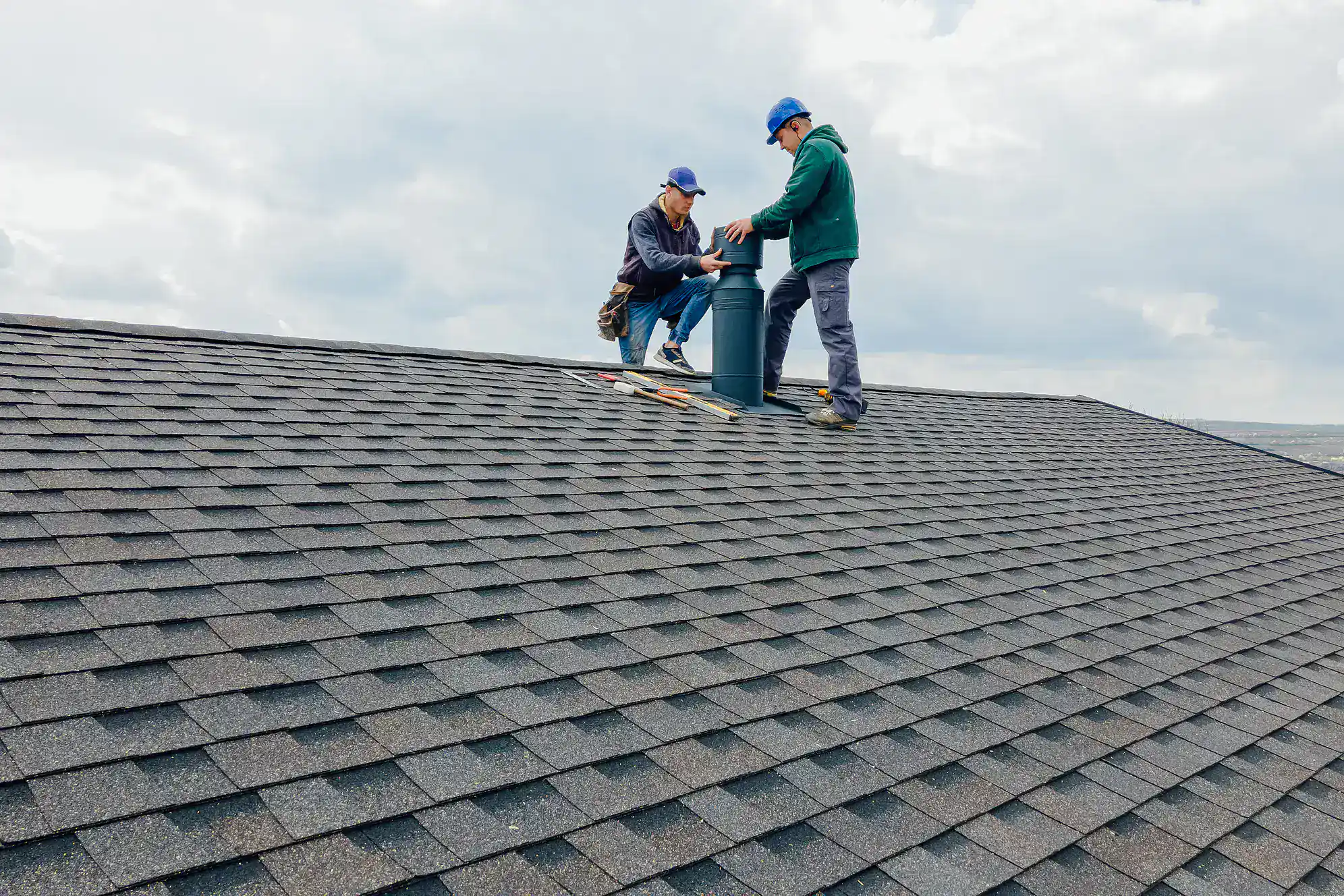
Roof repair in Edgewater, NJ isn’t one-size-fits-all, and we don’t treat it that way. For shingle roofs on the Palisades hillside — where steep pitches and wind exposure create their own set of challenges — that means proper fastening, matching materials, and sealing that actually holds up through a nor’easter. For flat and low-slope roofs common in Edgewater’s townhouse developments and waterfront condominiums, it means working with the right membrane system — TPO, EPDM, or modified bitumen — rather than improvising with materials that weren’t designed for that application.
Emergency roof leak repair in Edgewater, NJ is also available for situations that can’t wait. If you’ve got an active leak during a storm, we put temporary protective measures in place fast to stop the water while a permanent solution is planned. Storm damage repair includes the documentation you’ll need if you’re filing a homeowners insurance claim — written damage assessments, photo records, and a scope of work that aligns with what your adjuster is looking for.
Roof repair estimates in Edgewater, NJ are always free and always written. Whether you own a single-family home off Gorge Road or a townhouse unit near Edgewater Harbor, the process is the same: honest assessment, clear pricing, and work that’s built to last in a waterfront environment.
How much does roof repair cost in Edgewater, NJ?
The range is wide because the variables are wide. A targeted shingle repair — replacing a handful of wind-lifted or cracked shingles and resealing the flashing — typically runs between $400 and $2,500 depending on how many squares are affected and the pitch of the roof. Properties on the steeper sections of the Palisades hillside may carry a pitch premium because of the additional safety equipment and time required to work safely at that angle.
Flat roof repairs are a different conversation. A localized membrane patch on a townhouse or condominium roof might run $500 to $3,000. A full flat roof system replacement — which becomes necessary when the membrane has deteriorated beyond repair — can range from $5,000 to $15,000 or more depending on square footage and the system type. The only way to get a real number is to have someone actually look at the roof. That inspection is free, and the estimate you get afterward is written and itemized — not a verbal ballpark.
How do I know if I need roof repair or a full replacement in Edgewater?
This is the question most Edgewater homeowners are really asking when they call. The honest answer is: it depends on the age of the roof, the extent of the damage, and whether the underlying decking is still sound. A roof that’s 10 years old with isolated wind damage from a nor’easter is almost certainly a repair. A roof that’s 25 years old with widespread granule loss, multiple leak points, and soft spots in the decking is probably past the repair threshold.
What you want to avoid is a contractor who defaults to replacement because the margin is better. A free inspection from us gives you a straight answer — if repair is the right call, that’s what you’ll hear. If replacement makes more sense structurally and financially, that case will be made with specifics, not sales language. Edgewater homeowners investing in properties at this price point deserve that level of honesty before making any decision.
What types of roofs are most common in Edgewater, and does that affect repairs?
Yes, significantly. Edgewater’s housing stock is unlike most of Bergen County. The borough is dense — a narrow strip between the Hudson River and the Palisades Cliff — and a large share of its residential buildings are townhouses, luxury condominiums, and mixed-use waterfront developments. Many of these have flat or low-slope roofs rather than the pitched asphalt shingle roofs you’d find in Ridgewood or Saddle River.
Flat roofs require different materials, different diagnostic approaches, and different repair techniques than pitched roofs. TPO membrane, EPDM rubber roofing, and modified bitumen systems all have distinct failure patterns and repair methods. A contractor who primarily works on shingle roofs and occasionally patches a flat roof is not the same as one who genuinely understands these systems. For Edgewater homeowners with flat roofs, that distinction matters — getting the repair wrong doesn’t just fail to fix the leak, it can accelerate membrane deterioration and void any remaining manufacturer warranty on the system.
Does roof repair in Edgewater, NJ require a permit?
It depends on the scope of the work. Under the New Jersey Uniform Construction Code, which Edgewater’s Building Department enforces, minor repairs — replacing a small number of damaged shingles, patching a localized leak, resealing flashing — typically don’t require a permit. But once the scope expands to include structural decking replacement, a full re-roof over existing layers, or any work on a property in a designated flood zone, a permit is generally required before work begins.
Most of the borough’s land east of River Road and south of North Street falls within a FEMA-designated flood zone, which adds a layer of regulatory consideration for storm-damaged properties in those areas. We handle permit coordination as part of the job — you don’t have to navigate the Building Department on your own. If a permit is needed, it gets pulled before work starts. If it isn’t, you’ll know exactly why and have that documented.
What should I do if my roof is actively leaking during a storm in Edgewater?
First, contain what you can inside — move valuables, put down towels or buckets, and document the water entry points with photos if it’s safe to do so. That documentation matters if you end up filing an insurance claim. Don’t go on the roof yourself during active weather, especially on a pitched Palisades-area property where wet conditions make the surface genuinely dangerous.
Call for emergency roof repair in Edgewater, NJ as soon as possible. The longer an active leak runs, the more it costs — water moving through the decking and into the insulation and interior structure of a high-value Edgewater home escalates repair bills fast. Our emergency response gets temporary protective measures in place to stop active infiltration while permanent repairs are scoped and scheduled. Getting someone out quickly is the single most effective thing you can do to limit the total damage.
How does Edgewater's waterfront location affect how long a roof repair lasts?
More than most homeowners expect. The Hudson River corridor creates a sustained wind environment that inland Bergen County properties don’t experience. Properties along River Road and the waterfront face prevailing winds off the river that test shingle adhesion, flashing seals, and every penetration on the roof on a regular basis — not just during named storms. Properties at the base of the Palisades Cliff deal with concentrated moisture runoff from uphill communities, which promotes moss and algae growth on shingles and accelerates water infiltration at roof edges and valleys.
The elevated humidity from the river environment also speeds up corrosion on metal roofing components — flashing, drip edges, gutter connections, and vent covers tend to degrade faster here than on comparable properties further inland. A repair that’s done with materials rated for this kind of exposure, installed with proper fastening and sealing for a wind-exposed waterfront environment, will outlast a generic repair by years.