
Roof Inspection in Kenilworth, NJ
Kenilworth's Aging Roofs Deserve More Than a Driveway Glance
Hear from Our Customers
Roof Damage Inspection in Kenilworth, NJ
When a professional roof inspection is done right, you stop wondering and start knowing. You know whether that water stain on your ceiling is a slow drip or a serious problem. You know whether your roof has five years left or five months. That clarity alone is worth the call — and with a free inspection, it costs you nothing to find out.
Kenilworth is a borough built on pre-1960 housing stock. Cape Cods, ranches, bungalows — most of them constructed in the 1940s and 1950s — are the backbone of the residential landscape here. Roofs on homes that age have been through decades of Union County winters, nor’easters, and freeze-thaw cycles that quietly work on flashing, shingles, and valleys year after year. If your Kenilworth home hasn’t had a professional set of eyes on the roof since Tropical Storm Ida came through in September 2021, there may be damage sitting up there that you simply can’t see from the ground.
A thorough roof damage inspection in Kenilworth, NJ doesn’t just tell you what’s wrong. It tells you what’s fine, what to watch, and what needs attention now. That’s the kind of information that protects your home, your budget, and your peace of mind — and it’s what a real inspection should deliver every time.
Licensed Roof Inspector in Kenilworth, NJ
We’ve been serving New Jersey homeowners for over ten years, and the way our business has grown says a lot about how we operate. No paid lead funnels. No aggressive door-knocking after storms. Just consistent work, honest assessments, and the kind of word-of-mouth reputation that spreads through tight communities — communities exactly like Kenilworth.
We hold a valid New Jersey Home Improvement Contractor registration and carry certifications from major shingle manufacturers — credentials that a small fraction of roofing contractors in the country actually qualify for. That means when you get an inspection, you’re getting it from a licensed roof inspector in Kenilworth, NJ who can also back any recommended work with manufacturer-supported warranty coverage that uncertified contractors simply can’t offer.
From the Boulevard corridor to the neighborhoods near Monroe Avenue and out toward Galloping Hill Road, we know Kenilworth’s housing stock — the quirks of older Cape Cod rooflines, the drainage challenges on low-slope ranches, and what decades of New Jersey weather does to a home that’s been standing since Eisenhower was president.

Roof Inspection Company in Kenilworth, NJ
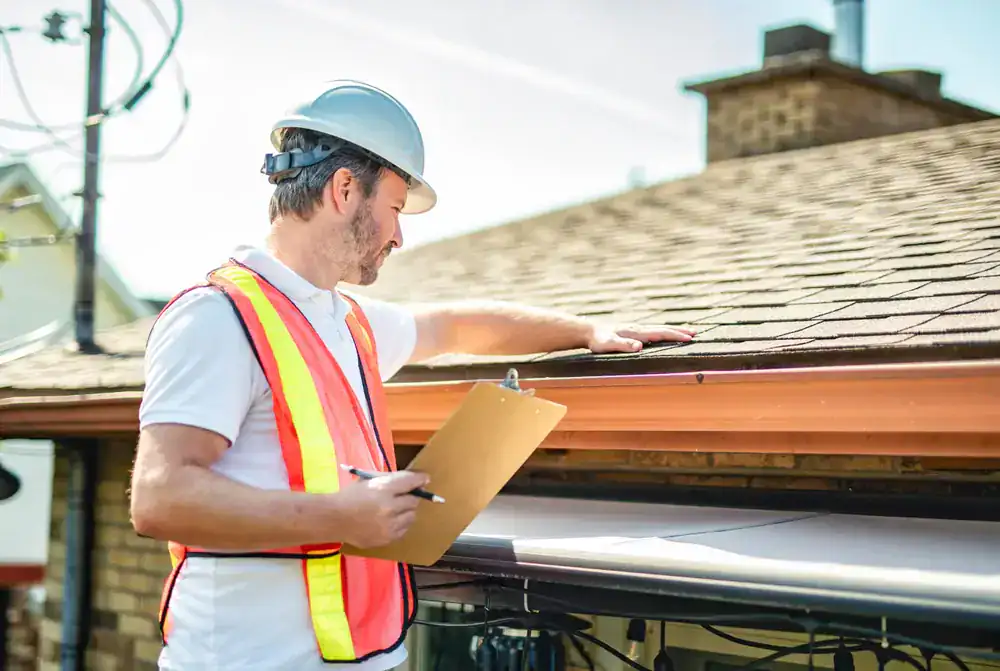
It starts with a call and a scheduled time that works for you — no vague arrival windows, no last-minute rescheduling. When our inspector arrives, they go up on the roof. Not a binocular scan from the driveway. An actual, physical inspection of the shingles, flashing, ridgeline, valleys, and any penetration points like chimneys or vents where leaks tend to start first.
From there, the inspection covers your gutters and fascia — because in Kenilworth’s older homes, roofline damage rarely stays contained to the shingles alone. A nor’easter that lifts a few shingles can just as easily bend gutter sections or compromise the drip edge. Checking the full system in one visit gives you a complete picture instead of a partial one.
After the inspection, you get a straight report. What’s in good shape, what needs monitoring, and what needs to be addressed. If there’s damage consistent with storm activity — wind, hail, or the kind of heavy rain events Union County sees during tropical remnants — the documentation from our certified roof inspector in Kenilworth, NJ can be used directly in an insurance claim conversation. And if everything looks solid? You’ll hear that too. No inflated findings, no manufactured urgency — just the facts about your roof, delivered plainly.
Spring and fall are the busiest inspection seasons in this area, but if you’ve had a significant weather event or noticed any interior warning signs, don’t wait for a season. The longer a small issue sits, the more it costs to fix.
Ready to get started?
Certified Roof Inspector in Kenilworth, NJ
The roof inspection in Kenilworth, NJ that we provide is free — not a discounted assessment, not a fee-waived-with-purchase deal. Free. Because the information your home needs shouldn’t be behind a paywall, and because a company that does honest work doesn’t need to charge you just to look.
What’s covered in the inspection reflects the realities of Kenilworth’s housing stock specifically. Cape Cod dormers and valley intersections are high-priority checkpoints — those are the spots where aging flashing fails first on older homes. Low-slope ranch rooflines get checked for granule loss and pooling patterns that accelerate membrane fatigue. Chimneys, skylights, and pipe boots get examined at every penetration point, because that’s where water finds its way in on homes that have been through as many Union County winters as most of these have.
The inspection also accounts for what New Jersey’s Uniform Construction Code requires if repair or replacement work follows. Kenilworth’s Building Department administers permit requirements locally, and any legitimate contractor will pull the proper permits before work begins — something we handle on your behalf as a standard part of the process, not an add-on. If your roof inspection reveals damage that qualifies for an insurance claim, the documented findings from a licensed roof inspector in Kenilworth, NJ carry real weight with adjusters — and that documentation is included as part of what you receive, at no additional cost.

How do I know if my Kenilworth home's roof actually needs to be replaced?
The honest answer is that most homeowners can’t tell from the ground — and neither can a contractor who’s only looked at your roof from the driveway. The signs that matter most are often subtle: granules accumulating in your gutters, flashing that’s started to separate at the chimney or a dormer, shingles that have begun to cup or curl at the edges. Interior signs like a water stain on the ceiling or a musty smell in the attic can indicate active infiltration, but by the time those show up, the damage has usually been building for a while.
In Kenilworth specifically, where the majority of the housing stock dates to the 1940s and 1950s, many roofs are at or past the 20–30 year lifespan of a standard asphalt shingle system. That doesn’t automatically mean replacement — some roofs are well-maintained and have years left. But it does mean a professional inspection is the only way to know for certain. A certified roof inspector in Kenilworth, NJ will give you a condition assessment based on what’s actually up there, not a sales pitch based on what they’d like to sell you.
What does a roof inspection in Kenilworth, NJ typically include?
A thorough roof inspection covers the full roofline system — not just the shingles. That means the inspector examines shingle condition across all roof planes, checks every flashing point at chimneys, vents, skylights, and wall-to-roof junctions, evaluates the ridge and hip caps, and looks at the gutters and fascia for signs of related damage. On Kenilworth’s older Cape Cods and colonials, the valleys and dormers get particular attention because those are the areas where water tends to concentrate and where aging flashing fails first.
The inspection also looks for signs of prior storm damage that may not have been addressed — wind lifting, hail bruising, or granule loss patterns that indicate accelerated wear. If the findings suggest storm-related damage, the inspector’s documented report can support an insurance claim. You’ll receive a clear summary of what was found, what’s in good condition, what needs monitoring, and what needs immediate attention. The whole process is straightforward, and since the inspection is free, there’s no financial risk in getting the information.
My roof isn't leaking yet — do I still need a professional roof inspection?
Yes — and this is actually one of the most important things to understand about roof maintenance. By the time water is coming through your ceiling, the damage has already moved past the roof surface and into the underlayment, decking, or insulation below. At that point, what started as a manageable repair can become a significantly more expensive project. A roof inspection catches problems in the early stages — before they become leaks, before they compromise the structure underneath, and before a small flashing issue turns into a rotted deck section.
In Kenilworth, where homes have been through decades of nor’easters, freeze-thaw cycles, and storm events including Tropical Storm Ida in 2021, the cumulative wear on older roofing systems is real even when there’s no active drip inside. The freeze-thaw cycle alone — temperatures regularly crossing 32°F through Union County winters — causes flashing to contract and pull away from surfaces over time, creating gaps that let water in during the next rain. A roof damage inspection in Kenilworth, NJ gives you the early warning system your home needs before the problem announces itself through your ceiling.
Will the inspector just try to sell me a new roof whether I need one or not?
That’s a fair concern, and it’s one of the most common reasons homeowners put off calling a roofing company. The roofing industry has a real problem with contractors who overstate damage to push replacements that aren’t necessary — and if you’ve heard stories from neighbors or seen news coverage about contractor fraud in New Jersey, that skepticism is well-placed.
Our business has grown almost entirely through reviews and referrals, which means every assessment we give has a direct impact on our reputation. A Kenilworth homeowner who’s told their roof is fine and doesn’t need replacement is far more likely to call back in five years when it does — and to send their neighbors in the meantime. That’s the actual business model here. If your roof has useful life remaining, you’ll hear that. If minor repairs will address the issue, that’s what gets recommended. Replacement only comes up when replacement is genuinely the right answer, and the inspector will explain why in plain terms you can verify independently if you choose to.
How does a roof inspection help with an insurance claim after storm damage?
When you file a claim for storm damage, the insurance company sends their own adjuster to assess the roof. That adjuster works for the insurance company — not for you. Their job is to document what they find, but their findings don’t always capture the full picture, and disputed or underpaid claims are common after significant weather events in New Jersey.
Having an independent roof damage inspection in Kenilworth, NJ from a licensed contractor gives you your own documentation — photographs, written findings, and a professional assessment of the damage that you can present alongside the adjuster’s report. If the adjuster’s assessment misses damage or undervalues it, your contractor’s independent report gives you the basis to push back and request a reinspection. This matters particularly in Kenilworth, where documented street flooding and wind damage from Tropical Storm Ida in September 2021 affected homes throughout the borough. Homeowners who had professional documentation were in a much stronger position when negotiating with their insurers than those who relied solely on the adjuster’s report.
What time of year is best for a roof inspection in Kenilworth, NJ?
Spring and fall are the two natural inspection windows for Kenilworth homeowners. Spring gives you a chance to assess whatever the winter left behind — ice dam damage, cracked shingles from freeze-thaw cycling, flashing that shifted during cold snaps. Fall is your opportunity to catch anything before the next round of winter weather arrives, when a small problem can become a serious one once ice and snow load up on an already-compromised roof.
That said, the best time for a roof inspection is whenever you have a reason to get one. If you noticed granules in your gutters after the last rain, if a shingle came off during a storm, if there’s a water stain on your ceiling that appeared after a heavy rain event — don’t wait for a seasonal window. Union County weather doesn’t operate on a schedule, and neither does roof damage. The roof inspection company in Kenilworth, NJ that you call should be able to get out to you in a reasonable timeframe regardless of the season, assess what’s there, and give you honest information about what, if anything, needs to happen next.
Other Services we provide in Kenilworth