
Roof Inspection in Franklin Lakes, NJ
When the Trees Are Beautiful and the Roof Is Quietly Failing

Hear from Our Customers
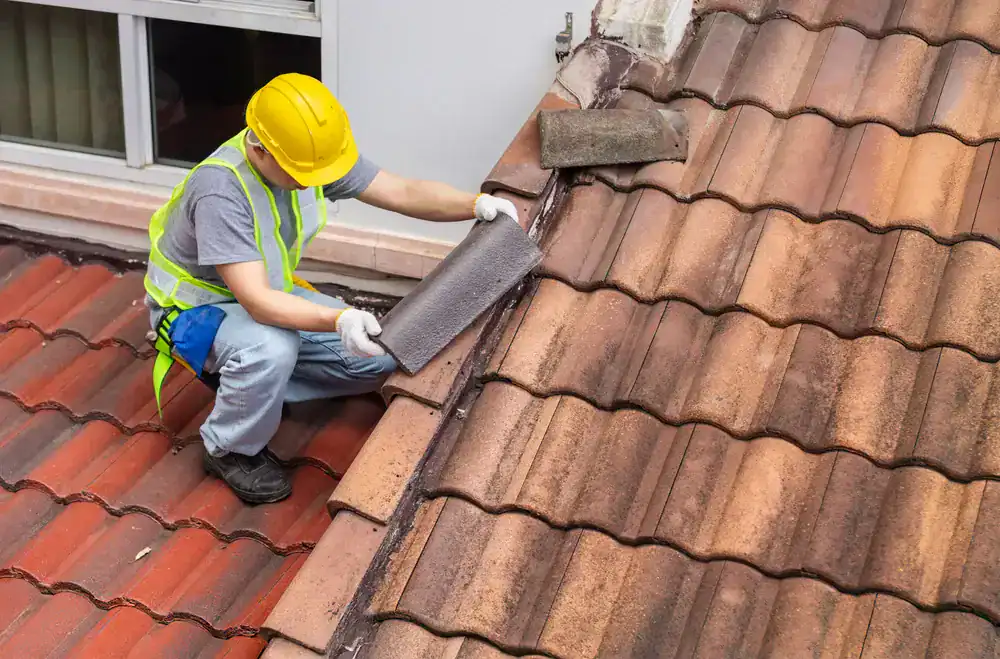
Roof Damage Inspection, Franklin Lakes NJ
Most roof problems in Franklin Lakes don’t start with a leak. They start with debris sitting on a shaded shingle for two seasons straight, or a flashing seal that cracked during last February’s freeze and hasn’t been touched since. By the time water shows up inside, the damage has usually been building for months — sometimes longer. A thorough roof inspection tells you what’s happening before it becomes expensive.
The wooded character of Franklin Lakes creates conditions that generic inspections miss entirely. North-facing roof sections that rarely see direct sun are prime territory for moss and algae growth. Gutters clogged with oak leaves and pine needles push water back under the roofline. And when a storm rolls through and a limb comes down, the damage to shingles, decking, and flashing often isn’t visible from your driveway — it needs someone on the roof to find it.
For a home worth what Franklin Lakes properties are worth, the stakes of missing something are real. A licensed roof inspector who knows what to look for on large, complex roofs — dormers, valleys, multiple ridges, chimney flashing — is a different conversation than a quick visual from the ground. You walk away knowing the actual condition of one of your home’s most critical systems.
Certified Roof Inspector in Franklin Lakes, NJ
We’ve been working on roofs across Bergen County for nearly ten years, with plenty of experience on Franklin Lakes properties — large homes on wooded lots, estate-style rooflines with a dozen potential failure points, and homeowners who expect straight answers, not a sales pitch.
We’re family-operated, which means the people doing the work are the same people whose name is on the business. Manufacturer certifications from major shingle brands back up the technical side — those credentials aren’t handed out, they’re earned through training, licensing, and demonstrated results. And they unlock enhanced warranty coverage that most contractors in this area simply can’t offer.
The free inspection isn’t a hook to get in the door. It’s how we’ve always operated — show you what’s there, explain what it means, and let you decide. No pressure, no manufactured urgency.

Roof Inspection Company in Franklin Lakes, NJ
It starts with a free inspection scheduled at your convenience. When our inspector arrives, they go up on the roof — not just around the perimeter. That means checking shingle condition across every section, including the shaded north-facing areas that tend to accumulate moisture and biological growth on heavily wooded Franklin Lakes properties. Flashing at chimneys, dormers, and valleys gets a close look, because that’s where water finds its way in on complex rooflines.
Gutters and the roofline edge get assessed as part of the same visit. On properties surrounded by mature trees, those systems take a beating year-round, and gutter damage often connects directly to what’s happening at the roof surface. If there are signs of ice dam activity from the prior winter — staining, lifted shingles near the eaves, soffit damage — that gets documented too.
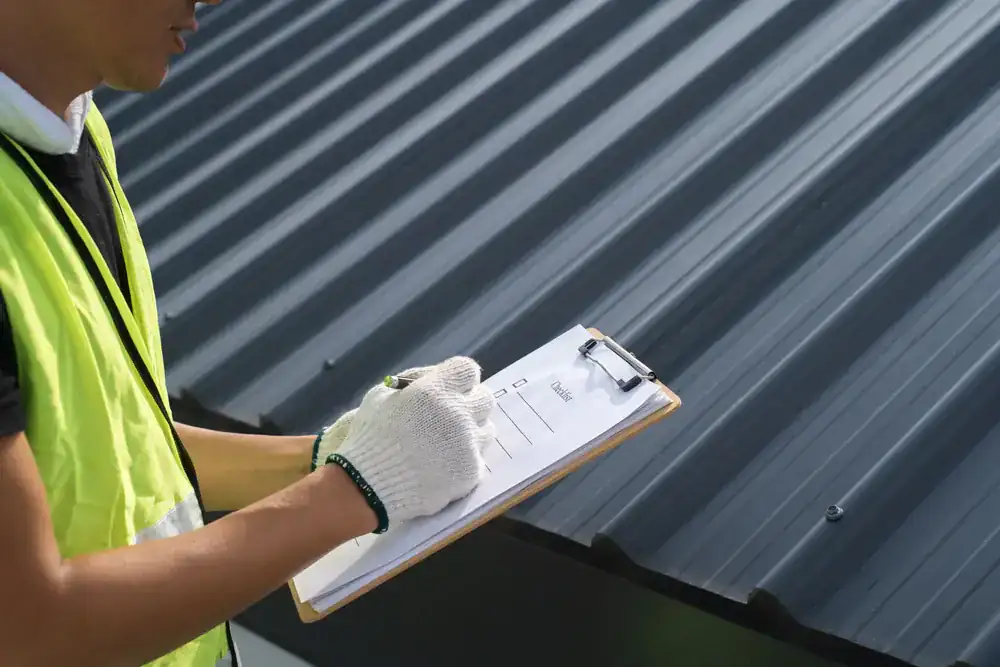
After the inspection, you get a clear written report with photos and findings. If there’s work that needs to be done, it’s explained plainly — what it is, why it matters, and what happens if it’s left alone. If your roof is in solid shape, you’ll hear that too. Franklin Lakes’ Code Enforcement department requires licensed contractors for any permitted roofing work, and everything we do is fully compliant with New Jersey’s requirements from inspection through completion.
Ready to get started?
Licensed Roof Inspector in Franklin Lakes, NJ
A roof inspection in Franklin Lakes isn’t a ten-minute walk around the yard. On a property with the size and complexity typical of this borough, a thorough assessment covers shingle integrity across all roof planes, flashing condition at every penetration point, ridge and valley seals, soffit and fascia, gutter attachment and drainage, and any visible signs of structural stress or water infiltration. The inspection is designed around what these roofs actually deal with — heavy debris loads from the surrounding tree canopy, freeze-thaw cycling through Bergen County winters, and the occasional direct hit from a falling limb during a nor’easter.
Because we also handle gutters and siding, the inspection can cover the full exterior in a single visit. That matters on large Franklin Lakes properties where storm damage rarely stops at the shingles — wind-driven debris affects siding, overloaded gutters affect fascia, and a complete picture of the exterior gives you far more useful information than a shingle-only assessment.
If the inspection reveals damage consistent with a covered insurance event — storm, wind, hail — the written report and photo documentation are formatted to support your claim. After a major weather event in this area, having that documentation from a certified roof inspector in Franklin Lakes, NJ can make a meaningful difference in how your claim is handled.

How do I know if storm damage actually requires a roof inspection in Franklin Lakes?
If you’ve had a significant wind event, a nor’easter, or a storm that brought down branches anywhere near your home, an inspection is worth scheduling — even if you don’t see obvious damage from the ground. In Franklin Lakes, the combination of mature trees and complex rooflines means storm damage often happens in spots that aren’t visible without getting up on the roof. A limb that grazed a dormer, a wind gust that lifted a ridge cap, or debris that cracked a flashing seal can all go unnoticed until water starts showing up inside.
The threshold most roofing professionals use is simple: if the storm was strong enough to move things around your yard, it was strong enough to affect your roof. Getting a roof damage inspection in Franklin Lakes, NJ after any significant weather event gives you documentation of the actual condition — which matters both for your own peace of mind and for any insurance claim you might need to file.
What does a roof inspection actually include, and how long does it take?
A proper roof inspection goes well beyond a visual check from the driveway. On a typical Franklin Lakes property, expect our inspector to physically access the roof and assess shingle condition across every plane, check all flashing at chimneys, skylights, dormers, and valleys, evaluate ridge and hip cap integrity, and look for signs of moisture intrusion at the decking level. Gutters, soffit, and fascia are included in the same visit.
On larger estate-style homes — which are common in this borough — the process takes longer than it would on a smaller structure, simply because there’s more to cover and more potential failure points to assess. Plan for an hour to an hour and a half on a complex roofline. After the inspection, you receive a written report with photos so you have a clear record of findings, not just a verbal summary.
Does Franklin Lakes require a permit for roof repairs, and does the inspection affect that?
Yes, New Jersey’s Uniform Construction Code requires permits for roof replacement and significant repair work, and Franklin Lakes enforces this through its Code Enforcement department. The borough uses an online portal for permit applications and inspection scheduling, and those requirements apply regardless of the scope of the project. A roof inspection itself doesn’t trigger a permit — it’s an assessment of existing conditions, not construction work.
Where the inspection connects to the permit process is in what it finds. If the inspection identifies damage that requires permitted repair or replacement, having a licensed contractor conduct the inspection means the same company can manage the permitting correctly from the start. Hiring an unlicensed inspector and then needing to bring in a licensed contractor afterward often means duplicating the assessment process. We’re fully licensed under New Jersey’s Home Improvement Contractor program and handle the permitting side as part of the job.
Can a roof inspection in Franklin Lakes, NJ help with an insurance claim after a storm?
It can, and in many cases it’s the most important step you take after a significant weather event. Insurance adjusters assess damage from the insurer’s perspective, focused on what falls within your policy’s covered perils. A written inspection report from a certified roof inspector in Franklin Lakes, NJ gives you an independent, contractor-side assessment of what’s actually there — with photographs, written findings, and documentation of every damaged component.
On a high-value Franklin Lakes property, the difference between a thorough inspection report and a minimal one can translate directly into the outcome of your claim. Large estate homes have more surface area, more flashing penetrations, and more places for damage to hide. A complete report that captures all of it — not just the most obvious findings — gives your insurance company the full picture and reduces the chance that legitimate damage goes undocumented and uncovered.
What are the signs of ice dam damage I should look for on my Franklin Lakes roof?
Ice dams form when heat escaping from the attic melts snow on the upper roof, and that snowmelt refreezes at the colder eaves before it can drain. Bergen County winters cross the freezing threshold repeatedly throughout the season, which means Franklin Lakes roofs go through this cycle multiple times each winter. The damage it causes isn’t always obvious until spring.
Signs worth paying attention to include water staining on interior ceilings or walls near exterior edges, paint peeling near soffits, shingles that appear lifted or buckled near the eaves, and visible staining or rot on fascia boards. If you had significant icicle formation last winter, that’s a reliable indicator that ice dams were present. A spring roof inspection that specifically checks for freeze-thaw damage and assesses attic ventilation — which is the root cause of most ice dam formation — gives you a clear picture of what the winter left behind and what needs to be addressed before the next one.
Is a pre-listing roof inspection worth it before selling a home in Franklin Lakes?
In a market where homes regularly sell above $1 million, a roof condition flagged during a buyer’s inspection can cost sellers tens of thousands in negotiated credits — or stall a deal at exactly the wrong moment. A pre-listing roof inspection gives you the information before the buyer’s inspector does, which means you control the timeline and the options.
If the inspection finds something, you can address it on your own terms before listing, price it into the transaction accurately, or disclose it with documentation rather than having it surface as a surprise during due diligence. If the inspection comes back clean, that report becomes a genuine selling point in a market where buyers at this price point are thorough and expect documentation. Either way, you go into the transaction with full information — and that’s a better position than finding out what’s on your roof the same day your buyer does.