
Gutter Replacement in Paramus, NJ
Bergen County Winters Don't Forgive Failing Gutters
Hear from Our Customers
Rain Gutter Replacement Paramus NJ
Paramus gets around 51 inches of rain and snow every year. That’s not a slow drip — that’s a continuous load on your gutter system, month after month. When the system is working, water moves away from your home the way it’s supposed to. When it isn’t, it finds somewhere else to go — and that somewhere is usually your fascia boards, your foundation, or your basement.
Most of the homes in Paramus were built between the 1950s and 1970s. A lot of those original or early-replacement gutter systems used spike-and-ferrule fasteners that loosen over decades as the wood behind them expands and contracts through Bergen County’s seasonal swings. By the time gutters start visibly pulling away from the house, the fascia behind them has often already taken damage. Catching it before that point matters.
The other thing worth knowing: Bergen County winters are cold enough to turn compromised gutters into a real structural problem. Ice accumulates in gutters that are already sagging or improperly pitched, and that weight pulls fascia boards away from the roofline. Getting your gutter system in solid shape before the first hard freeze isn’t just maintenance — it’s protecting a home that, in Paramus, is likely worth close to a million dollars.
Gutter Replacement Company in Paramus NJ
USA Home Remodeling is a family-owned exterior renovation company with ten years of hands-on experience serving homeowners throughout Bergen County, with deep roots in Paramus and the surrounding neighborhoods. Roofing is the core of what we do, which means when we look at your gutters, we’re looking at the whole picture — the roof drainage path, the fascia condition, the downspout discharge points — not just the trough itself. That systems-level thinking is something a gutter-only company can’t replicate.
We’ve grown almost entirely through customer reviews and referrals from Paramus residents and their neighbors. No heavy advertising, no franchise backing — just a track record of doing the work right and communicating clearly from the first call to the final walkthrough. We hold contractor licenses and manufacturer certifications that require verified experience and insurance documentation, so you’re not guessing about who’s showing up to your home.
From the residential streets near Van Saun County Park to the established neighborhoods bordering Ridgewood and Saddle Brook, we’ve worked on the kind of homes Paramus is built on — large, well-kept, and worth protecting.

House Gutter Replacement Paramus NJ
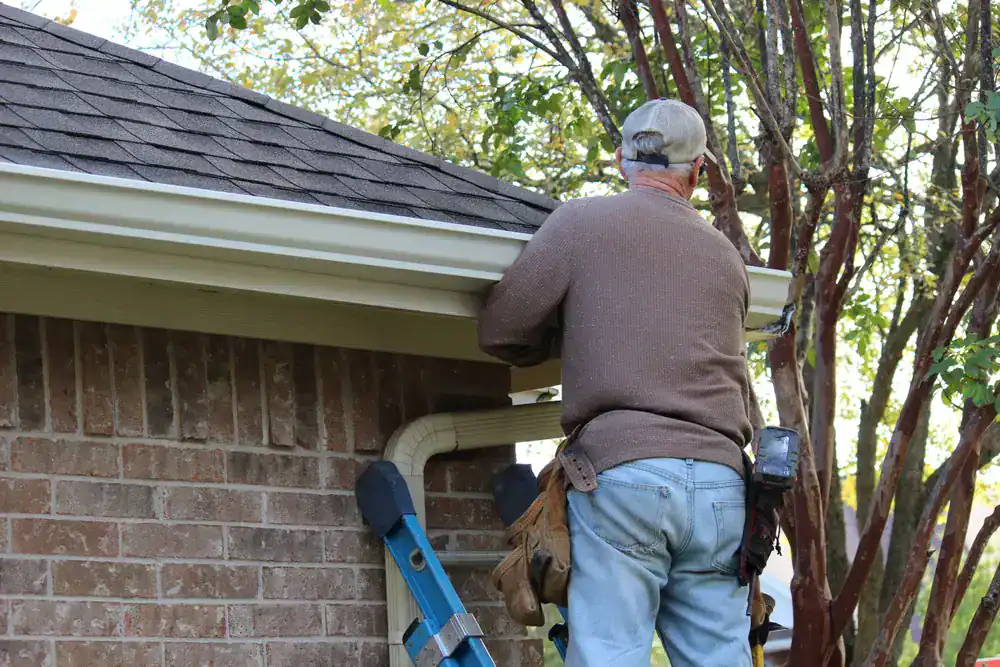
It starts with a free inspection. One of our technicians gets on a ladder and actually looks at what’s happening — not a drive-by estimate from the ground. We’re checking for fascia damage behind the gutters, improper pitch, failing fasteners, and any signs that water has already been going where it shouldn’t. You get a clear picture of what you’re dealing with before anyone asks you to sign anything.
If replacement makes sense, you’ll receive a transparent, itemized estimate. No vague totals, no line items that appear after the job starts. Paramus’s Building Department requires a construction permit for home improvement work, and we handle that process as part of the job — so you’re not navigating permit paperwork on your own or hiring someone who skips it.
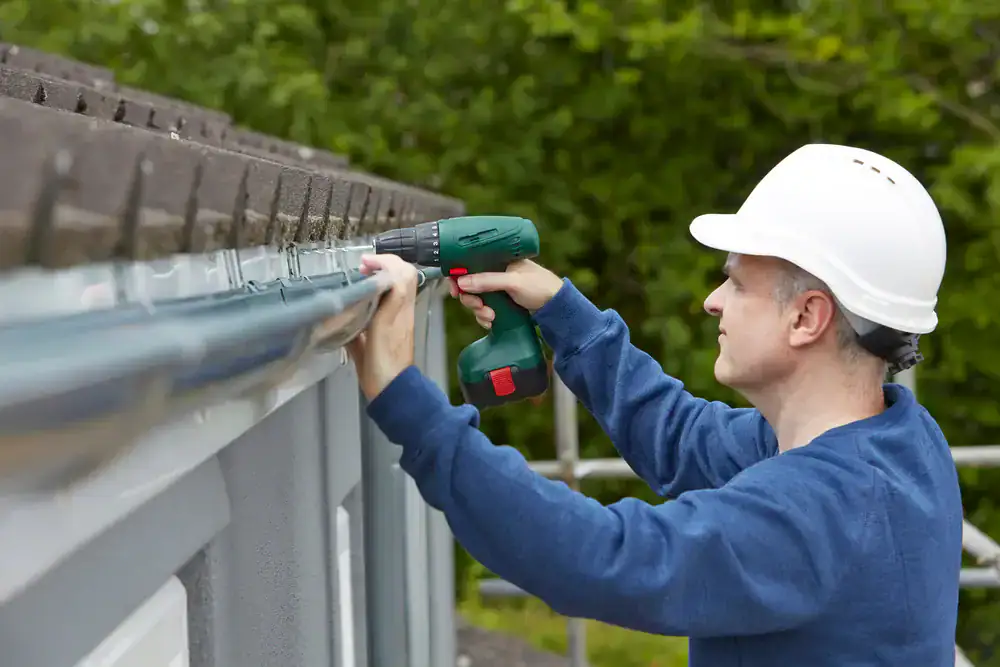
Installation uses seamless aluminum gutters fabricated on-site to the exact dimensions of your home. Seamless means no joints every few feet, which means far fewer places for leaks to develop over time. Downspout placement is evaluated as part of the installation — making sure water is discharged far enough from your foundation is especially important on properties near any of Paramus’s drainage-sensitive waterways, including the brooks that flow into the Saddle River and Hackensack River watersheds. When the job is done, the site is cleaned up and you’re walked through what was done and why.

Ready to get started?
Roof Gutter Replacement Contractors Paramus NJ
Gutter replacement in Paramus isn’t a one-size job. The homes here are large — a higher share of four- and five-bedroom single-family properties than nearly anywhere else in the country — which means more linear footage, more roof surface draining into the system, and more consequences when something fails. Every installation we complete is sized and pitched to handle the actual volume your roof delivers in a Bergen County rainstorm, not just what meets code on paper.
We install seamless aluminum gutters using hidden hanger fasteners, which are significantly more durable than the spike-and-ferrule systems common on Paramus’s mid-century housing stock. Hidden hangers don’t loosen the way spikes do over decades of seasonal wood movement — so the system stays flush against the fascia the way it’s supposed to. Downspouts are positioned and extended to move water well clear of the foundation, which matters on any Paramus property within proximity of the borough’s named brooks and drainage zones.
The work also includes a check of the fascia condition before installation. If there’s rot or structural damage behind where the gutters attach, that gets flagged and addressed — because installing new gutters over damaged fascia just means the problem comes back faster. Our goal is a system that holds up through Bergen County winters, not one that looks good on day one and fails by year three.

Do I need a permit for gutter replacement in Paramus, NJ?
For a standard gutter replacement in Paramus, a construction permit is typically required through the borough’s Building Department at West Jockish Square. You’ll need to submit the UCC-F170 Construction Permit form, which includes contractor information — meaning whoever you hire needs to be properly licensed and registered in New Jersey to be listed on that application. Hiring an unlicensed contractor doesn’t just create a quality risk; it can create a permit compliance problem that follows the property.
New Jersey also requires all home improvement contractors to hold a valid Home Improvement Contractor registration through the Division of Consumer Affairs, separate from any trade licensing. We carry both, so the permit process is handled as a standard part of the job. If your property is near one of Paramus’s designated waterways — the borough has over a dozen named brooks draining into the Saddle River and Hackensack River systems — there may be additional drainage-related review under Chapter 213 of the Paramus Code, depending on where downspouts discharge. That’s something worth flagging during the inspection.
How do I know if my gutters need to be replaced or just repaired?
The honest answer is that it depends on what’s actually failing, and you usually can’t tell from the ground. Gutters that are leaking at a single seam or have one loose section might be good repair candidates. But if you’re seeing multiple sections pulling away from the fascia, consistent overflow during rainstorms, or visible sagging along the run, those are signs the system as a whole has reached the end of its useful life.
In Paramus specifically, a lot of homes are working with gutter systems that are 40 to 50 years old. The spike-and-ferrule fasteners used on mid-century installations loosen over time as the fascia wood behind them cycles through Bergen County’s temperature swings year after year. Once that process has happened across most of the mounting points, repair becomes a short-term fix on a system that’s going to keep failing. A free inspection gives you a clear, honest read on which category your gutters fall into — and there’s no obligation to move forward if repair is genuinely the right call.
What type of gutters work best on older Paramus homes?
Seamless aluminum gutters are the right choice for the vast majority of Paramus homes, and that’s not just a sales preference — it’s what holds up in this climate and on this housing stock. Seamless gutters are fabricated on-site from a single continuous run of aluminum, which eliminates the joints that sectional systems develop leaks at over time. For a home receiving 51 inches of precipitation annually, reducing leak points is a meaningful functional difference.
For homes built in the 1950s through 1970s — which describes a large portion of Paramus’s residential inventory — the shift from spike-and-ferrule fasteners to hidden hanger systems is especially important. Hidden hangers attach to the fascia differently and don’t loosen the way the old spike systems do through decades of seasonal wood expansion and contraction. They keep the gutter flush and properly pitched for the long term. Aluminum itself holds up well through Bergen County winters without rusting, and it’s light enough that it doesn’t add unnecessary load stress to the fascia during ice accumulation events.
How much does gutter replacement cost in Paramus, NJ?
For most Paramus homes, a full seamless aluminum gutter replacement runs somewhere between $1,000 and $2,400, with the majority of single-family homes landing in the $1,000 to $1,500 range. The variables that move the number are the total linear footage of gutters, the number of downspouts, the pitch and accessibility of the roofline, and whether any fascia repair is needed before installation can happen.
Paramus homes tend to be on the larger end of the residential spectrum — four- and five-bedroom single-family properties with more roof surface and more gutter footage than a typical suburban home. That can push the total up compared to a smaller home, but it’s worth keeping in perspective: you’re protecting a property with a median value close to $978,000 in one of the most expensive residential markets in New Jersey. The cost of a properly installed gutter system is a fraction of what foundation repairs, basement water remediation, or fascia replacement runs if drainage problems go unaddressed. A free estimate gives you an exact number for your specific home before you commit to anything.
Can gutters be replaced in the fall or winter in Bergen County?
Fall is actually one of the best times to replace gutters in Bergen County, and it’s when demand is highest for good reason. Paramus has significant tree canopy throughout its residential neighborhoods, and once leaves start coming down, homeowners discover quickly whether their gutters are clogged, sagging, or pulling away from the fascia. Getting replacement done before the first hard freeze means your system is properly fastened and pitched before ice starts accumulating — which is when compromised gutters do the most structural damage.
Winter replacement is possible during mild stretches, but scheduling becomes tighter and conditions are less predictable. The bigger risk of waiting is what Bergen County ice does to gutters that are already failing. Ice accumulation in sagging or improperly pitched gutters adds significant weight load to the fascia attachment points, and that’s what pulls fascia boards away from the roofline — turning a gutter problem into a fascia and water infiltration problem before spring arrives. If your gutters are showing signs of failure heading into October or November, that’s not a situation where waiting until spring makes financial sense.
Why are the gutters on my Paramus home pulling away from the house?
This is one of the most common issues on Paramus homes built in the postwar decades, and the cause is almost always the same: spike-and-ferrule fasteners that have loosened over time. The way those systems work, a long spike is driven through the front of the gutter and into the fascia board behind it. Over years of seasonal temperature cycling — the kind Bergen County delivers reliably every year — the wood expands and contracts, and the spike gradually works itself loose. Once that happens across multiple mounting points, the gutter starts to pull away from the fascia and lose its proper pitch.
When gutters lose pitch, water stops flowing toward the downspouts and starts pooling in the low spots instead. That standing water accelerates corrosion, adds weight load, and eventually overflows in places it was never meant to. The fascia board behind the loose section is often already showing moisture damage by the time the gutter visibly separates. The fix isn’t to re-drive the old spikes — it’s to replace the system with hidden hanger fasteners that attach differently and don’t develop the same loosening pattern. That’s a permanent solution, not a patch that buys another season or two before the same problem returns.