
Gutter Repair in Summit, NJ
Stop Water Damage Before It Starts
Hear from Our Customers
Professional Gutter Services in Summit
When your gutters work right, you don’t think about them. Water flows where it should, away from your home. Your foundation stays dry. Your landscaping doesn’t wash away every time it rains.
But when gutters fail, the problems stack up fast. A small leak today becomes rotted wood next month. Sagging sections pull away from your roofline. Water pools against your foundation. That’s when a $50 repair turns into a $2,000 problem.
Summit’s weather makes this worse. Freeze-thaw cycles crack seams. Ice dams trap water on your roof. Heavy snow bends hangers and pulls entire sections loose. The homes here deal with conditions that age gutter systems faster than in most places.
You’re not looking for perfect gutters. You’re looking for a system that handles New Jersey winters without creating new problems. That’s what we fix.
Local Gutter Contractor in Summit
USA Home Remodeling has spent over a decade working on homes in Summit and the surrounding areas. We’re a family-owned gutter company, which means you’re not dealing with a call center or getting passed between departments.
We focus on exterior work: roofing, siding, and gutters. That matters because gutter problems rarely exist in isolation. When we inspect your gutters, we’re also looking at your fascia, your roof edge, and how water’s actually moving around your property.
Summit homeowners know what New Jersey weather does to houses. You’ve seen the ice dams, the spring flooding, the way fall leaves clog everything. We’ve fixed those problems hundreds of times. We know which repairs hold up and which ones you’ll be calling about again next year.

Our Gutter Repair Process
First, we come out and actually look at your gutters. Not a quick glance from the ground—we get up there and check the seams, the hangers, the pitch, and how water’s draining. We’re looking for active leaks, weak spots, and anything that’s going to fail soon.
Then we tell you what’s wrong and what it’ll cost to fix. If you’ve got a simple leak, we’re not going to sell you new gutters. If your system is 20 years old and failing in multiple places, we’ll explain why replacement makes more sense than patching it together.
Once you approve the work, we schedule it and show up when we say we will. Most gutter repairs take a few hours. Larger jobs might take a day. We clean up when we’re done, and we test the system to make sure water’s flowing correctly.
You get a straightforward fix that addresses the actual problem. No upselling. No surprises on the bill.

Ready to get started?
Gutter Repair Services We Provide
Leaking seams are the most common problem we see. The sealant breaks down over time, especially with temperature swings. We reseal joints properly so they hold through winter.
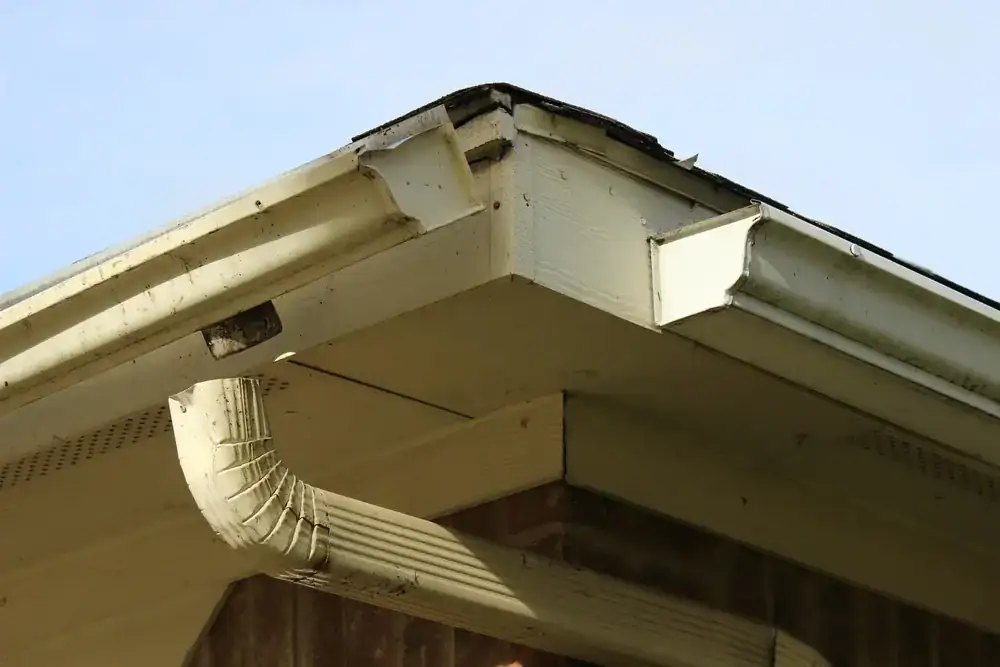
Sagging gutters mean water isn’t draining. Usually it’s failed hangers or rotted fascia behind the gutter. We replace hangers and repair or replace damaged wood so the gutter sits at the right pitch again.
Ice damage from Summit’s winters shows up as bent gutters, cracked seams, and pulled-away sections. We straighten what can be saved and replace sections that are too damaged. Then we look at why ice built up in the first place—often it’s a ventilation or insulation issue we can point you toward.
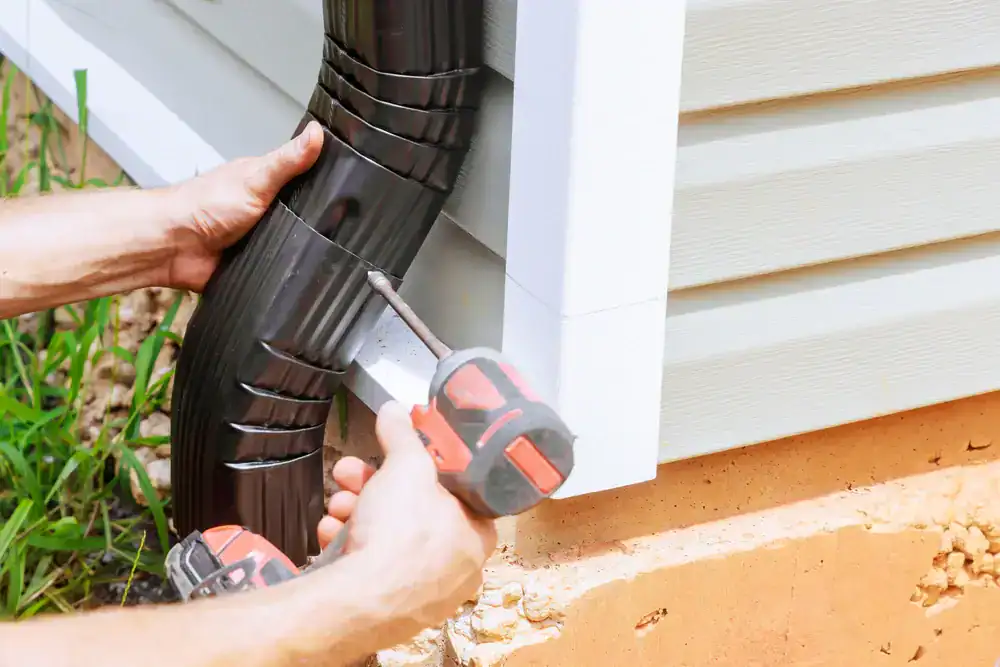
Clogged downspouts and underground drains cause water to back up and overflow. We clear blockages and make sure water’s actually making it away from your foundation. Sometimes that means installing or repairing underground drainage that carries water far enough from the house.
In Summit, mature trees mean constant debris. If you’re cleaning gutters three or four times a year, gutter guards make sense. We install systems that keep leaves out while letting water through. Not every house needs them, but when you do, they eliminate most of your maintenance.

How do I know if my gutters need repair or full replacement?
If you’ve got one or two problem spots—a leaking seam, a sagging section—repair usually makes sense. These are isolated issues that don’t indicate the whole system is failing.
Replacement makes more sense when you’re dealing with multiple problems across different areas. If your gutters are 15-20 years old and you’re seeing rust, several leaks, and sections pulling away from the house, you’re looking at a system at the end of its life. Patching it becomes a cycle of constant repairs.
We’ll tell you honestly which situation you’re in. Sometimes a $200 repair buys you another five years. Sometimes it’s throwing money at a system that’s going to keep failing. We’d rather have you spend money once on a real solution than keep calling us back for bandaid fixes.
What causes ice dams and can gutter repair fix them?
Ice dams form when heat escapes through your roof, melts snow, and that water refreezes at the roof edge where it’s colder. The ice blocks drainage, trapping water that can work its way under shingles and into your home.
Gutter repair doesn’t fix the root cause—that’s an attic insulation and ventilation issue. But damaged gutters make ice dams worse. If your gutters are clogged or pitched wrong, water sits there and freezes more easily. Clearing debris and fixing drainage helps, but it’s not the complete solution.
We can repair the gutter damage that ice dams cause: bent sections, pulled hangers, cracked seams. And we’ll tell you if we see signs that ice dams are forming because of attic issues. That’s a separate fix, but it’s worth knowing about before you end up with water damage inside your walls.
How much does gutter repair typically cost in Summit?
Small repairs—resealing a leaking joint or replacing a few hangers—usually run $100-$300. These are quick fixes that solve isolated problems.
Larger repairs get into the $400-$800 range. That’s when you’re replacing sections of gutter, fixing fascia damage, or addressing multiple problem areas. If you need extensive work on a full gutter system, you’re looking at $1,000-$2,000, and at that point replacement might make more financial sense.
The real cost driver is what’s behind the problem. A leaking seam is cheap to fix. But if that leak has been dripping for months and rotted your fascia board, now you’re paying for carpentry work too. That’s why catching problems early matters. The repair itself is straightforward—it’s the secondary damage that gets expensive.
Should I try to repair gutters myself or hire a professional?
If you’re comfortable on a ladder and you’ve got a simple issue—maybe a small leak you can reseal—DIY can work. You need the right sealant, proper technique, and good weather for it to cure.
Where DIY gets risky is anything involving ladder work on a two-story home, repairs near power lines, or problems you can’t fully see from the ground. Gutter work means you’re leaning out, reaching, and working at angles that aren’t stable. We see homeowners hurt themselves every year trying to save a couple hundred dollars.
The other issue is diagnosis. You might see a leak and seal it, but miss that the real problem is improper pitch or a clogged downspout creating back pressure. A professional gutter contractor looks at the whole system and fixes the actual cause, not just the symptom. That’s the difference between a repair that lasts and one you’re redoing next season.
How often should gutters be cleaned or inspected in Summit?
Most Summit homes need gutter cleaning twice a year minimum—once in late fall after leaves drop, and once in spring after winter debris and seed pods accumulate. If you’ve got oak trees or pines near your roofline, you might need three or four cleanings.
Inspection should happen at least once a year, ideally in early fall before winter weather hits. You’re looking for loose hangers, small leaks, rust spots, and areas where water isn’t draining properly. Catching these early means simple fixes instead of emergency repairs.
After major storms—especially ice storms or heavy snow—it’s worth a quick visual check from the ground. Look for sagging sections or gutters pulling away from the house. Those are signs of damage that’ll get worse if you wait until spring to address them. New Jersey weather is hard on gutter systems, so staying ahead of problems saves money long-term.
Do gutter guards really work or are they a waste of money?
Good gutter guards work, but they’re not magic. They keep out leaves and large debris, which means you’re cleaning gutters once a year instead of three or four times. For homes surrounded by mature trees, that’s a significant reduction in maintenance.
The catch is that cheaper guards often create new problems. Some designs trap debris on top, some let small particles through that build up into sludge, and some actually make ice dams worse by creating a shelf for ice to form on. The quality of the product and the installation matters more than most homeowners realize.
Whether guards make sense for your home depends on your tree situation and how much gutter maintenance bothers you. If you’ve got minimal tree coverage and don’t mind cleaning gutters twice a year, skip them. If you’re up there every six weeks dealing with clogs, quality guards pay for themselves in saved time and hassle. We install them when they make sense, and we’re honest when they don’t.