
Siding Installation in Summit, NJ
Summit Homes Deserve More Than a Quick Fix
Hear from Our Customers
Siding Contractors in Summit, NJ
Summit’s climate does not go easy on exterior cladding. Every winter brings multiple freeze-thaw cycles that force moisture into any crack or gap in your siding, and every summer adds heat, humidity, and UV exposure on top of that. By the time visible damage shows up — warping, cracking, panels pulling away from the wall — water has usually already been working behind the surface for a season or two. New siding, installed correctly with a proper moisture barrier and tight flashing at every window and roofline, stops that process cold.
For homeowners on the Northside, where many of Summit’s Victorians, Tudors, and Colonial Revivals have been standing since the 1880s and 1920s, the stakes are even higher. These homes have architectural complexity that basic installation simply cannot account for — dormers, decorative trim, multiple roof pitches meeting exterior walls. Done right, a siding replacement on a home like that protects the structure, preserves the character, and adds immediate curb appeal in one of New Jersey’s most competitive real estate markets.
On the Southside, where mid-century Capes and Colonials often still carry aging vinyl from the 1980s and 90s, the math is straightforward. Siding that is 30 to 40 years old is past its useful life. Replacing it now, before moisture damage reaches the sheathing, is significantly less expensive than replacing it after.
Residential Siding Contractors in Summit, NJ
We have been doing exterior renovation work across Union County for nearly ten years, with deep roots in Summit’s neighborhoods. That means we have worked on the kinds of homes Summit actually has — older, architecturally detailed, and unforgiving of sloppy installation. We are licensed, carry the manufacturer certifications required to back up the warranties on premium siding products, and are fully insured on every job.
What makes the difference in a market like Summit is accountability. This is a family-run operation, which means the people responsible for the outcome are the same people who show up for the estimate and answer the phone when you have a question mid-project. There is no franchise layer and no rotating project managers. When something needs attention, you are talking directly to the people who own the result.
From the tree-lined streets of the Northside to the neighborhoods closer to Springfield Avenue, we understand what Summit homeowners expect and what their homes actually require.

Summit, NJ Siding Installation Process
It starts with a free inspection. Before any numbers are discussed, a member of our team walks the exterior of your home and gives you an honest read on what is actually going on — what is failing, what caused it, and what your real options are. For Summit homeowners whose properties fall within a designated historic district, this inspection also helps clarify the scope of work before you approach the City’s Historic Preservation Commission, which reviews exterior modification applications for properties on the List of Historic Properties. Knowing what you need before that conversation saves time and avoids surprises.
From there, you get a written estimate that breaks down exactly what is included — removal of existing siding, moisture barrier installation, new panels, trim, and all associated materials. The number you agree to is the number you pay. Once you are ready to move forward, we work with you on scheduling. Spring and fall are the busiest booking windows in Summit, so if you are planning a project around the real estate market or a pre-winter deadline, reaching out early is worth it.
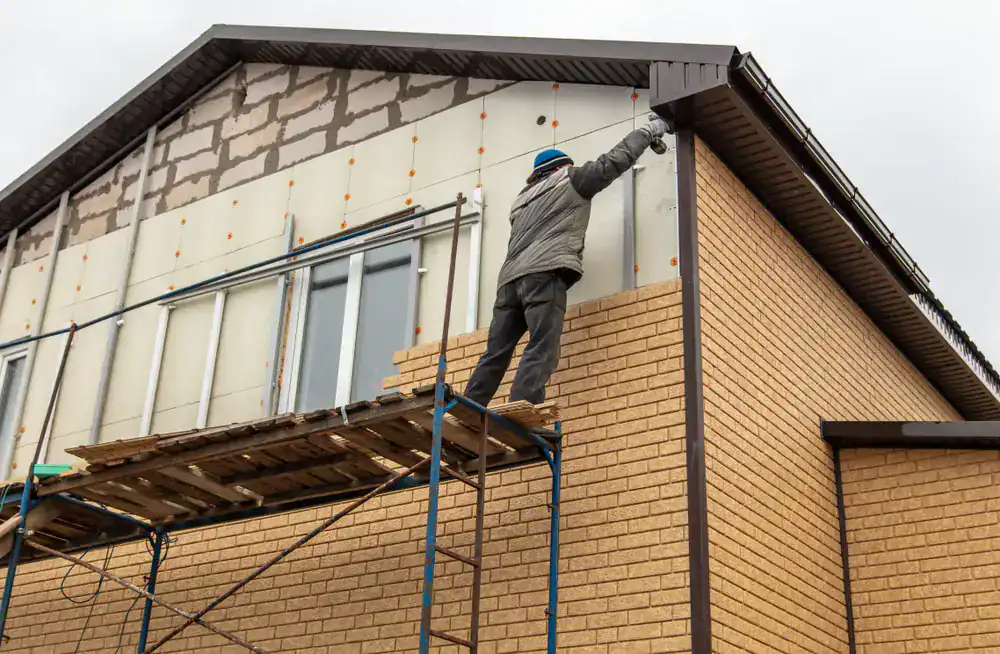
Installation is managed from start to finish with clear communication at every stage. You will know what is happening each day, and the final walkthrough does not happen until you are satisfied with what you see.

Ready to get started?
Vinyl Siding Contractors in Summit, NJ
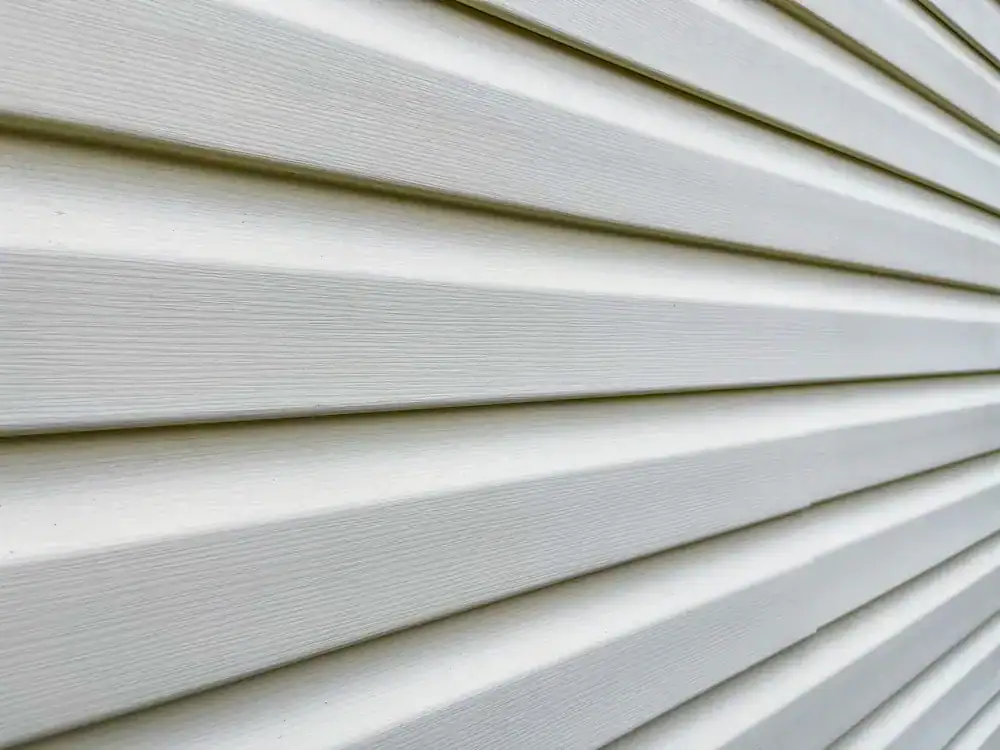
Not every siding material performs the same way in a New Jersey climate, and not every material suits every home in Summit. We work with a range of products — standard and insulated vinyl, fiber cement options like James Hardie, and engineered wood — and the recommendation you get is based on your home’s age, architecture, and what will actually hold up through Union County winters. Insulated vinyl, for example, adds a meaningful layer of thermal performance that older homes on the Northside — many of which were built before modern insulation standards existed — can genuinely benefit from.
For homes in or near Summit’s historic districts, material selection carries additional weight. The Historic Preservation Commission evaluates whether proposed exterior changes are consistent with the architectural character of the area. A contractor who does not understand that process is a liability. We are familiar with these requirements and can help you navigate the permit process through the City’s Division of Code Administration at 512 Springfield Avenue before work begins.
Every installation includes proper moisture barrier application, correctly flashed transitions at windows, doors, and rooflines, and cleanup that leaves your property the way it was — minus the failing siding. The goal is not just a good-looking exterior. It is an exterior that performs for the next 20 to 40 years.

Do I need a permit for siding installation in Summit, NJ?
In most cases, yes. The City of Summit requires construction permits for most types of home renovation and improvement work, including siding replacement. This is enforced through Summit’s Division of Code Administration under the New Jersey Uniform Construction Code. If you are unsure whether your specific project requires a permit, the Summit Construction Office can be reached directly to confirm before any work begins.
There is an additional layer for certain Summit properties. If your home is located within a designated historic district or appears on the City’s List of Historic Properties, the Historic Preservation Commission may need to review and approve the exterior modification before a construction permit is issued. This is not a bureaucratic hurdle to dread — it is a process that protects the architectural character of Summit’s neighborhoods. Working with a contractor who understands these requirements from the start makes the whole process significantly smoother.
How do I know if my Summit home's siding needs full replacement or just repair?
The honest answer is that it depends on what is actually happening behind the panels, not just what you can see from the driveway. Cracked or warped panels in an isolated area can sometimes be repaired without replacing the entire exterior. But if the damage is widespread, if the siding is 25 or more years old, or if there are signs of moisture getting into the wall assembly — soft spots, interior water staining, or mold near the base of walls — repair is usually a short-term fix that delays a larger, more expensive problem.
For Summit’s Southside homes that still carry original vinyl from the 1980s or early 1990s, the age alone is often the deciding factor. That material is at or past the end of its designed lifespan regardless of how it looks on the surface. A free inspection from us gives you an honest assessment based on what is actually there — not a recommendation engineered to sell you the most expensive option.
What siding material works best for older homes in Summit, NJ?
For Summit’s older housing stock — particularly the Victorians, Tudors, and Colonial Revivals that define the Northside — fiber cement is often the strongest choice. Products like James Hardie siding are dimensionally stable, meaning they do not expand and contract significantly with New Jersey’s freeze-thaw cycles, and they can be manufactured to replicate the look of wood clapboard or shingle siding without the maintenance demands of actual wood. That matters on homes where the architectural character is part of what makes the property valuable.
Insulated vinyl is another strong option, especially for mid-century homes on the Southside that lack modern wall insulation. The added thermal layer reduces heat loss and can meaningfully improve energy efficiency in a home that was built before today’s insulation standards. The right answer depends on your home’s specific construction, your budget, and whether the property has any Historic Preservation Commission considerations. That is exactly the kind of conversation worth having during a free estimate before any decision is made.
How much does siding installation typically cost for a Summit, NJ home?
Siding installation costs vary based on the size of the home, the material selected, and the complexity of the installation. For a standard-sized Summit home, vinyl siding projects typically range from $8,000 to $15,000. Larger homes, or those with architectural complexity — multiple dormers, decorative trim, irregular profiles — can run $15,000 to $25,000 or more, particularly when fiber cement or insulated vinyl is the chosen material. Summit’s housing stock skews toward the more architecturally detailed end of that range.
What matters as much as the number itself is how it is presented. A written estimate that breaks down materials, labor, removal of existing siding, and moisture barrier work tells you exactly what you are paying for. A vague verbal quote does not. We provide detailed written estimates before any work is scheduled, so you are never left guessing what the final invoice will look like. The price agreed to at the estimate is the price on the invoice.
How long does siding installation take on a typical Summit home?
For most single-family homes in Summit, a full siding installation takes anywhere from two to five days depending on the size of the home, the material being installed, and the complexity of the exterior. A straightforward Southside Cape Cod with clean lines and minimal trim detail will move faster than a Northside Tudor with dormers, decorative half-timbering profiles, and multiple roofline intersections that require careful flashing work.
Weather is always a factor in New Jersey, particularly during spring and fall when most Summit homeowners are scheduling exterior projects. We coordinate scheduling with realistic timelines and communicate proactively if conditions affect the daily plan. The permit process can also add time to the front end of a project, especially for properties that require Historic Preservation Commission review. Building that lead time into your planning — rather than discovering it after you are ready to start — is one of the reasons getting an estimate and inspection early in the season makes a real difference.
How do I find a trustworthy siding contractor in Summit, NJ without getting burned?
Start with the basics that are easy to verify. New Jersey law requires all home improvement contractors to be registered with the NJ Division of Consumer Affairs under the Home Improvement Contractor registration program. You can look up any contractor’s registration status directly on the Division’s website. If a contractor cannot provide a registration number, that is a clear stop sign regardless of how competitive their price looks.
Beyond licensing, look at how they communicate before you sign anything. Do they provide a written estimate that itemizes the work? Do they explain the permit process for Summit — including whether your property may require Historic Preservation Commission review? Do they answer your questions directly, or do they push you toward a decision before you feel ready? In a community like Summit, where reputations are built over years of consistent work, the contractors who have been operating here for years with strong organic reviews have earned that standing the hard way. That track record is worth more than any promotional claim.
Other Services we provide in Summit