
Gutter Installation in Ferdinands Mills, NJ
When Your Lot Has More Trees Than Neighbors, Your Gutters Need to Keep Up
Hear from Our Customers
Rain Gutter Installation in Bergen County
Most gutter problems don’t announce themselves until something bigger is already wrong. Water is pooling against your foundation. The fascia behind your gutters has gone soft. Your basement takes on water every time Route 208 floods and the rain doesn’t let up. By then, you’re not just replacing gutters — you’re dealing with the damage they left behind.
The homes in Ferdinands Mills and the Crystal Lake area weren’t built last year. A lot of them are carrying original or first-generation gutter systems that were never designed to handle the leaf drop from a mature canopy or the volume of a Bergen County storm. When those systems fail, they fail quietly — until they don’t. A properly installed seamless gutter system stops that cycle before it starts.
What you actually get is straightforward: water moves off your roof, away from your foundation, and out of the equation. No overflow. No ice buildup at the eaves come January. No rotting wood hiding behind gutters that look fine from the driveway. For a home worth what yours is worth in this area, that’s not a small thing.
Gutter Contractors Serving Ferdinands Mills, NJ
We’ve been doing exterior work across Bergen County for over ten years, including gutters, roofing, and siding on homes throughout Ferdinands Mills and the surrounding area. We’re licensed with the NJ Division of Consumer Affairs (License #13VH10605800), hold certifications from major manufacturers, and have built our reputation almost entirely through referrals — not advertising volume. That means every job is someone’s recommendation on the line.
Our focus has always been roofing first, with gutters and siding as the systems that complete the picture. That matters in a place like Ferdinands Mills, where the homes are older, the lots are heavily wooded, and the drainage conditions are genuinely demanding. A gutter contractor who doesn’t understand how your roof sheds water — or what the Ramapo watershed does to a property during a heavy storm — is only solving half the problem.
You get a free inspection, a written estimate, and a crew that treats a Ferdinands Mills home the way it deserves to be treated.
Home Gutter Installation Process in Ferdinands Mills
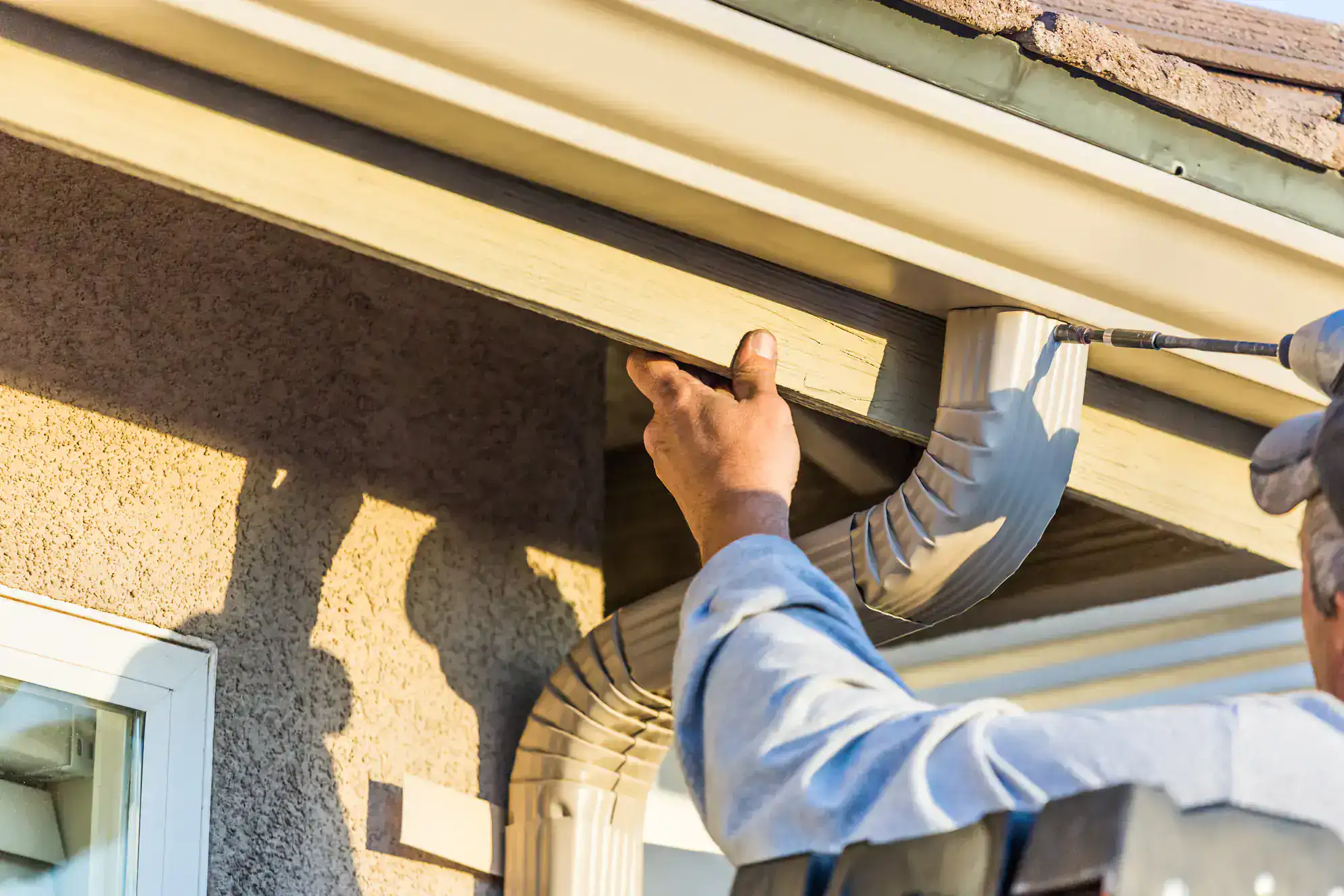
It starts with a free on-site inspection. Before anything is measured or quoted, we evaluate the full picture — not just the gutters themselves, but the fascia boards they’ll be mounted to, the slope of your roofline, and how your current system is actually performing. On older Ferdinands Mills homes, that evaluation often turns up things a quick drive-by estimate would miss entirely: soft wood behind the gutter, undersized downspouts that can’t move the volume your roof generates, or slope issues that have been causing standing water for years.
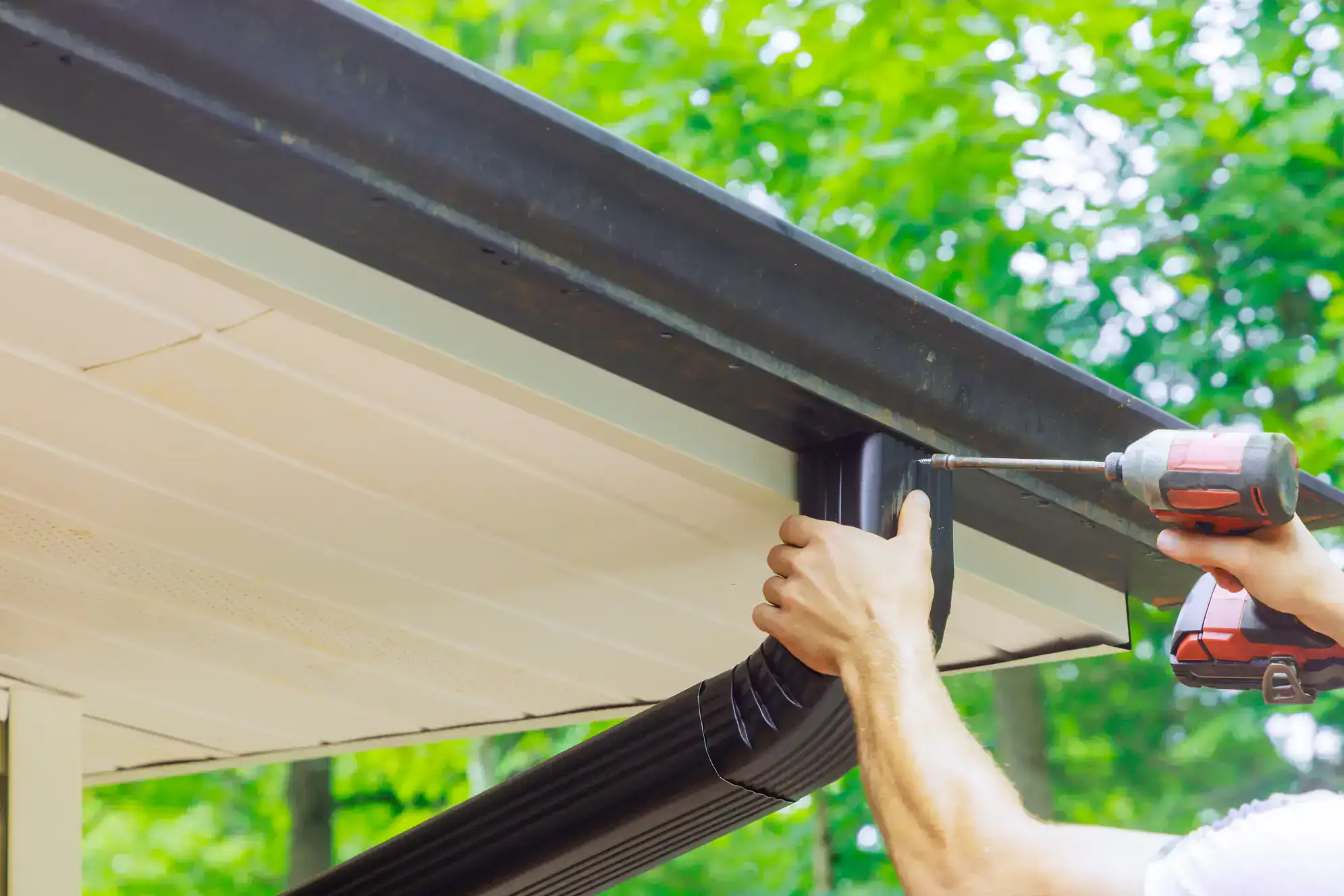
Once the inspection is done, you get a written estimate. No verbal ballparks, no numbers that shift when the crew shows up. If the scope changes, you hear about it before anything happens. From there, the gutters are fabricated on-site using a seamless machine — cut to the exact length your roofline needs, not pieced together from sections. Every run is sloped to the industry standard before a single bracket is set.
One important note for Ferdinands Mills homeowners: gutter installation is classified as ordinary maintenance under New Jersey’s Uniform Construction Code, which means no building permit is required. The process moves quickly, without the back-and-forth of a permit timeline, and your installation is fully compliant with state law from start to finish.
Ready to get started?
Roof Gutter Installation Company in Ferdinands Mills, NJ
Every gutter installation starts with sizing that actually matches your home. The large rooflines common in Ferdinands Mills and the Crystal Lake area generate serious water volume during a storm — and a standard 5-inch gutter that might work fine on a smaller suburban home can be completely overwhelmed on a 4,000-square-foot property surrounded by mature trees. Downspouts get sized the same way: based on your actual roof square footage and drainage load, not a one-size-fits-all default.
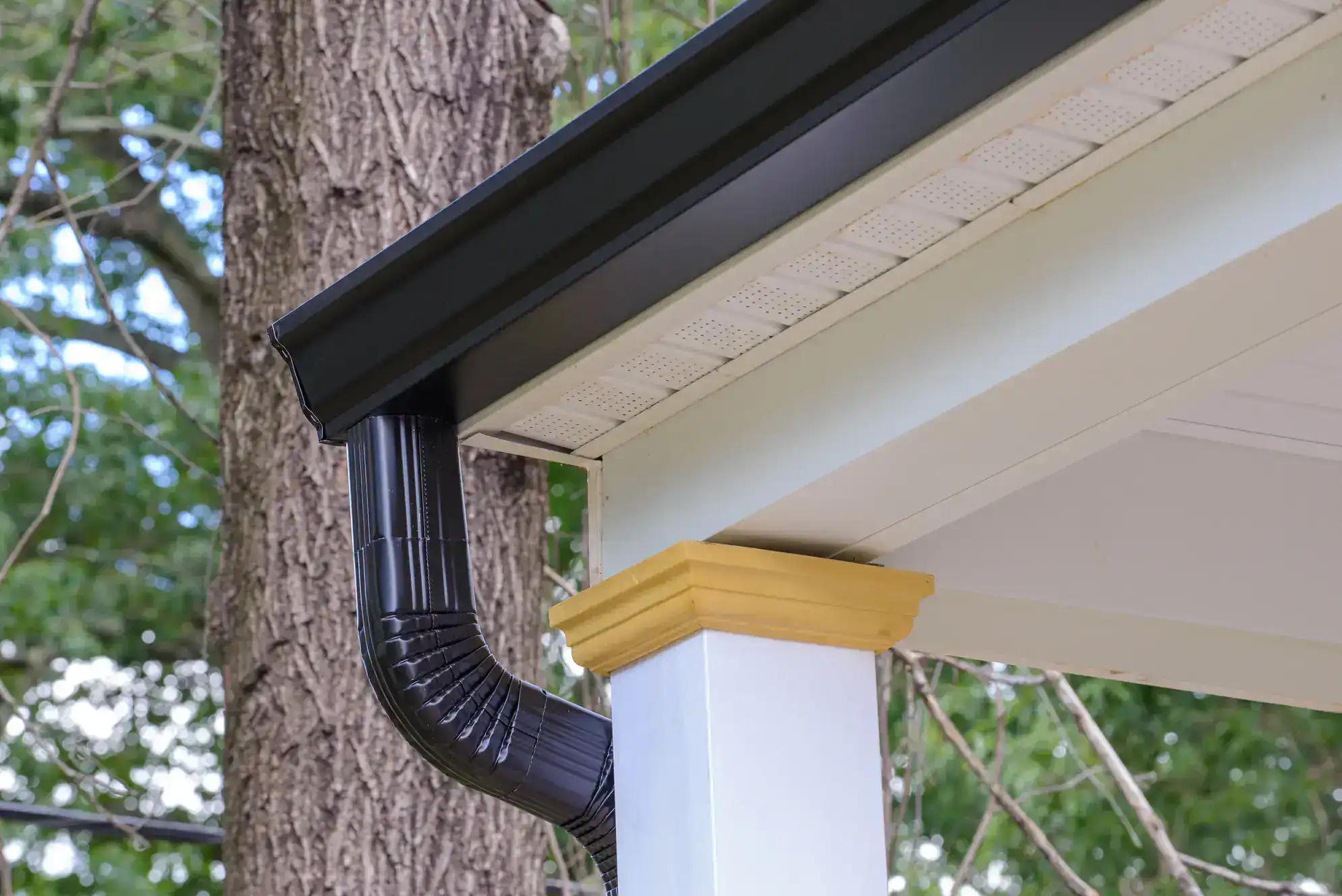
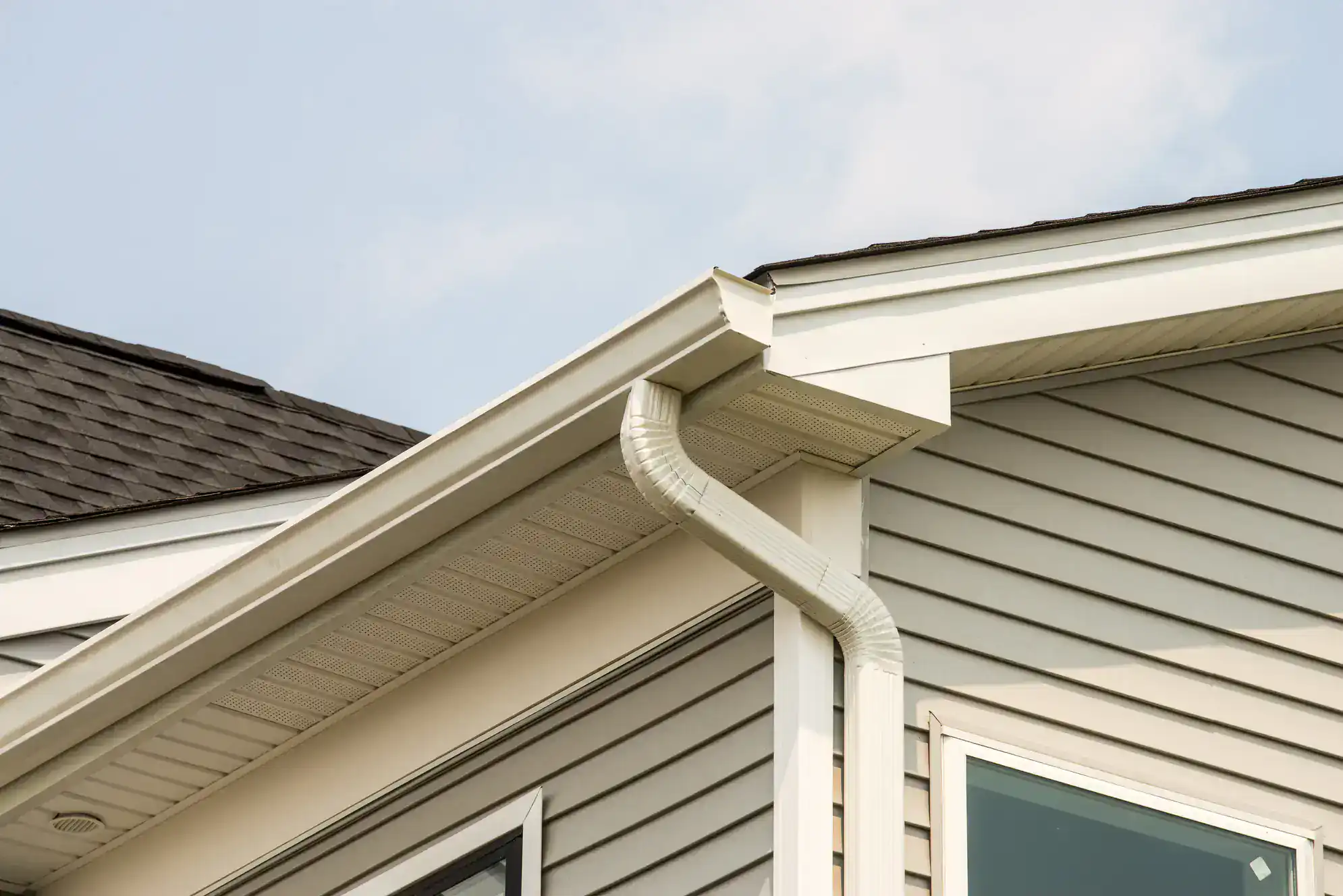
The gutters themselves are seamless aluminum, fabricated on-site and installed with hidden hanger systems rather than the old spike-and-ferrule method. Spike systems back out over time — especially under the ice load that builds up in Bergen County winters. Hidden hangers hold through freeze-thaw cycles, and they hold through the weight of a gutter full of wet leaves, which is a real and recurring condition in Ferdinands Mills every October and November.
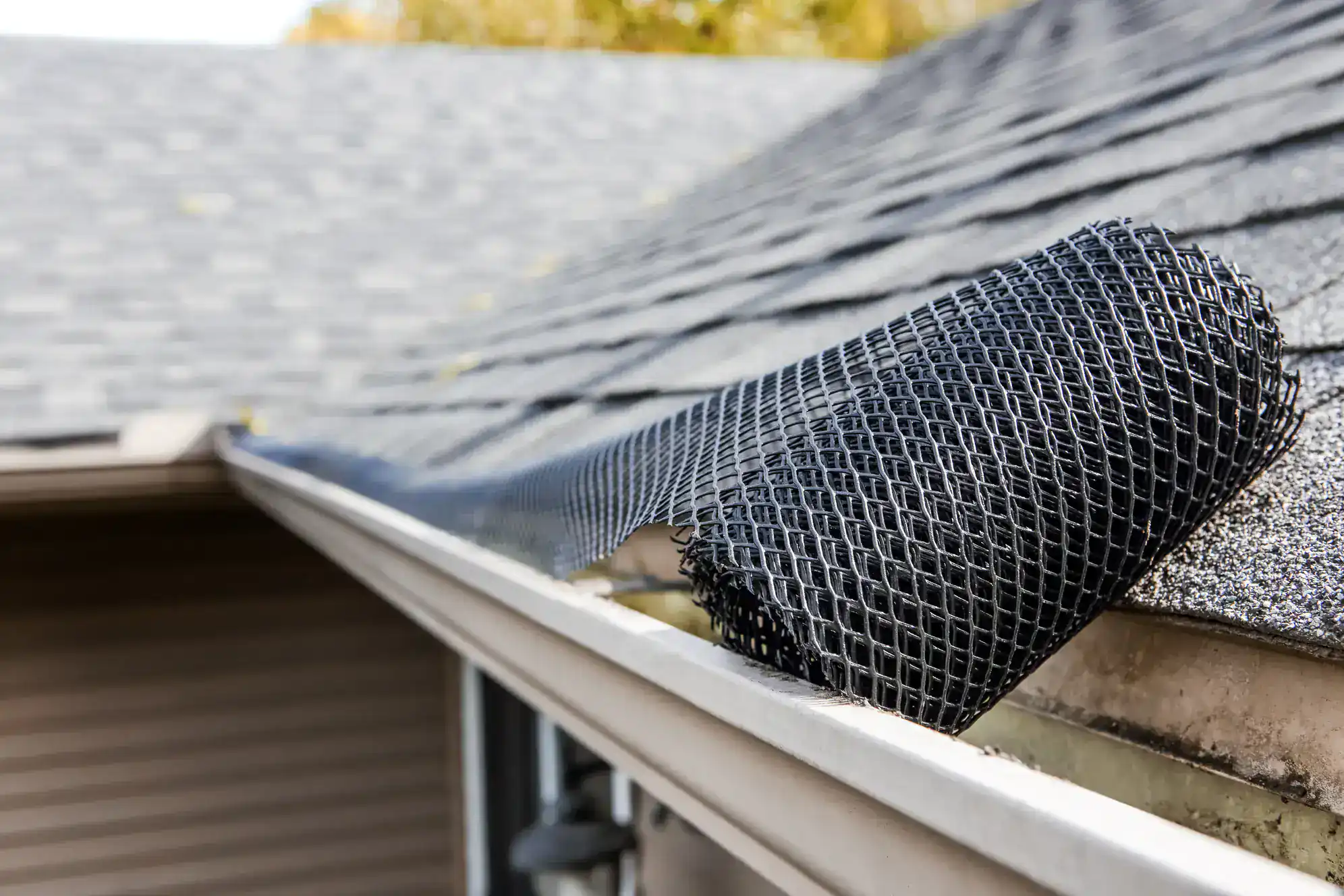
If your property has significant tree coverage — and most in this area do — gutter guard options are available and worth a conversation during your inspection. They won’t eliminate every maintenance task, but they meaningfully reduce the seasonal accumulation that turns a minor cleaning into a full overflow event. The inspection is free, the estimate is written, and the conversation is honest either way.
Do I need a permit for gutter installation in Ferdinands Mills, NJ?
No permit is required. Under New Jersey’s Uniform Construction Code, the repair, replacement, or installation of exterior gutters and leaders is classified as ordinary maintenance — which means it falls outside the permit requirement entirely. You don’t need to file paperwork, wait for municipal approval, or schedule an inspection through your local borough.
What does matter is that the contractor performing the work holds a valid NJ Home Improvement Contractor registration. That’s a state-level requirement that applies regardless of permit status, and it’s one of the first things you should verify before signing anything. Our NJ HIC license number is #13VH10605800 — it’s public record and verifiable through the NJ Division of Consumer Affairs. The work moves quickly, it’s fully compliant, and there’s no administrative burden on your end.
How do I know if my gutters need to be replaced or just repaired?
The honest answer is that it depends on what’s actually failing — and a lot of homeowners in Ferdinands Mills don’t get a clear answer to that question until someone gets up there and looks. Gutters that are pulling away from the fascia, holding standing water, or visibly sagging between hangers are often repairable if the underlying wood is still solid and the system is properly sized. The problem is that on homes built in the 1940s through 1960s — which make up a significant portion of the Ferdinands Mills housing stock — the fascia boards behind aging gutters have frequently absorbed years of joint leakage. At that point, repair doesn’t hold.
The inspection will tell you which situation you’re actually in. If a repair is genuinely the right call, that’s what we recommend. There’s no incentive here to sell a full replacement when a repair does the job — but there’s also no value in patching a system that’s going to fail again in two seasons.
What size gutters do I actually need for a larger home?
Most residential gutters are either 5-inch or 6-inch, and the difference matters more than people expect. A 5-inch gutter is standard, but it has real limits when you’re dealing with a large roofline, a steep pitch, or heavy leaf load — all of which are common conditions on Ferdinands Mills properties. A 4,000-square-foot home can shed well over 1,500 gallons of water per inch of rainfall. If your gutters can’t move that volume, they overflow. If they overflow consistently, the water ends up exactly where you don’t want it: against your foundation.
The right sizing decision comes from your actual roof square footage, the pitch of each run, and the drainage load those runs need to handle. Downspout sizing follows the same logic — more volume needs more exit points, and positioning matters for keeping water moving away from the foundation rather than pooling near it. That calculation happens during the inspection, not after the gutters are already ordered.
Can clogged gutters really cause ice dams on my roof in the winter?
Yes, and it’s one of the more direct connections between fall maintenance and winter damage. Ice dams form when heat escapes through your roof, melts snow near the ridge, and that meltwater runs down to the cold overhang where it refreezes. When your gutters are packed with leaves — which is a predictable seasonal reality in a heavily wooded area like Ferdinands Mills — that ice has nowhere to drain. It builds up, adds significant weight to the gutter system, and can pull gutters away from the fascia entirely.
More importantly, the water backing up behind that ice dam doesn’t just sit there. It finds its way under shingles and into your roof assembly, which means you’re looking at potential damage to your decking, insulation, and interior ceilings — all from a gutter that was full of leaves going into November. Bergen County winters are cold enough and long enough to make this a real risk, not a theoretical one. Keeping gutters clear before the first freeze, or installing a guard system that reduces accumulation, is the most direct way to interrupt that cycle.
How long does a seamless aluminum gutter installation typically take?
For most single-family homes in Ferdinands Mills and the surrounding area, a full gutter replacement runs one day — sometimes less, depending on the size of the roofline and the number of downspout locations. The seamless fabrication happens on-site, so there’s no waiting on pre-cut materials to arrive. The crew shows up with the equipment, takes final measurements, fabricates the runs to length, and installs everything in a single visit in most cases.
Where jobs extend into a second day, it’s usually because of additional work that came out of the inspection — replacing deteriorated fascia boards, adding downspout extensions, or addressing drainage issues at the foundation. Those aren’t surprises you find out about mid-job. If the inspection turns up anything that affects the timeline or the scope, it’s in the written estimate before work begins. You know exactly what’s happening and when.
Why does gutter installation cost vary so much between contractors in Bergen County?
A few things drive the range. Material quality is one — there’s a real difference between standard aluminum and heavier-gauge stock, and between spike-and-ferrule hangers that back out over time and hidden hanger systems that hold through freeze-thaw cycles and ice load. Labor is another — a crew that calculates slope before installation and fabricates gutters on-site is doing more work than one that shows up with pre-cut sections and a caulk gun.
Then there’s what’s included in the evaluation. Some contractors quote the gutters and nothing else. If they find rotted fascia boards or undersized downspouts after they’ve started, that becomes a separate conversation — and a separate invoice. Our inspection-first approach means those conditions get identified before anything is priced, so the written estimate reflects the actual scope of the job. For homeowners in Ferdinands Mills managing properties at this value level, the difference between a low bid that grows and an honest number upfront is usually pretty clear once you’ve been through it once.