
Siding Installation in Winfield, NJ
80-Year-Old Homes Here Deserve More Than a Quick Fix
Hear from Our Customers
Winfield, NJ Siding Contractors
When siding fails on an 80-year-old frame home, it rarely fails quietly. You get moisture working its way into the sheathing, drafts showing up in rooms that never used to have them, and exterior walls that look rough no matter how well you maintain everything else. New siding done right puts a stop to all of that — and it stays stopped.
Winfield’s geography makes this more urgent than most people realize. The township is bordered on three sides by the Rahway River, and the Winfield Mutual Housing Corporation’s own member handbook acknowledges that moisture is a persistent issue throughout the community. That kind of environment accelerates the breakdown of aging cladding faster than a typical Union County neighborhood. The right siding installation — with proper housewrap, correct flashing, and materials chosen for wet, freeze-thaw conditions — is what keeps that moisture from becoming a structural problem.
Beyond protection, there’s the practical side: lower energy bills when insulated siding replaces drafty original cladding, a cleaner exterior that reflects the pride most Winfield residents have in their homes, and the peace of mind that comes from knowing the job was done to manufacturer standards with a warranty that actually holds.
Local Siding Company in Winfield, NJ
We’ve been doing exterior work across Union County for close to ten years — roofing, siding, gutters, the full envelope. Our experience with roofing isn’t incidental to siding work. It means we understand how moisture moves through a building, where it enters, and how to stop it at every layer. That’s a different level of knowledge than a siding-only shop brings.
Winfield is a tight community. Two roads in, two roads out, and word travels fast when a contractor does good work — or doesn’t. The families on Wavecrest Avenue, Gulfstream Avenue, and Atlantic Drive have been here for generations in many cases, and they’re not interested in being sold something that won’t last. That’s the same standard we hold ourselves to on every job.
Every project comes with a written estimate upfront, no changes without a conversation first, and no surprises on the final invoice. Licensing, insurance, and manufacturer certifications are in place — not as a marketing point, but because that’s what professional exterior work in New Jersey requires.

Residential Siding Contractors in Winfield, NJ
It starts with a free inspection. For Winfield’s frame buildings, that means a real look at what’s underneath the current cladding — checking for moisture damage, rot, or sheathing issues that need to be addressed before new siding goes on. Skipping that step is how contractors create problems that show up two years later. We won’t skip it.
Once the inspection is done, you get a written estimate that breaks down materials, labor, removal of the existing siding, and disposal. Winfield Township requires a building permit before exterior construction begins, and we handle that process. The Building Department at 908-925-3850 handles permit issuance and inspection scheduling — and all work is completed in compliance with both municipal code and any applicable Winfield Mutual Housing Corporation guidelines. You won’t be navigating that alone.
Installation follows manufacturer specifications, which matters more than most homeowners realize — it’s the difference between a warranty that’s valid and one that gets voided on a technicality. After the work is done, a final walkthrough confirms everything is clean, sealed, and finished correctly. What you’re left with is a home that’s protected, permitted, and ready for whatever the Rahway River corridor throws at it next winter.

Ready to get started?
Vinyl Siding Contractors in Winfield, NJ
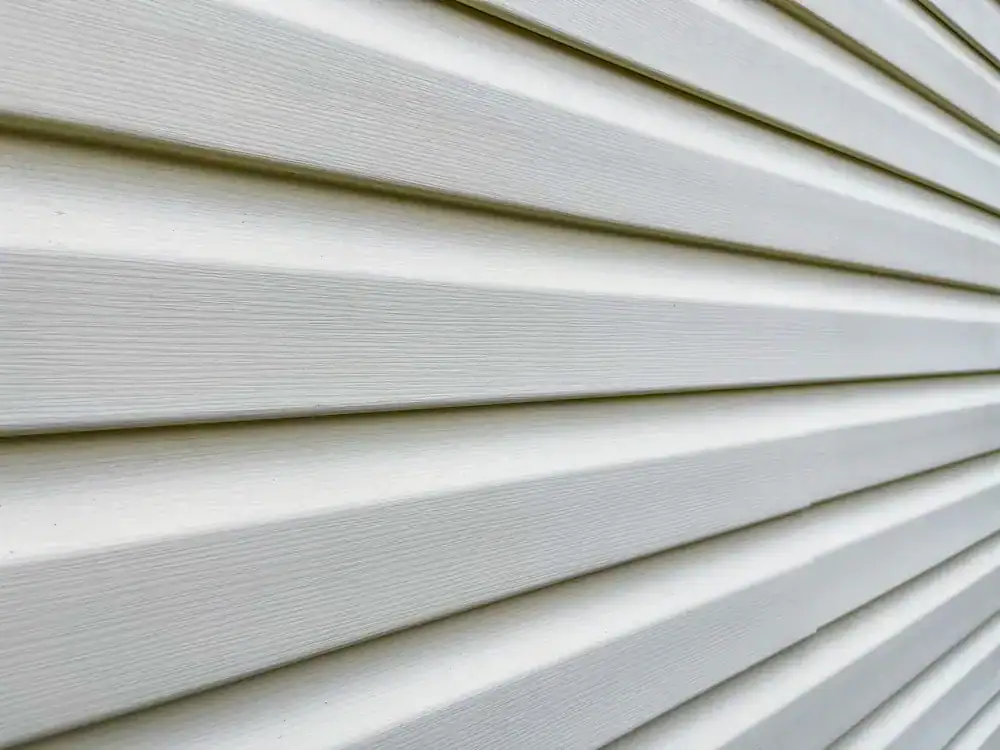
Not every siding product performs the same way in every environment. For Winfield’s riverside location, aging frame construction, and the freeze-thaw cycling that Union County sees every winter, material selection matters. Vinyl siding remains the most practical choice for most homes here — it holds up to moisture, doesn’t require painting, and handles temperature swings without cracking when it’s properly installed. Insulated vinyl is worth the conversation for homes where energy efficiency is a priority, since it adds a layer of thermal resistance that original 1941 construction never had.
Fiber cement — James Hardie being the most recognized name — is the right call when durability and curb appeal are the priority and the budget supports it. It handles moisture and impact well, which is relevant for homes sitting in the Rahway River floodplain corridor. It does require certified installation to perform as advertised and to keep the manufacturer warranty intact, which is part of why certifications matter.
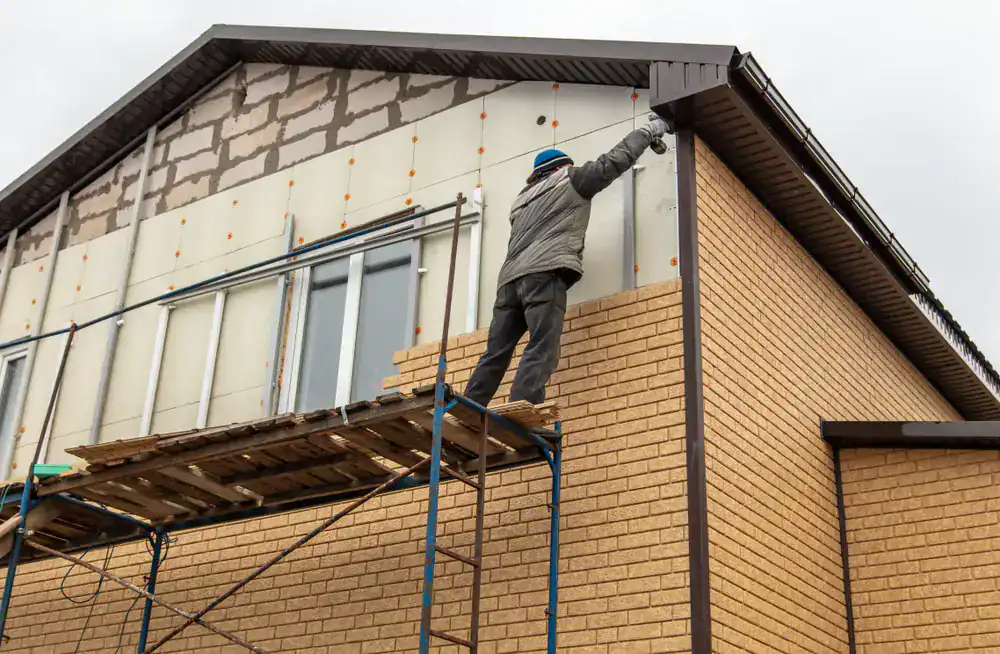
Whatever material fits your home and your budget, the scope of work is the same: full removal of existing siding, inspection and preparation of the substrate, installation of housewrap and flashing at all openings and penetrations, installation of the new siding to manufacturer specs, and clean disposal of all removed material. The Winfield Township Building Department requires a permit and inspection for this work, and we handle that process as part of every project.

Do I need a permit for siding installation in Winfield, NJ?
Yes — Winfield Township requires a building permit before any exterior construction or replacement work begins, including siding installation. The Township Building Department is clear that starting work before a permit is issued results in a Notice and Order to Pay Penalty, and the permit fee can be increased by up to $2,000 as a result. That’s not a risk worth taking.
The permit process also requires a visible construction permit notice displayed in your window once the permit is received, and inspections at appropriate stages of the project. It’s the contractor’s and homeowner’s shared responsibility to make sure inspections are scheduled. We handle the permit application as part of every siding project in Winfield — you don’t need to figure out the Building Department’s process on your own. If you have questions before work begins, the Winfield Township Building Department can be reached at 908-925-3850, Monday through Friday between 9:00 a.m. and 4:00 p.m.
How do I know if my siding needs full replacement or just repairs?
The honest answer is that you usually can’t tell from the outside alone. Siding that looks worn or faded might only need targeted repairs, while siding that looks intact from the street can be hiding moisture damage, rot, or failed sheathing underneath. The only way to know for sure is a proper inspection that looks at what’s actually going on behind the surface.
For Winfield’s 1941 frame buildings, this matters more than it does in a newer neighborhood. Every residential building in the township was constructed in the same five-month period over 80 years ago, and many have had siding replaced once or twice since then — meaning even the replacement siding may be 20 to 30 years old at this point. Add in the moisture environment from the Rahway River on three sides of the township, and the conditions for accelerated deterioration are real. A free inspection from us gives you a straight answer before you commit to anything — repair if that’s what makes sense, full replacement if that’s what the home actually needs.
How long does siding installation typically take on a Winfield home?
For most of Winfield’s single-story and bi-level frame units, a full siding installation typically runs between two and four days of active work, depending on the size of the unit, the condition of the substrate underneath, and the material being installed. If the inspection turns up moisture damage or sheathing that needs to be replaced before the new siding goes on, that adds time — but it’s time that’s necessary to make the installation last.
Permit issuance from the Winfield Township Building Department adds some lead time before work can start, so the total timeline from signed estimate to completed project is typically one to two weeks when you factor in scheduling and permitting. The best windows for siding work in Winfield are spring and early fall — before the cold makes vinyl siding more brittle and before winter moisture creates additional complications. That said, fiber cement and engineered wood products can be installed year-round with the right technique if timing is urgent.
What siding material holds up best against moisture near the Rahway River?
Moisture resistance is genuinely one of the most important factors to consider for Winfield homes, and it’s not something to gloss over. The township sits in a low-lying position with the Rahway River bordering three sides — and the Winfield Mutual Housing Corporation’s own member handbook acknowledges that moisture is a persistent reality throughout the community. That environment puts extra stress on exterior cladding, especially on frame buildings where moisture intrusion can reach the sheathing and structure if the siding system isn’t installed correctly.
Vinyl siding handles moisture well when properly installed with the right housewrap and flashing — it doesn’t absorb water and won’t rot. Fiber cement, particularly James Hardie products, is engineered specifically for high-moisture environments and holds up exceptionally well in the kind of freeze-thaw, river-adjacent conditions Winfield sees. What matters as much as the material itself is the installation: proper moisture barriers, correctly sealed penetrations around windows and doors, and flashing that directs water away from the building envelope. Cutting corners on any of those steps is where moisture problems start, regardless of what siding product is on the outside.
Does the Winfield Mutual Housing Corporation affect how siding work gets approved?
It can, and it’s worth understanding before you start. Winfield operates as a mutual housing cooperative — residents are members of the Winfield Mutual Housing Corporation rather than traditional property owners. The Corporation’s maintenance guidelines establish that any improvement made to a dwelling, whether by the current member or a previous one, becomes the current member’s responsibility to maintain. For exterior work initiated by an individual member, that means the project may need to align with both the Township’s building permit requirements and any applicable Corporation guidelines.
In practical terms, this means working with a contractor who understands the cooperative structure and can navigate both the municipal permit process and any Corporation-specific requirements without creating complications. We’re familiar with how exterior work is handled in Winfield’s cooperative framework and can help you understand what approvals are needed before any work begins. The goal is to make sure the project is done right, documented correctly, and doesn’t create any issues with the Corporation down the line.
Why does it matter if a siding contractor is manufacturer-certified in Winfield, NJ?
Manufacturer certifications exist because siding products — whether vinyl, fiber cement, or engineered wood — have specific installation requirements that have to be followed for the product to perform as designed and for the warranty to remain valid. A contractor who isn’t certified may install the product incorrectly in ways that aren’t visible on the surface but void the warranty entirely. For an 80-year-old frame home in Winfield, where the investment in new siding is meant to last decades, that warranty protection is real money.
Beyond the warranty, certified installers have completed training that covers moisture management, proper flashing, substrate preparation, and material-specific handling — all of which matter significantly in Winfield’s riverside environment. The Winfield Township Building Department explicitly advises residents to verify contractor credentials before signing anything, and manufacturer certification is one of the clearest signals that a contractor is operating to a professional standard. We hold manufacturer certifications and carry full NJ Home Improvement Contractor registration — both of which are verifiable before you commit to a single dollar of work.