
Siding Installation in Tremont Park, NJ
Old Siding on a High-Value Home Is a Risk You Can See
Hear from Our Customers
Residential Siding Contractors in Tremont Park, NJ
The most immediate thing you’ll notice is what stops happening. No more bubbling paint around window frames. No more soft spots on the wall where water has been sitting behind your old panels for longer than you’d like to think. On homes in Tremont Park and the surrounding Woodland Park area — many of them built before 1969, some well before that — these aren’t hypothetical problems. They’re active ones.
Tremont Park sits in one of Summit’s most densely wooded residential environments. That mature tree canopy looks beautiful, but it keeps your exterior walls shaded and damp longer after every rain. Leaves pack into siding channels. Moisture lingers. Over decades, that sustained exposure does real work on older cladding — and it does it quietly, behind the surface, where you can’t see it until it’s already expensive.
New siding installation done correctly doesn’t just refresh the look of your home. It resets the building envelope — the layer that keeps conditioned air in and weather out. That means lower energy bills, better temperature consistency inside, and a home that’s genuinely protected rather than just presentable. On a property worth well over a million dollars, that’s not a cosmetic upgrade. It’s maintenance that was overdue.
Local Siding Company Serving Tremont Park, NJ
We’ve been working on exterior renovations across Union County for close to ten years. Our company is family-operated, which means accountability isn’t a policy — it’s just how things run. The same crew that starts your project finishes it. Estimates are written, detailed, and meant. If something unexpected comes up mid-project, you hear about it before anything additional gets done.
Tremont Park homeowners — especially in neighborhoods like Woodland Park — tend to ask sharp questions before they hire anyone. That’s a good thing. We’re fully licensed as a New Jersey Home Improvement Contractor, carry general liability and workers’ compensation insurance, and hold manufacturer certifications that matter when it comes to warranty coverage on the materials going on your home.
Our growth has come almost entirely through reviews and referrals. No heavy advertising, no volume-first approach. Just consistent work that holds up — which, on homes of this age and value in Tremont Park, is exactly what the job requires.

Vinyl Siding Contractors in Tremont Park, NJ
It starts with a free inspection. Not a sales call dressed up as an assessment — an actual look at what your siding is doing and what’s happening behind it. On older homes in Tremont Park, that inspection sometimes reveals moisture damage to the sheathing underneath that wouldn’t have been visible without removing a panel. Knowing that before the project starts is the difference between a clean job and a mid-project conversation no one wants to have.
Once the scope is clear, you get a written estimate that breaks down materials, labor, and timeline. Summit has a formal Construction and Code Administration process, and exterior work typically requires a permit through the city. We manage that application — so you’re not chasing paperwork while also managing a project on your home.
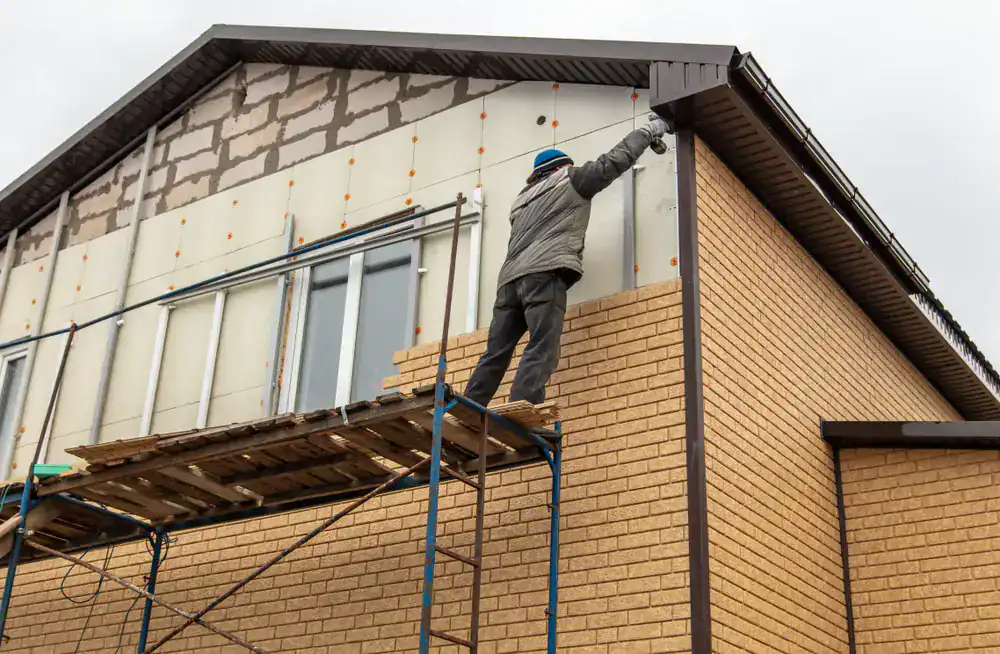
Installation itself is sequenced carefully: old cladding comes off, the substrate gets inspected and addressed where needed, housewrap or moisture barrier goes on correctly, and then the new siding is installed with the proper fastening patterns, flashing, and expansion gaps for Northeast weather. Spring and early fall are the busiest windows — if you’re planning a project, earlier contact means more flexibility on scheduling. The job ends with a full walkthrough and cleanup, and you should leave that conversation knowing exactly what was done and why.

Ready to get started?
Siding Contractors in Tremont Park, NJ
Tremont Park isn’t a neighborhood of vinyl-sided ranches. It’s Tudors, Colonials, Victorians, and grand estates — architectural styles that carry real aesthetic expectations and don’t respond well to generic material selections. Choosing siding here is a conversation about what actually fits the home, not just what’s available.
Fiber cement siding — James Hardie being the most widely specified — is particularly well-suited to Tremont Park’s older housing stock. It can authentically replicate wood grain, shake, and board-and-batten profiles, which matters on a pre-1940 home where the architectural character is part of the property’s value. It also handles New Jersey’s freeze-thaw cycles and humid summers better than wood or standard vinyl over the long term. Manufacturer-certified installation is what unlocks the full product warranty — and we install to those specifications.
For homeowners where insulated vinyl is the right fit — whether for budget, profile, or energy performance — the options have improved significantly. Premium insulated vinyl with architectural-grade profiles performs well in this climate and installs correctly when the contractor understands thermal expansion requirements, which vary between a south-facing Colonial and a shaded north wall on a wooded Tremont Park lot. Engineered wood, like LP SmartSide, rounds out the material conversation for homeowners who want dimensional warmth with better moisture resistance than traditional wood. Whatever direction makes sense for your home, the process starts with an honest assessment — not a default recommendation.

Do I need a permit for siding installation in Summit, NJ?
Yes — Summit has a formal Construction and Code Administration department, and exterior work including siding replacement typically requires a construction permit through the city. This isn’t a bureaucratic inconvenience; it’s documentation that protects you. When you sell a home in Tremont Park — where transactions regularly exceed a million dollars and buyers conduct thorough due diligence — unpermitted exterior work can surface as a real problem during the inspection and title process.
We manage the permit application as part of the project. You don’t need to navigate Summit’s process yourself. What you do need is a contractor who knows it exists and handles it correctly from the start — because not every contractor operating in this area does. Permitted work also means the installation was completed to code, which matters for your homeowner’s insurance and for the long-term integrity of the work.
How do I know if my siding needs repair or full replacement?
The honest answer is that you often can’t tell from the outside — especially on older homes. Siding in Tremont Park and the surrounding Woodland Park area that looks faded or slightly warped on the surface may have more serious moisture damage behind the panels, particularly on walls that stay shaded under the neighborhood’s mature tree canopy. Shaded walls dry slowly after rain, and that sustained moisture exposure over years can compromise the sheathing and insulation behind the cladding without showing obvious exterior signs.
A free inspection gives you a real answer. We check for soft spots, look at how the existing panels are fastened, assess the condition of flashing around windows and trim, and in some cases remove a panel to look at the substrate. Repair makes sense when the damage is isolated. Full replacement makes sense when the material has aged past its functional life or when moisture has worked its way behind multiple sections. On homes built before 1969 — which describes a large portion of Tremont Park’s housing stock — full replacement is often the more honest recommendation.
What siding material works best for older homes in Tremont Park?
For the architectural styles common in Tremont Park — Tudors, Colonials, Victorians, and pre-1940 estates — fiber cement siding tends to be the strongest fit. James Hardie products in particular offer profiles that authentically replicate wood grain and shake textures, which matters when you’re working on a home where the exterior character is part of the property’s appeal and value. Fiber cement also handles New Jersey’s climate exceptionally well: it doesn’t expand and contract with temperature swings the way vinyl can, it resists moisture absorption, and it holds paint significantly longer than wood.
That said, the right material depends on the specific home, the wall orientation, the existing substrate condition, and what you’re trying to accomplish. A south-facing Colonial with good substrate condition has different needs than a north-facing Tudor wall that stays damp under heavy tree cover. Insulated vinyl and engineered wood are both legitimate options in the right context. The conversation should start with your home’s actual conditions — not a default recommendation based on what’s easiest to install.
How long does a siding installation project typically take in Summit, NJ?
For a standard single-family home in Tremont Park, most siding installation projects run between three and seven days of active work, depending on the size of the home, the material selected, and what’s discovered once the old cladding comes off. Fiber cement installation generally takes longer than vinyl because of the weight of the material and the precision the installation requires. Homes with complex rooflines, dormers, or decorative architectural details — which are common in Tremont Park’s Tudor and Colonial stock — add time as well.
The permit process through Summit’s Construction and Code Administration adds some lead time before work can begin, so factoring that in when you’re planning a spring or fall project matters. Peak season in the NJ market runs April through June and again in September and October — contractors with strong reputations in Union County book out four to six weeks during those windows. If you’re targeting a specific timeline, earlier contact gives you more scheduling flexibility and avoids the rush that pushes quality contractors into tighter windows than anyone wants.
Will new siding actually increase my home's value in this market?
In a market like Tremont Park — where median home values sit above $1.2 million — the ROI conversation around siding is less about raw dollar return and more about protection and presentation. Remodeling Magazine’s Cost vs. Value Report consistently ranks vinyl siding replacement among the highest-returning exterior projects nationally, with returns typically in the 67–80% range at resale. But in a neighborhood where buyers are sophisticated and inspections are thorough, the more relevant question is what failing siding costs you, not just what new siding earns you.
Moisture damage behind aging cladding on a pre-1940 home can mean $30,000 to $50,000 in remediation if it’s reached the sheathing and framing — costs that surface during inspection and either kill a deal or come out of your sale price. New siding that’s properly installed, permitted, and documented tells a buyer that the exterior envelope is sound. In a market where buyers are paying well over a million dollars and reading every inspection report carefully, that documentation has real transactional value.
How do I find a trustworthy local siding installer near Tremont Park, NJ?
Start with the basics that are easy to verify. In New Jersey, any contractor performing home improvement work must be registered with the NJ Division of Consumer Affairs as a Home Improvement Contractor. That registration is searchable online. Beyond that, ask for proof of general liability insurance and workers’ compensation coverage before anyone steps onto your property — in NJ, hiring an uninsured contractor can leave you personally liable if something goes wrong on the job.
After the credentials check out, look at how the company actually communicates. Do they give you a written estimate with a real line-item breakdown, or a verbal number that shifts later? Do they explain the permit process, or do they avoid the topic? In Tremont Park specifically, where homes are architecturally significant and property values are high, you want a contractor who asks questions about your home before recommending a material — not one who shows up with a single option and a clipboard. Reviews from real customers in Summit and Union County are worth reading carefully. A pattern of clear communication and consistent follow-through in those reviews tells you more than any credential on its own.
Other Services we provide in Tremont Park