
Roof Inspection in Summit, NJ
Summit's Older Homes Need More Than a Quick Glance
Hear from Our Customers
Certified Roof Inspector in Summit, NJ
Most roof problems in Summit don’t announce themselves. They start at a chimney flashing point on a 1920s Colonial, or in a valley where two dormers meet on a steep-pitched Tudor, and they work quietly until water shows up somewhere it shouldn’t — usually inside. By then, you’re not just dealing with a roofing bill. You’re dealing with interior damage, insurance paperwork, and a timeline you didn’t plan for.
A professional roof inspection gives you the full picture before any of that happens. You’ll know the actual condition of your shingles, your flashing, your gutters, and every penetration point on the roof — not a vague “looks okay from the ground” assessment, but a real, component-by-component evaluation from someone who understands how pre-war construction ages in a New Jersey climate.
Summit’s hillside lots add another layer to this. Water doesn’t behave the same way on a sloped property as it does on flat ground. It concentrates at eaves and valleys, it loads gutters harder, and it finds the weak points faster. If your home sits on one of those hillside streets off Springfield Avenue, knowing where your roof is vulnerable before the next nor’easter hits is worth more than any repair bill you’ll avoid.
Licensed Roof Inspector in Summit, NJ
We’ve been serving homeowners across Summit and Union County for over ten years. Our team holds a New Jersey Home Improvement Contractor license, carries full general liability and workers’ compensation insurance, and is certified by major shingle manufacturers — a credential that only a small fraction of roofing contractors in the country actually earn, and one that directly affects the warranty coverage available to you after any work is done.
We’re family-operated, which means the people doing the work and the people standing behind it are the same people. That accountability shows up in how we conduct inspections, how we communicate findings, and what we recommend. If your roof has years of life left, you’ll be told that. If it needs attention, you’ll know exactly what, where, and why — without a sales pitch attached to it.
Summit homeowners have high standards, and they should. When you’re maintaining a property worth over a million dollars in one of New Jersey’s most competitive real estate markets, you need a contractor whose reputation is built on honest assessments, not on selling replacements that aren’t necessary yet.

Roof Inspection Company in Summit, NJ
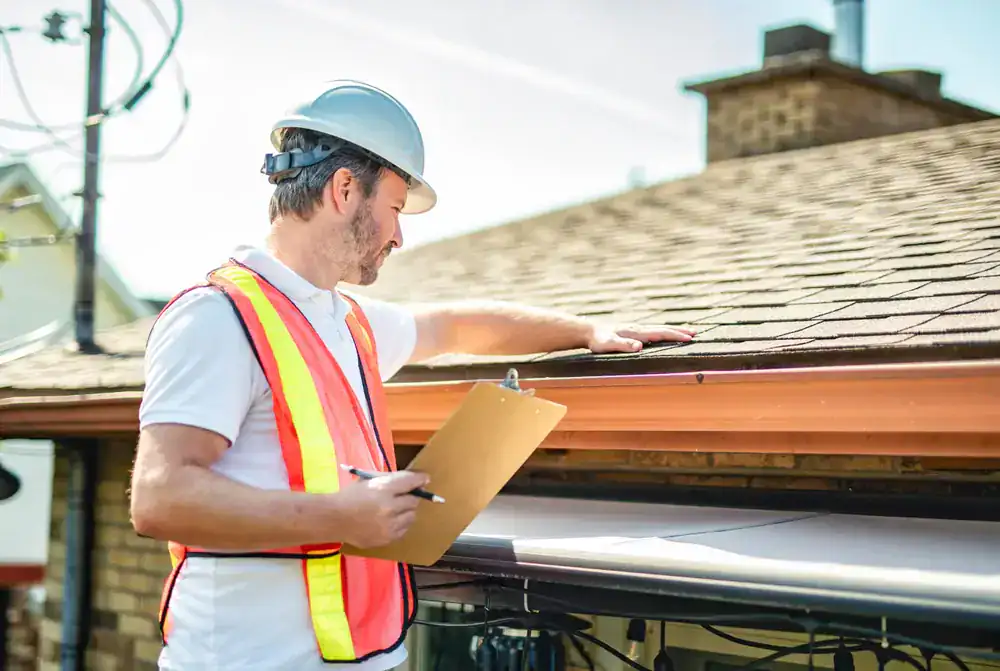
It starts with a free inspection, no charge and no obligation. When we arrive at your Summit home, we’re not doing a quick visual sweep from the driveway. We’re going up on the roof and working through every component systematically — shingles, flashing, ridge caps, valleys, pipe boots, gutters, fascia, and any penetration point where water can find its way in.
On Summit’s older homes, the chimney flashing gets particular attention. Lead and step flashing on pre-war masonry chimneys is one of the most common failure points in this area, especially after years of freeze-thaw cycling through New Jersey winters. The same goes for the valleys on homes with multiple dormers — these are the spots where water volume concentrates and where wear accelerates faster than anywhere else on the roof.
After the inspection, you get a clear, honest summary of what we found. If there’s damage, you’ll know what caused it, where it is, and what fixing it actually involves. If the roof is in good shape, you’ll know that too. Summit’s SDL permit portal means any work done on your home becomes part of its official record — so when the time comes to sell, having properly documented, permitted work from a licensed contractor protects your transaction. The inspection is where that process starts.
Ready to get started?
Roof Damage Inspection in Summit, NJ
Our roof leak inspection in Summit covers the full exterior system — not just the shingles. That means gutters, siding connections, flashing at every transition point, and the condition of any skylights or chimney caps. These systems work together, and they fail together. A nor’easter that loosens ridge shingles often pulls gutters from the fascia at the same time. Catching both in one visit saves you the coordination of multiple contractors and gives you a complete picture of what the storm actually did.
For homeowners dealing with an insurance claim, the inspection produces detailed documentation from a licensed, certified contractor — the kind of report that carries weight with adjusters and ensures nothing gets missed or undervalued in the process. New Jersey has seen 75 confirmed billion-dollar weather and climate disaster events since 1980, and Union County homeowners know firsthand what a serious storm can do to a roof that looked fine the week before.
If you’re preparing to list your home in Summit’s fast-moving real estate market — where properties near the Village Green and throughout the city’s historic neighborhoods are selling in roughly two weeks — a pre-listing roof inspection gives you the ability to get ahead of any buyer inspection findings on your own timeline. That’s a meaningful advantage in a market where a roof issue flagged at closing can threaten a deal worth seven figures.

How do I know if my Summit home's roof actually needs replacing or just repairs?
This is the most important question to get an honest answer on, and it’s one that a lot of contractors don’t answer straight. The reality is that most roofs — especially on Summit’s older homes — need targeted repairs far more often than they need full replacements. A roof with failed flashing around a masonry chimney, cracked pipe boots, or granule loss in a specific valley can often be repaired for a fraction of replacement cost and still have years of useful life remaining.
We assess the overall age and condition of the system, identify any isolated failure points, and give you an honest read on whether the roof has meaningful life left or whether the cumulative wear has reached the point where replacement makes more sense than continued repairs. You’ll get a clear recommendation with the reasoning behind it — not just a number.
What does a roof inspection in Summit, NJ typically cost?
We offer free, no-obligation roof inspections. You get a professional, component-by-component assessment of your roof without having to commit to anything or pay upfront just to find out what condition your roof is in.
If the inspection leads to a repair or replacement recommendation, we provide pricing transparently and in detail — itemized so you understand what you’re paying for and why. In Summit’s market, where roof replacements on larger, architecturally complex homes can range from $15,000 to $30,000 or more depending on the system, pitch, and materials involved, having a clear and honest estimate before you make any decisions matters. There are no vague lump sums and no pressure to commit on the spot.
Can a roof inspection help me with a storm damage insurance claim in Summit?
Yes, and it’s one of the most practical reasons to schedule one after any significant weather event. New Jersey sits in the path of nor’easters, remnant tropical systems, and summer convective storms that regularly cause wind and hail damage across Union County. When that damage occurs, the documentation you bring to your insurance company determines how the claim is evaluated.
An inspection from our licensed and manufacturer-certified team produces a professional damage assessment that insurance adjusters take seriously. It ensures that every affected component — not just the obvious shingle damage, but the flashing, gutters, and underlying decking — is documented before anything is repaired or replaced. This is a different document than what an insurance company’s own adjuster produces, and having it gives you an independent, complete record of what the storm actually did to your roof.
How does Summit's older housing stock affect what inspectors look for on my roof?
It changes the inspection significantly. More than a third of Summit’s homes were built before 1939, and these properties carry roofing systems that are architecturally complex — multiple dormers, steep pitches, intersecting valleys, masonry chimneys, and layers of repair history that can mask underlying issues. The failure points on a 1930s Tudor or a pre-war Colonial are different from those on a 1970s ranch, and an inspector who learned roofing on post-war construction may not know where to look.
The freeze-thaw cycling that Summit experiences through New Jersey winters is particularly hard on the lead and step flashing around masonry chimneys — one of the most common sources of roof leaks on older homes in this area. Valley systems on multi-dormer roofs concentrate water runoff in ways that accelerate wear faster than on simpler roof geometries. We account for all of these factors specifically in our inspections, not as a generic checklist item.
Should I schedule a roof inspection before listing my Summit home for sale?
It’s one of the smarter moves you can make before going to market. Summit’s real estate market moves fast — homes are selling in roughly two weeks on average, often above asking price. In that environment, a roof issue flagged by a buyer’s inspector during the contract period can force last-minute price negotiations or threaten the deal entirely on a property worth well over a million dollars.
Scheduling a roof inspection before listing gives you the ability to identify and address any issues on your own timeline, at your own pace, without buyer pressure. It also gives you documentation from a licensed, certified contractor that you can present to buyers as evidence of the roof’s condition — which carries considerably more weight than a passing note from a general home inspector. Summit’s SDL permit portal means buyers’ attorneys can review the permit history of your property at closing, so having properly documented, permitted work from a licensed contractor is part of protecting your transaction from the start.
Does Summit, NJ require permits for roof replacement work, and how does that affect me?
Summit’s Construction and Code Administration division requires permits for roof replacement work, and the city’s SDL Portal makes that permit history publicly accessible — meaning anyone can look up what work has been permitted on your property. When you sell, buyers’ attorneys and inspectors routinely check this record. Roofing work done by unlicensed contractors without proper permits creates a compliance gap that can surface at the worst possible time: at closing.
Working with a properly licensed New Jersey Home Improvement Contractor ensures that permits are pulled correctly and that the work is done in compliance with the New Jersey Uniform Construction Code as enforced locally. This isn’t just about following the rules — it’s about protecting the long-term value of your home and avoiding complications when you eventually sell. The inspection process is where this starts: knowing your roof’s condition, knowing what work may be needed, and ensuring that any work performed is documented and permitted the right way.
Other Services we provide in Summit