
Roof Installation in Winfield, NJ
Your Roof Replaced Right the First Time
Hear from Our Customers
Residential Roofing Services in Winfield
You’re not paying for a roof. You’re paying to stop worrying about leaks during the next rainstorm. You’re investing so your insurance company doesn’t find reasons to deny your next claim because the roof wasn’t installed to code. You’re buying back the peace of mind that comes from knowing your home can handle whatever New Jersey weather throws at it.
A proper roof installation means your attic stays dry when spring storms roll through Winfield. It means your energy bills don’t spike every summer because heat’s pouring through gaps in old shingles. It means you’re not scrambling to find a contractor when the next hailstorm hits—because your roof was built to last.
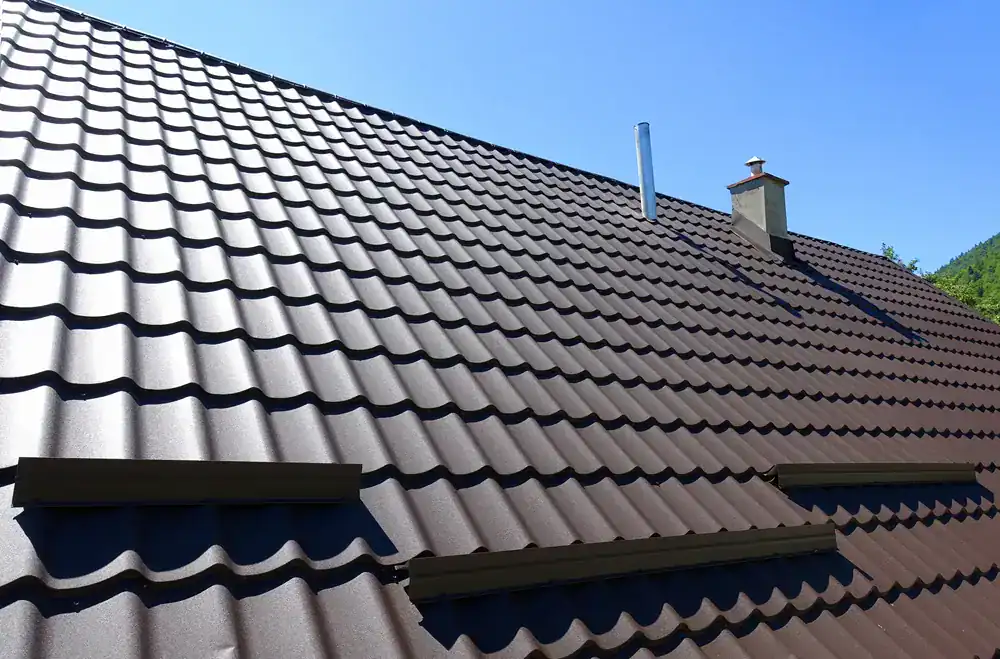
The difference between a roof that protects your home and one that just looks good from the street comes down to installation. Flashing around chimneys and vents needs to be sealed correctly. Underlayment has to be installed flat, without wrinkles that create weak spots. Shingles need proper overlap and nailing patterns, or wind will peel them off in strips. You don’t see this work from the ground, but you’ll definitely notice if it wasn’t done right.
Trusted Roofing Contractors in Winfield
USA Home Remodeling has spent over 17 years installing roofs across central New Jersey. We’re licensed, we carry the manufacturer certifications that matter, and we’ve worked on enough homes in Winfield to know exactly what holds up here and what doesn’t.
You’re not hiring a crew that learned roofing from YouTube. Our installers have done this through every season New Jersey offers—the kind of humid summers that test adhesive, the freeze-thaw cycles that crack inferior materials, the wind events that expose sloppy nailing. We know what works because we’ve seen what fails.
We offer free estimates and inspections because you shouldn’t have to pay someone just to tell you what’s wrong. If you’re dealing with insurance, we’ll walk you through that process too. Most claims get denied or underpaid because homeowners don’t know what to document or how to push back. We do.
Our Roof Installation Process
First, we inspect your current roof and measure everything. You get a written estimate that breaks down materials, labor, and timeline. No vague “we’ll figure it out as we go” pricing. If you’re filing an insurance claim, we document the damage with photos and notes that adjusters actually accept.
Once you approve the estimate, we order materials and schedule your installation. Most residential roof installations in Winfield take two to four days depending on size and complexity. We handle the permit, coordinate inspections, and make sure your property is protected during the work. Tarps go down to catch debris. Magnetic rollers pick up nails. We don’t leave a mess.
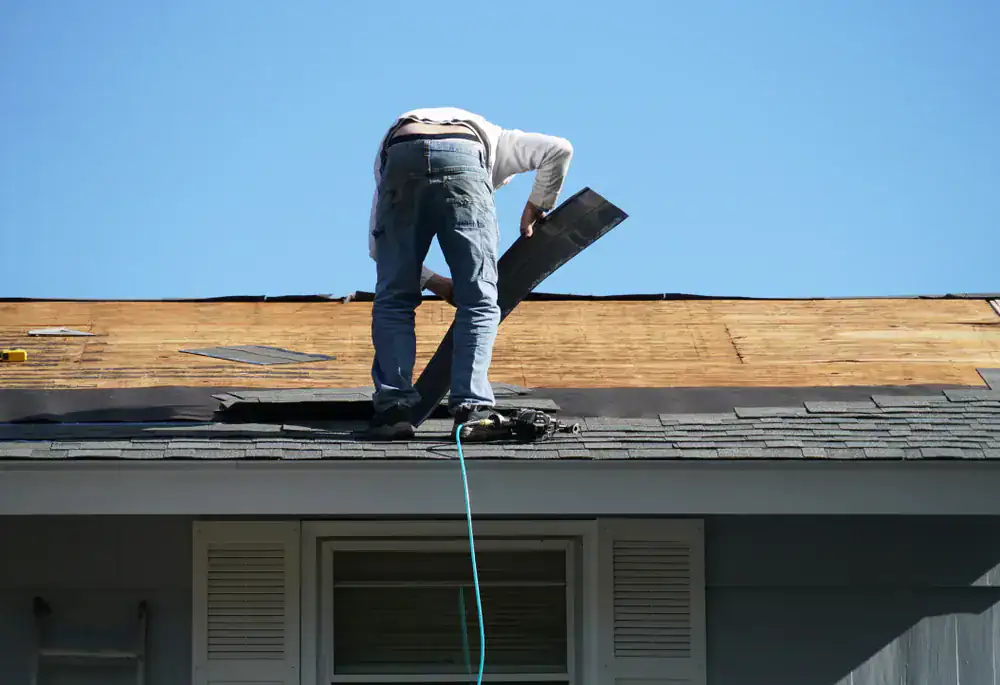
The old roof comes off in sections. We inspect the decking underneath for rot or damage—if we find soft spots, you’ll know before we go any further. New underlayment goes down as a waterproof barrier. Then we install drip edge, flashing, and starter strips before the first shingle goes on. Every row gets checked for alignment. Every penetration gets sealed properly.
When we’re done, we walk the property with you. You see the work up close, ask questions, and sign off when you’re satisfied. Then we clean up, haul away the old materials, and leave you with a roof that’s actually going to protect your home.

Ready to get started?
New Roof Installation in Winfield
You’re getting a complete tear-off and replacement, not a patch job. That means removing old shingles down to the decking, inspecting the structure, and rebuilding your roof with materials that match your home and your budget. We install asphalt shingles from manufacturers like GAF and Owens Corning—the brands that back their products with real warranties and actually honor claims.
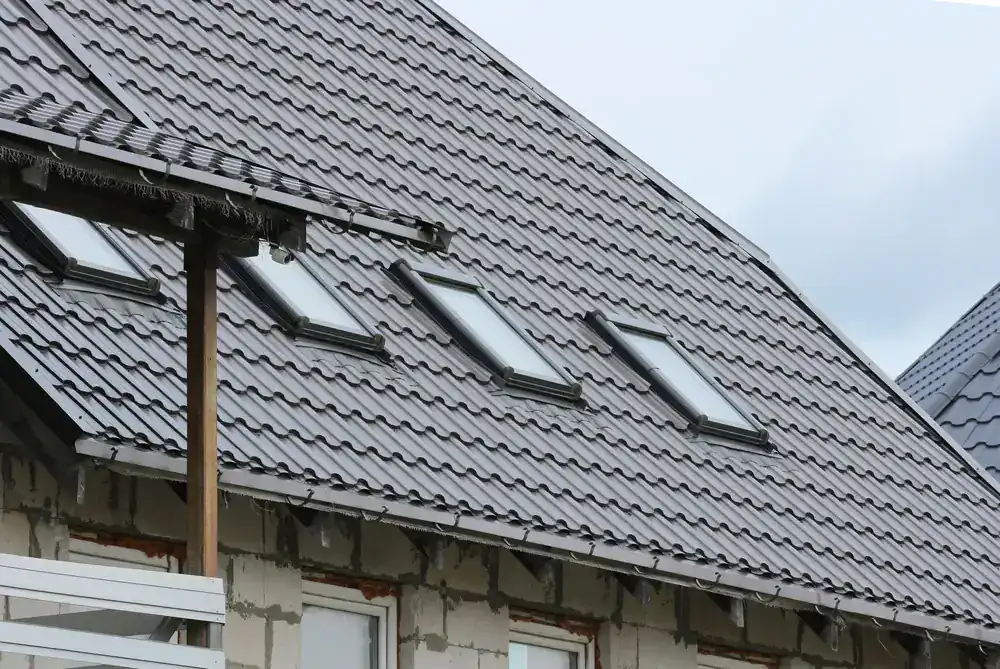
Winfield homes face specific challenges. Your roof takes a beating from nor’easters that dump heavy snow, summer storms with high winds, and humidity that accelerates wear on cheaper materials. We account for that. Proper ventilation keeps your attic from turning into a hotbox that warps shingles from underneath. Ice and water shield goes on vulnerable areas like valleys and eaves where ice dams form. Flashing around chimneys, skylights, and vents gets sealed with materials that won’t crack when temperatures swing.
You also get help with your insurance claim if storm damage is involved. We document everything, provide estimates adjusters can’t lowball, and push back when they try to deny coverage for necessary work. Most homeowners don’t know that cosmetic damage often hides structural issues—we make sure your claim covers what actually needs fixing, not just what’s visible from the street.

How long does a roof installation take in Winfield?
Most residential roof installations take two to four days depending on the size of your home, the complexity of the roof design, and weather conditions. A straightforward ranch with a simple gable roof goes faster than a two-story colonial with multiple valleys, dormers, and skylights.
Day one usually involves tearing off the old roof and inspecting the decking. If we find damaged plywood or rot, we replace those sections before moving forward. Day two and three focus on installing underlayment, flashing, and shingles. Final cleanup and inspection happen on the last day.
Weather delays are real. We don’t install roofs in the rain, and we won’t leave your home exposed overnight if a storm’s coming. If the forecast looks bad, we’ll reschedule rather than rush through the job. You want this done right, not fast.
What type of shingles should I choose for my Winfield home?
Asphalt shingles are the most common choice in Winfield because they balance cost, durability, and performance in New Jersey’s climate. You’ll choose between 3-tab shingles and architectural (dimensional) shingles. Three-tab shingles are the budget option—they last 15 to 20 years and get the job done. Architectural shingles cost more upfront but last 25 to 30 years, look better, and handle wind and impact damage better.
If your home has historical character or you want something that stands out, you might consider metal roofing or synthetic slate. Metal roofs last 40 to 50 years and handle snow and ice extremely well, but they cost significantly more. Synthetic slate gives you the look of traditional slate without the weight or price tag.
Your choice should match your budget, how long you plan to stay in the home, and what your neighborhood looks like. We’ll walk you through options that make sense for your situation—not just what’s most profitable for us to install.
Will my homeowners insurance cover roof installation costs?
It depends on why you need a new roof. If storm damage caused the problem—hail dents, wind-blown shingles, tree impact—your insurance should cover most or all of the replacement cost minus your deductible. If your roof is just old and worn out, insurance won’t pay. They cover sudden damage, not normal wear and tear.
Here’s where it gets tricky: adjusters often lowball estimates or claim damage is cosmetic when it’s actually structural. They’ll say your shingles are fine when they’re clearly compromised. That’s why documentation matters. We take detailed photos, provide written assessments, and give you an estimate that reflects what actually needs to be done—not what the insurance company hopes they can get away with paying.
If your claim gets denied or underpaid, you can appeal. We’ve helped dozens of Winfield homeowners push back on bad adjustments and get the coverage they’re entitled to. Don’t accept the first answer if it doesn’t seem right.
How do I know if I need a full roof replacement or just repairs?
If your roof is over 20 years old and you’re seeing multiple issues—curling shingles, granule loss, leaks in different areas—you probably need a replacement. Repairs make sense when damage is localized and the rest of the roof is still in good shape. Patching one section of storm damage on a 10-year-old roof is smart. Patching a 25-year-old roof that’s failing in multiple spots is throwing money away.
Look for these signs: shingles that are cracked, cupped, or missing in several areas. Daylight coming through your attic boards. Water stains on your ceiling in multiple rooms. Granules collecting in your gutters—that means the protective coating is wearing off and your shingles are deteriorating.
We’ll give you an honest assessment during the free inspection. If repairs will buy you a few more years and you’re not ready for a full replacement, we’ll tell you. If your roof is done and repairs are just delaying the inevitable, we’ll tell you that too. You make the call based on real information, not a sales pitch.
What happens to my landscaping and property during installation?
We protect your property before work starts. Tarps go down around the perimeter of your home to catch debris and shingles. We move or cover anything near the house that could get damaged—grills, patio furniture, potted plants. If you have flower beds directly under the roofline, we’ll do our best to protect them, but some impact is unavoidable when we’re tearing off old materials.
Magnetic rollers go over your lawn, driveway, and landscaping multiple times during and after the job to pick up nails. We also do a manual walk-through to grab anything the magnet missed. Roofing nails will end up in your yard—that’s just physics—but we make sure we get them before we leave.
If heavy equipment needs to access your backyard, we’ll use plywood to distribute weight and avoid tearing up your grass. Most jobs don’t require that, but if your driveway is too narrow or we need to bring materials around back, we plan for it. You shouldn’t have to re-sod your lawn because we didn’t think ahead.
Do you handle permits and inspections for roof installation?
Yes. We pull the permit, schedule the inspections, and make sure everything passes. Winfield requires permits for roof replacements, and the work has to meet New Jersey building code. That includes proper flashing, ventilation, and fastening patterns. Inspectors check that underlayment is installed correctly, that penetrations are sealed, and that the roof structure is sound.
Some contractors skip permits to save time or avoid scrutiny. That’s a problem for you when you sell your home or file an insurance claim. Unpermitted work can void your homeowners insurance, tank your home sale, or force you to tear off a roof and start over to get a certificate of occupancy.
We do it right. The permit costs get included in your estimate. Inspections happen on schedule. You get documentation showing the work was done to code. If something ever goes wrong down the line, you have proof that a licensed contractor installed your roof properly and legally.