
Gutter Installation in Garwood, NJ
Garwood's Older Homes Deserve Gutters That Actually Work
Hear from Our Customers
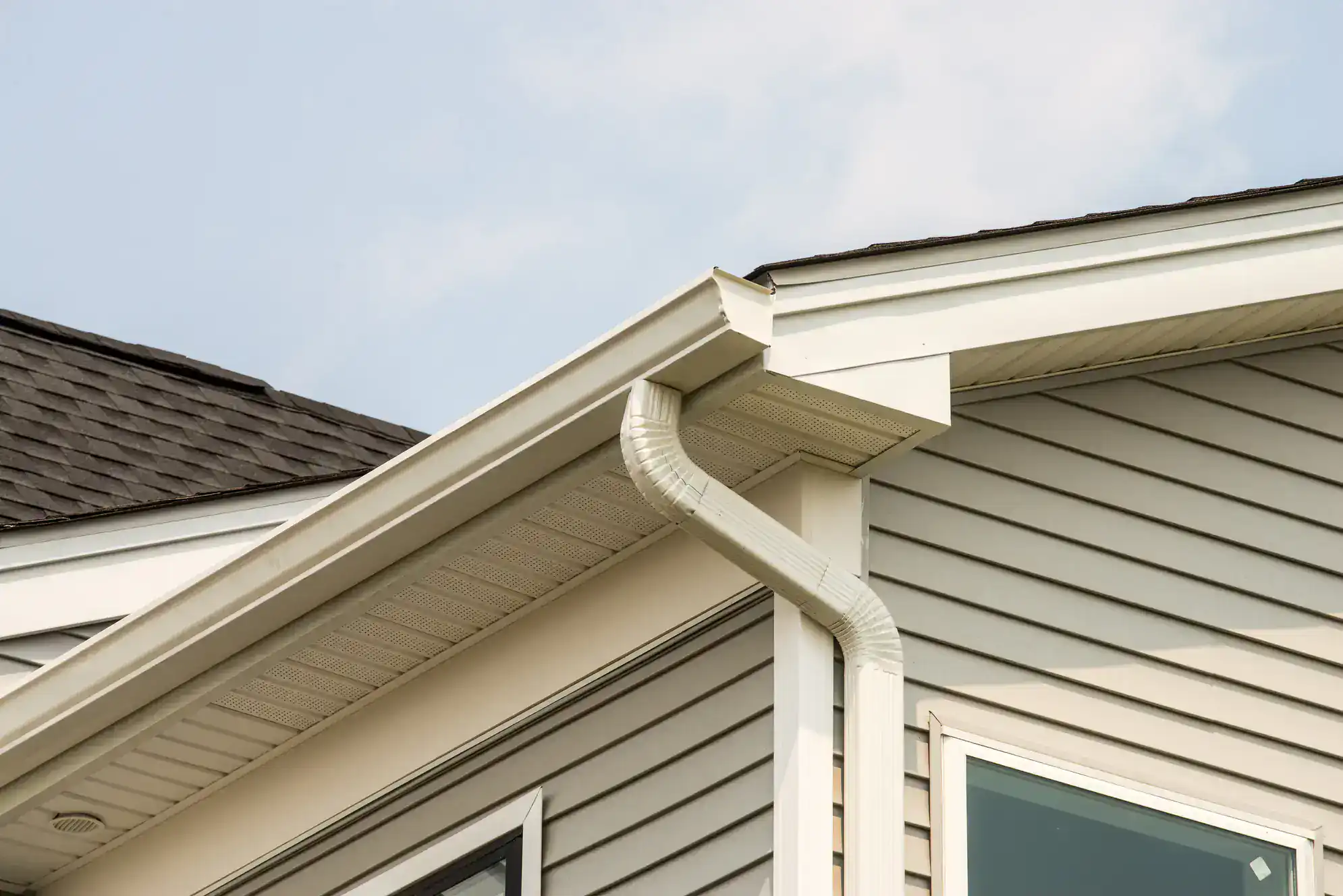
Rain Gutter Installation Garwood NJ
Garwood has a real flooding problem. Garwood Brook runs through the south side of the borough, and the streets along Willow, Myrtle, and Spruce Avenues have a documented history of flood insurance claims. For homeowners in those areas, a gutter system that overflows, sags, or drains toward the foundation isn’t just an annoyance — it’s a direct contributor to the kind of basement flooding that costs anywhere from five to thirty thousand dollars to fix. Gutters that work correctly move water off your roof, away from your siding, and well clear of your foundation. That’s the job.
Most homes in Garwood were built in the 1940s and 1950s, which means the gutter systems on a large share of properties in this borough are original or close to it. Galvanized steel and early sectional aluminum gutters from that era weren’t designed for the rainfall intensity Union County sees today — and they weren’t built to last 70 years. When you get new gutters installed correctly, you’re not just fixing an eyesore. You’re protecting a home that’s now worth $600,000 or more, and you’re cutting off one of the most common entry points for water damage before it starts.
The tree-named streets on Garwood’s south side — Willow, Myrtle, Spruce, Oak — sit under a mature tree canopy that drops leaves and debris directly into gutters every fall. That’s not a minor maintenance note. It’s the reason properly sized gutters and the right guard system matter more here than they would on a newer, more open lot. When the gutters are right, the whole exterior holds up better.
Gutter Contractors in Garwood, NJ
We’re based in Elizabeth, NJ — about eight miles from Garwood along Route 28 — and have been handling exterior renovations across Union County for over ten years. That means we’ve worked on the same pre-war housing stock Garwood residents are dealing with, in the same climate, under the same NJ building code requirements. We’re not a national franchise with a templated page for every town. We’re a licensed NJ home improvement contractor (License #13VH10605800) with manufacturer certifications, a BBB registration, and a track record built on referrals and repeat customers in Garwood and the surrounding area.
When we come out to your Garwood home, you get a real inspection — not a sales pitch dressed up as one. We look at the gutters, the fascia boards, the roof edge, and the downspout drainage together, because on a home that’s 60 or 80 years old, those things don’t age independently. If you need repair instead of full replacement, we’ll tell you that. If your fascia needs attention before new gutters can be mounted correctly, we’ll show you why. No hidden fees, no pressure, no surprises on the invoice.
Home Gutter Installation Garwood, NJ
It starts with a free inspection. We come out, walk the exterior, and look at the full picture — not just the gutter line. On Garwood’s older homes, that means checking the fascia boards for rot, evaluating the existing bracket system, and assessing whether the current downspout positions are actually moving water away from the foundation or just redirecting it to a worse spot. We give you a written estimate before any work is scheduled. You’ll know exactly what’s being done and what it costs.
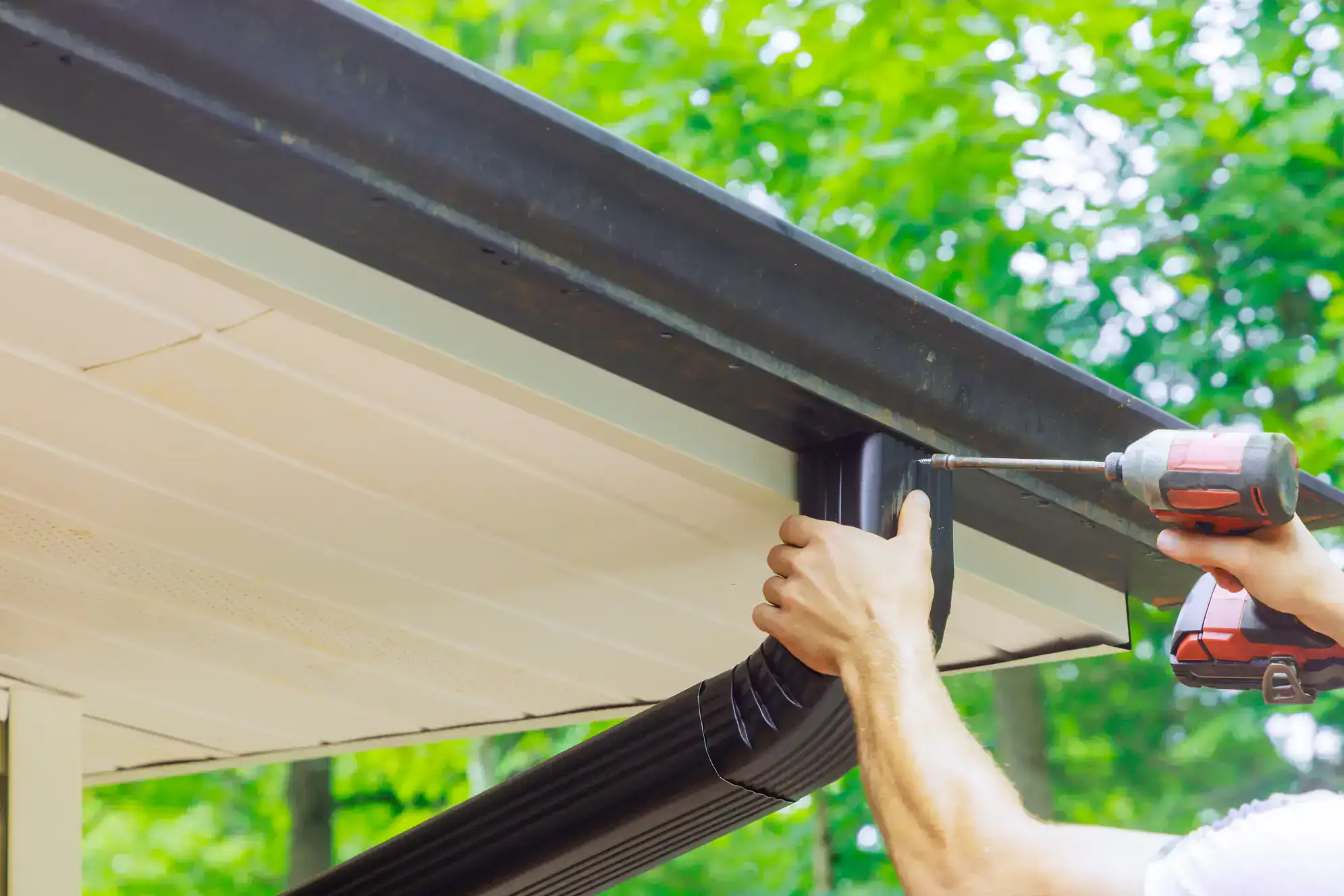
If you’re moving forward with installation, we custom-fabricate seamless aluminum gutters on-site to the exact measurements of your roofline. Seamless systems eliminate the seam points where sectional gutters fail first — and they’re cut to fit your specific home, not pre-sized at a supply house. We calculate proper slope before mounting a single bracket, because gutters installed without the right pitch hold standing water, corrode faster, and overflow during the kind of summer thunderstorms that hit Union County hard every year.
One thing worth knowing if you’re in Garwood: all building permits for the borough are processed through the Cranford Municipal Building at 8 Springfield Avenue in Cranford — not through Garwood Borough Hall. That’s a shared service arrangement unique to Garwood. For most standard gutter replacements, a separate permit isn’t required under the NJ Uniform Construction Code. But if your home is near Garwood Brook and sits in the flood hazard overlay, there may be additional review requirements. We’ll walk you through what applies to your property before work begins.
Ready to get started?
Roof Gutter Installation Garwood, NJ
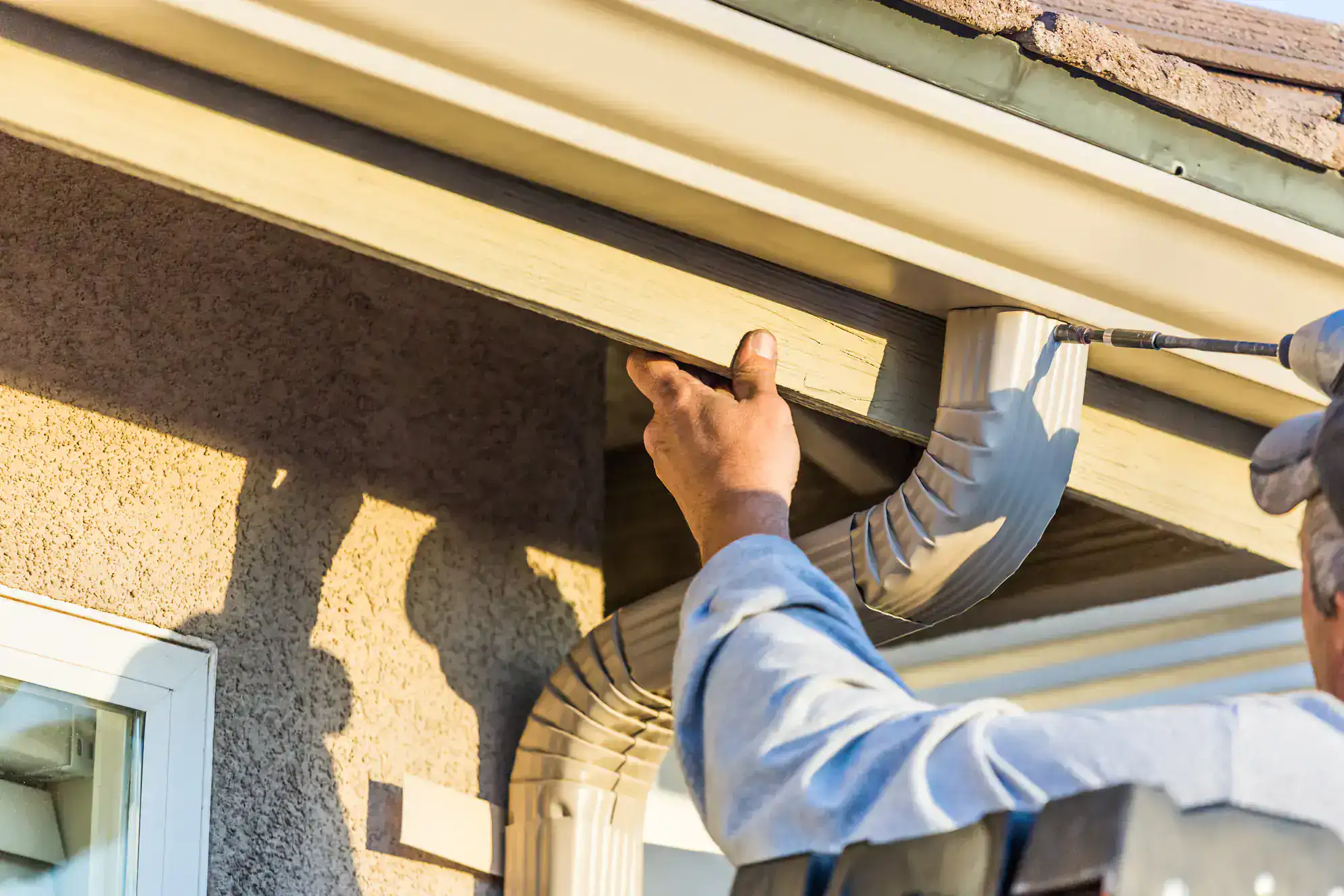
Every gutter installation we do in Garwood is approached as an exterior system evaluation, not a line-item swap. That distinction matters on homes this age. We assess the fascia condition, the roof edge, the existing drainage path, and the downspout positioning as part of the process — because new gutters mounted to rotted fascia boards will fail within a year, regardless of the material quality. If we find fascia damage, we address it. If the downspout positioning is working against you, we reposition it.
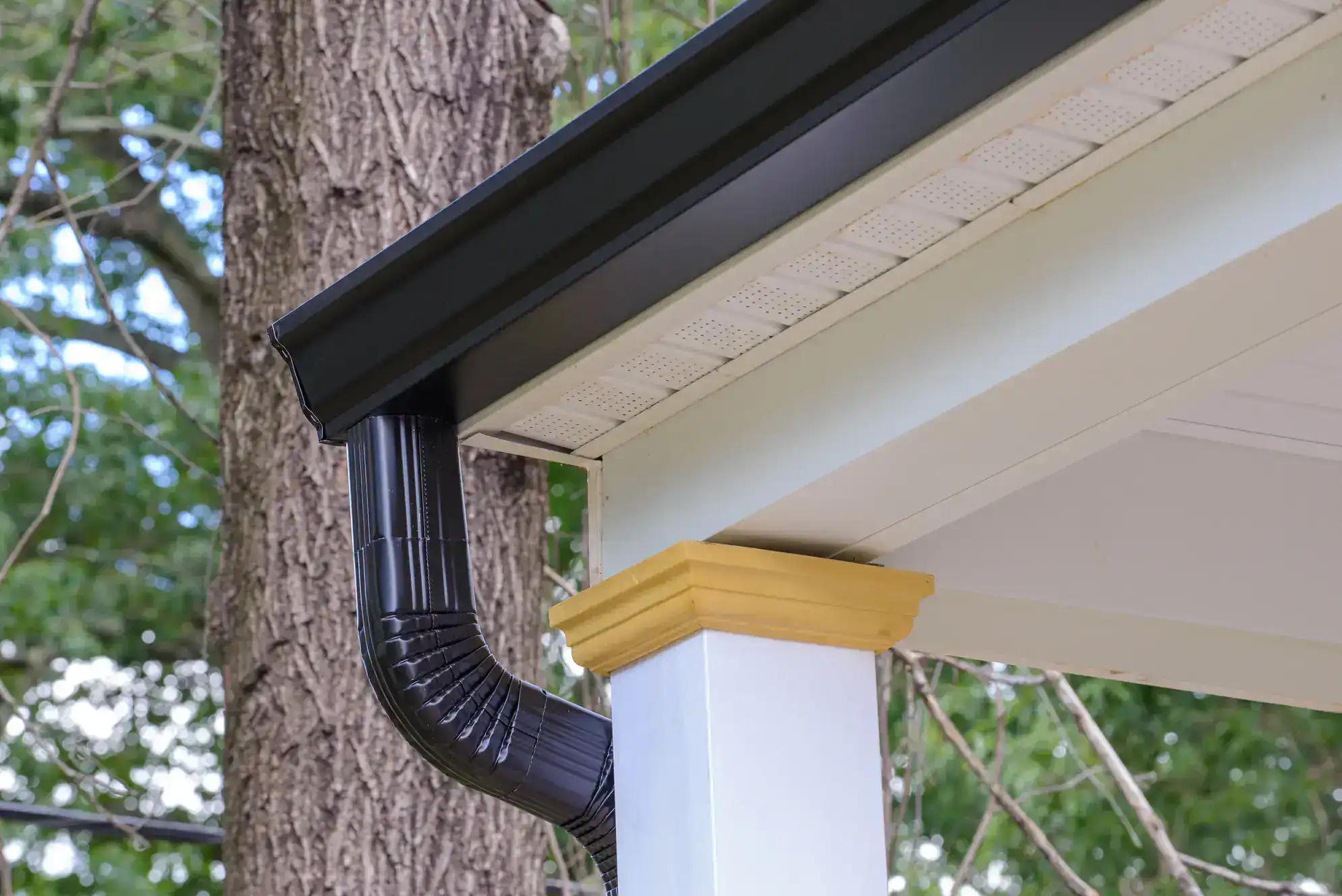
We install seamless aluminum gutters as the standard because they’re the right call for Garwood’s housing stock and climate. Aluminum doesn’t rust, handles NJ’s freeze-thaw cycles better than vinyl, and the seamless format means fewer failure points over time. We size the system to your specific roof area and pitch — not a one-size estimate — because undersized gutters are one of the most common reasons homeowners on Garwood’s south side see overflow during heavy rain events. For homes under the mature tree canopy on the tree-named streets, we’ll also walk you through gutter guard options honestly: what they do well, what they don’t, and whether your specific situation calls for them.
If your gutters were damaged in a storm — wind, hail, or a falling branch — we work directly with insurance adjusters to document the damage and support your claim. We know what adjusters look for, and we make sure the documentation is complete before anything gets submitted.
Do I need a permit to replace gutters on my Garwood, NJ home?
For most standard gutter replacements in Garwood — where you’re swapping out an existing system with a comparable one — a separate building permit is generally not required under the New Jersey Uniform Construction Code. Like-for-like replacements typically fall below the permit threshold. That said, there’s an important local detail here: all construction permits for Garwood properties are processed through the Cranford Municipal Building at 8 Springfield Avenue in Cranford, not through Garwood Borough Hall. That’s a shared service arrangement most Garwood homeowners don’t know about until they’re already mid-project.
There’s one scenario where you’ll want to confirm requirements before starting: if your home is near Garwood Brook and sits within the borough’s flood hazard overlay zone, Garwood’s Flood Damage Prevention ordinance may require additional review for exterior work. This applies to a specific area along the south side of the borough — roughly the blocks near Willow, Myrtle, and Spruce Avenues between Center and New Streets. If your property is in or near that zone, we’ll help you figure out what’s needed before work begins.
How do I know if I need gutter repair or full replacement?
The honest answer is that it depends on what’s actually failing — and a contractor who defaults to full replacement without inspecting the system isn’t doing you any favors. Repairs make sense when you’re dealing with isolated issues: a loose bracket, a single leaking seam, a downspout that’s come loose from the outlet. Those are fixable without replacing the whole run. Replacement is the right call when the gutters are sagging across multiple sections, when there’s widespread rust or corrosion, when seams are failing in multiple places, or when the system is so undersized for your roof that no amount of repair will stop it from overflowing in a heavy rain.
On Garwood’s older homes, there’s a third factor that often tips the decision: fascia board condition. If the wood behind the gutters has rotted — which is common on homes built in the 1940s and 1950s — repairs to the gutter itself won’t hold. The brackets have nothing solid to anchor into. In those cases, you’re looking at fascia repair or replacement alongside the gutter work, and it’s usually more cost-effective to do it all at once than to patch the gutters now and come back to the fascia in a year. That’s exactly why we inspect the full system during our free estimate, not just the gutter line.
Why do my gutters overflow during heavy rain even though they look fine?
This is one of the most common complaints we hear, and the cause is almost always one of three things: the gutters are undersized for the roof area they’re draining, they’ve lost their slope and are holding standing water instead of moving it toward the downspout, or the downspouts are too few or too small to handle the volume during a heavy event. All three problems are invisible from the ground until it’s actually raining.
In Garwood, this issue shows up frequently during the summer thunderstorm season, when Union County can see one to two inches of rainfall per hour during a microburst. A gutter system that handles a steady rain just fine will overflow completely in those conditions if it’s undersized or sloped incorrectly. The standard installation spec is a quarter inch of slope per ten feet of gutter run toward the downspout — and many older systems in Garwood were installed without any real slope calculation at all. When we do a free inspection, we check slope, sizing, and downspout capacity as part of the evaluation, so you know exactly what’s causing the overflow before we talk about solutions.
How long do gutters typically last on older homes in Garwood, NJ?
Seamless aluminum gutters, when installed correctly and maintained reasonably well, typically last 20 to 30 years. Galvanized steel gutters — which are what you’ll find on a lot of Garwood’s pre-war and mid-century homes — have a functional lifespan of about 20 to 30 years before rust and seam failure become serious problems. The catch is that many of those original systems are now 50, 60, or 70 years old. They’ve been past their lifespan for decades, and the visible deterioration you can see from the ground is usually just a fraction of what’s actually going on.
New Jersey’s climate accelerates the wear on older systems in specific ways. The freeze-thaw cycles through January and March expand water trapped in gutters, which pulls brackets loose and separates seams over time. Fall leaf loads from the mature trees throughout Garwood — particularly on the south side streets — create standing water in gutters that aren’t cleaned regularly, which speeds up corrosion on steel systems and causes overflow that damages fascia boards. If your home was built before 1960 and the gutters have never been replaced, the question probably isn’t whether you need new ones — it’s how much longer the current system will hold before it causes damage to the structure behind it.
Are gutter guards worth it for homes on Garwood's tree-lined streets?
For the right home in the right location, yes — gutter guards are genuinely worth the investment. For others, they’re an added cost that doesn’t change much. The honest answer depends on your specific situation, and we’ll give you that straight when we’re on-site.
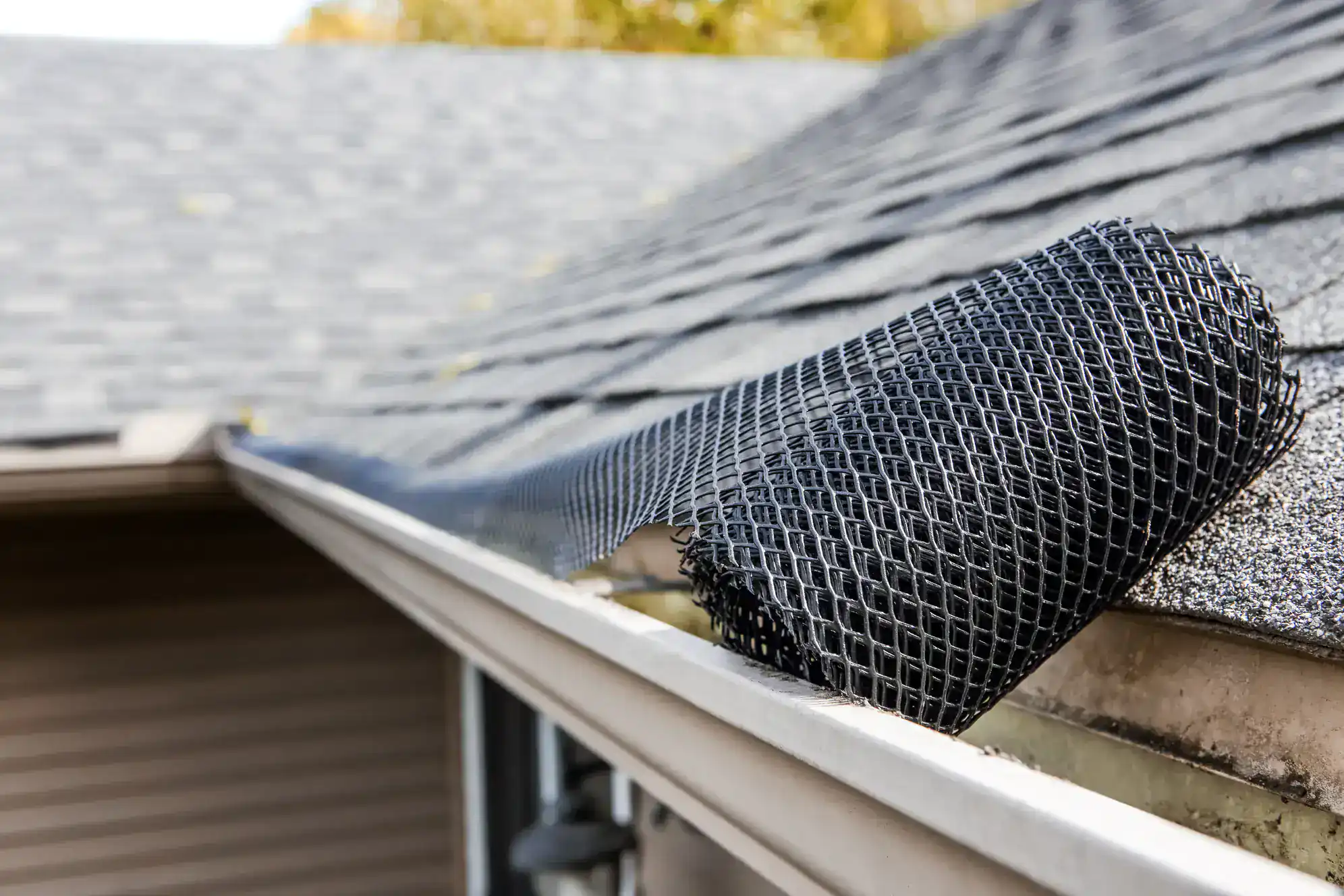
Where guards make the most sense in Garwood is on the south side streets — Willow, Myrtle, Spruce, Oak, and the surrounding blocks — where mature trees that have been growing for 60 to 80 years drop leaves, seed pods, and debris directly into gutters from directly above. Homes in those areas can see gutters clog after a single fall storm without guards, which means water backs up, overflows, and works its way behind the fascia or toward the foundation. A properly installed guard system reduces that cleaning frequency significantly and extends the life of the gutter itself by keeping standing debris and moisture out. What guards don’t do is eliminate maintenance entirely — no guard system is completely self-sufficient. We’ll walk you through the options that actually perform in NJ’s climate and tell you which ones are worth the cost for your home’s specific tree exposure.
What does gutter installation typically cost for a home in Garwood, NJ?
For a typical single-family home in Garwood, full seamless aluminum gutter installation generally runs somewhere in the range of $1,500 to $3,500, depending on the linear footage of your roofline, the number of downspouts needed, and whether any fascia work is required before the gutters can be properly mounted. Homes with more complex rooflines, multiple stories, or significant fascia damage will be toward the higher end of that range. Gutter guard installation, if you’re adding it at the same time, adds cost on top of that.
The most important thing to understand about pricing in this market is that the estimate you get should be written and itemized — not a ballpark number over the phone. A contractor who quotes you a price without seeing your fascia condition, measuring your roofline, and checking your downspout configuration is guessing. On Garwood’s older homes especially, where fascia rot is common and original gutter systems are often undersized, the scope of work can vary significantly from one property to the next. Our free inspection gives you a written estimate based on what your specific home actually needs, so you’re not comparing a real number against someone else’s guess.