
Roof Repair in New Milford, NJ
When Bergen County Storms Hit New Milford, Your Roof Needs More Than a Quick Fix

Hear from Our Customers
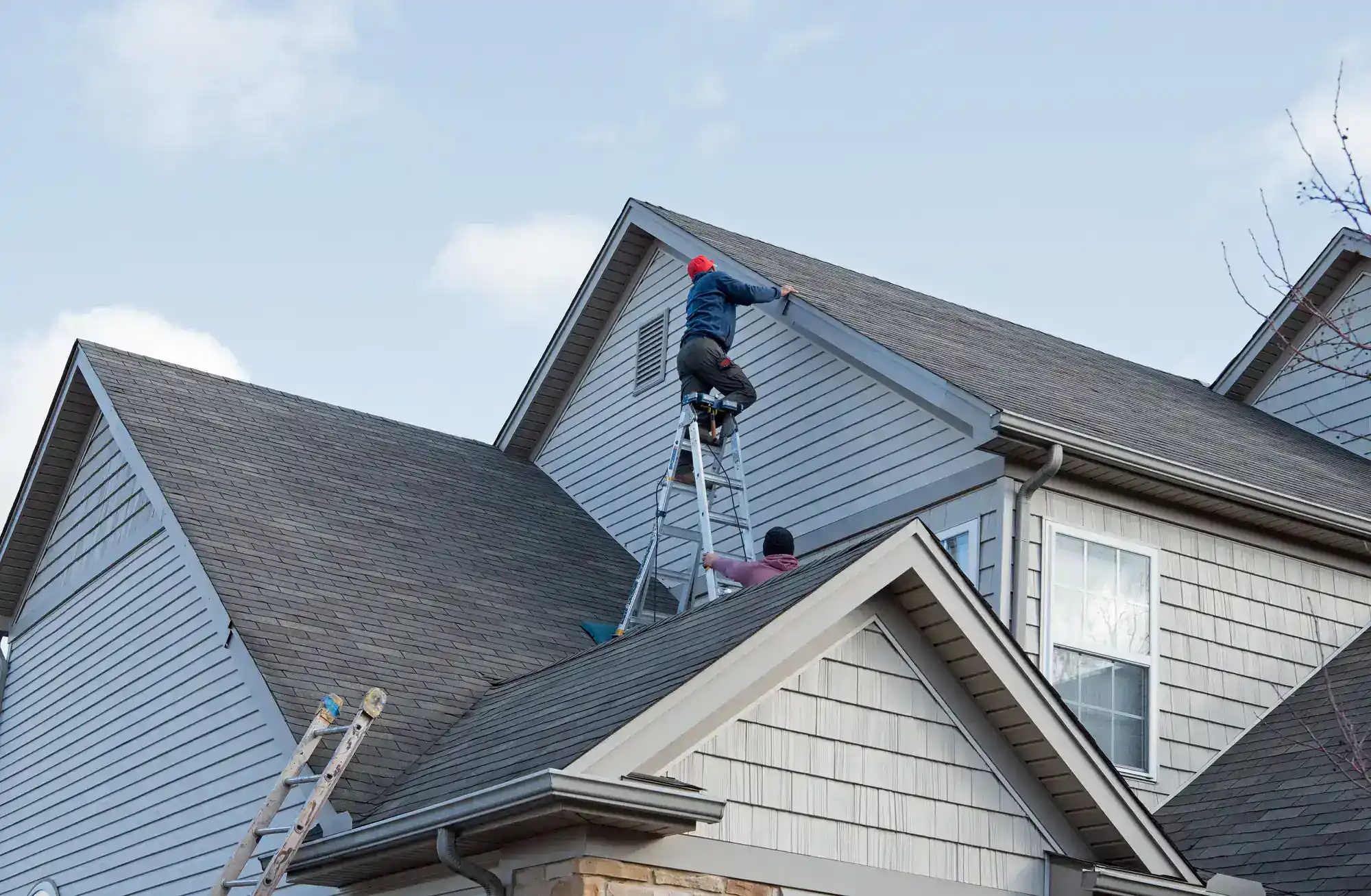
Roof Leak Repair in New Milford, NJ
When a roof repair is done right, you stop thinking about your roof. No more water stains creeping across the ceiling after a heavy rain. No more wondering whether that soft spot near the chimney is getting worse. You just live in your house without the background anxiety of knowing something up there is failing.
In New Milford, that peace of mind is harder to hold onto than in most towns. The Hackensack River corridor creates real weather exposure — the kind that crested at nearly 12 feet during Hurricane Irene and has sent water into riverside homes more than once. A roof that can’t shed water efficiently during those events doesn’t just leak; it lets the damage compound fast. Proper flashing, sealed valleys, and intact shingles are what stand between a manageable storm and a serious interior problem.
The older housing stock here adds another layer. A significant portion of New Milford’s homes were built between the 1940s and 1960s, and roofs on homes that age have specific failure points — dried flashing sealants, worn valley underlayment, shingles that have long since lost their granule protection. A targeted, well-executed repair on a home like that doesn’t just fix today’s problem. It extends the life of a roof that still has years left in it, which matters a great deal when the alternative is a full replacement you may not need yet.
Trusted Roof Repair Contractor in New Milford
We’ve been working on New Milford and Bergen County homes for over a decade. The same people who answer your call, write your estimate, and show up on the job are the ones accountable when the work is done — there’s no handoff to a subcontracted crew you’ve never met.
We hold contractor licenses required under New Jersey law and carry certifications from major shingle manufacturers — credentials that unlock warranty tiers most contractors simply can’t offer. Whether you’re in the New Milford North neighborhood near the river or closer to the Bergenfield border, we know what the local housing stock looks like from the inside out. Homes built in the postwar era, updated in pieces over the decades, with roofing histories that take real experience to read correctly.
Free estimates. Written, itemized pricing. No surprises on invoice day. That’s the baseline, not a bonus.

Shingle Roof Repair Process in New Milford
It starts with a free inspection. A licensed technician comes out, gets on the roof, and actually looks — not a drive-by assessment from the driveway. We’re checking shingle condition, flashing integrity, valley underlayment, ridge caps, and any penetrations like chimneys or vents where leaks commonly originate in New Milford’s older homes. You get a clear picture of what’s going on before anyone asks you to spend a dollar.
From there, you receive a written, itemized estimate. Not a ballpark. Not a verbal number that shifts later. A document that tells you exactly what work is being done, what materials are being used, and what the total cost is. For one- and two-family homes in New Milford, roof repair work doesn’t require a municipal permit under the borough’s building code — which simplifies the process considerably. But every repair still meets New Jersey Uniform Construction Code standards, because cutting corners on installation is how you end up with the same problem six months later.
Once the work is approved, our crew shows up, does the repair, and cleans up completely before leaving. If the damage was caused by a storm and you’re navigating an insurance claim, we can help document what needs to be documented so your adjuster has what they need. The goal is a finished repair that holds — and a process that didn’t make your life harder than it already was.
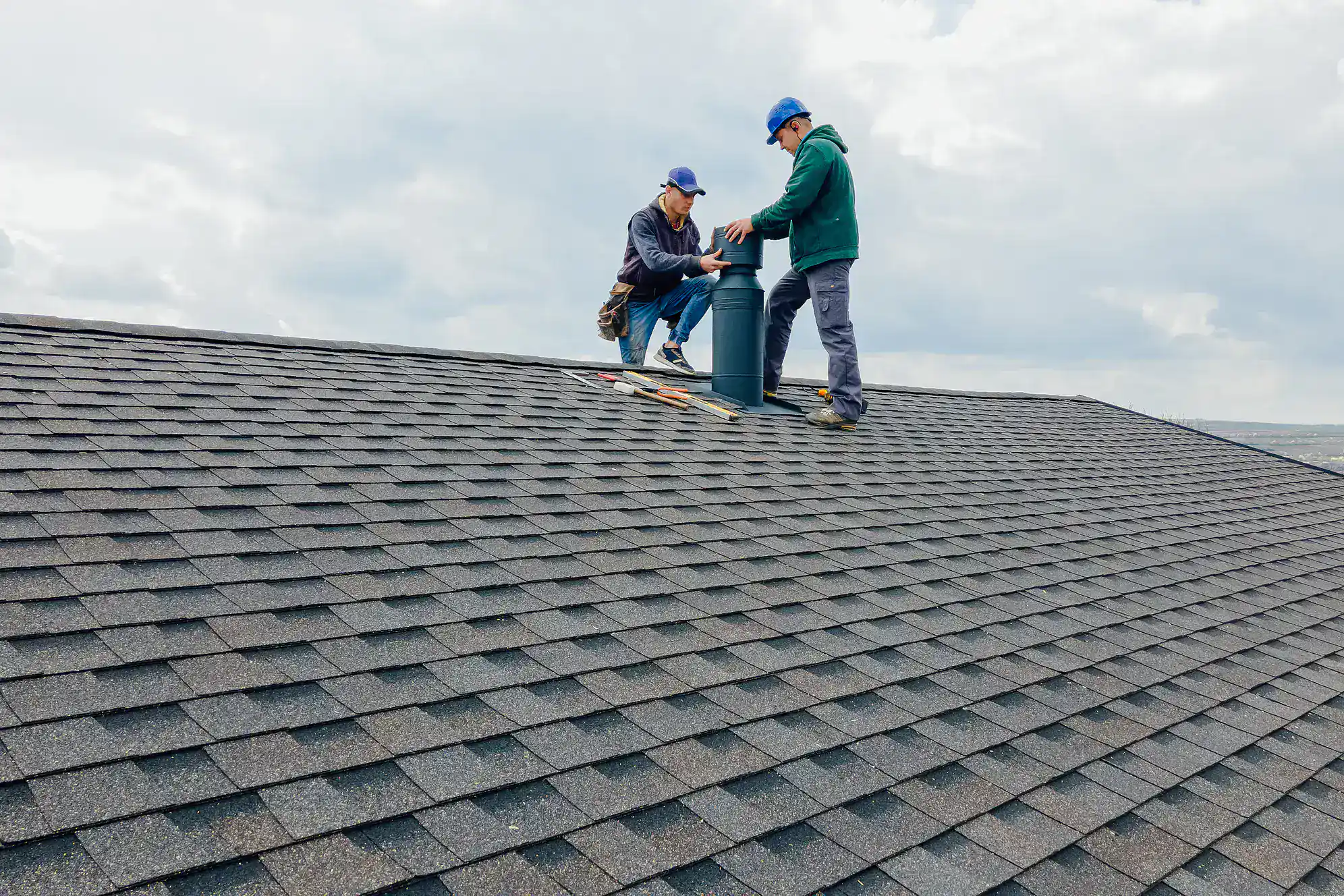
Ready to get started?
Emergency and Storm Damage Roof Repair in New Milford
Roof repair in New Milford covers a wider range of situations than most homeowners expect before they’ve dealt with one. Shingle roof repair is the most common — wind-lifted tabs, cracked or missing shingles, granule loss on aging asphalt — and it’s where the shingle matching process matters more than people realize. A repair that looks like a patch job doesn’t do your property value any favors in a market where the average home is worth over $700,000.
Roof leak repair often traces back to flashing failures — at chimneys, skylights, dormers, or along the valleys where two roof planes meet. These are the failure points that show up most often in New Milford’s mid-century housing stock, and they’re also the ones most likely to be misdiagnosed by a contractor who doesn’t look carefully. Emergency roof repair is also available for active damage situations — when a storm has caused immediate exposure and you need the roof stabilized before a permanent fix can be completed.
It’s worth noting that New Milford’s residential zoning prohibits flat roofs except where needed for mechanical equipment, so flat roof repair in this borough applies primarily to commercial properties, garages, and specific structural additions rather than primary residential rooflines. Whatever the situation, the assessment starts with what’s actually happening on your roof — not with a predetermined recommendation.
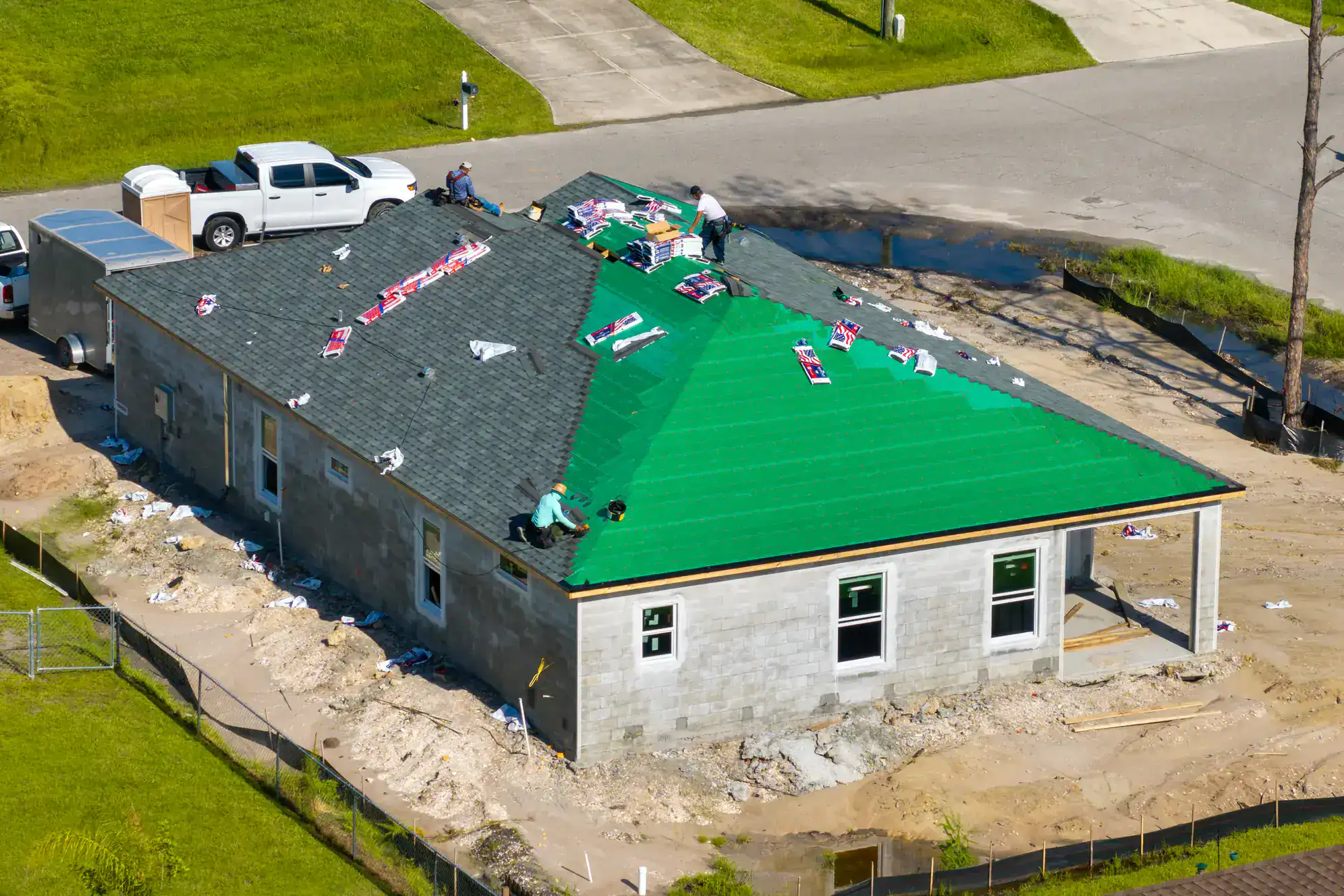
Do I need a permit for roof repair on my New Milford home?
For one- and two-family homes in New Milford, the borough’s building code explicitly exempts roofing and siding work from the local permit requirement. That means you don’t need to file a permit application, wait for approval, or schedule a municipal inspection for a standard roof repair on a single-family or two-family property. The process is straightforward, and it removes a step that slows things down in many other Bergen County municipalities.
That said, the absence of a permit requirement doesn’t mean the absence of standards. All roofing work in New Milford still has to comply with the New Jersey Uniform Construction Code, which sets binding requirements for materials, installation methods, and workmanship. A contractor who treats the lack of permit oversight as a license to cut corners isn’t compliant — and when substandard work fails, the homeowner is the one dealing with the consequences. We follow NJ UCC standards on every job, permit or not.
How do I know if my roof needs repair or a full replacement?
The honest answer depends on several factors: how old the roof is, how much of the surface is affected, what condition the underlying decking is in, and what your plans are for the property. A roof with isolated damage — a few failed shingles, a single flashing failure, a compromised valley — is often a strong repair candidate, even on an older home. A roof where the granules are gone across most of the surface, where multiple areas are failing simultaneously, or where the decking underneath has been compromised by repeated water intrusion is a different conversation.
In New Milford, where a significant portion of homes were built in the 1940s through 1960s, this question comes up constantly. These homes have often been re-roofed once or twice already, and reading the full picture — the shingle age, the decking condition, the repair history — takes real experience. The free inspection is specifically designed to give you an honest answer to this question before you commit to anything. If a repair makes sense, that’s what you’ll hear. If the roof is genuinely at end of life and a repair would be a short-term fix on a long-term problem, that will be explained clearly, with the evidence to back it up.
What causes most roof leaks in older New Milford homes?
In homes built during the postwar era that dominates New Milford’s housing stock, the most common source of roof leaks isn’t the shingles themselves — it’s the flashing. Flashing is the metal or sealant material used to seal the joints where the roof meets a chimney, a dormer, a skyline, or a wall. Over decades, the sealants dry out, the metal corrodes or shifts, and water finds the gap. It’s a slow failure that often goes unnoticed until there’s visible staining on an interior ceiling.
Valley underlayment is the second most common culprit. The valleys — where two roof planes meet and water concentrates — take more abuse than any other part of the roof. On a 60- or 70-year-old New Milford home, that underlayment has been through a lot of freeze-thaw cycles, and it shows. Ice dams are also a recurring issue in New Milford’s older housing stock: homes from that era often have inadequate attic insulation and ventilation by modern standards, which creates the temperature differential that lets ice accumulate at the eaves and back water up under the shingles. A thorough inspection will identify which of these is actually happening on your roof.
How much does roof repair typically cost in New Milford, NJ?
Roof repair costs in New Milford vary depending on what’s actually wrong, how accessible the affected area is, and what materials are needed. A targeted shingle repair — replacing a handful of damaged tabs and resealing the surrounding area — might run a few hundred dollars. A flashing repair around a chimney or dormer typically falls in the $300 to $700 range depending on scope. More involved repairs involving valley underlayment replacement, larger shingle sections, or decking repair can run higher, often in the $800 to $2,000 range.
What you should expect from us is a written, itemized estimate before any work begins — not a verbal ballpark that changes when the invoice arrives. In a market where the average New Milford home is worth over $700,000, the repair cost is almost always a small fraction of what deferred maintenance ends up costing. Water that gets into decking, insulation, and framing doesn’t stop on its own. Getting an accurate written estimate upfront is how you make a clear-headed decision about what to do and when.
Can you help with storm damage roof repair and insurance claims in New Milford?
Yes — and it’s worth understanding how that process actually works before you call your insurance company. When storm damage triggers a homeowners insurance claim, the adjuster’s assessment of scope and severity drives what gets approved. If the damage isn’t thoroughly documented — with photos, written descriptions, and a clear explanation of what failed and why — claims can come back with approvals that don’t cover the full scope of what the roof actually needs.
New Milford homeowners have dealt with significant storm events over the years, including the flooding and wind damage associated with Hurricane Irene in 2011 and recurring summer hailstorms that affect Bergen County regularly. When you call after a storm, our inspection process includes documentation specifically designed to support an insurance submission — not just a repair assessment for your own reference. The goal is to make sure the approved scope matches what your roof actually needs, so you’re not left covering the gap out of pocket on a repair that should have been fully covered.
How long does a roof repair in New Milford take from start to finish?
For most standard repairs — shingle replacement, flashing repair, valley work — the actual on-site work takes anywhere from a few hours to a full day, depending on the scope. The inspection and estimate happen before that, typically within a few days of your initial call. Once you approve the written estimate, scheduling is usually straightforward, and most repairs in the New Milford area are completed within one to two weeks of estimate approval under normal conditions.
Emergency situations are handled differently. If you have active exposure — a storm has caused immediate damage and water is getting in — the priority is stabilization first, with temporary protective measures put in place while the permanent repair is planned. Bergen County’s weather pattern means that fall and post-storm periods tend to be the busiest windows for roofing contractors across the region, so if you’re dealing with damage or have a roof you know needs attention before winter, earlier is better. Waiting until November to address something you noticed in September means competing with every other homeowner in the area who had the same idea at the same time.