
Gutter Installation in Palisades Park, NJ
Bergen County Storms Don't Wait — Neither Should Your Gutters
Hear from Our Customers
Rain Gutter Installation in Palisades Park
In a borough as dense as Palisades Park, water has nowhere to go but where you direct it. When your gutters are doing their job, that means away from your foundation, away from your siding, and away from your neighbor’s property. When they’re not, the consequences show up fast — and in a place where homes sit this close together, they show up for more than just you.
Bergen County’s seasonal cycle is relentless on exterior systems. Summer microbursts dump heavy rain in minutes. Fall leaves from the tree canopy along residential streets pack gutters solid before the first frost. Then winter freeze-thaw cycles do their work on anything that’s already compromised. A gutter system that’s properly sized, correctly sloped, and installed with the right downspout placement handles all of that. One that isn’t becomes a liability before spring even arrives.
For Palisades Park homeowners — many managing duplexes or two-family homes with more complex rooflines than a standard gable — getting this right matters even more. Water that overflows from an undersized or clogged gutter on a compact lot doesn’t just threaten your foundation. It saturates shared driveways, affects adjacent properties, and contributes to the kind of stormwater runoff that the borough’s own drainage infrastructure is built to manage. Professional installation isn’t an upgrade here. It’s basic protection for a property worth protecting.
Gutter Contractors in Palisades Park, NJ
We’ve been doing exterior work across Bergen County for over a decade. That means real familiarity with the housing stock here — the post-war duplexes, the two-family homes on compact lots, the rooflines that have been modified through conversions and renovations over the years. Palisades Park isn’t a market we added to a list. It’s a community we’ve worked in consistently, and we understand the specific challenges that come with dense residential neighborhoods where property lines are tight and water management directly affects your neighbors.
We hold NJ Home Improvement Contractor License #13VH10605800 — a state-required credential you can verify directly through the NJ Division of Consumer Affairs. Beyond licensing, we carry manufacturer certifications that unlock enhanced warranty coverage most contractors simply can’t offer. That’s not a sales line. It’s a meaningful difference when something goes wrong five years from now.
Every job starts with a free inspection and a written estimate. No vague verbal quotes, no pressure to sign on the spot. You’ll know what needs to be done, why it needs to be done, and what it costs before any work begins.
Home Gutter Installation in Palisades Park
It starts with a thorough inspection — not just of the gutters themselves, but of the full exterior system. We assess fascia board condition, roofline water volume, existing downspout sizing, and where water is currently going when it leaves your roof. In Palisades Park’s older housing stock, it’s common to find rotted fascia behind failing gutters, or downspouts that were sized for a roofline that no longer exists after a renovation. Catching that before installation is the difference between a fix that lasts and one that doesn’t.
From there, you get a written estimate with a clear breakdown of what’s included. If the job requires a permit through the Palisades Park Building Department — which can apply depending on the scope of work, especially if fascia replacement or drainage modifications are involved — we handle that process. You don’t have to navigate borough requirements on your own.
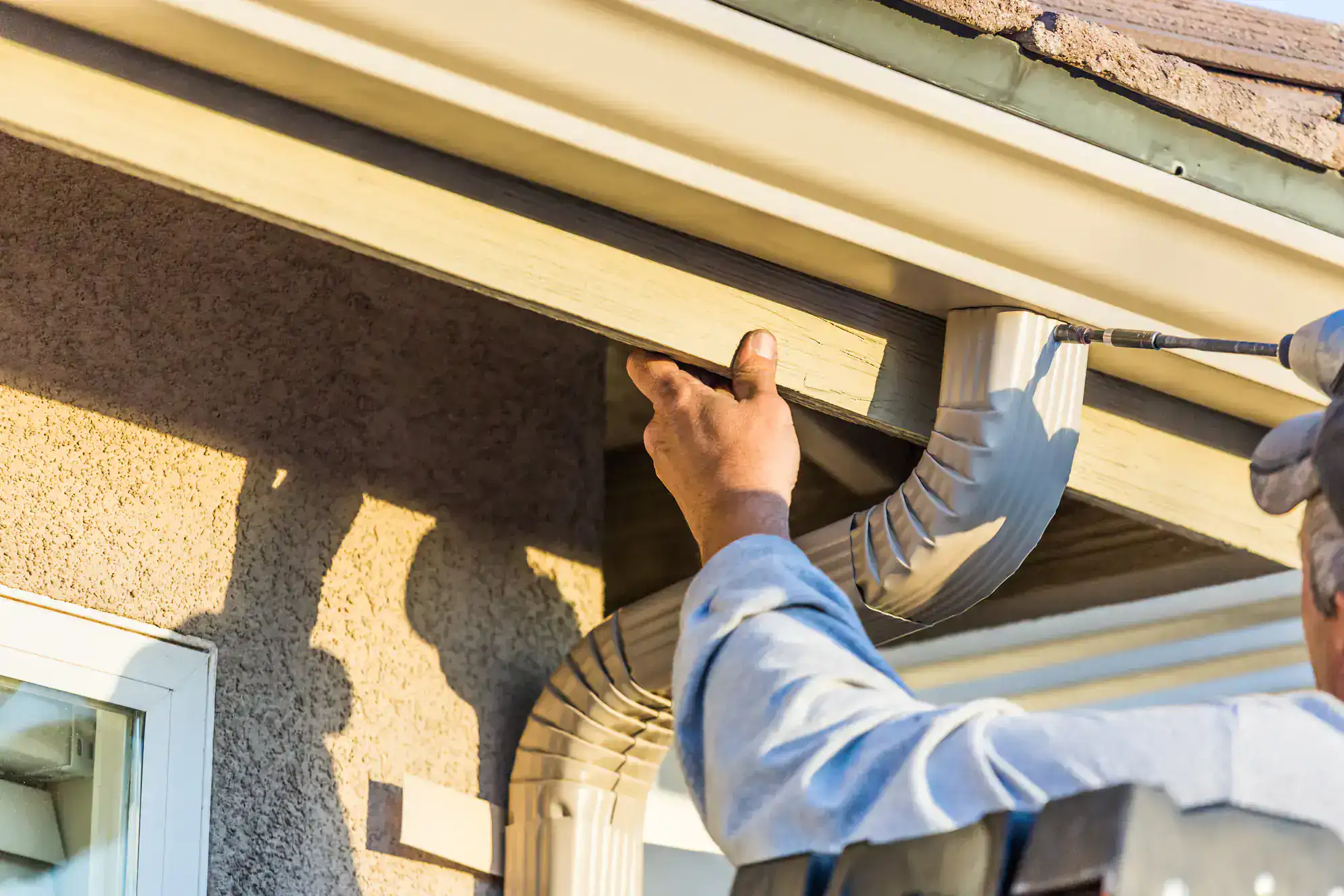
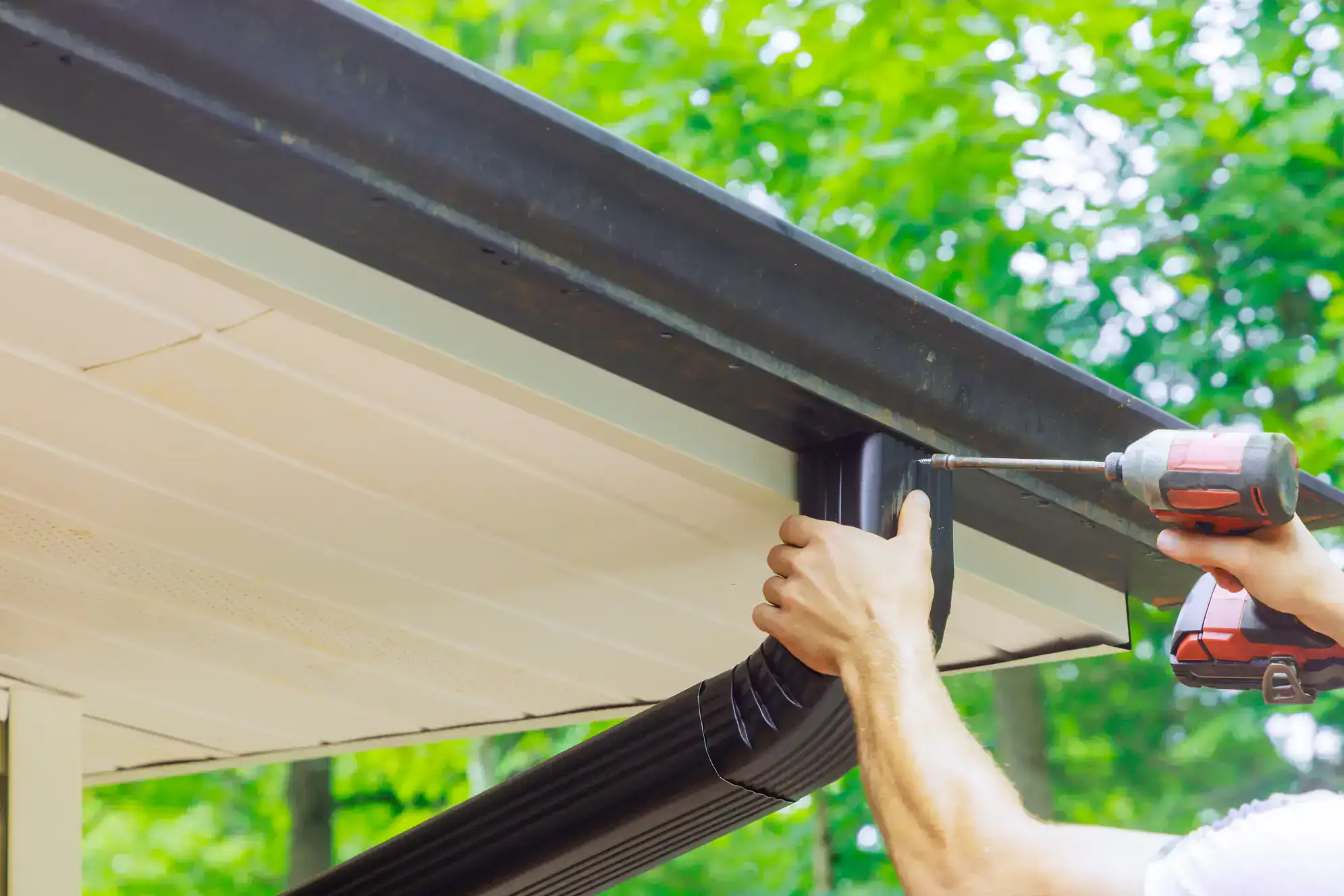
Installation uses seamless aluminum gutters fabricated on-site, cut to the exact dimensions of your roofline. Slope is calculated before a single bracket goes in — a quarter inch of drop per ten feet of run toward the downspout, so water moves the way it’s supposed to. Downspouts are positioned to discharge water away from your foundation and clear of neighboring properties, which matters on Palisades Park’s compact residential lots more than it would almost anywhere else in Bergen County. When the job is done, the system is tested, the site is cleaned up, and you’re not left guessing whether it works.
Ready to get started?
Roof Gutter Installation in Palisades Park, NJ
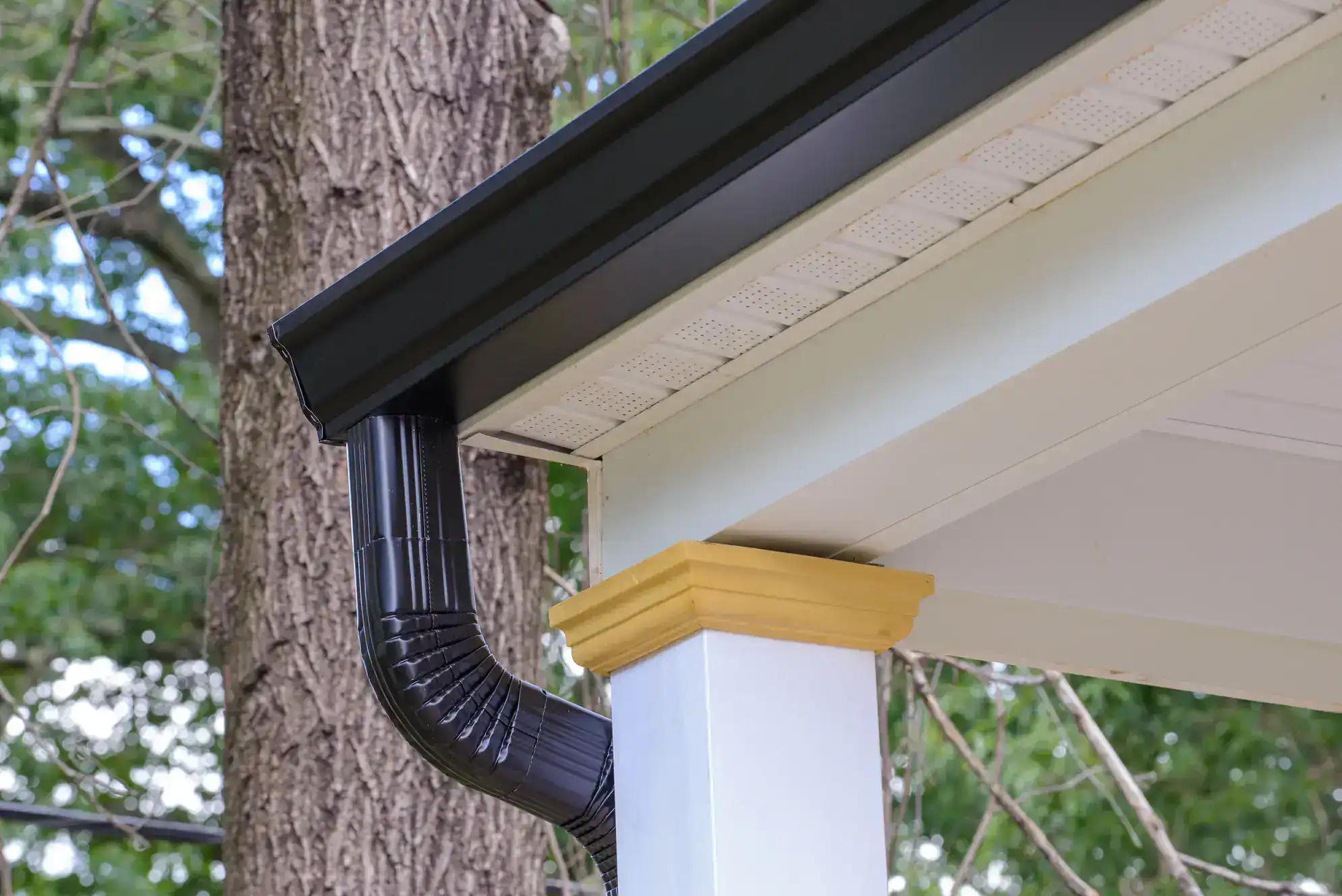
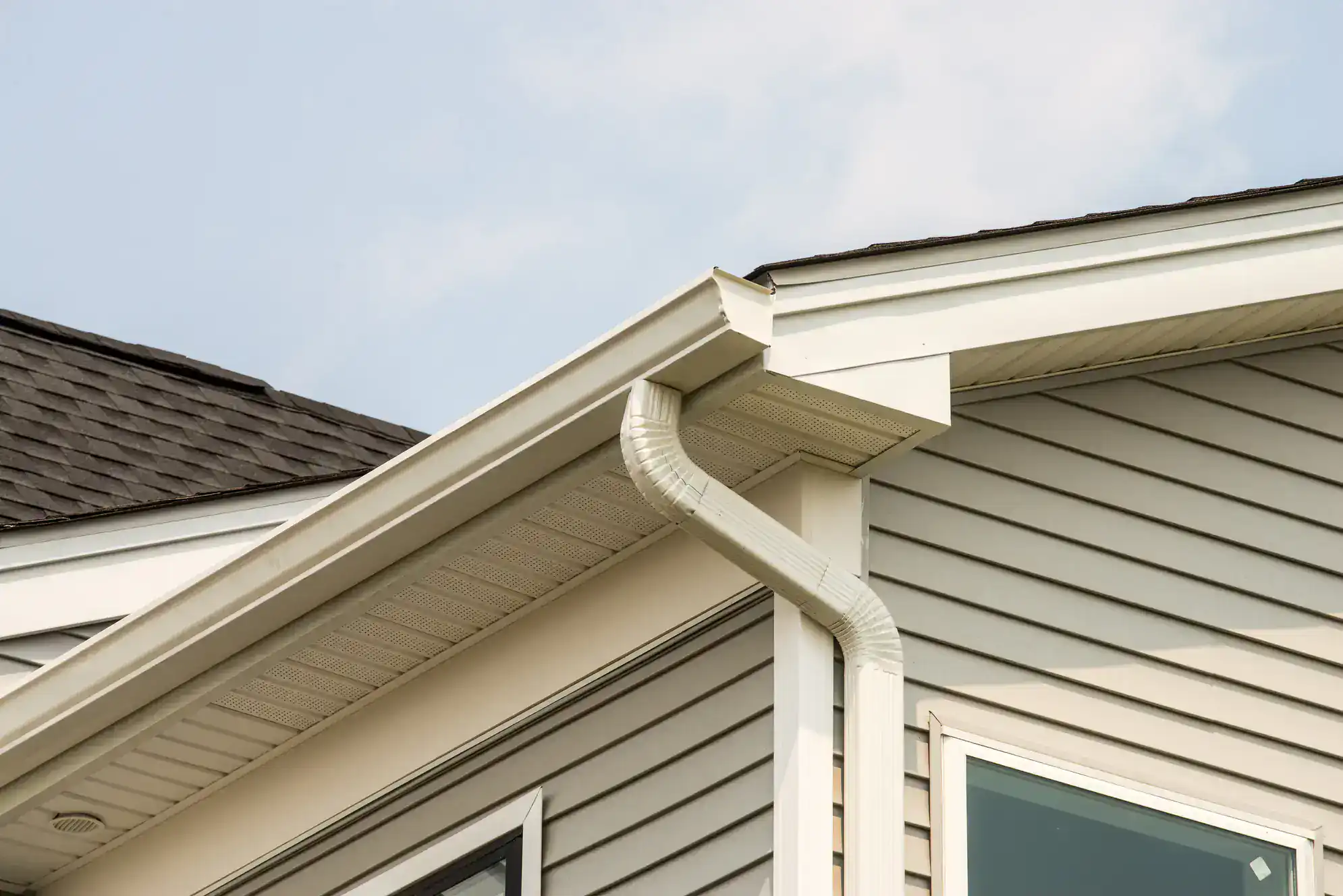
Our gutter installation covers the full system — not just the channel itself. That means seamless aluminum gutters fabricated to your exact roofline measurements, properly pitched and secured with hidden hangers spaced to handle Bergen County’s heavy rainfall loads. Downspouts are sized for actual water volume, not just what looked standard on the original build. End caps, miters, and outlets are sealed to prevent leaks at every joint.
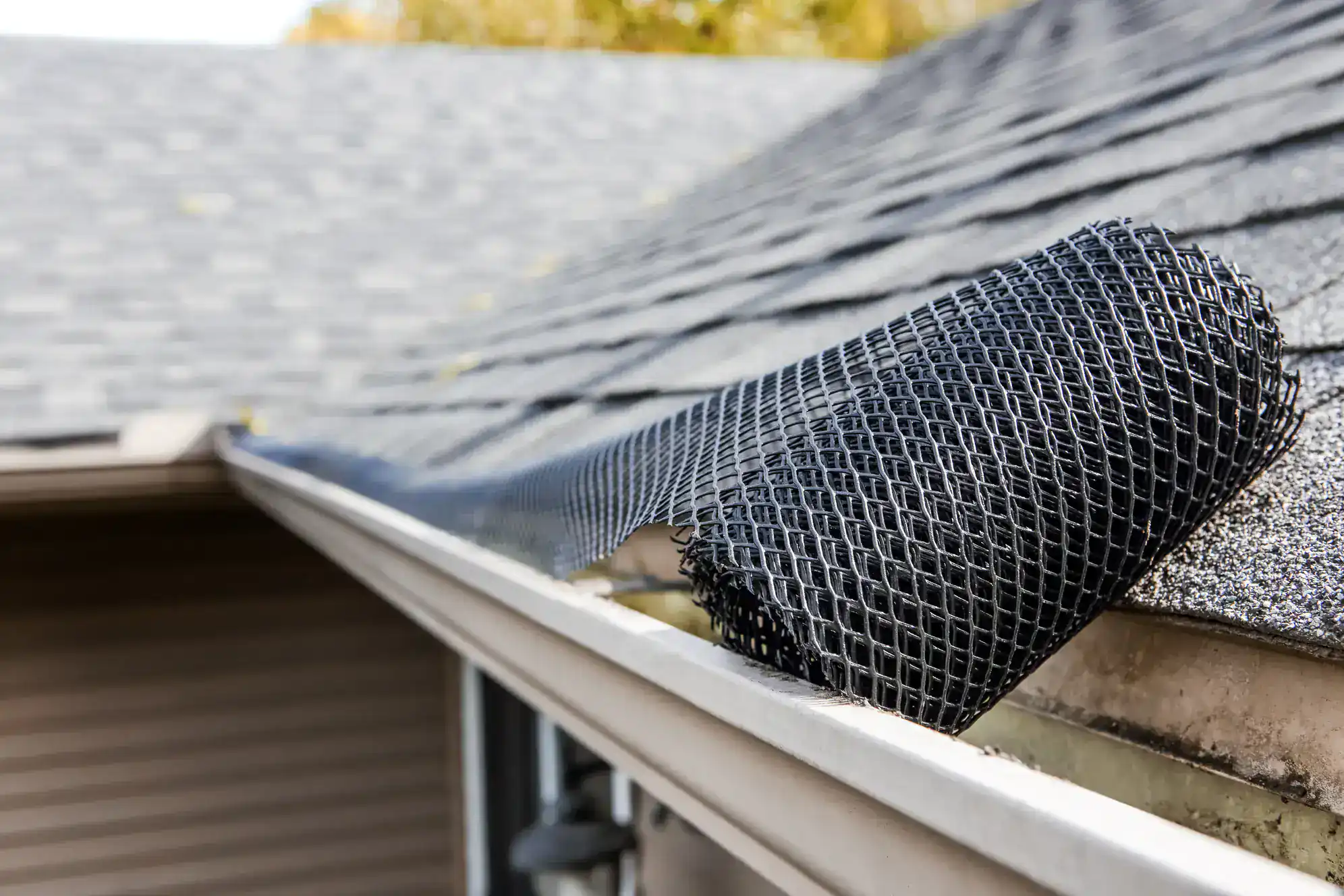
If your fascia boards are rotted or pulling away — which is common on Palisades Park homes that haven’t had exterior work in twenty or thirty years — that gets addressed before new gutters go up. Mounting new gutters over compromised fascia is a shortcut that fails fast, and it’s not how we do this work. The same goes for existing gutter guards or leaf protection: if you want them added as part of the installation, that conversation happens during the estimate, not as a surprise line item after the fact.
We also work directly with homeowners navigating storm damage insurance claims. Bergen County sees regular nor’easters and high-wind events, and a lot of Palisades Park homeowners don’t realize their policy may cover gutter damage from a qualifying storm. If that’s your situation, we can help document the damage and work through the process with your adjuster — so you’re not leaving covered repairs on the table.
Do I need a permit for gutter installation in Palisades Park, NJ?
It depends on the scope of the work. A straightforward gutter replacement — same footprint, no structural changes — may not require a permit in Palisades Park. But if the job involves replacing fascia boards, modifying the drainage system, or making changes to a two-family or rental property, the Palisades Park Building Department may require one. The borough has its own contractor registration requirement under Chapter 120 in addition to the state-level NJ Home Improvement Contractor registration, so the regulatory layer here is a step more involved than in some other Bergen County towns.
The practical answer is: don’t assume. We’re familiar with the borough’s building department process and can confirm what’s required for your specific job before work begins. If a permit is needed, that’s handled as part of the project — not something you’re left to figure out on your own.
How do I know if my gutters need full replacement or just a repair?
The honest answer is that it depends on what’s actually failing. Gutters that are pulling away from the fascia because of a few loose brackets, or that have a single leaking seam, are often repairable. But gutters that are sagging along multiple runs, showing widespread corrosion, or were installed on a home that’s since been modified — a duplex conversion, a roofline extension, a new addition — may be undersized for the water volume they’re now handling. That’s not a repair situation. That’s a replacement.
Palisades Park’s housing stock skews older, and a lot of homes have gutter systems that are twenty, thirty, or even forty years old. Standard aluminum gutters have a functional lifespan of around twenty to thirty years under normal conditions — and Bergen County’s weather isn’t always normal. If you’re not sure what you’re dealing with, our free inspection will give you a clear answer. No guessing, no pressure either way.
What size gutters are right for a two-family home in Palisades Park?
Most residential homes in New Jersey are installed with 5-inch K-style gutters as the standard. But for two-family homes and duplexes — which make up a significant portion of Palisades Park’s housing stock — the roof geometry is often more complex, and the drainage load per run can be higher than a standard single-family calculation assumes. In those cases, 6-inch gutters are frequently the better choice, particularly on longer roof runs or on sides of the home that handle significant water volume during heavy rain.
The right answer comes from measuring the actual roof area draining into each gutter run and factoring in the slope of the roof — not from defaulting to whatever was there before. Bergen County’s summer microbursts can deliver a significant amount of water in a very short window, and gutters that are undersized by even a half-inch can overflow under those conditions. Getting the sizing right during installation is far less expensive than dealing with the foundation or siding damage that follows repeated overflow.
Can storm damage to my gutters in Palisades Park be covered by insurance?
Yes, in many cases it can. Homeowner’s insurance policies typically cover sudden and accidental damage caused by qualifying events — high winds, hail, and the kind of nor’easters Bergen County sees regularly. Gutter damage that results directly from a storm event is often covered under the same claim as roof or siding damage from the same storm. What’s usually not covered is damage from deferred maintenance or gradual deterioration, which is why the distinction between storm damage and wear-and-tear matters when you’re filing a claim in Palisades Park.
The challenge most homeowners run into is documentation. Adjusters are assessing the damage on their own timeline, and without clear evidence that the damage was storm-related rather than pre-existing, claims get minimized or denied. We have experience working through this process — documenting the damage, communicating with adjusters, and making sure the scope of what’s covered is accurately represented. If a storm recently hit your property and you’re not sure what you’re entitled to, that’s worth a conversation before you pay out of pocket.
How long does a gutter installation take on a typical Palisades Park home?
For most single-family or two-family homes in Palisades Park, a full gutter installation is typically completed in a single day. The timeline depends on the size of the home, the complexity of the roofline, and whether any fascia repair work is needed before the gutters go up. A straightforward replacement on a standard home usually runs four to six hours from start to finish. A more complex job — a duplex with multiple roof sections, or a home that needs fascia work along several runs — may take longer, but that’s scoped out during the estimate so there are no surprises on installation day.
One thing worth noting for Palisades Park specifically: homes on compact lots with close property lines require more care around equipment placement and debris management during installation. We work with that in mind. The goal is to finish the job cleanly without creating a problem for your neighbors in the process.
Why does proper gutter slope matter, and how do I know if mine is off?
Slope — or pitch — is what makes water move toward the downspout instead of sitting in the gutter. The standard is about a quarter inch of drop for every ten feet of horizontal run. It sounds like a small number, and it is. But gutters that are even slightly off from that spec will hold standing water after every rain, and standing water in a gutter accelerates corrosion, attracts mosquitoes, adds weight that pulls brackets loose, and eventually leads to overflow at the low points.
The most common sign of an improper slope is water dripping or streaming over the front edge of the gutter during rain — not at the downspout end, but somewhere in the middle of a run. You might also notice rust staining on the gutter exterior or on the siding below it, which indicates water has been sitting in the same spot repeatedly. If your gutters are holding water or showing signs of corrosion, slope is one of the first things worth checking.