
Gutter Installation in Little Ferry, NJ
Flat Land, High Water — Get Gutters That Actually Handle It
Hear from Our Customers
Rain Gutter Installation, Little Ferry, NJ
Little Ferry doesn’t have the luxury of elevation. When water comes off your roof with nowhere to go, it goes somewhere you don’t want it — against your foundation, into your soil, and eventually into your basement. Properly installed gutters with the right slope, the right downspout sizing, and extensions that actually direct water away from your home are what prevent that chain reaction from starting.
The homes here — Cape Cods, colonials, ranches built mostly in the mid-20th century — weren’t designed with today’s storm volume in mind. If your gutters are original or haven’t been replaced in 20-plus years, there’s a real chance they’re undersized, pulling away from the fascia, or draining toward your foundation instead of away from it. That’s not a minor inconvenience in a Meadowlands borough with a high water table. It’s a problem that compounds every storm season.
When the system is installed correctly, you stop thinking about it. No overflow streaking down your siding. No water pooling at the base of your walls. No soggy soil against your foundation after every rainstorm that rolls in off Route 46. That’s the outcome — not a prettier roofline, but a home that handles what New Jersey throws at it.
Gutter Contractors Serving Little Ferry, NJ
We’ve spent over ten years working on homes across Bergen County — including Little Ferry itself and communities right in the backyard like Hackensack, Moonachie, Ridgefield Park, and South Hackensack. We’re a licensed New Jersey Home Improvement Contractor (License #13VH10605800), and we hold manufacturer certifications that most local gutter companies don’t bother with. That matters when it comes to warranty coverage and installation quality.
We’re not a national franchise with rotating crews. This is a family-run operation that grew through referrals — and in a tight-knit, 1.5-square-mile borough like Little Ferry, that kind of reputation is either earned or it isn’t. We don’t pad estimates, we don’t disappear after the job, and we don’t start work without giving you a written quote first.
If you’ve got storm damage from a recent event, we work directly with insurance adjusters. Little Ferry homeowners know better than most what a bad storm can do — and navigating a claim shouldn’t fall entirely on you.
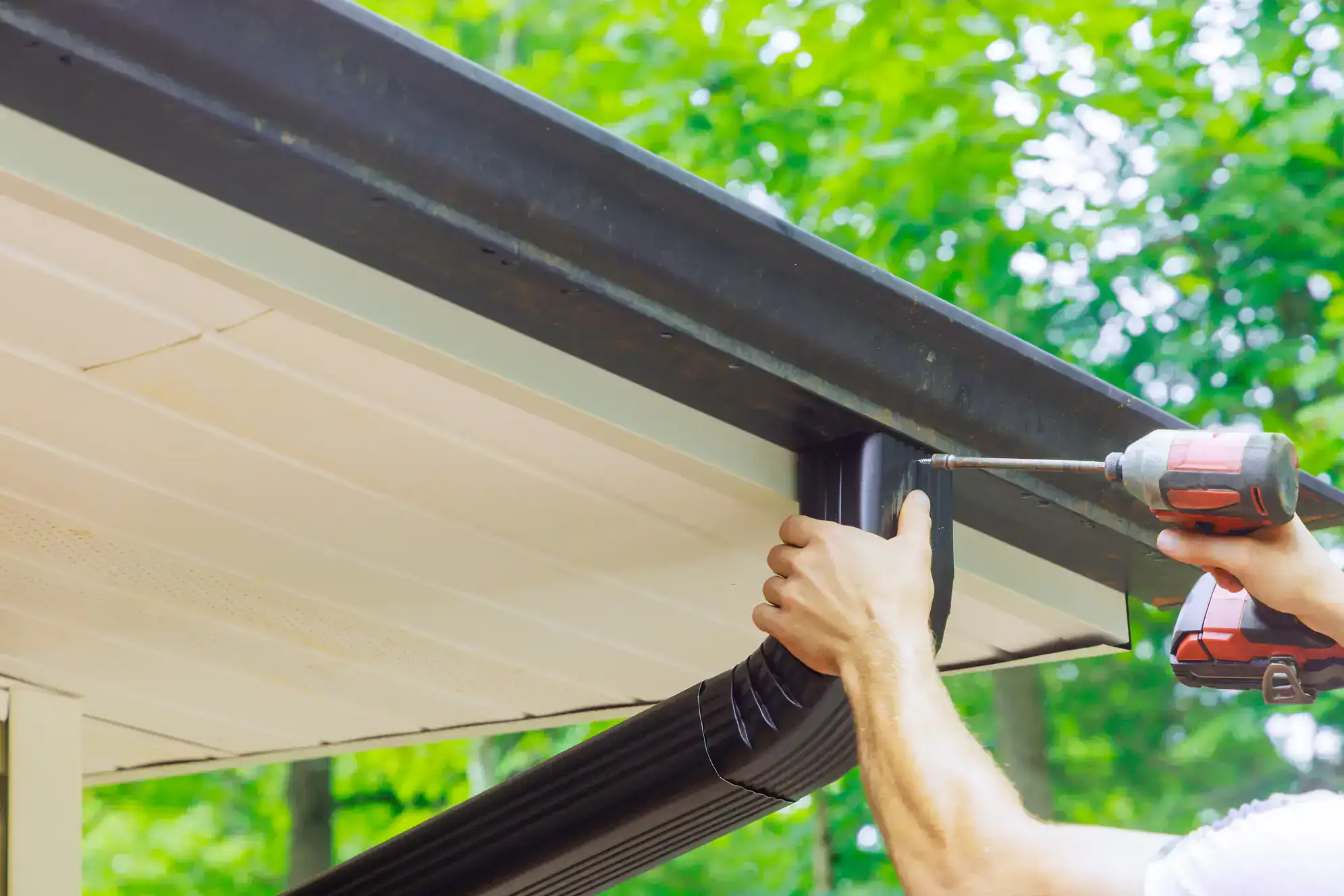
Home Gutter Installation Process, Little Ferry, NJ
It starts with a free inspection. We come out, walk the roofline, check the fascia boards, look at how your current system is draining, and assess whether you need a repair, a partial replacement, or a full installation. In Little Ferry specifically, we pay close attention to downspout placement and extension length — because on flat, low-lying lots near the Hackensack River corridor, where water drains to matters as much as how much water you’re moving.
From there, you get a written estimate. Itemized, specific, no vague line items. If we find rotted fascia or other issues that need to be addressed before gutters can be properly mounted, we tell you upfront — not after we’ve already started. You decide what you want to do before any work begins.
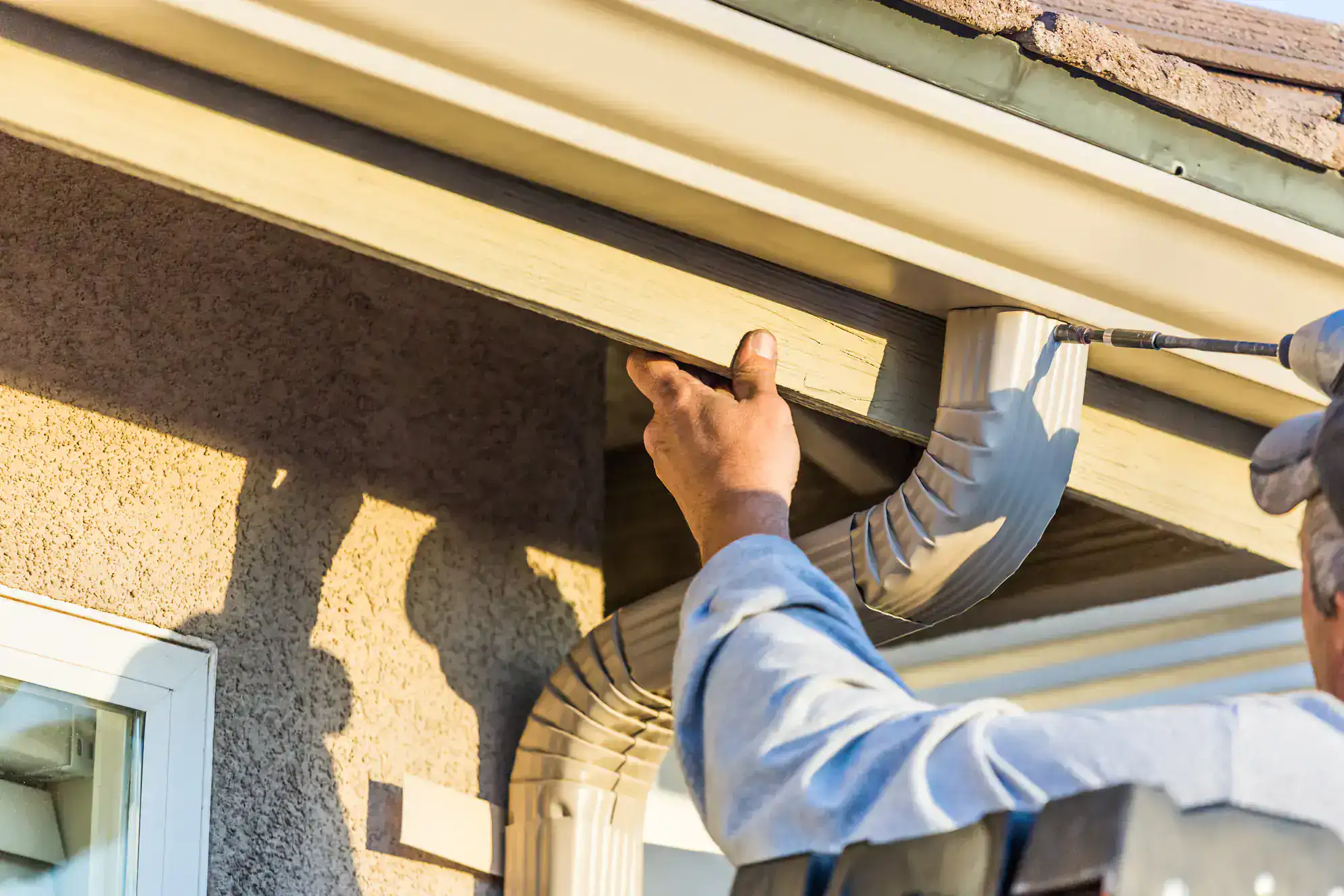
When installation day comes, we fabricate your seamless aluminum gutters on-site to your exact roofline measurements. No pre-cut sections, no seams in the middle of a run. We set the correct pitch — a quarter inch of drop per ten feet toward the downspout — fasten everything securely, and run the downspouts to extensions that move water well away from your foundation. Before we leave, we walk the job with you and make sure everything looks and functions the way it should.
Ready to get started?
Roof Gutter Installation Company, Little Ferry, NJ
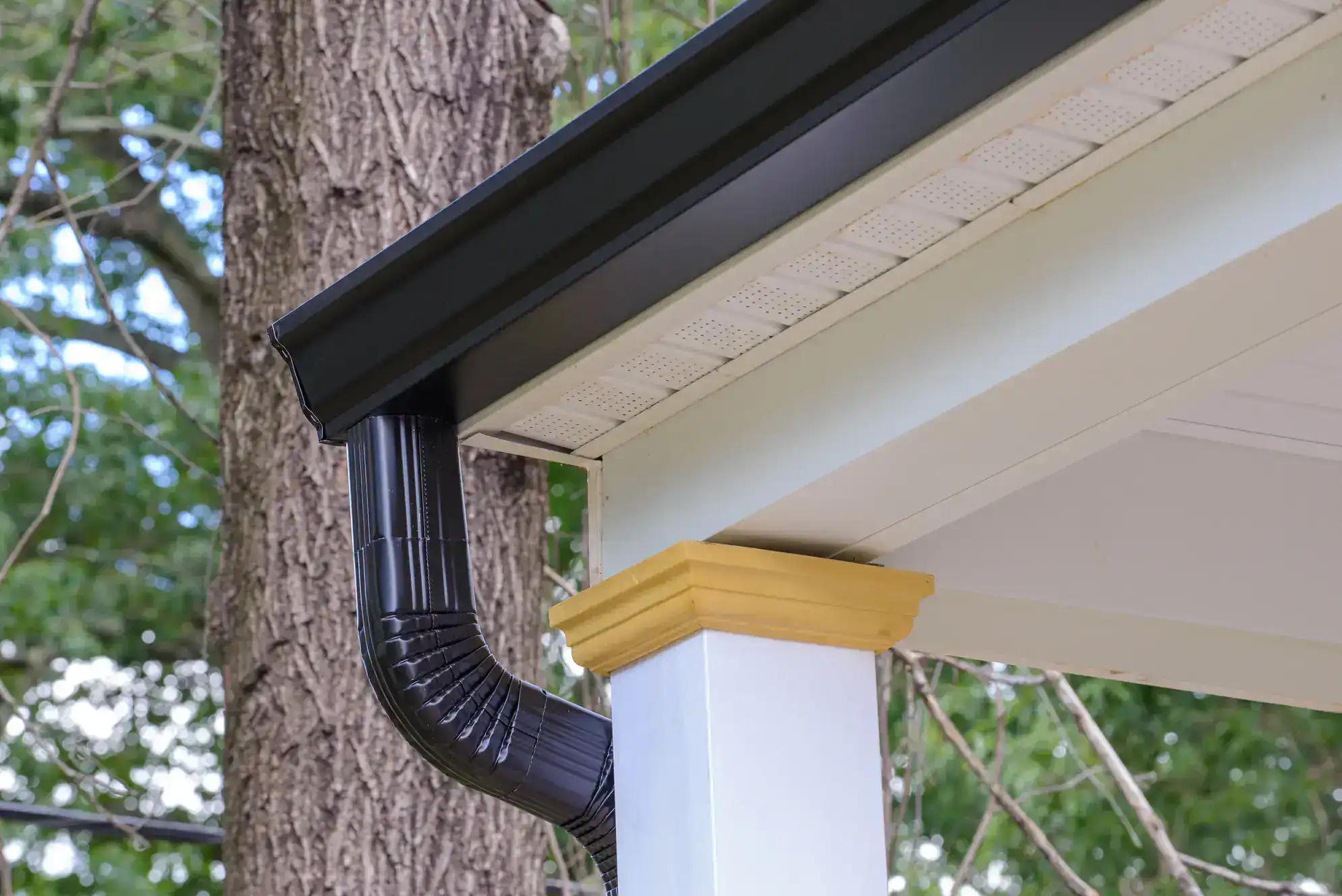
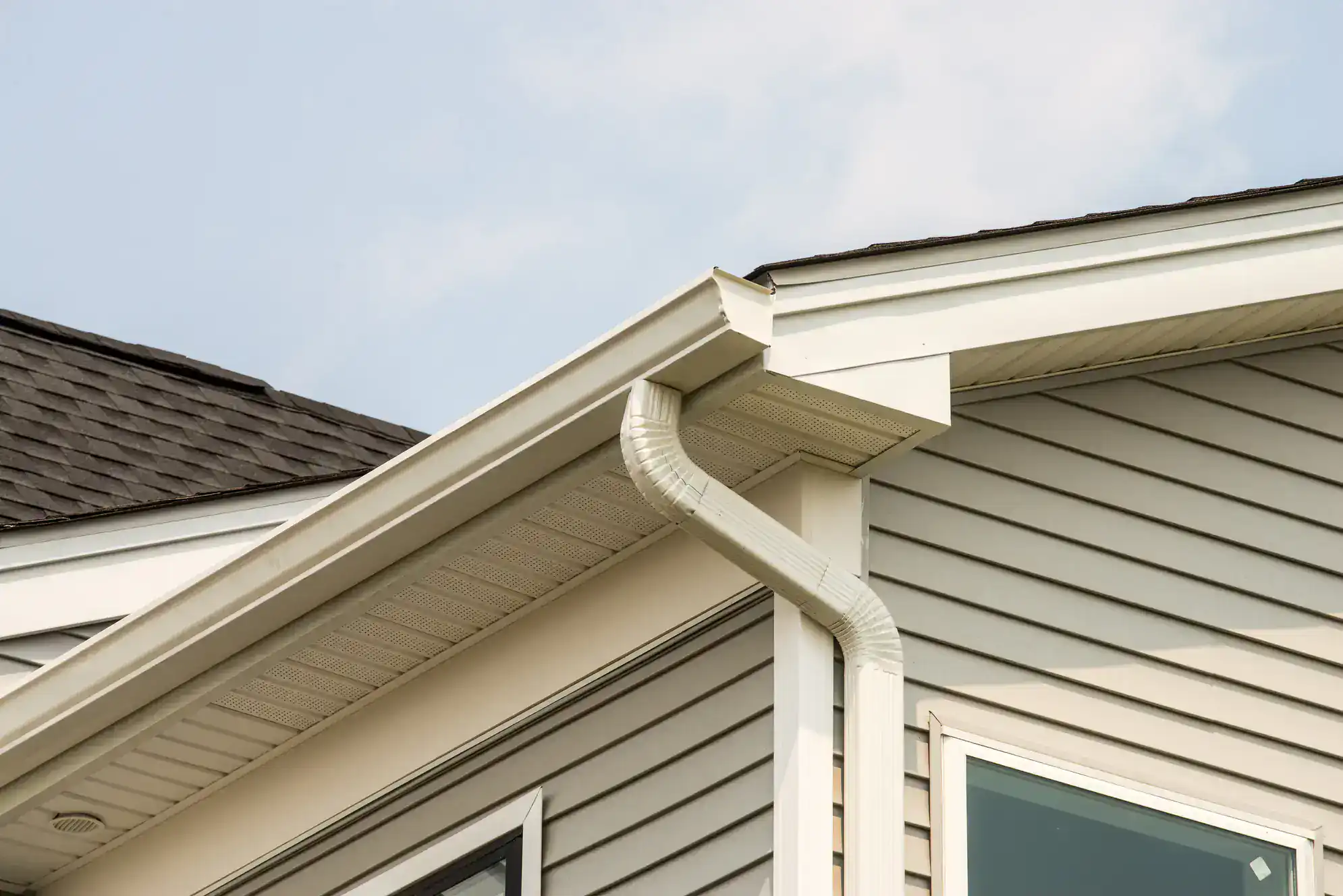
Every gutter installation we do in Little Ferry uses custom-fabricated seamless aluminum — formed on-site to match your specific roofline. Aluminum is the right material for this area: it doesn’t rust, it handles the humidity that comes with living near the Meadowlands, and it holds up through the freeze-thaw cycles that crack and separate sectional systems over time. The seamless design eliminates the mid-run joints where most leaks start, which means fewer repairs and longer system life.
We size everything to your actual roof. That includes calculating your roof’s square footage and matching downspout quantity and diameter to the volume of water your system needs to move during a heavy storm. A lot of older homes in Little Ferry are running 4-inch gutters on rooflines that really need 5-inch or 6-inch systems — especially on two-story colonials where the roof area is larger than it looks from the street. Getting that sizing wrong means overflow during every significant rainstorm, which in a flat, river-adjacent borough is exactly the scenario you’re trying to avoid.
We also look at the full picture: fascia condition, soffit integrity, downspout routing, and whether your current drainage is directing water toward or away from your foundation. Gutters are one piece of a larger exterior water management system, and we treat them that way.
Do gutters require a permit for installation in Little Ferry, NJ?
In most cases, a straight replacement of existing gutters on a residential property in New Jersey does not require a separate construction permit. It falls under standard home improvement work, which is governed by the NJ Home Improvement Contractor registration framework rather than the building permit process. That said, Little Ferry’s Building Department enforces the NJ State Uniform Building Code, and if the scope of work involves structural changes — like adding new downspout penetrations through fascia or soffit, or altering drainage routing in a way that affects neighboring properties — it’s worth confirming with the borough’s building office before work begins.
What does matter in every case is that the contractor performing the work holds a current NJ Home Improvement Contractor license. Working with an unlicensed contractor can void your homeowner’s insurance coverage for the work and create liability issues if something goes wrong. Our license number is #13VH10605800 — verifiable directly through the NJ Division of Consumer Affairs. That’s not a small detail, especially in a municipality that takes stormwater management and code compliance seriously.
How much does gutter installation typically cost in Little Ferry, NJ?
The honest answer is that it depends on your home — and anyone who gives you a firm number without seeing it first is guessing. Most residential gutter installations in Bergen County fall somewhere in the range of $1,000 to $3,500 for a standard single-family home, with the final number driven by linear footage, the number of stories, downspout quantity, whether fascia repairs are needed, and the material and profile you choose. Seamless aluminum — which is what we install and what’s most appropriate for Little Ferry’s climate — runs more upfront than sectional systems from a hardware store, but it lasts significantly longer and requires far less maintenance.
The best way to get a real number is a free on-site estimate. We’ll walk your roofline, measure the runs, assess your fascia, and give you a written quote that breaks down exactly what you’re getting and what it costs. No vague totals, no line items you have to ask about. Little Ferry homes vary a lot in age and configuration, so the estimate is where the guessing stops and the real conversation starts.
Can failing gutters actually cause basement flooding in Little Ferry?
Yes — and in Little Ferry specifically, this connection is more direct than it would be in most other Bergen County towns. The borough sits on flat, low-lying terrain near the confluence of the Hackensack River and Overpeck Creek. The water table is naturally higher here than in elevated communities, and the soil has less room to absorb water before it starts migrating toward your foundation. When gutters overflow or drain too close to the house, that water saturates the ground immediately around your foundation walls — and from there, it’s a short path into your basement.
This is why downspout placement and extension length matter so much in Little Ferry. It’s not enough to just get the water off the roof. You need it directed far enough away from the house that it doesn’t come right back. During our installations here, we pay specific attention to where the water is going after it leaves the downspout — because in a flat, river-adjacent borough, “close enough” isn’t good enough.
What's the difference between seamless and sectional gutters, and which is better for my home?
Sectional gutters are pre-cut pieces that connect at joints every 10 to 20 feet. Those joints are sealed with caulk or gaskets, and over time — especially through New Jersey’s freeze-thaw cycles — they separate, crack, and leak. You end up with water dripping behind the gutter, soaking into the fascia board, and eventually causing rot and mounting failures. It’s a maintenance cycle that never really ends.
Seamless gutters are fabricated in one continuous piece to match your exact roofline measurement. The only joints are at corners and downspout connections, where proper fittings are used. There’s no mid-run seam to fail. For a home in Little Ferry — where humidity from the Meadowlands corridor accelerates corrosion on lower-quality materials and where storms put real volume through the system — seamless aluminum is the right call. It handles more water, lasts longer, and gives you fewer points of failure over the life of the system.
How do I know if my gutters need to be replaced or just repaired in Little Ferry?
A few things to look for: gutters pulling away from the fascia, visible sagging or separation at joints, water stains on your siding below the gutter line, peeling paint or soft wood on your fascia boards, or water pooling at the base of your foundation after rain. Any of these is a sign that the system isn’t doing its job. In Little Ferry, where the stakes of poor drainage are higher than in most places, it’s worth getting a professional set of eyes on it rather than waiting for a visible problem to get worse.
Age matters too. Aluminum gutters have a lifespan of roughly 20 to 30 years under normal conditions — shorter in high-humidity, high-storm environments. A lot of Little Ferry’s housing stock dates to the mid-20th century, and systems installed in the 1980s or 1990s are at or past the end of their useful life. Whether it’s a repair or a full replacement depends on what we find during the inspection — and we’ll give you a straight answer either way, not just a push toward the more expensive option.
Will my homeowner's insurance cover gutter replacement after storm damage in Little Ferry?
It can — but it depends on how the damage happened and how the claim is filed. Homeowner’s insurance typically covers sudden storm damage: wind, hail, falling debris, or the kind of surge event that Little Ferry has experienced firsthand. What it generally doesn’t cover is gradual deterioration or deferred maintenance. The distinction matters, and insurance adjusters will look closely at the cause of the damage when evaluating a claim.
Where a lot of homeowners run into trouble is in the documentation. If the damage isn’t clearly tied to a specific storm event and properly documented with photos, written assessments, and accurate measurements, the claim can be denied or underpaid. We work directly with insurance adjusters on storm damage claims — documenting what we find, providing the written assessments adjusters need, and helping you understand what your policy is likely to cover before you commit to anything. Given Little Ferry’s history with Hackensack River flooding and the ongoing storm risk in this part of Bergen County, this is a service that genuinely matters here.