
Gutter Installation in Kingsland, NJ
Gutters Built for What Kingsland Throws at Them
Hear from Our Customers
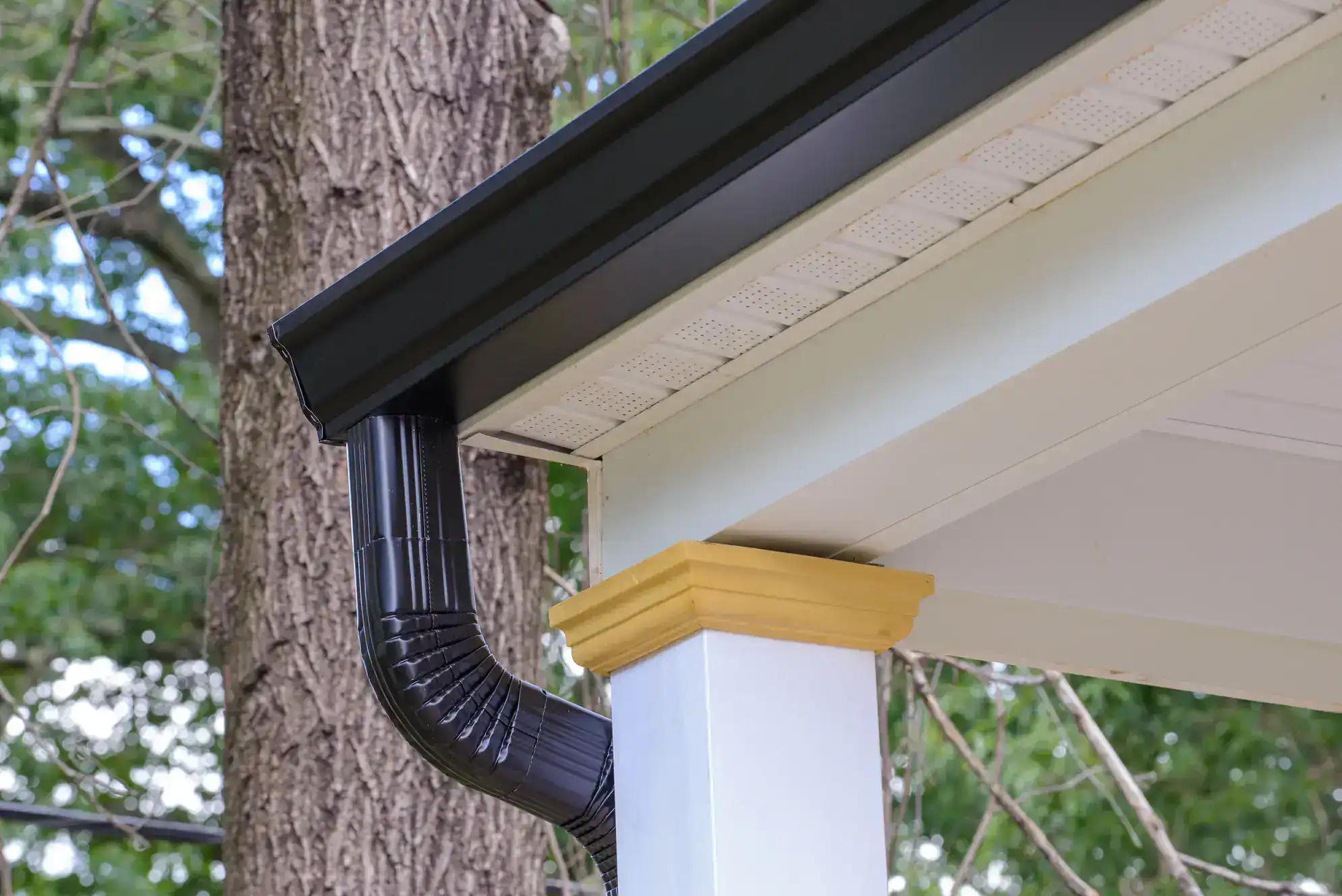
Rain Gutter Installation in Kingsland, NJ
When gutters fail in Kingsland, the consequences aren’t subtle. Water pools at the foundation, finds its way into basements, and accelerates the kind of damage that turns a maintenance call into a five-figure repair. This neighborhood already sits in one of Bergen County’s most flood-sensitive corridors — between the Passaic River to the west and the Meadowlands lowlands to the east. Your gutters aren’t doing you any favors if they’re overflowing, pulling away from the fascia, or draining toward the house instead of away from it.
The homes on and around Kingsland Avenue were mostly built between the 1940s and 1960s. That means the original gutters — if they haven’t been replaced — are well past their useful life. Even homes that got an upgrade in the 1990s are now looking at 25 to 35 years on a system that typically lasts 20 to 30. The freeze-thaw cycling that hits this part of Lyndhurst harder than inland Bergen County towns accelerates joint separation and corrosion in older sectional systems. When we install seamless aluminum gutters, there are no mid-run seams to split open after a hard winter.
What you get on the other side of this is simple: water moves away from your home the way it’s supposed to. Your foundation stays dry. Your fascia stays intact. And when Bergen County’s summer storms drop two inches of rain in an hour — which they do — your gutters handle it instead of dumping it at your doorstep.
Gutter Contractors in Kingsland, NJ
USA Home Remodeling is a licensed, family-operated exterior contractor based in Elizabeth, NJ — less than 20 minutes from Kingsland via Route 17. We hold NJ Division of Consumer Affairs Home Improvement Contractor License #13VH10605800, and we’ve been installing gutters across Bergen County and Union County for over ten years. That license number isn’t just a line on a page — it’s a publicly searchable credential that protects you if something ever goes wrong.
We’re not a franchise. There’s no regional call center routing your job to whoever’s available. When you reach out, you’re talking to people who know Lyndhurst Township’s specific municipal code requirements — including the ordinance that mandates gutters on all buildings and requires downspouts to drain to curb lines or into a stormwater system, not just terminate at grade next to your foundation. We’ve worked on dozens of homes in Kingsland and throughout this corridor, and we understand the specific drainage challenges that come with the area’s proximity to the Passaic River and Meadowlands.
We’ve built this business on referrals from homeowners who didn’t have to chase us down after the job was done. That’s the standard we hold ourselves to on every project, whether it’s a single-family home off Kingsland Avenue or a larger exterior renovation across the township.
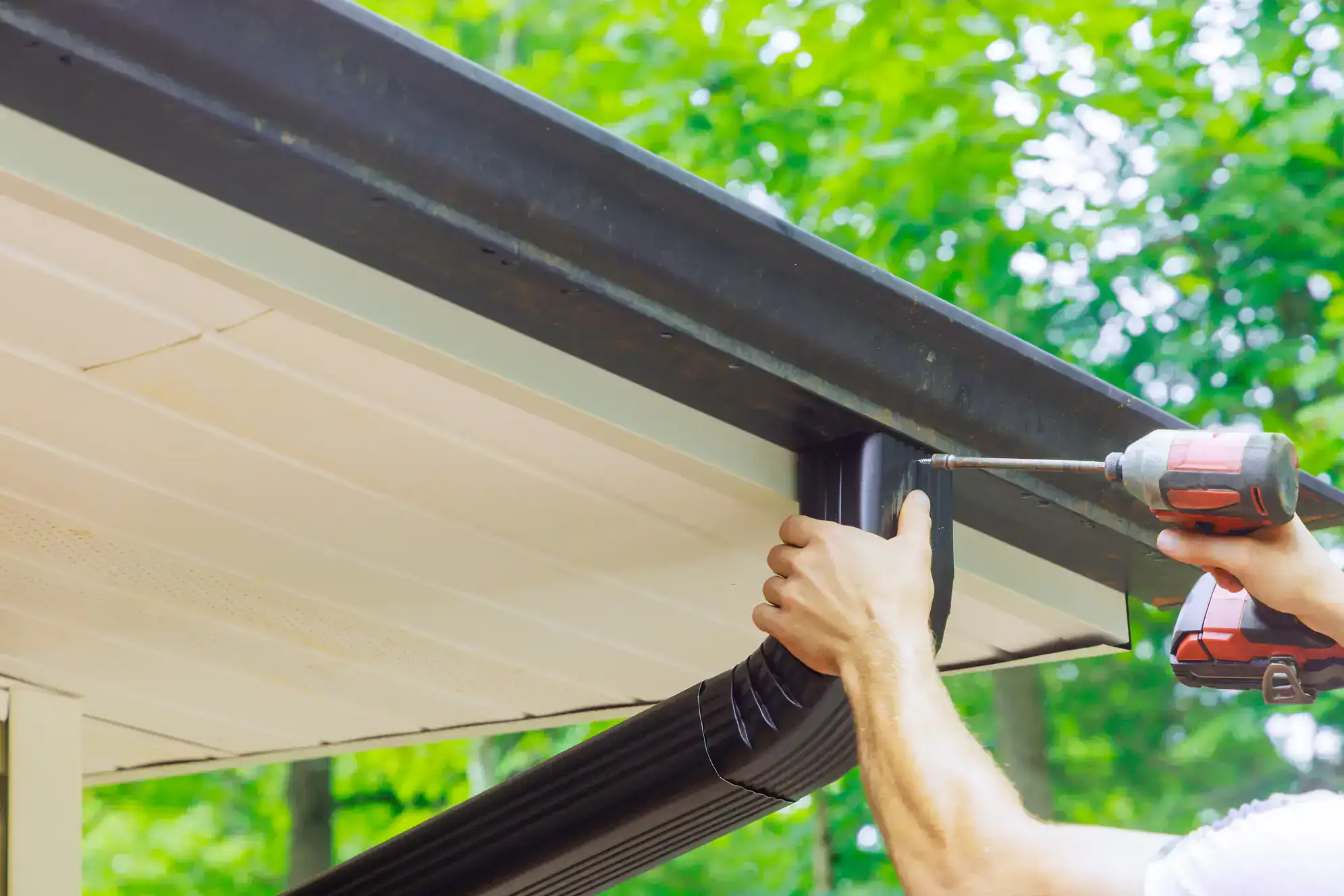
Home Gutter Installation in Kingsland, NJ
It starts with a free inspection. We come out, look at your existing gutters, check the fascia boards behind them, evaluate the downspout sizing relative to your roof’s actual water volume, and assess where everything terminates. In Kingsland, that last part matters more than most contractors acknowledge — Lyndhurst’s municipal code requires that leader pipes drain to the curb line or into a stormwater or dry well system. If your current setup doesn’t meet that standard, we’ll tell you before we do anything else.
From there, you get a written estimate. Itemized, clear, no vague line items. You’ll know exactly what’s being installed, where, and why. If there are fascia boards that need to be addressed before new gutters go up, we’ll flag that too — because gutters mounted over rotted wood won’t last, and we’d rather tell you upfront than have you call us back in a year wondering why they’re pulling away from the house.
On installation day, we fabricate your seamless aluminum gutters on-site. The equipment comes to your home, and every run is cut to your exact roofline measurements. No pre-cut sections, no seams in the middle of a run. Once everything is hung and the downspouts are routed correctly, we walk the job with you before we leave. You see exactly what was done and why. That’s the whole process — no surprises, no follow-up calls to figure out what you paid for.
Ready to get started?
Roof Gutter Installation in Kingsland, NJ
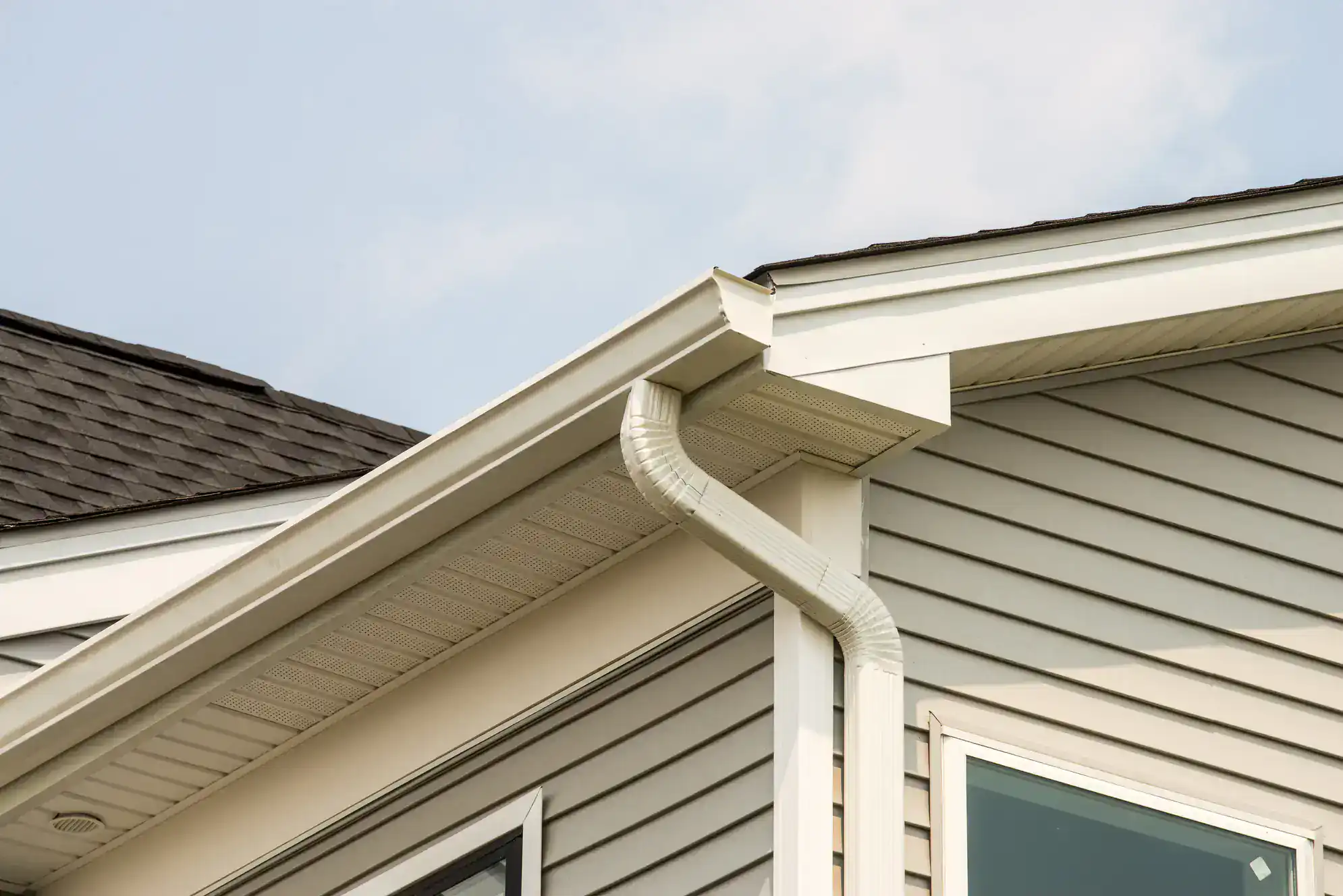
Every gutter installation we complete in Kingsland is seamless aluminum, custom-fabricated on-site to your home’s exact measurements. Seamless means no joints along the run — which eliminates the most common failure point in older sectional systems. For homes in the Meadowlands-adjacent corridor where freeze-thaw cycling is more pronounced than in higher-elevation Bergen County towns, that matters. Sectional gutters that were installed 20 or 30 years ago have joints that have been expanding and contracting through hundreds of freeze cycles. At some point, they stop sealing.
We handle downspout placement and routing as part of the installation — not as an add-on. That includes making sure your leader pipes terminate in compliance with Lyndhurst Township’s code requirements. If you’ve had a previous contractor install gutters that drain at grade next to your foundation, that’s not just a performance issue — it’s a potential code violation in this township.
We also look at the full exterior picture. That means checking fascia board condition before we mount anything, evaluating whether your current gutter sizing matches your roof’s actual square footage and the rainfall intensity this part of Bergen County regularly sees, and flagging any roofing or siding issues that could affect water management. If your home has storm-damaged gutters that may be covered by your homeowner’s insurance, we work directly with your adjuster and handle the documentation. You shouldn’t have to figure that process out alone after a storm has already put you through enough.
Does Lyndhurst Township require gutters on residential homes in Kingsland?
Yes — and this is one of the details that separates contractors who actually know this area from those who don’t. Lyndhurst Township’s municipal code requires that all buildings have gutters and leader pipes for water drainage. Beyond that, the code specifies that downspouts must be piped to the curb line, or if that’s not possible, they must drain into a stormwater or dry well system. That means a downspout that simply terminates at grade next to your foundation — which is how a lot of low-cost installations are done — is not code-compliant in Lyndhurst.
This matters for more than just compliance. Kingsland sits in a low-lying corridor between the Passaic River and the Meadowlands, where stormwater management is already a documented challenge for homeowners. A downspout that drains toward your foundation instead of away from it doesn’t just risk a code issue — it contributes directly to the basement flooding and stormwater intrusion that residents in this neighborhood deal with regularly. When we install gutters in Kingsland, proper drainage routing is built into the job, not treated as an optional upgrade.
How do I know if I need gutter repair or a full replacement in Kingsland?
The honest answer is that it depends on what’s actually failing — and that requires a real inspection, not a guess from the ground. There are situations where a targeted repair makes sense: a single section that took impact damage, a downspout that came loose, or a joint that’s separated but the rest of the system is structurally sound. But in Kingsland, where the majority of homes were built between the 1940s and 1960s, the more common scenario is a system that’s simply reached the end of its useful life.
Gutters last roughly 20 to 30 years under normal conditions. In this part of Lyndhurst, where the Meadowlands-adjacent microclimate creates more pronounced freeze-thaw cycling than you’d see in inland Bergen County towns, that timeline can be shorter for older sectional systems. If your gutters are pulling away from the fascia, showing visible rust or corrosion, sagging between hangers, or overflowing during moderate rain, those are signs that the system is done — not just in need of a patch. We’ll tell you honestly which situation you’re in during the free inspection, and we won’t recommend replacement if repair is genuinely the right call.
What size gutters does my Kingsland home actually need?
Most residential homes in this area are well-served by 5-inch K-style aluminum gutters, but that’s not a universal answer — it depends on your roof’s square footage, pitch, and the volume of water your drainage system needs to handle during peak rainfall. Bergen County, including Lyndhurst and the Kingsland corridor, regularly sees summer thunderstorms with rainfall rates of 2 to 3 inches per hour. A gutter system that was sized for average rainfall can be completely overwhelmed by those conditions, even if it’s in perfect structural shape.
For larger rooflines, steeper pitches, or homes with multiple drainage planes converging at a single downspout, 6-inch gutters may be the right call. Downspout sizing matters just as much — an undersized downspout is a bottleneck that limits the whole system regardless of how well the gutter is installed. When we do your inspection, we calculate the actual water volume your roof produces and size the system accordingly. You won’t get a one-size-fits-all recommendation because that’s not how water management works, especially in a neighborhood with Kingsland’s drainage profile.
How much does gutter installation cost for a home in Kingsland, NJ?
For most single-family homes in Kingsland, a full seamless aluminum gutter installation runs somewhere between $1,800 and $4,500, depending on the linear footage, the number of downspouts, whether any fascia repair is needed before installation, and how the downspouts need to be routed to meet Lyndhurst Township’s code requirements. Homes with more complex rooflines, multiple stories, or drainage routing that requires running leader pipes to the curb line rather than terminating at grade will typically be on the higher end of that range.
What affects cost more than most homeowners expect is the condition of the fascia boards. If the wood behind your gutters has rotted — which is common on Kingsland’s mid-century housing stock — that has to be addressed before new gutters go up, or the installation won’t hold. We include a fascia assessment in every free estimate so you know the full picture before any work starts. There are no line items that appear after the fact. The number we give you is the number you pay.
Can storm damage to my gutters be covered by homeowner's insurance in New Jersey?
It can be, and in Bergen County — where flash flooding, summer microbursts, and Passaic River overflow events regularly cause gutter damage — it’s worth knowing how the process works before you assume you’re paying out of pocket. Homeowner’s insurance typically covers sudden, storm-related damage: wind-driven debris impact, gutter sections torn away during a severe storm, or damage caused by falling tree limbs. What it generally doesn’t cover is deterioration over time or gutters that failed due to lack of maintenance.
The key is documentation. Insurance adjusters need to see clear evidence that the damage was storm-caused, not pre-existing wear. We work directly with adjusters on storm damage claims, document the damage properly, and help you understand what your policy is likely to cover before you commit to anything. If you’ve had a significant storm event recently — and Kingsland residents know how hard this corridor can get hit — it’s worth having an inspection before you assume the cost is yours to absorb entirely.
How long does gutter installation take on a typical Kingsland home?
For most single-family homes in Kingsland, the installation itself is typically completed in a single day. The timeline depends on the size of the home, the number of gutter runs and downspouts, and whether any fascia work needs to happen before the gutters go up. If fascia repair is part of the job, that may add time — but we’ll tell you that upfront when we give you the estimate, not the morning the crew shows up.
Because we fabricate seamless gutters on-site, the process is more efficient than it might seem. The equipment comes to your home, every run is cut to your exact measurements on the spot, and installation follows directly. There’s no waiting on pre-fabricated sections to arrive or be modified. For Kingsland homeowners who are dealing with deteriorating gutters heading into Bergen County’s spring storm season or preparing for another round of summer thunderstorms, the turnaround from estimate to completed installation is typically fast — we don’t carry a six-week backlog, and we don’t treat scheduling like an afterthought.