
Gutter Installation in Keyport, NJ
Bayshore Homes Need More Than Basic Gutters
Hear from Our Customers
Rain Gutter Installation in Keyport
When gutters fail on a Keyport home, water doesn’t just drip off the edge — it finds the path of least resistance. That means fascia rot, foundation saturation, and water pushing behind your siding. In a borough where nearly 70% of homes were built before 1970, those are not hypothetical risks. They’re what happens when a 60-year-old sectional gutter system finally gives out.
Good gutter installation stops that chain reaction before it starts. Water leaves your roof, moves through a properly sloped system, and exits well away from your foundation — every time, including during a nor’easter that’s been sitting over Raritan Bay for 18 hours. That’s the kind of rainfall event Keyport gets, and your system needs to be sized and installed for it, not for some national average that has nothing to do with your street.
The other thing that changes is peace of mind going into storm season. When you know your gutters are correctly pitched, properly anchored to sound fascia, and directing water where it belongs, you stop watching the forecast with dread. That’s the real outcome — not just dry walls, but confidence that your home is ready for whatever comes in off the bay.
Gutter Contractors in Keyport, NJ
USA Home Remodeling is a licensed New Jersey home improvement contractor (License #13VH10605800) with over ten years of hands-on exterior work across Monmouth County and the surrounding region. We’re not a national franchise with a Keyport zip code in a database — we’re a contractor who has worked on homes in this area and understands what the bayshore environment does to exterior systems over time.
We focus on roofing, gutters, and siding as a connected system — because on a 1950s colonial near the waterfront in Keyport, they are. Rotted fascia, worn drip edge, and improper downspout placement don’t exist in isolation. When we come out for an estimate, we look at the full picture and tell you exactly what we find, including the things that don’t benefit us to mention.
Free inspections, written estimates, no pressure. You get the information you need to make the right call — and we’re still here after the job is done if something needs attention.
Home Gutter Installation in Keyport
It starts with a free inspection. We come out, look at your existing system, check the fascia boards for rot or damage, assess the roofline, and evaluate whether your current downspout placement is actually moving water away from your foundation. If there are issues beyond the gutters themselves — and on older Keyport homes, there often are — we tell you upfront before anything is quoted or scheduled.
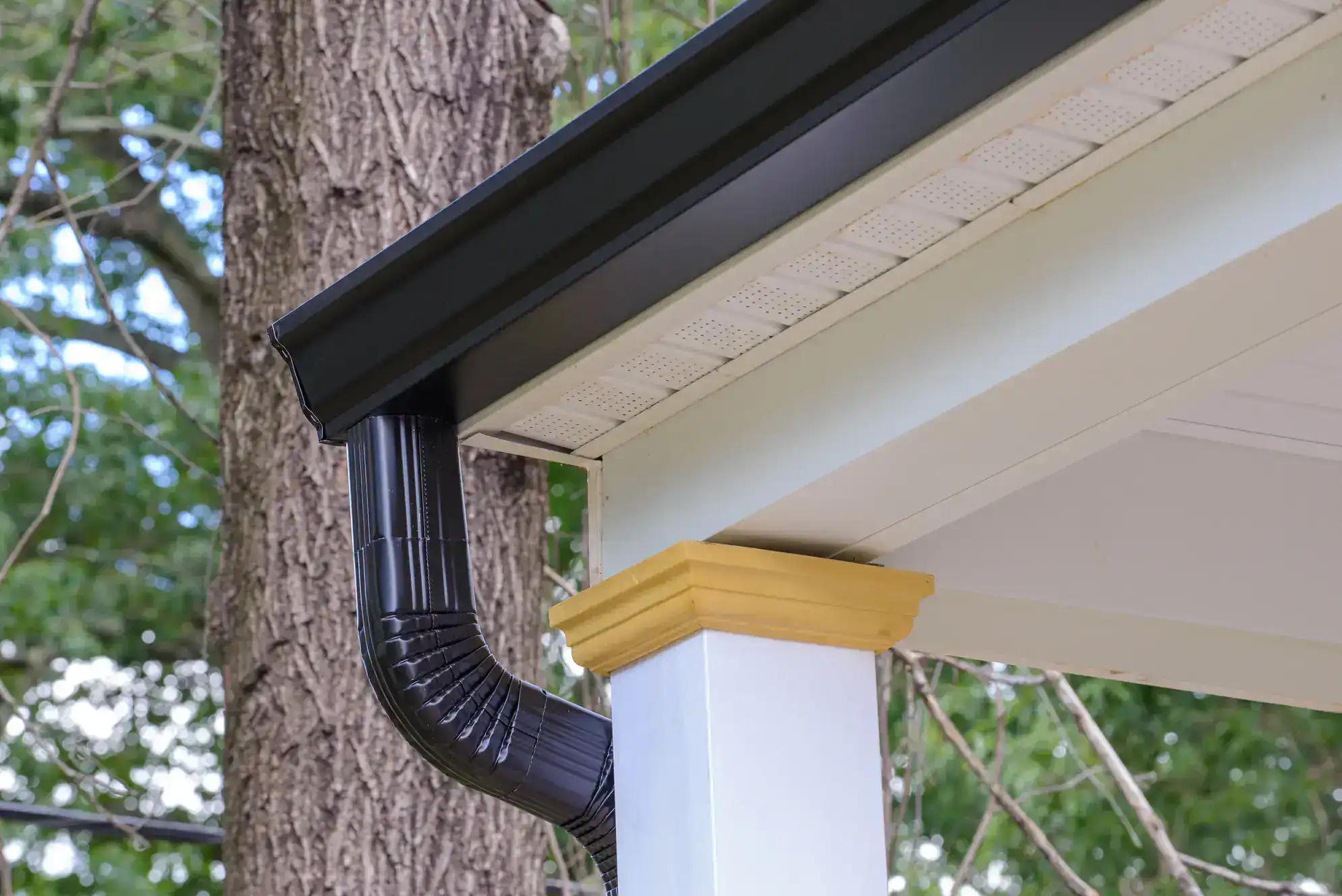
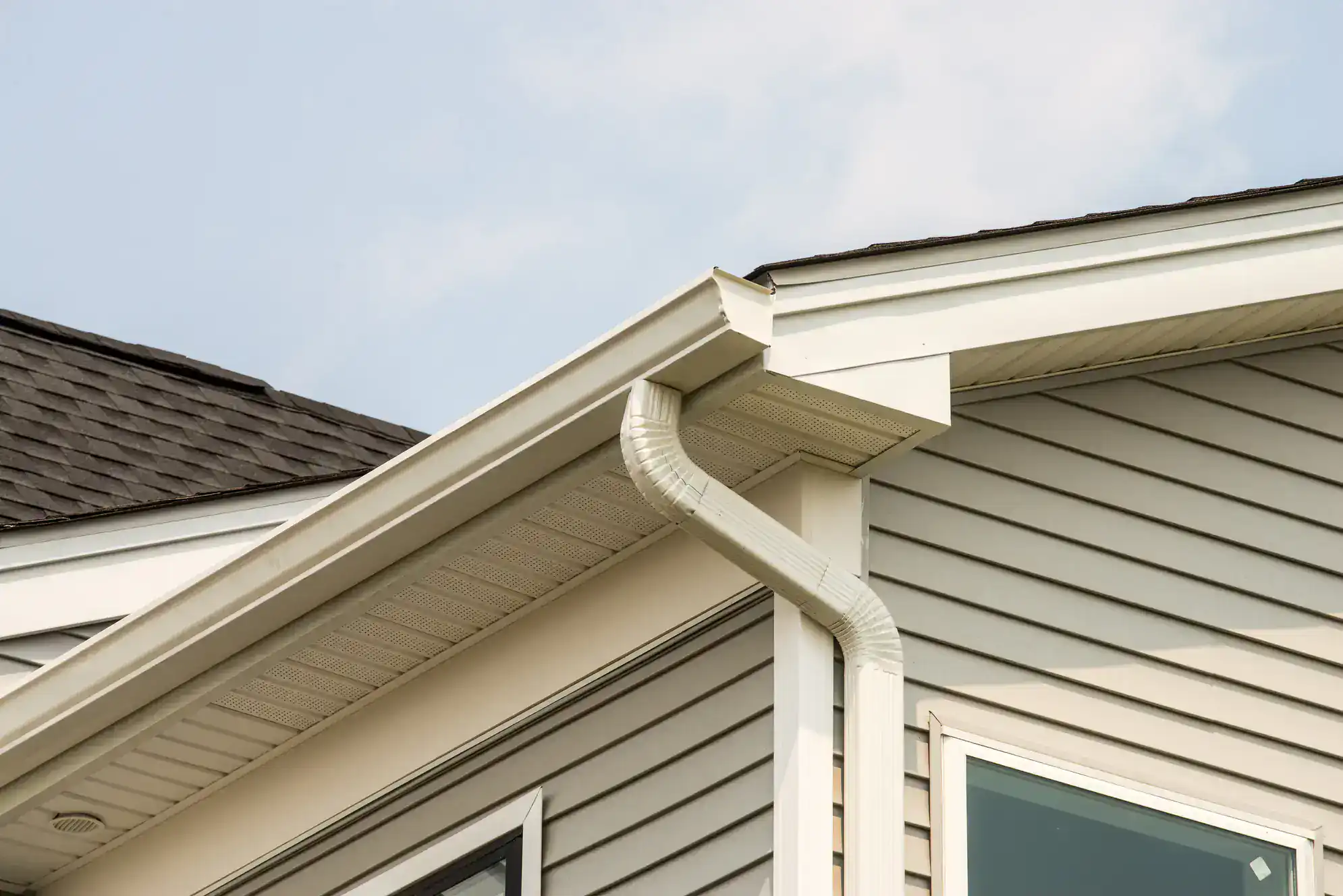
Once you approve the written estimate, we fabricate your new gutters on-site. Every run is custom-cut to your home’s exact measurements using seamless aluminum stock, which eliminates the joints and seams where sectional gutters always fail first. We calculate the slope for your specific roofline and size the downspouts based on the actual drainage load your roof produces — not a one-size-fits-all spec.
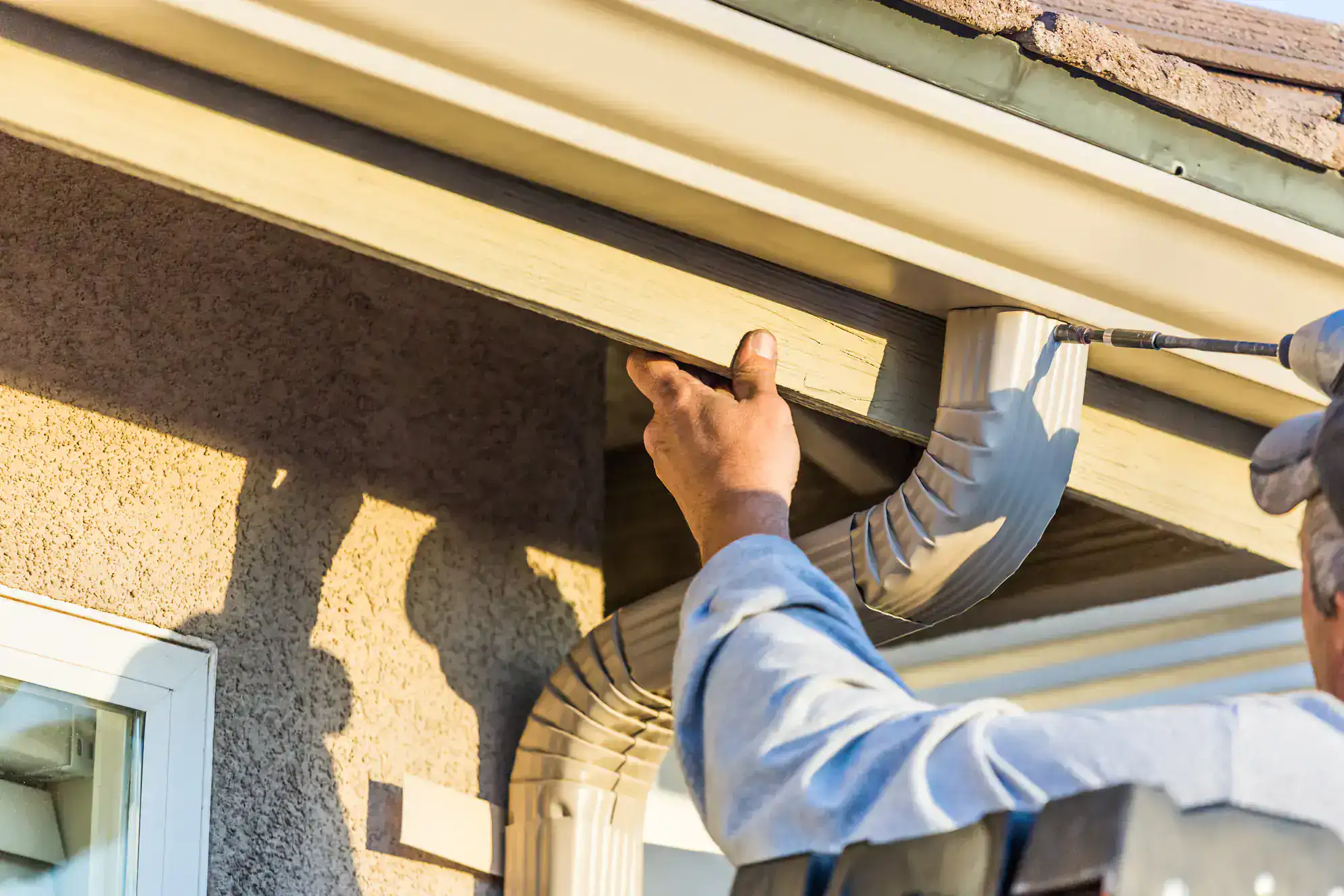
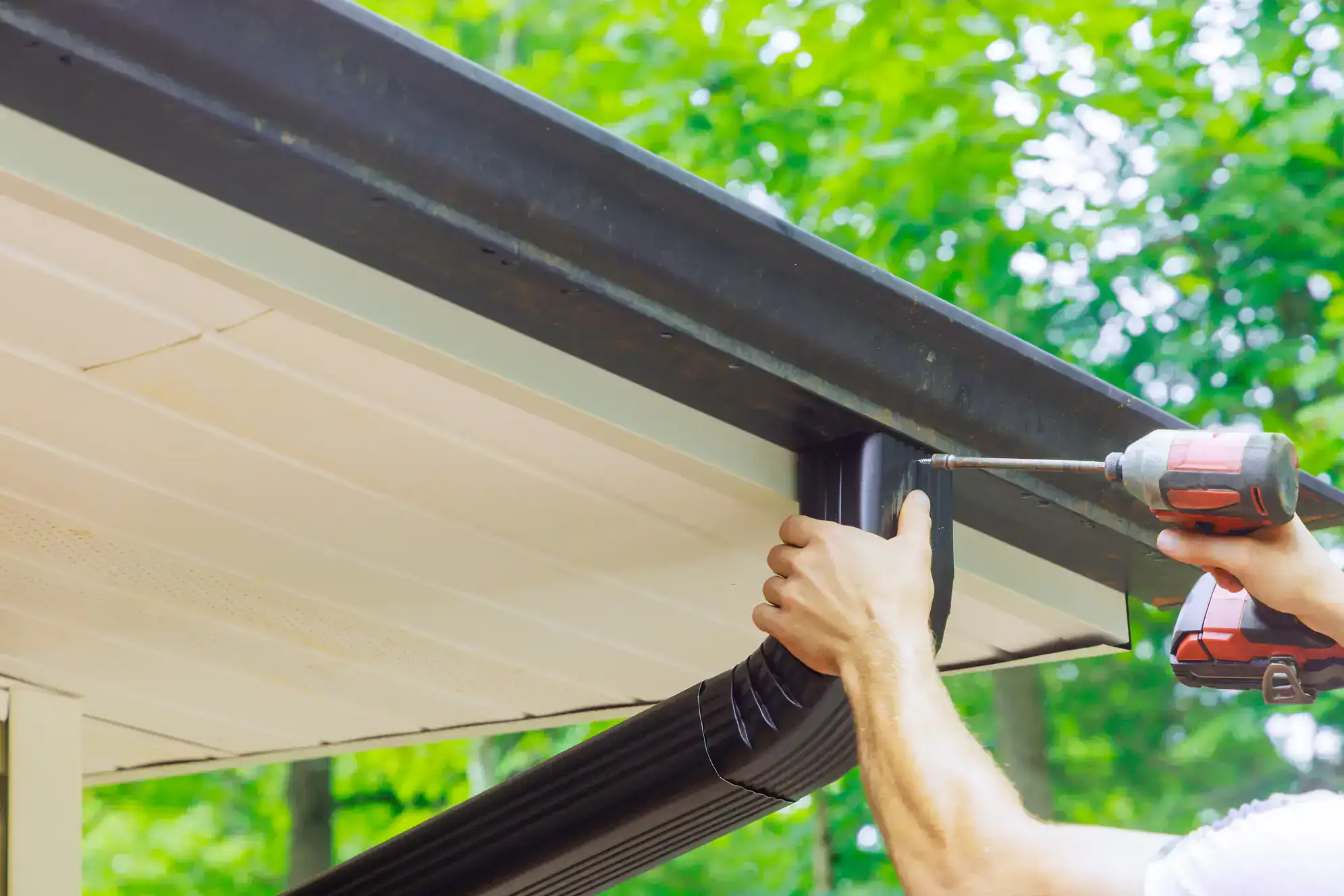
Installation day is straightforward. We mount the system, secure every hanger, seal every connection point, and confirm that water is exiting at ground level in the right direction. Before we leave, we walk you through what was installed and why. In Keyport, where fall nor’easters and bay-driven storms are part of life, the last thing you want is to find out your new gutters weren’t installed correctly during the first real test.
Ready to get started?
Roof Gutter Installation in Keyport, NJ
Every gutter installation we do in Keyport starts with the same question: what does this specific home actually need? That depends on the roof’s pitch, the square footage draining into each run, the condition of the fascia, and how close the home is to the water. A house two blocks from Raritan Bay faces salt air exposure that accelerates corrosion on metal components — which is why we use seamless aluminum with a factory-applied baked-on finish, not painted or galvanized systems that degrade faster in coastal conditions.
We also look at downspout count and placement carefully. Undersized or poorly positioned downspouts are one of the most common causes of gutter overflow during heavy rain events — and in Monmouth County, heavy rain events are not rare. We follow proper load calculations to make sure every section of your system has enough exit capacity to handle peak flow without backing up.
If your fascia boards are compromised — which is common in Keyport’s older housing stock — we address that before new gutters go up. Installing new gutters on rotted wood is a short-term fix that fails fast. We’d rather tell you that now than have you call us back in two years with the same problem. Everything is documented in your written estimate so you know exactly what’s being done and what it costs before work begins.
How do I know if my Keyport home needs gutter replacement or just repairs?
The honest answer is that it depends on what’s actually failing. Minor issues — a loose hanger, a small hole, a single section pulling away from the fascia — are often repairable without replacing the entire system. But when you’re dealing with a home built in the 1950s or 1960s, which describes a large portion of Keyport’s housing stock, the more relevant question is how much life is left in the existing system overall.
Sectional gutters from that era are held together by joints and seams that degrade over time. When one section starts failing, others usually aren’t far behind. If we come out and find widespread sagging, multiple separation points, heavy rust, or fascia rot underneath the existing gutters, replacement is almost always the better investment. You get a new seamless system built to current standards, properly sized for your roof, and installed on sound fascia — rather than patching a system that’s going to need full replacement in two or three years anyway. We’ll give you a straight answer on which direction makes sense after the inspection.
What gutter material is best for homes close to Raritan Bay?
For homes in Keyport — especially those within several blocks of the waterfront — seamless aluminum with a factory-baked color finish is the standard we recommend. Salt air is genuinely corrosive to metal components, and painted or galvanized steel gutters that might hold up fine in an inland town will degrade noticeably faster in a bayshore environment. The factory-applied finish on quality aluminum stock is significantly more resistant to that kind of exposure than field-painted or galvanized surfaces.
Copper is another option that handles salt air well and looks excellent on older colonial-style homes, but it carries a substantially higher cost. For most Keyport homeowners, seamless aluminum hits the right balance of durability, performance, and value. What we don’t recommend for coastal exposure is vinyl — it becomes brittle over time, especially with the temperature swings and UV exposure this area sees, and it doesn’t hold up to the kind of wind-driven rain that comes off the bay during a serious storm.
How are gutters sized, and does roof pitch affect the installation in Keyport?
Gutter sizing is based on the drainage area of the roof — meaning the square footage of roof surface that drains into each gutter run — combined with the local rainfall intensity. In Monmouth County, coastal rainfall rates are higher than inland NJ averages, which means undersizing is a real risk when contractors apply generic specs without accounting for where the home actually sits.
Roof pitch matters in two ways. A steeper pitch moves water faster, which increases peak flow into the gutter and can require wider gutter profiles or additional downspouts to handle it without overflow. It also affects how the gutter is positioned relative to the roofline to catch water properly without allowing it to overshoot during heavy rain. On the older colonial and cape cod homes common in Keyport, we often find that original gutter systems were installed at incorrect slopes — either too flat, which causes standing water and debris buildup, or pitched unevenly, which concentrates flow in one spot. We correct for that during installation so the system drains consistently from end to end.
Does gutter installation in Keyport, NJ require a permit?
Standard gutter replacement on an existing residential structure typically does not require a separate building permit under New Jersey’s Uniform Construction Code. The work is generally classified as routine maintenance or like-for-like replacement, which falls outside the permit threshold for most NJ municipalities, including Keyport.
Where it gets more nuanced is when the scope of work goes beyond the gutters themselves. If we find that your fascia boards need to be replaced — which is common on older homes in Keyport — or if there’s any structural modification to the roofline or soffit involved, that can trigger a permit requirement depending on the extent of the work. We’re familiar with Monmouth County’s local code framework and will let you know during the estimate if anything in your specific project is likely to require a permit. You won’t find out about it after the fact.
How does Hurricane Sandy-level storm damage affect gutter systems on older homes?
Keyport recorded a 7.9-foot high water mark during Hurricane Sandy — the highest along Monmouth County’s bay coastline. For homes that went through that event, the visible damage was often obvious: flooded basements, damaged siding, compromised foundations. But gutter systems took hits that weren’t always as visible, and many were never properly assessed afterward.
Storm surge and sustained wind-driven rain at that intensity can pull gutters away from fascia, crack or crush sections under debris load, and permanently alter the slope of a system that was marginal to begin with. If your gutters were in place during Sandy and haven’t been replaced since, there’s a reasonable chance they’re operating at reduced capacity — holding up under normal rain but not equipped for the next serious storm event. Beyond Sandy specifically, the regular nor’easters that track up through Raritan Bay deliver the kind of sustained, heavy rainfall that exposes every weak point in a drainage system. An inspection will tell you where yours stands.
How much does professional gutter installation cost in Keyport, NJ?
For a typical single-family home in Keyport, seamless aluminum gutter installation generally runs somewhere in the range of $1,000 to $2,500, depending on the linear footage of gutter needed, the number of downspouts, the height and complexity of the roofline, and whether any fascia repair is required before installation can proceed. Homes with multiple stories, steep pitches, or significant fascia damage will land toward the higher end of that range.
What affects cost most in Keyport specifically is the condition of the existing fascia. On homes built in the 1940s through 1960s — which make up a large share of the borough’s housing stock — fascia rot is common, and it has to be addressed before new gutters go up. That’s not an upsell; it’s a structural requirement. Gutters mounted to rotted wood will fail within a season or two regardless of how well the gutter itself was installed. We include fascia assessment in every free inspection and give you a clear, itemized written estimate before any work begins — so you know exactly what you’re paying for and why.