
Siding Installation in Keyport, NJ
Bayshore Homes Need More Than a Fresh Look
Hear from Our Customers
Siding Contractors in Keyport, NJ
When your siding is doing its job, you stop thinking about it. No more water stains creeping down interior walls after a nor’easter. No more soft spots around window frames where moisture has been sitting for years. No more wondering whether the next coastal storm is going to expose a problem you didn’t know you had. That’s what good siding installation actually delivers — not just a better-looking house, but a house that handles what Keyport throws at it.
Living on the Raritan Bay corridor means your home faces conditions that most New Jersey towns simply don’t. Salt air off the bay accelerates deterioration in ways that aren’t always visible until real damage has already started. Wind-driven rain during a nor’easter tests every seam and panel overlap in ways that calm-weather inspections never reveal. The homes along this stretch of Monmouth County need siding that’s selected and installed with that environment in mind — not whatever material was easiest to source or quickest to hang.
Beyond protection, there’s real financial value here. Updated siding is consistently one of the highest-return exterior improvements at resale, and in a borough that’s been actively reinvesting in itself since Sandy, that matters. Whether you’re planning to stay for decades or thinking about listing in the next few years, a properly installed exterior protects what you’ve built in Keyport.
Local Siding Company Serving Keyport, NJ
We’ve been doing exterior work in New Jersey for roughly ten years. Not as a franchise. Not as a rotating crew of subcontractors. As a family-operated business where the people responsible for your project are the same people who built our reputation — and who have every reason to protect it.
We’ve worked on homes throughout Monmouth County, including the Bayshore communities along Routes 35 and 36 — Hazlet, Aberdeen, Union Beach, and Keyport itself. We know what aging housing stock in this area looks like. We know what post-Sandy repairs that are now 10-plus years old tend to reveal. We know how to have an honest conversation about whether your Keyport home needs targeted repair or a full replacement.
Our licensing is current, our insurance is real, and our estimates are written — not verbal. When you call us, you get a straight answer, a clear number, and a crew that shows up when we said we would.

Residential Siding Contractors in Keyport, NJ
It starts with a free inspection. We come out, look at your current siding, check for moisture intrusion, assess the substrate condition, and give you a clear read on what’s actually going on. A lot of Keyport homeowners come to us thinking they need a full replacement and find out they need targeted panel work — or the opposite. Either way, you leave that conversation knowing the truth, not a sales pitch.
From there, we put together a written estimate that breaks down materials, labor, and timeline. We’ll walk you through material options that make sense for your specific home — accounting for your exposure level, your budget, and your long-term goals. For homes close to the bay, that conversation often includes fiber cement versus vinyl, wind ratings, and what proper housewrap installation looks like in a coastal environment. These aren’t upsells. They’re decisions that affect how long your siding actually lasts.
Once you’re ready to move forward, we handle the permit process with Keyport’s Construction Office — because siding replacement in New Jersey typically requires a permit under the state’s Uniform Construction Code, and skipping that step creates real problems if you ever sell. Installation is scheduled around your timeline, and we don’t leave until the job passes inspection and you’ve walked the perimeter with us.

Ready to get started?
Vinyl Siding Contractors in Keyport, NJ
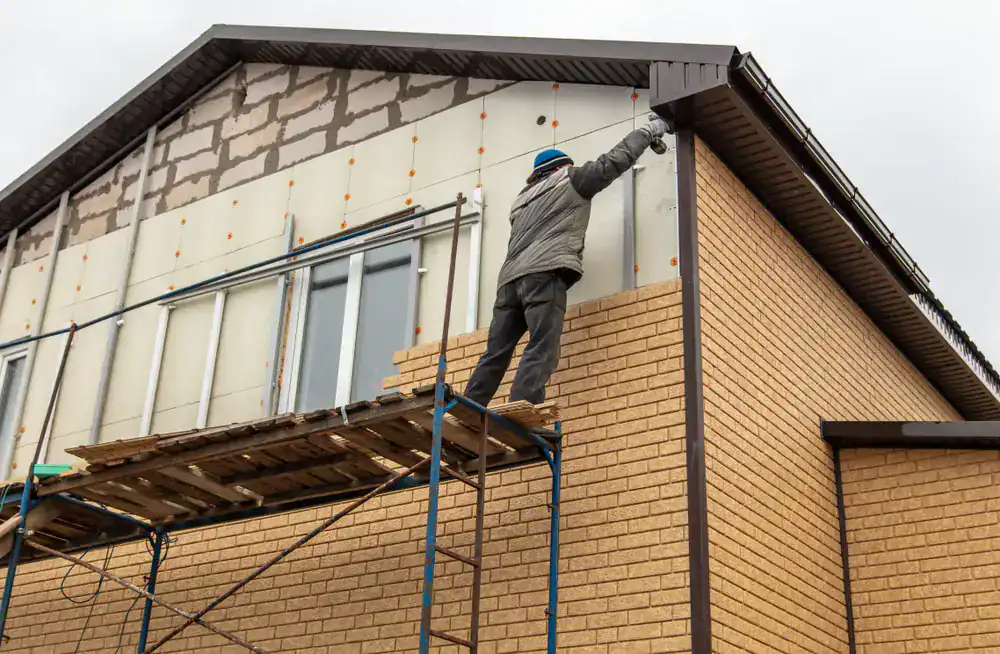
Every siding installation we do starts with the substrate. Before a single panel goes up, we’re checking the sheathing underneath — because in Keyport’s older housing stock, what’s behind the existing siding often tells a different story than the surface does. If there’s damaged plywood, compromised framing, or moisture that’s been sitting for a while, we address it before it gets covered up. That’s not an upsell. That’s how the job is supposed to be done.
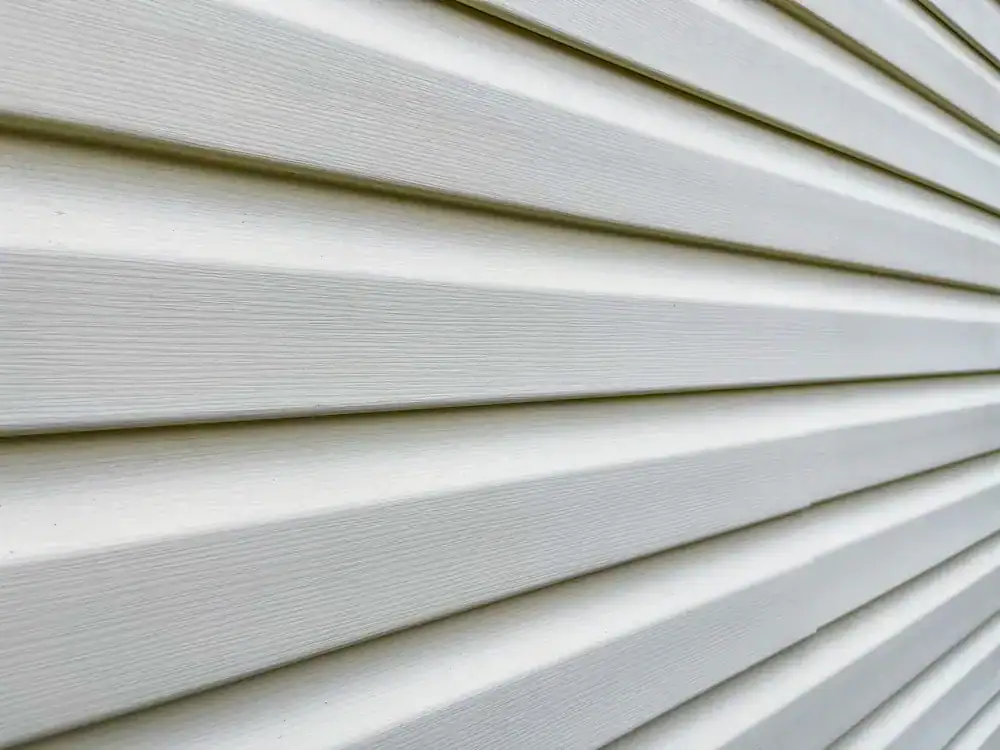
We install both vinyl and fiber cement siding, and we’ll give you an honest recommendation based on your home’s specific situation. Vinyl is a strong choice for many Keyport homes — it’s low maintenance, it’s come a long way in quality, and when it’s properly installed with the right expansion gaps and corrosion-resistant fasteners, it holds up well in a coastal climate. Fiber cement is worth the conversation for homes with heavier bay exposure or for homeowners who want a longer material lifespan and a look that reads more like wood without the maintenance.
All installations we complete include proper housewrap or moisture barrier, fully sealed window and door surrounds, and finished trim work. We’re also a full exterior contractor — so if your gutters or roofline have issues that are contributing to siding deterioration, we can address those in the same project rather than leaving you to coordinate a second crew.

Do I need a permit for siding installation in Keyport, NJ?
Yes, in most cases. New Jersey’s Uniform Construction Code requires a permit for siding replacement that goes beyond minor cosmetic repair — so if you’re doing a full panel replacement, adding new housewrap, or repairing substrate, you’ll need to pull a permit through Keyport Borough’s Construction Office before work begins. It’s not a complicated process, but it’s not optional either.
The reason it matters beyond just compliance: unpermitted work creates real headaches when you go to sell your home. Real estate transactions in Monmouth County routinely surface unpermitted improvements during title searches, and they can delay or derail a closing. We handle the permit process as part of the job so you’re not left managing that on your own or discovering the problem years later.
How do I know if my siding needs repair or full replacement?
The honest answer is that you often can’t tell from the outside alone. Surface fading, minor cracking, or a few loose panels can sometimes be addressed with targeted repair. But in Keyport’s coastal environment, what looks like surface damage is sometimes sitting on top of moisture intrusion that’s been working its way into the sheathing for years — especially on homes where post-Sandy repairs were done quickly and are now a decade old.
The way to know for sure is a proper inspection, not a guess from the curb. When we come out, we’re looking at panel condition, checking around every penetration and window surround, and assessing what the substrate feels like where we can access it. That gives you a real answer — not one that defaults to the most expensive option. Some homes genuinely need full replacement. Others need less than the homeowner feared. We’ll tell you which one you’re dealing with.
What siding material holds up best near Raritan Bay in Keyport?
Both vinyl and fiber cement can perform well in Keyport’s bayfront environment, but the details of installation matter as much as the material itself. For vinyl, you want a product with a solid UV stabilization rating and proper installation with corrosion-resistant fasteners — standard steel fasteners will oxidize faster than you’d expect in salt air. Panels also need to be installed with the correct expansion gaps, because vinyl that’s nailed too tight will buckle and crack when temperatures drop, which happens every winter in this part of Monmouth County.
Fiber cement has a natural advantage near the water because it’s non-reactive to salt air and doesn’t expand and contract the way vinyl does. It’s heavier, takes longer to install, and requires proper priming and sealing at all cut edges — but it’s genuinely built for the kind of exposure Keyport homes deal with. If your home is close to the waterfront or has had recurring moisture issues, it’s worth the conversation. We can walk you through the cost difference and the long-term math during your estimate.
How long does siding installation take on a typical Keyport home?
For most single-family homes in Keyport, a full siding installation runs between three and five days of active work, depending on the size of the home, the material being installed, and what we find once the old siding comes off. If there’s substrate repair involved — which is more common than most homeowners expect on older homes in this area — that adds time before panels go up.
Weather is always a factor in coastal communities. We schedule with buffer time built in for the kind of weather patterns that come off the bay, and we don’t rush installation to beat a forecast. Siding that’s hung in poor conditions — cold snaps that make vinyl brittle, or rain that prevents proper adhesion of moisture barriers — is siding that fails early. We’d rather push a start date by a day than cut corners on installation conditions. Your timeline will be communicated clearly upfront, and we’ll keep you updated if anything changes.
What should I look for when hiring a siding contractor in Keyport, NJ?
Start with the basics that are legally required in New Jersey: every home improvement contractor working in the state must be registered with the NJ Division of Consumer Affairs as a Home Improvement Contractor. Ask for that registration number before you sign anything. Beyond that, verify they carry general liability insurance and workers’ compensation — not just because it protects them, but because if they don’t have it and something goes wrong on your property, you’re the one holding the liability.
After credentials, look at their track record in your specific area. A contractor who’s worked extensively in Bayshore communities like Keyport, Hazlet, and Union Beach understands the coastal installation requirements that inland contractors may never have dealt with. Check their Google reviews for recency and specificity — reviews that describe the actual work, not just general satisfaction, tell you more. Get your estimate in writing. A contractor who gives you a verbal number and a handshake is a contractor who can change that number after the crew arrives.
Why does siding installation cost more on bayfront homes in Keyport?
A few reasons, and they’re all legitimate. First, material selection for coastal exposure typically means stepping up to higher-grade vinyl or fiber cement — products that cost more than builder-grade options but actually hold up in a salt-air, high-wind environment. Second, proper coastal installation requires corrosion-resistant fasteners throughout, which adds material cost but prevents the kind of fastener failure that shows up as loose or rattling panels within a few years of installation.
Third — and this one surprises some homeowners — older homes near the Keyport waterfront often have more substrate damage than homes in sheltered inland areas. Years of wind-driven moisture, combined with the age of the housing stock, means there’s a higher likelihood of finding compromised sheathing or framing once the existing siding comes off. That work has to happen before new panels go up, and it adds to the overall cost. We always discuss any substrate findings with you before proceeding, so there are no surprise charges after the job is underway.