
Gutter Installation in Cliffside Park, NJ
When Your Home Sits on the Palisades, Gutters Aren't Optional
Hear from Our Customers
Rain Gutter Installation in Cliffside Park
Most gutter problems don’t announce themselves loudly. They show up as a water stain creeping down your siding, a basement that smells off after heavy rain, or a foundation crack you notice during a home inspection. By the time it’s obvious, the damage is already done — and in Cliffside Park, where single-family homes routinely sit at $800,000 or more, the cost of ignoring it is steep.
The homes throughout Grantwood, Shadyside, and Central Cliffside Park were largely built in the 1960s. That’s roughly 60 years of freeze-thaw cycles, summer microbursts, and fall leaf loads working against sectional gutters that were never designed to last this long. What you’re dealing with isn’t bad luck — it’s physics and time catching up with an aging system.
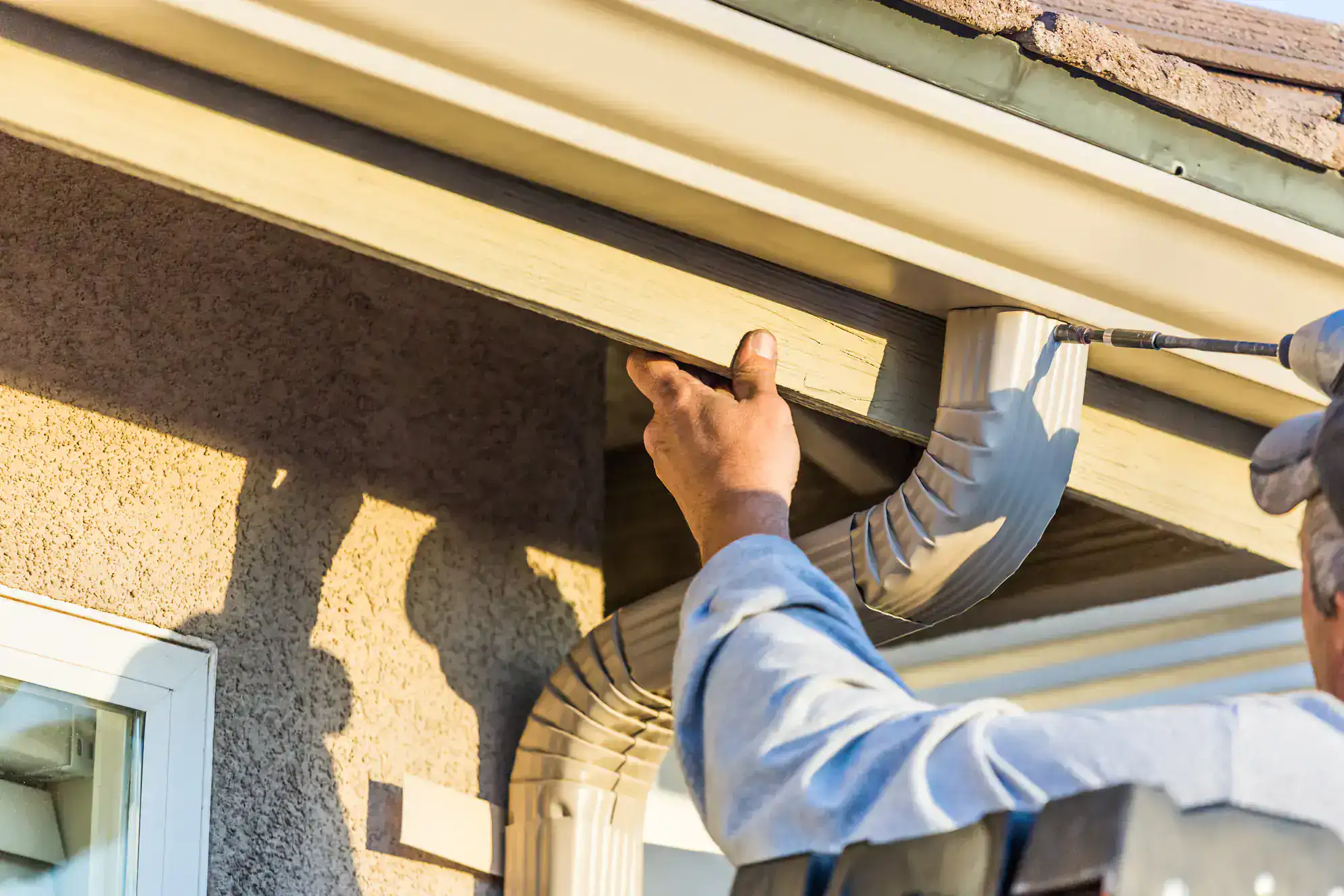
When rain gutter installation in Cliffside Park is done correctly — properly sloped, correctly sized for your roofline, with downspouts positioned to move water away from your foundation — the difference is immediate. No more overflow pooling against your home. No more water sheeting down your siding during a storm. And on a property this close to the Palisades cliff edge, no more runoff accelerating erosion on slopes that have nowhere to absorb it. That’s your home protected the way it should be.
Gutter Contractors in Cliffside Park, NJ
We’re a licensed New Jersey home improvement contractor — License #13VH10605800, issued by the NJ Division of Consumer Affairs. That number is verifiable, and you should verify it. It means you have legal standing, warranty protection, and real recourse if anything goes wrong. Most of the lead-generation sites ranking for gutter contractors in Cliffside Park, NJ can’t say the same.
We’ve been serving Bergen County homeowners for over a decade, with manufacturer certifications that back our installation work with warranties that go beyond a contractor’s handshake promise. Our approach isn’t to sell you the most expensive job — it’s to look at your full exterior, tell you what’s actually failing, and give you a written estimate before you commit to anything.
From the residential streets near Anderson Avenue to the homes overlooking the Hudson along Palisade Avenue, the exterior conditions in Cliffside Park are specific. The density, the topography, the aging housing stock — it all factors into how a gutter system should be built here. That’s the kind of local knowledge that shows up in our work.
Home Gutter Installation in Cliffside Park, NJ
It starts with a free inspection. Before any numbers are discussed, one of our technicians walks your exterior — gutters, fascia boards, downspout placement, and drainage grade. On homes throughout Cliffside Park’s older residential neighborhoods, fascia boards that have been holding failing gutters for decades are often soft or partially rotted. If that’s what we find, we tell you upfront, because mounting new gutters on compromised wood is a job that fails before it starts.
From there, you get a written estimate with line-item detail. No verbal quotes that shift once work begins. No vague ranges that leave you guessing. The scope is defined, the price is fixed, and you decide whether to move forward — no pressure either way.
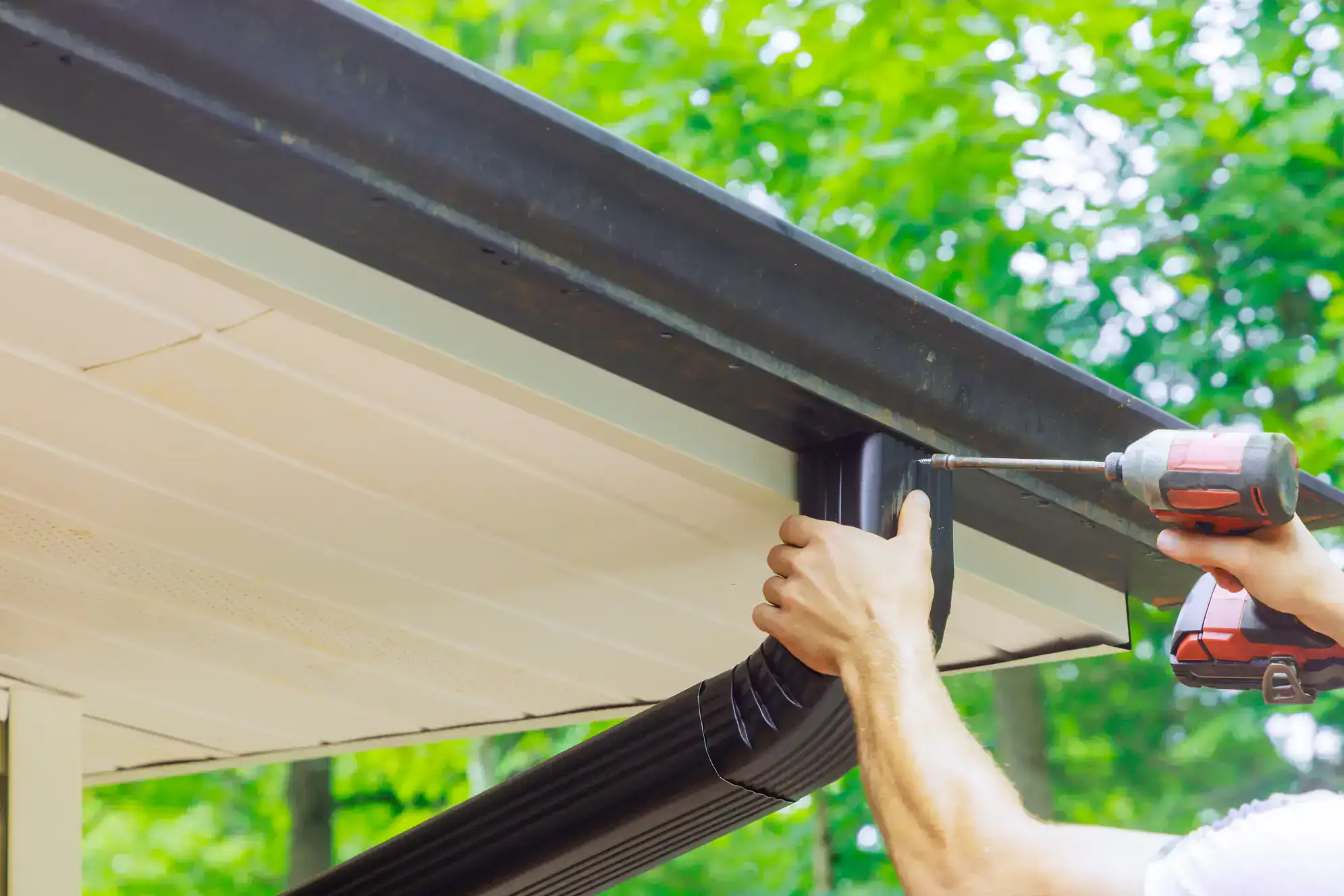
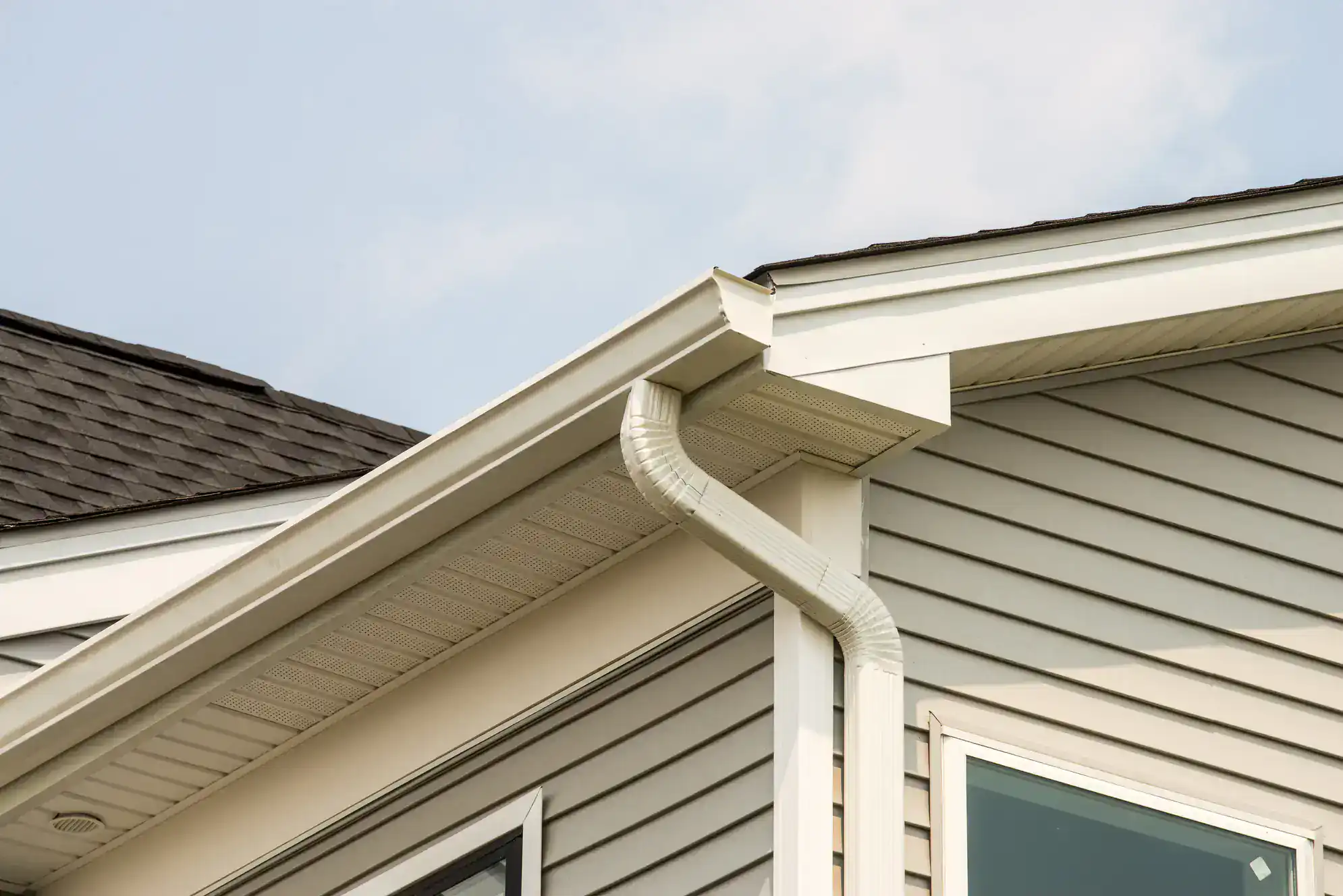
When the job starts, we custom-fabricate seamless aluminum gutters on-site, cut to the exact length of your roofline. There are no mid-run seams to separate or rust over time. Slope is calculated before a single bracket goes in — the standard is a quarter inch of drop per ten feet of run, and it’s not negotiable if you want water to actually reach your downspout. Bergen County’s stormwater intensity, including the flood watch conditions that regularly affect Eastern Bergen, means your system needs to be sized for real rainfall loads — not the national average. That’s what we build to.
Ready to get started?
Roof Gutter Installation in Cliffside Park, NJ
Roof gutter installation in Cliffside Park isn’t just a hardware swap. Every project we complete includes a full exterior assessment — because gutters don’t fail in isolation. If your roof’s drip edge is directing water behind the gutter channel, new gutters won’t stop the leak. If your siding shows water staining below the gutter line, the problem might be overflow, or it might be something the gutter is masking. You get a complete picture, not just a replacement quote.
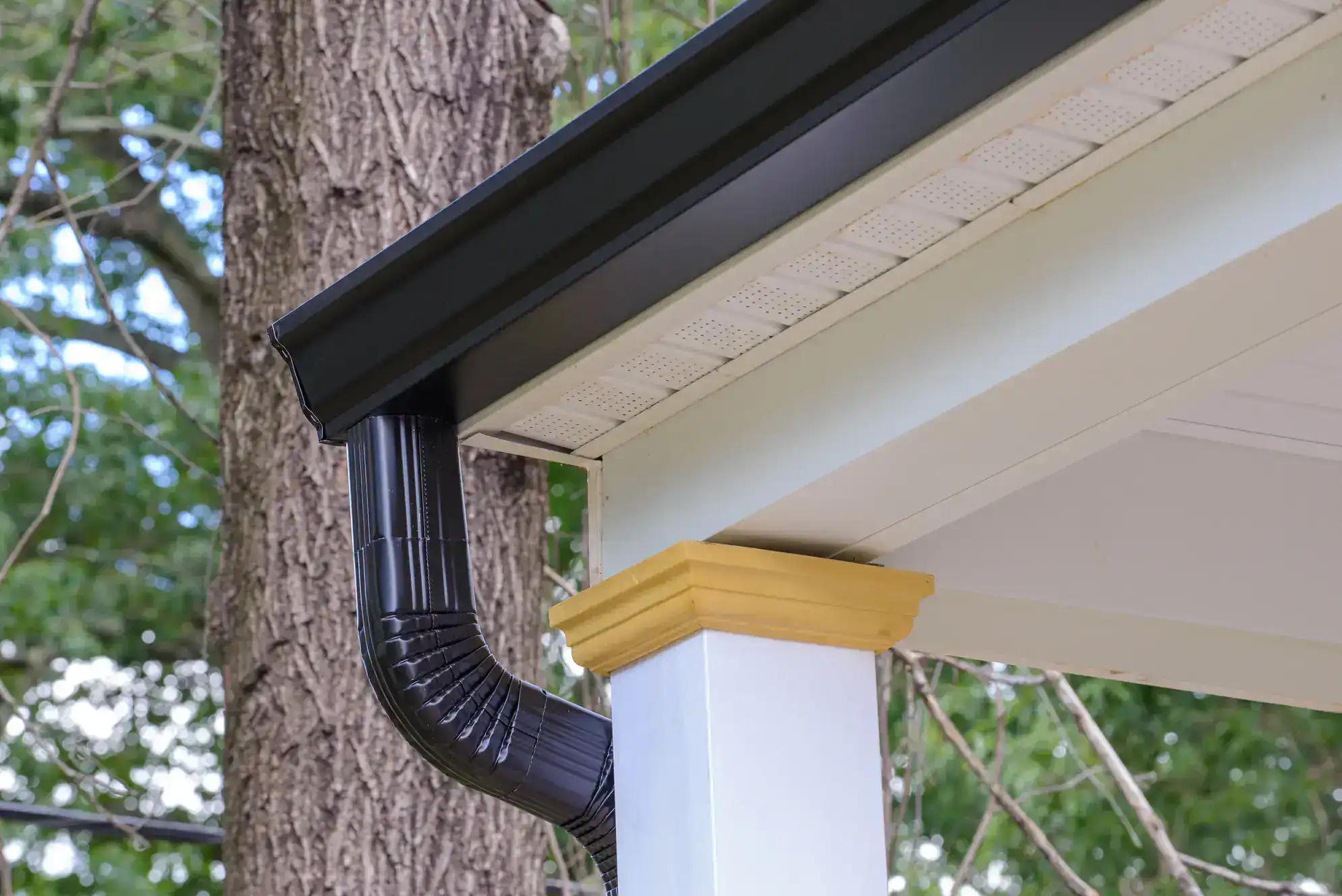
The seamless aluminum systems we install on Cliffside Park homes are fabricated to match your roofline exactly — no stock lengths, no seam joints in the middle of a run. Downspout placement is evaluated based on your specific lot grade and drainage path, which matters more in a borough this dense. When homes are separated by feet rather than acres, water that leaves your property incorrectly becomes your neighbor’s problem. Getting downspout positioning right isn’t a courtesy — it’s a necessity.
For homeowners whose gutters were damaged in a storm, we work directly with insurance companies. Bergen County sees its share of summer microbursts and nor’easters, and Cliffside Park’s own Flood Damage Prevention ordinance reflects how real that risk is. If your damage is covered, we document it, submit it, and advocate for what you’re owed. That’s part of what makes us a gutter installation company in Cliffside Park, NJ worth calling — not just one that shows up with a ladder.
Do I need a permit for gutter installation in Cliffside Park, NJ?
For a straight like-for-like gutter replacement — same placement, same configuration — a building permit is generally not required in New Jersey. The Cliffside Park Building Department handles permits and applications for home improvement work, and under the borough’s municipal code, any permit that is issued must have work commenced within one year or it becomes void. That’s worth knowing if you’re planning gutter work as part of a larger exterior renovation with a delayed timeline.
Where it gets more complicated is when the drainage pattern changes. If new downspout extensions redirect water toward a neighboring property, or if you’re adding underground drainage components, that may require review. In a borough as dense as Cliffside Park — where lots are measured in feet, not acres — those details matter. A licensed contractor familiar with Bergen County requirements will know when a permit applies and handle that process for you. That’s one more reason to avoid unlicensed operators who skip that conversation entirely.
How do I know if my gutters need full replacement or just repairs?
The honest answer is that it depends on what’s actually failing — and the only way to know for certain is a proper inspection. That said, there are patterns worth paying attention to. If you have sectional gutters on a home built in the 1960s or earlier, which covers a large portion of Cliffside Park’s single-family housing stock, those seams have been expanding and contracting through decades of New Jersey freeze-thaw cycles. When seams start separating, patching them buys time, not a solution.
Sagging gutters, gutters pulling away from the fascia, visible rust streaks, or water pooling at your foundation after rain are all signs that the system isn’t functioning. Overflow during moderate rain — not just during heavy storms — usually means the gutters are either clogged, undersized, or sloped incorrectly. If cleaning doesn’t fix the overflow, the problem is structural. A free inspection will tell you exactly where the line is between a repair that makes sense and a replacement that’s overdue.
What type of gutters work best on older Bergen County homes?
Seamless aluminum is the right choice for most residential homes in Cliffside Park and throughout Bergen County, and the reasons are practical. Aluminum doesn’t rust, it handles New Jersey’s temperature swings without warping, and because seamless gutters are fabricated in one continuous piece, there are no mid-run joints to fail over time. That last point matters more than most homeowners realize — the seam is where sectional gutters always fail eventually, and on a 1960s colonial in Shadyside or Grantwood, those seams have already had 60 years of stress applied to them.
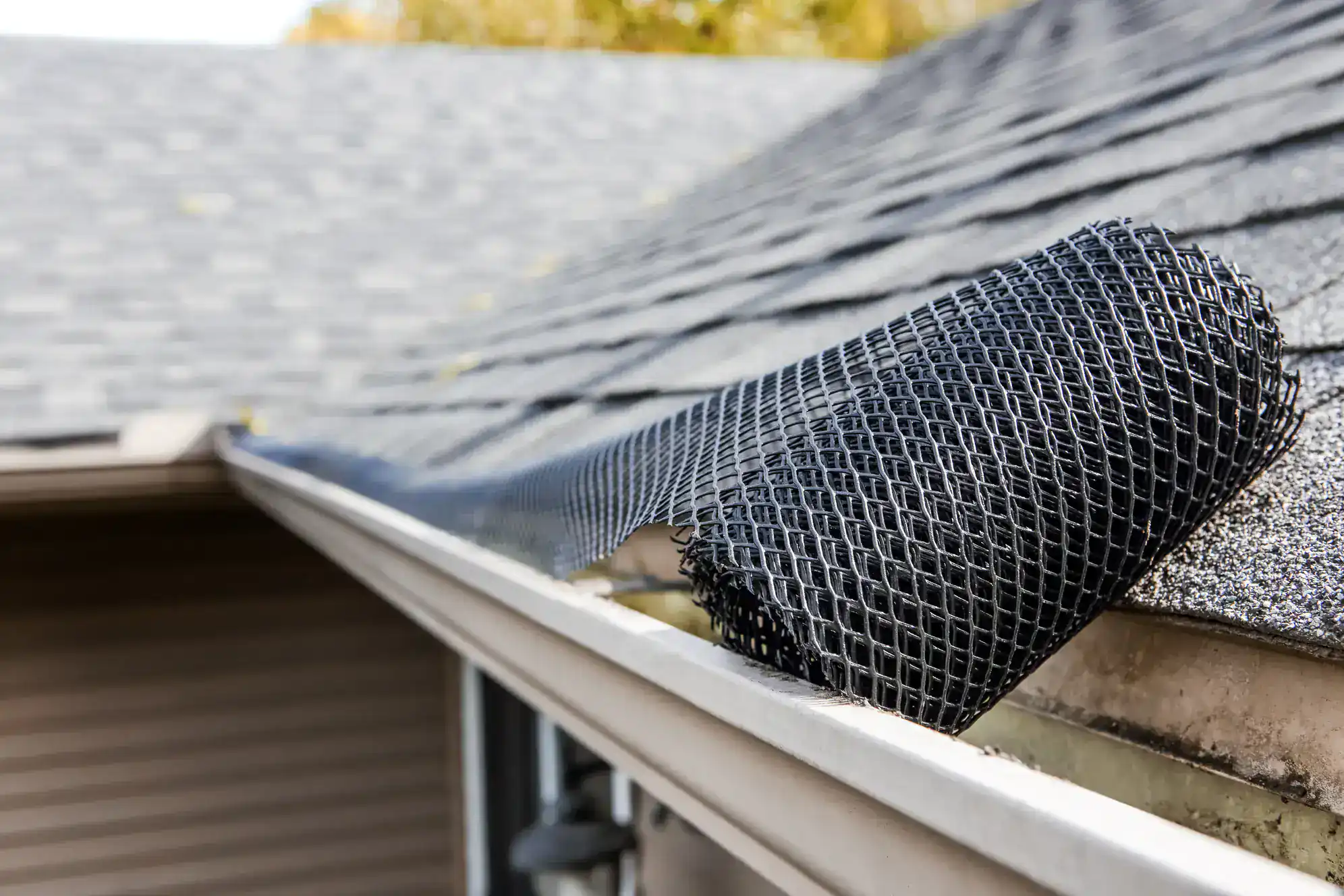
For homes with heavier tree coverage — common on the residential streets in Central Cliffside Park — pairing seamless gutters with a quality gutter guard system significantly reduces the maintenance burden. Fall leaf loads in a dense, tree-lined neighborhood can clog even a properly installed system within weeks. Gutter guards don’t eliminate maintenance entirely, but they extend the interval and reduce the risk of overflow from blockage during the heavy rainfall events Bergen County sees regularly.
Can failing gutters actually cause foundation damage on my Cliffside Park home?
Yes — and in Cliffside Park specifically, the risk is higher than it would be on a flat suburban lot with room for water to disperse. When gutters overflow or downspouts deposit water directly against a foundation, that water saturates the soil around the base of the home. Over time, that moisture works into foundation cracks, expands during freeze cycles, and causes the kind of structural movement that leads to significant repair bills. Foundation repair in New Jersey ranges from roughly $5,000 on the low end to $30,000 or more for serious issues.
For homes near the Palisades cliff edge — particularly along the streets in Grantwood and the northern sections of Cliffside Park — the stakes are even higher. Water that isn’t properly channeled away from the home doesn’t just threaten the foundation; it contributes to slope erosion on terrain that has limited capacity to absorb runoff. A properly installed gutter system with correctly positioned downspouts and adequate extensions is the first line of defense against all of it. The cost of a full gutter replacement is a fraction of what foundation remediation costs on a property worth $800,000 or more.
Will my homeowner's insurance cover storm-damaged gutters in Cliffside Park?
It depends on the cause of the damage and the specifics of your policy, but storm-related gutter damage is often covered — and many Cliffside Park homeowners either don’t know that or don’t know how to document it in a way that satisfies an adjuster. Eastern Bergen County, which includes Cliffside Park, is regularly included in NJ flood watch advisories, and the borough’s own Flood Damage Prevention ordinance exists precisely because storm damage here is a documented, recurring reality.
Wind, hail, falling debris, and ice damage are the most common covered causes. What typically disqualifies a claim is age and deferred maintenance — if an adjuster determines the gutters were already failing before the storm, coverage becomes harder to secure. That’s why documentation matters, and it’s why having a licensed contractor involved early in the process makes a difference. We work directly with insurance companies — documenting the damage, submitting the claim, and advocating for full coverage so you’re not navigating that process on your own.
How long will new gutters last on a home in Cliffside Park, NJ?
Seamless aluminum gutters, properly installed and maintained, typically last 20 to 30 years in New Jersey’s climate. The variables that shorten that lifespan are installation quality, fascia condition at the time of mounting, and how well the system is maintained over time. Gutters that are installed with incorrect slope hold standing water, which accelerates corrosion and adds weight that pulls brackets out of the fascia — often within just a few years. Getting the installation right from the start is what determines whether you’re replacing gutters again in a decade or in three.
In Cliffside Park, the freeze-thaw cycle is the biggest long-term stress factor. Water that sits in a gutter because the slope is off will freeze in winter, expand, and crack seam joints or bend brackets. Combined with the fall leaf loads that come with the tree canopy on many of the borough’s residential streets, a system that isn’t draining properly degrades faster than one that moves water efficiently every time it rains. Annual inspections — particularly in spring after the freeze season and in fall before it begins — will catch small issues before they become replacement-level problems.